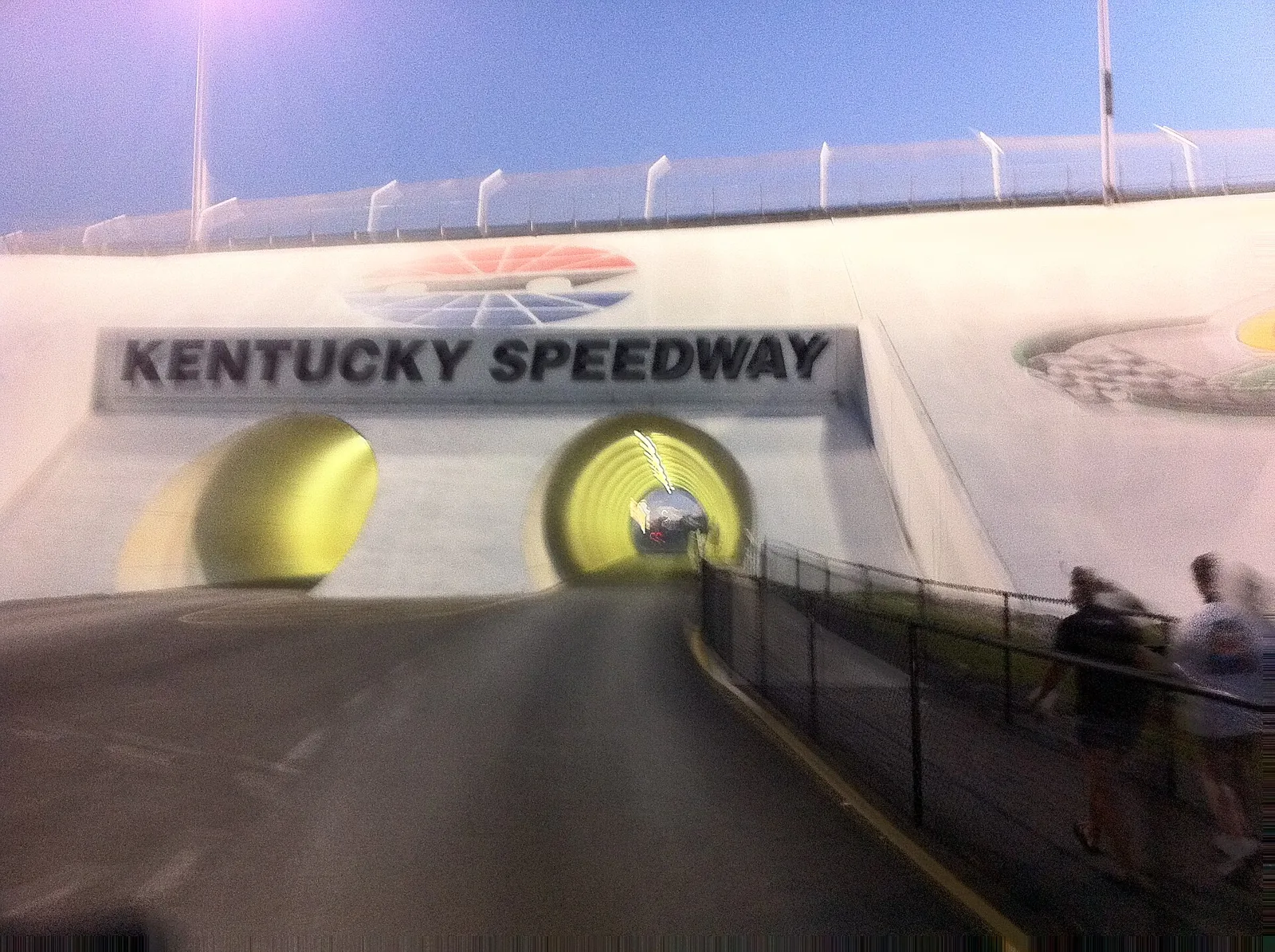
A 1.5 mi tri-oval that opened in 2000, won its NASCAR Cup date after years of litigation and lost its race weekends a decade later.
Kentucky Speedway, a venue near Sparta, Kentucky, is now inactive. Its 1.5 mi (2.4 km) tri-oval opened in June 2000, hosted NASCAR Cup racing from 2011 after a long antitrust fight, and now runs as a rental venue owned by Speedway Motorsports.
Kentucky Speedway is a tri-oval in Sparta, Kentucky, that was built with a hope of winning a NASCAR Cup Series date. It opened in 2000, spent years in litigation, finally hosted the top series in 2011 and then lost its race weekends a decade later. Its story is one of ambition, legal fights and traffic problems.
Who owns Kentucky Speedway and is it still racing?
Kentucky Speedway is an inactive 1.5 mi (2.4 km) tri-oval in Sparta, Kentucky, owned by Speedway Motorsports, LLC. It is now used for weekend track rental, after NASCAR and IndyCar racing ended. Its grandstand capacity was listed at 87,000 as of 2020.
The speedway was planned by Turfway Park owner Jerry Carroll, who had seen his horse-racing business decline. He wanted a modern venue with a Cup weekend, and the track was designed around that goal from the start.
A track built to win a Cup date won one in 2011, then lost its race weekends within a decade.
Planning and construction, 1997 to 2000
In April 1997 Carroll visited the newly built Texas Motor Speedway and began studying a NASCAR-style superspeedway in northern Kentucky. On January 8, 1998, he unveiled a facility costing $132 million, planned at 1.5 mi (2.4 km) long with 60,000 seats, and it would sit on 1,000 acres in Gallatin County. Expansion to 180,000 seats was part of the long-term idea.
Construction began on August 1, 1998, by which time the budget had grown to $152 million. The facility was officially named Kentucky Speedway, and within its first month about 1,500 personal seat licences were sold. Darrell Waltrip, who advised the project, helped set the banking at 14 degrees in the turns.
The track was annexed into Sparta in February 1999. Cintas, Ford Motor Company and Budweiser signed on as corporate sponsors that same year, and Carroll sold his stake in Turfway Park to focus on the speedway.
When did Kentucky Speedway open and who attended?
Kentucky Speedway opened on June 16, 2000, when Billy Bigley won the first event in front of 36,210 fans. The first Truck Series race followed the next day, and although heavy rain delayed it, the crowd was close to a sell-out with Greg Biffle taking the win.
Planners had built a large venue for the opening weekend, and the first crowds tested every part of the access plan.
How did rain and traffic affect the first race weekend?
Heavy rain turned the parking lots to mud, which forced some spectators to be turned away. Traffic on Interstate 71 backed up for 14 miles (23 km), and the track responded by adding 50,000 tons of gravel and a 10,000-car emergency lot.
The early years were not easy on the track's reputation. In August 2000 Kentucky was awarded an annual NASCAR Busch Series race, and Kevin Harvick won the first one in 2001. The next year Jason Priestley was seriously hurt when his car crashed at 180 mph (290 km/h) during a test session.
Why did Kentucky Speedway sue NASCAR?
In July 2005 the speedway filed an antitrust suit against NASCAR and the International Speedway Corporation, seeking more than $400 million in damages and a Cup Series race. Judge William Bertelsman accepted NASCAR's request to end the case on January 7, 2008, and the Sixth Circuit upheld that ruling on December 11.
The speedway amended its case in April 2007, dropping the Cup demand and asking the France family to give up ownership of one of their two companies. Its lawyer then appealed the dismissal, and the litigation was formally settled on April 30, ending a six-year lawsuit that had kept the track from a Cup date.
How did Bruton Smith change the track?
Bruton Smith's Speedway Motorsports paid $78.3 million for the track in 2008, buying it for $15 million and assuming the rest in debt. Smith planned to add about 50,000 seats, more bathrooms and a renovated garage, and he said he hoped to win a Cup date.
The date came in 2011. Smith submitted a bid in early July, and on August 10 a Cup Series date was officially confirmed. He planned to invest $90-100 million, and by November two new spectator towers, the Kentucky and Ohio towers, were being built to lift capacity to 106,000.
What happened at the first NASCAR Cup race?
The first ever NASCAR Cup Series race at the facility ran on July 9, 2011, with Kyle Busch winning the event. The race was also mired in heavy traffic, with fans waiting six hours in gridlock and reports of stack-ups as far as Carrollton.
By 9:30 PM, fans were being turned away, and Smith later said about 20,000 people were refused entry. The response was an $11 million programme that added 219 acres of land, a new pedestrian walkway and widened parts of Interstate 71 and Kentucky Route 35, and later races reported no major traffic jams.
Why did the surface and attendance decline?
By 2014 the track had a reputation for a rough and bumpy surface, and attendance dropped sharply over a three-year period. Officials ground down a dip in Turn 4, and that year the track recorded its first automobile-related fatality, when Stephen Cox crashed during a Rusty Wallace Racing Experience session.
In January 2016 officials announced a repave of the first two turns, which were raised to 17 degrees of banking from 14 and narrowed from 74 feet to 56 feet. Grandstand capacity was cut twice in the years that followed, first to 86,000 in 2017 and then to 69,000 in 2019.
Why did NASCAR leave Kentucky Speedway?
NASCAR confirmed on September 29, 2020 that it would not return to the track for its 2021 season in any capacity. An analysis in the Cincinnati Enquirer attributed the decision to the track's inability to generate enough revenue for its parent company.
General manager Mark Simendinger said the facility would become a multi-use rental complex, able to host special events, television production, festivals and camping rallies. He resigned from SMI in December 2020, and the track was then used for storage and rental rather than racing.
What events have been held at the track since?
Music has played a big part in the speedway's later life. Metallica's Summer Sanitarium Tour stopped there in July 2000 with approximately 50,000 fans, and the Warped Tour visited a year later. The Meijer Country Stampede was staged at the speedway in 2003 and 2004.
In May 2021 Ford used the track to store thousands of pickup trucks that were waiting for computer chips, and later deals with Amazon followed. By 2022 the only event held at the speedway was the Interstellar Music Festival, an EDM event held that August.
Which racing series ran at Kentucky Speedway?
The track hosted a mix of national and regional series during its two decades. NASCAR's Cup Series raced there from 2011 until 2020, and the Truck and Xfinity series ran annual weekends. The table below summarises the main series and their dates.
| Series | Years at the track | Notes |
|---|---|---|
| NASCAR Craftsman Truck Series | Since 2000 | Kentucky 201 and the Truck 225 event |
| NASCAR Xfinity Series | Since 2001 | Alsco 300 |
| NASCAR Cup Series | 2011 to 2020 | Quaker State 400, first held July 9, 2011 |
| IndyCar Series | 2000 to 2011 | Kentucky Indy 300, won first by Buddy Lazier |
How did IndyCar race at Kentucky?
IndyCar held the Kentucky Indy 300 every year from 2000 to 2011, an annual 300-mile event. Buddy Lazier won the first one on August 27, 2000. In December 2011 the series said it would stay away in 2012, ending its open-wheel racing there.
Shorter events followed. The Shady Rays 200 ran as a second Xfinity Series race from 2012 to 2017, was removed in 2018 in favour of a race at Las Vegas, and returned as a one-off event in 2020.
What facilities did the track offer at its opening?
When the track opened, drivers and officials praised its facilities. Seating for 65,989 was matched by 23,000 parking spaces, 104 infield garage spots and two Outback Steakhouse restaurants on the grounds. The first event, on June 16, 2000, drew a crowd of 36,210 and was won by Billy Bigley.
Later the track carried out a wider programme of work. By the start of the first Cup weekend, about $70 million of renovations had been completed, including moving pit road 200 feet closer to the frontstretch and adding 3,000 campsite spots.
How did the surface debate play out?
By 2014 the track's surface had a reputation for roughness, and attendance dropped sharply over three years. Several NASCAR drivers pleaded with officials not to repave, but the track chose to grind down a patch in turn four after complaints of a dip beyond tolerance.
Plans to leave the surface alone in 2015 were dropped after water leaked through it during a July rain delay. In January 2016 officials announced a repave and changes to the first two turns, and the new surface drew mixed reactions. Simendinger added another asphalt layer because the first layer did not meet specifications.
What were the early plans for the speedway?
Carroll's early plans were ambitious. He hoped to land a Cup Series date by 2003, and he began by moving a Truck race over from Louisville Motor Speedway, a track he had bought. He praised NASCAR and its president Bill France Jr as very loyal, even as IRL president Tony George said the league had no plans to race there.
The project's leadership moved quickly. Mark Cassis was named general manager, IndyCar driver Greg Ray ran test laps in the autumn of 1999, and by early 2000 about 70 percent of the facility was complete. NASCAR indicated the track was unlikely to land a Cup race at that stage, but it was ready for Busch Series events. Carroll's long-term goal remained a full Cup Series race weekend, and the early plans were built around that prize.