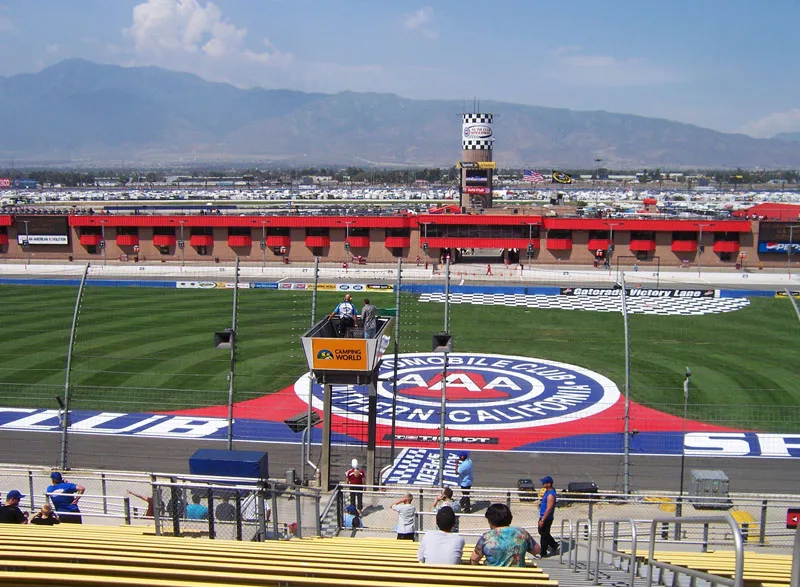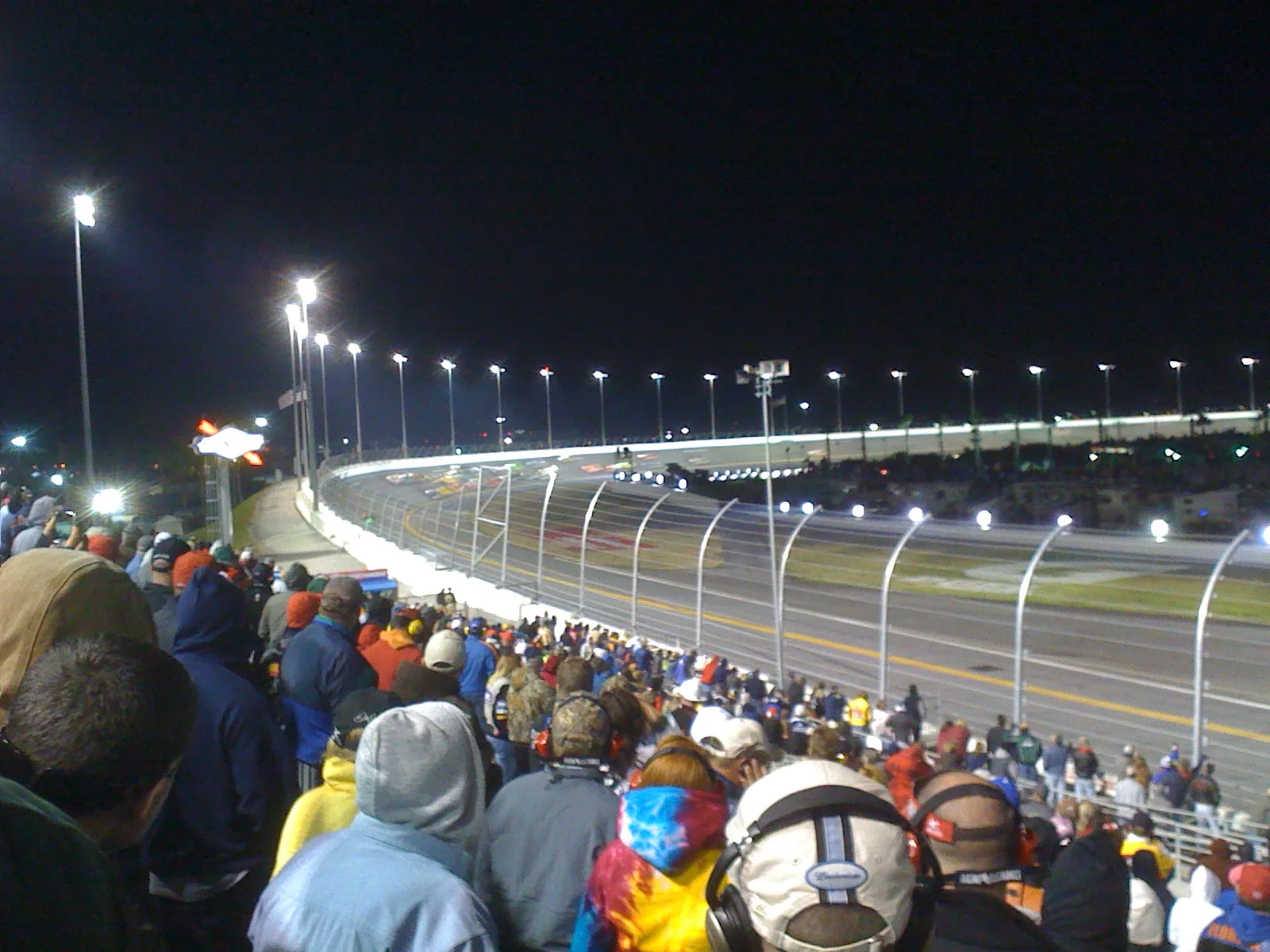
The 52nd Daytona 500 opened the 2010 NASCAR Sprint Cup season, with a veteran pole-sitter, a track repair in mid-race and a win from 13th.
The 2010 Daytona 500 was the 52nd running of the race and the opening event of the 2010 NASCAR Sprint Cup Series. Jamie McMurray won from 13th on the grid, ahead of Dale Earnhardt Jr. and Greg Biffle. The race was stopped twice for pothole repairs before the 208-lap finish.
What was the 2010 Daytona 500?
Opening the 2010 Sprint Cup calendar, the 52nd running of the Daytona 500 was the season's first stock car race. It was held on 14 February 2010 at Daytona International Speedway in Daytona Beach, Florida, before a crowd of about 175,000.
The race was the first of 36 stock car races on the Sprint Cup calendar that season. Since 1982 it has launched the NASCAR season, and it carries the biggest prize fund in American auto racing.
Victory is often ranked in the same bracket as the Masters golf tournament, the Super Bowl or baseball's championship series. The 2010 edition added its own drama, with a track surface problem and a late dash for the finish.
A veteran pole-sitter, two pothole stoppages and a last-lap pass that gave a driver from 13th his first Daytona 500.
What rule changes shaped the 2010 race?
NASCAR's 2010 decision to step back from enforcing bump drafting answered complaints that the racing lacked aggression, voiced by fans and drivers alike. Bump drafting had been tightened step by step, and it was outright banned at the 2009 AMP Energy 500.
Other changes were designed to put the racing back in the drivers' hands. Restrictor plate openings were widened to 63/64 inches, the largest since the 1989 Daytona 500, to deliver more horsepower. Robin Pemberton, who oversaw competition at NASCAR, argued that the changes handed control back to the drivers.
The green-white-checkered finish rule was also revised, so that a race ending under caution could be given up to three attempts to finish under green rather than one. The yellow out-of-bounds line stayed in place because drivers did not want it removed.
Safety work followed a crash at the 2009 Aaron's 499, when Carl Edwards went into the catchfence. Track workers raised the fences at Daytona International Speedway from 14 feet (4.3 metres) to 22 feet (6.7 metres), with the work completed in mid-January 2010.
How did practice and the duels set up the field?
The schedule called for six practice sessions, and a steady rain washed out one of them. Dale Earnhardt Jr. set the pace in the first practice, which was cut short by a thunderstorm, and David Gilliland led the second session. Matt Kenseth was fastest in the third.
Practice was not free of incident. Hamlin bumped Earnhardt at 190 mph, and one of Vickers' tyres failed on the way out of turn two. Bliss ran into Logano in a crash soon after green flag running resumed, and Johnson hit the back of Hamlin's car, with a cone wedged under his splitter.
Several crashes forced teams to switch to back-up cars for the Gatorade Duels, which were won by Johnson and Kahne on 11 February. The starting grid was finalised with Johnson, Kahne, Harvick, Tony Stewart and Kyle Busch among the top names. Eleven drivers failed to qualify for the race.
Jeff Gordon also changed to a back-up car after a three-car accident. The final practice, in cold and cloudy conditions, saw Burton quickest. Scott Speed's car then struck Bobby Labonte, sending him toward a wall at 180 mph, which he narrowly avoided.
Who took the pole, and why did it matter?
The qualifying session was held a day early so that it would not clash with Super Bowl XLIV, which had been moved forward a week by the National Football League. Each driver ran two laps, and the session set the first two positions on the grid. The rest of the field was decided through the Gatorade Duels.
Friday's rain had left the drivers with little on-track preparation. Mark Martin took his first Daytona 500 pole with a lap of 47.074 seconds, his 49th career pole. At 51 years and 27 days old, he became the oldest pole winner in the race's history.
Earnhardt joined Martin on the front row. Afterwards Martin said it was a special way to start the year, and he expected Earnhardt to challenge for the win. That prediction proved partly right, since Earnhardt finished second.
How did the race start?
The start came at 1:20 in the afternoon, Eastern time. Eastern time in clear weather, with the air at 52 degrees F (11 degrees C). Harry Connick Jr. sang the anthem, and Junior Johnson, a former Daytona 500 champion, sent the drivers off by telling them to start their engines.
Martin set the early pace for four laps, until Kahne got by on lap five. Martin reclaimed the lead on lap six, and the first caution came on lap seven after a tyre failure sent Brad Keselowski into the turn-two wall. Several cars were collected in the crash, and some drivers returned to their garages for repairs.
Earnhardt took the lead on lap 14 by passing Juan Pablo Montoya, then used his position to block drivers trying to pass him. The early laps were close and changeable, with the lead passing between several drivers in quick succession.
Who led the middle laps?
Harvick spent long periods out front and finished with the most laps led, 41 in all. He lost the lead to Kurt Busch in the opening stint, then regained it several times as the pit stops rotated the order. Those changes at the front shaped the middle third of the race.
Kurt Busch became a leading contender early on, moving to second by lap 26 and taking the lead on lap 36. Allmendinger rose from the back of the grid to second on the 38th lap, and he took the lead when Busch pitted and the pit order shifted.
Robby Gordon led one lap, and Logano held the lead briefly before his own pit stop. Kyle Busch passed Kahne for fifth on the 58th lap, and Johnson was among the leading group after the pit stops.
By the midpoint of the race the lead had changed hands many times. Bowyer, Biffle and Jeff Gordon traded the lead again in the second half, and the front of the field stayed crowded.
What caused the pothole stoppages?
A big pothole appeared on lap 122 along a seam near the yellow line, between the first two turns. It measured about 15 inches long, 9 inches wide and 2 inches deep, and the race was stopped for one hour, 40 minutes and 45 seconds while engineers inspected it.
Teams were directed to park on pit road while the track was repaired. The first patch, made from two compounds, failed in the damp and cold, and a third try finally let the race restart under caution.
The pothole returned larger than before, and a second stoppage was called on lap 161 for 44 minutes and 35 seconds. Crews borrowed resin from rival garages, blended it with hardener and warmed it with torches and jet dryers so the surface could carry traffic.
Officials attributed the problem to a combination of factors. The cars' weight, their low running heights for better aerodynamic efficiency, moisture and cold temperatures and the pre-race rain all contributed to the surface breaking up.
How did the finish unfold?
Bowyer led the restart at lap 125 with Ragan and Kahne close behind, and Sadler pushed past Kahne a few laps later. Harvick then made it three abreast on the backstretch, and Montoya briefly took the lead on the 154th lap, and Harvick passed him on the next lap.
The race ended under the green-white-checkered rule, which was used twice. Biffle had passed Bowyer for the lead just before the eighth caution on lap 199, which came for an accident involving Elliott and Logano and froze the order. The first green-white-checkered finish on lap 202 added two laps to the distance.
On the next lap Harvick took the lead from Biffle, but a ninth caution came after Gordon hit Kahne on the backstretch. The second green-white-checkered restart on lap 206 gave the race a total of 208 laps. Harvick led into the final stretch, but McMurray, who had experienced wheelspin, used Biffle's help on the outside to take the lead on lap 207.
Earnhardt had moved from tenth to second in less than two laps after changing all four tyres at his final pit stop, but he could not catch McMurray. Biffle and Bowyer were among the drivers who finished in the top ten, alongside Montoya and Edwards.
How did the finishing order look?
| Position | Driver | Team | Note |
|---|---|---|---|
| 1 | Jamie McMurray | Earnhardt Ganassi Racing | Won from 13th, margin of 0.119 seconds |
| 2 | Dale Earnhardt Jr. | Hendrick Motorsports | Moved from tenth to second in the final stint |
| 3 | Greg Biffle | Roush Fenway Racing | Led the first green-white-checkered finish |
| Pole | Mark Martin | Hendrick Motorsports | 47.074 seconds, oldest pole winner |
| Laps led | Kevin Harvick | Teammate of Clint Bowyer | 41 laps, the most of any driver |
The race attracted an estimated 175,000 people in the stands and 13.294 million television viewers. Those numbers reflected both the event's standing in the sport and the drama of the day.
How did the drivers react to the result?
McMurray celebrated in the infield after the win. He was emotional, and he described the victory as the thing every young driver dreams of achieving at Daytona. His fourth career win carried a prize of $1,508,449. Each reaction shows the mood after the flag.
Earnhardt said his second-place finish showed that the changes his team had made were paying off. He praised the new rules for giving the drivers more freedom, and said he never felt anyone was looking over his shoulder during the race.
Third-placed Biffle admitted he had gone for his move too early at the first green-white-checkered restart. He said he should have waited until the backstretch before making his run.
Robin Pemberton, NASCAR's vice-president of competition, said the rule change had worked, and that three attempts had been needed to finish the race. He called the race an excellent one, with the leading group lined up through the last 25 miles.
Jeff Gordon argued for a single attempt at the green-white-checkered finish, saying the fans deserved a show but also had their limits. Earnhardt was less certain about the rule, but he did not think it had gone too far.
What did the track repairs involve?
The track was damaged by the cars' weight, which uprooted the surface patch and enlarged it to about twice its original size. Robin Braig, the speedway's president, accepted responsibility and said sorry for the surface. The repair work lasted several days.
From 18 to 20 February, engineers and asphalt specialists patched the hole with a concrete slab 6 feet across and 18 feet long. The track was later repaved from 5 July to 10 December, its first repaving since 1978.
It was the first race since the 2004 Advance Auto Parts 500 held at Martinsville to be disrupted by a track surface breaking down. Braig said that no problems had been found in a pre-race inspection, and that cars running low had been the likely cause.
What do the standings and ratings show?
After one race McMurray topped the Drivers' Championship on 195 points, with Earnhardt right behind in second. Chevrolet topped the manufacturers' standings on nine points, ahead of the other makes. They give a snapshot of the season at its very start.
The race was broadcast live on Fox, with commentary from Mike Joy and analysis from Darrell Waltrip. Without the two stoppages, the running time was three hours, 47 minutes and 16 seconds. In 2023 NASCAR named the race among its 75 greatest, marking the sport's 75th anniversary.
What is the race's legacy?
The 2010 Daytona 500 is remembered for a winner from 13th, a pothole that stopped the race twice and a rule change that gave the drivers more room to race. Its place in the record books rests on those elements together.
The race also shows how a single track issue can reshape a major event. The repair, the repaving that followed and the changes to the rules all grew out of one afternoon in February, and the result still stands as the first major race of the season.