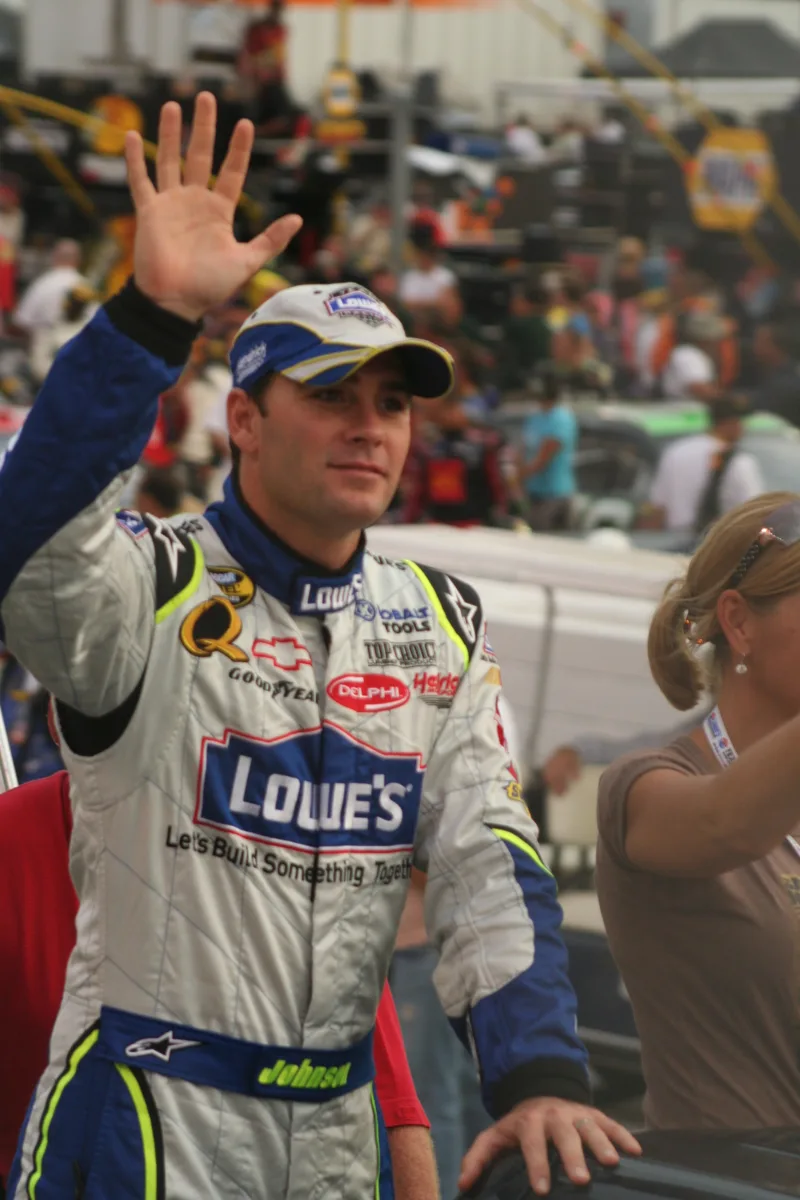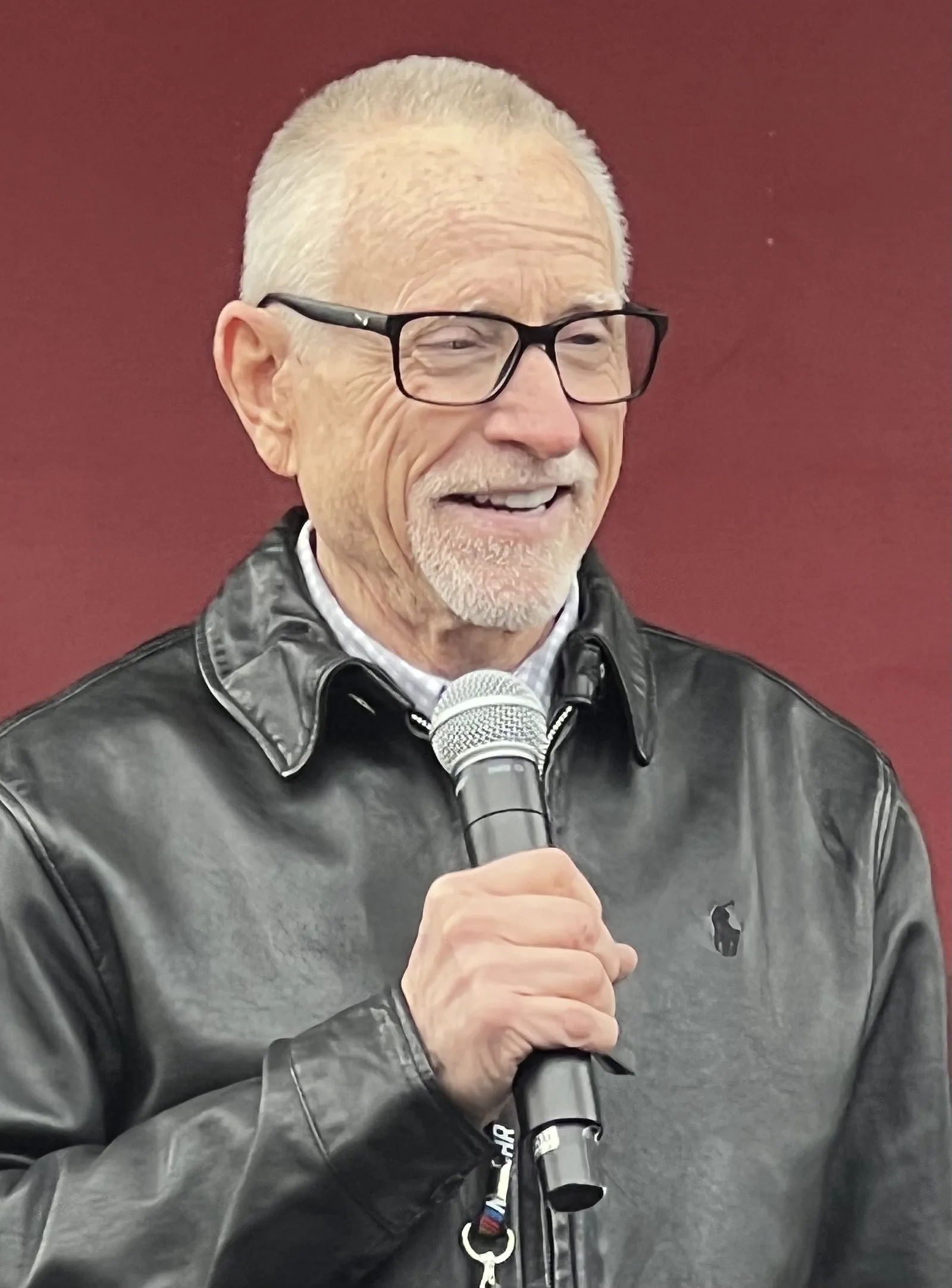
Forty Cup wins, five runner-up finishes and a 2009 season that nearly delivered the championship at the age of 50, all built on the No. 6 Roush Ford.
Mark Martin, an American stock car driver, collected 40 wins in NASCAR's top series, mainly for Roush Racing. Five times he finished runner-up in the standings without a title, and in 2009 he came second again at the age of 50.
Mark Martin, born in Batesville, Arkansas, in 1959, was an American stock car driver nicknamed 'the Kid'. He won 40 NASCAR Cup Series races, most of them in the No. 6 Ford for Roush Racing. He finished second in the points five times without winning the championship.
How did Martin's ASA years prepare him for NASCAR?
Martin started young on local dirt tracks before moving to asphalt and the American Speed Association. He took the ASA National Tour's Rookie of the Year honour in 1977, and his later haul included 22 ASA race wins and four series titles, in 1978, 1979, 1980 and 1986.
His rivals there included Dick Trickle and Bobby Allison, with Jim Sauter and Joe Shear also on the grid. The 1986 title came with crew chief Jimmy Fennig, who had joined him in 1985.
Forty Cup wins and five runner-up points finishes, and still no title to show for them.
What were his first NASCAR seasons like?
His NASCAR start was unsettled, as he drove for six different teams between 1981 and 1987. In 1981 he made five starts for a team owned by Bud Reeder and earned pole positions at Nashville and Richmond.
In 1982 he raced full-time for Reeder, but the team went bankrupt and he was not paid. He finished 14th in the standings and second in the Rookie of the Year contest behind Geoff Bodine, despite a difficult season that saw him complete only 73.7 per cent of the laps.
A full-time Busch Series ride with Bruce Lawmaster in 1987 brought two wins and three poles in the first fifteen races, and he finished eighth in the standings after a late-season collapse in reliability.
How did the Roush Racing partnership begin?
Martin joined the newly formed Roush Racing in 1988, driving the No. 6 Ford Thunderbird with crew chief Steve Hmiel. He recorded three top-five finishes and ten top 10s in that first Winston Cup season, but ten DNFs stopped him from breaking into the top 10 in points, and he finished 15th.
His first Winston Cup win came at Rockingham in 1989, ahead of Rusty Wallace by a margin of three seconds. Roush's first win as an owner came in that race. He finished the year third in the standings after an engine failure at Atlanta, having posted the series' best average start, 5.3.
Why was the 1990 title so close and so costly?
Martin entered 1990 as the favourite to win the championship. His results were strong throughout, with three wins, sixteen top-fives and twenty-three top 10s.
The season turned on a penalty at Richmond. After his second career win there, inspectors found an illegal carburetor spacer. Competitors generally agreed it gave no performance advantage, but the rule was clear, so Martin lost 46 points in the standings, and Pemberton, his crew chief, was fined $40,000.
He led the points for sixteen races but lost the lead to Dale Earnhardt with two races left. Earnhardt won the title by 26 points. Theoretically, had the penalty never happened, Martin would have won the championship by about twenty points.
What did the early 1990s bring?
The 1991 season was a step back. Martin never held the points lead and went into the Atlanta finale without a win, but he won that race. He finished the year sixth in the standings with fourteen top-fives, seventeen top 10s and five poles.
In 1992 he entered the final race at Atlanta as one of six drivers still in contention for the title, but his hopes ended when the engine failed on lap 160. He finished sixth in the standings again, with wins at Martinsville and Charlotte.
In 1993 he took the sixth place in the Daytona 500, his first top-20 finish there, and then won four consecutive races at Watkins Glen, Michigan, Bristol and Darlington. He ended the year third, a 376-point gap behind Dale Earnhardt.
How did the 1994 season go?
The 1994 season ended with Martin runner-up, 444 points adrift of Earnhardt. He won twice, at Watkins Glen from pole and in the season finale at Atlanta, and after the opening race at Daytona he never dropped out of the top five in the standings.
One of the season's highlights was a violent crash at the Winston Select 500. On lap 103 a multi-car pile-up in the tri-oval brought in Todd Bodine, Greg Sacks and Jeff Gordon, and Martin's car lost its brakes, went through the infield grass and plowed through several barriers before stopping close to a spectator area.
That year he also raced in the Busch Series, where a mistake at Bristol became one of the most talked-about moments of his career. He led the field to the white flag, went down pit road believing the race was over, and David Green took the win. Martin finished eleventh and called the error the stupidest thing he had done.
What did the late 1990s look like?
In 1995 Martin won four races, including a third consecutive win from pole at Watkins Glen and his first restrictor-plate win at Talladega. He finished fourth in the standings, and he was one of only three drivers ranked in the top five for every one of the season's 31 races.
The 1996 season was his first winless year in eight seasons, although he finished second four times and took fifth in the standings. In 1997 he rebounded with victories at Sonoma, Talladega, Michigan and Dover, and finished third in the points.
1998 was his best season in terms of results. He won seven races, took 22 top-five finishes, 26 top 10s and three poles, averaging a finish of 8.64. Yet he finished as runner-up to Jeff Gordon by 364 points.
How did his time at Roush end?
The 1999 and 2000 seasons brought two wins and then one, with a third-place and an eighth-place finish in the standings. In 2001 he went winless and finished 12th, and in 2003 he was winless again and 17th.
The 2002 season was a return to contention. Ben Leslie joined as crew chief, Martin won the Coca-Cola 600 and led the table at one stage, yet a penalty at Rockingham late in the year cost him dearly, and he finished second to Tony Stewart.
In 2004 he returned to victory lane at the MBNA America 400 with crew chief Pat Tryson, and at the end of 2005 he announced a cut back from full-time racing. He took the Nextel Challenge in a throwback livery modelled on his 1993 car, and his last win for Roush came at Kansas. In total he won 35 Cup races with the team, and he also won five IROC titles and thirteen IROC races, both records for that series.
What happened in the 2007 Daytona 500?
In 2007 Martin shared the Ginn Racing No. 01 Chevrolet with Regan Smith, and the Daytona 500 ended with him second, by 0.020 seconds, to Kevin Harvick. He was out front on the last lap, but Harvick came from seventh to win on the outside.
The finish was controversial, because a large crash behind the leaders might have brought out a caution flag. Martin was gracious in defeat, saying he had not got the job done. He topped the points from the Auto Club 500 through the Kobalt Tools 500. In July 2007 Dale Earnhardt, Inc. acquired Ginn Racing, and from the Brickyard 400 Martin drove for DEI.
How did the 2009 season produce a second championship bid?
Martin joined Hendrick Motorsports in 2008 to replace Casey Mears in the No. 5 car, on a two-year deal with a full-time schedule. He won the Sam's Town 300 for JR Motorsports in 2008 as well, a Nationwide win that was his 48th in that series.
On April 18, 2009, he won the race at Phoenix from pole at age 50, becoming only the fourth driver to win a Cup race after turning 50. The win ended a run of 97 races without a victory, and he later did a Polish Victory Lap in honour of Alan Kulwicki.
He won the Southern 500, and the LifeLock 400 went his way when Johnson and Biffle both ran dry in the closing laps. By July he had four wins, leading the series, and on September 20 he won at New Hampshire, his 40th and final career win and the first race of the Chase.
The lead in the standings was real but short-lived. At Talladega he was caught in an accident that flipped his car one and a half times, and experts saw it as the end of his title hopes. At Homestead he finished 12th, and Jimmie Johnson took the title. Martin finished second in the standings, his fifth and last runner-up finish.
What did the 2010 to 2013 seasons look like?
In 2010 Martin won the pole for the Daytona 500 and later had back-to-back fourth-place finishes. A stretch of crashes and bad luck saw him fall to 11th in the standings, before a run of strong finishes at Texas and the Aaron's 499 pushed him back up.
He left Hendrick at the end of 2011, when Kasey Kahne took over the No. 5, and ended that Cup season 22nd in points. In 2012 he joined Michael Waltrip Racing in the No. 55, and in 2013 he drove for Joe Gibbs Racing and Stewart-Haas Racing when other drivers were injured.
In 2013 he finished third at the Daytona 500 and won the pole for the Subway Fresh Fit 500, and he nearly won at Michigan but ran dry with three laps left. That made him the second-oldest pole winner in the Sprint Cup Series.
How do his main seasons compare?
| Season | Team | Wins | Points finish |
|---|---|---|---|
| 1989 | Roush Racing | 1 | Third |
| 1990 | Roush Racing | 3 | Second |
| 1993 | Roush Racing | 5 | Third |
| 1994 | Roush Racing | 2 | Second |
| 1995 | Roush Racing | 4 | Fourth |
| 1997 | Roush Racing | 4 | Third |
| 1998 | Roush Racing | 7 | Second |
| 2002 | Roush Racing | 1 | Second |
| 2009 | Hendrick Motorsports | 5 | Second |
What is Martin's legacy in the sport?
Many observers count him among the strongest drivers never to win the Cup title. He was named one of NASCAR's 50 Greatest Drivers in 1998, and one of its 75 Greatest Drivers in 2023.
He was inducted into the Motorsports Hall of Fame of America in 2015 and into the NASCAR Hall of Fame in 2017. He ranks second on the all-time O'Reilly's Series (formerly Busch Series) wins list with 49, and among drivers born in the 1950s he was the last to take a Cup victory.
After racing he worked as a driver development coach for Roush Fenway Racing in 2014. He has since retired from driving, and his company backs a driver on the Lucas Oil dirt late model circuit. His Arkansas car dealerships trade under the Mark Martin Automotive name.