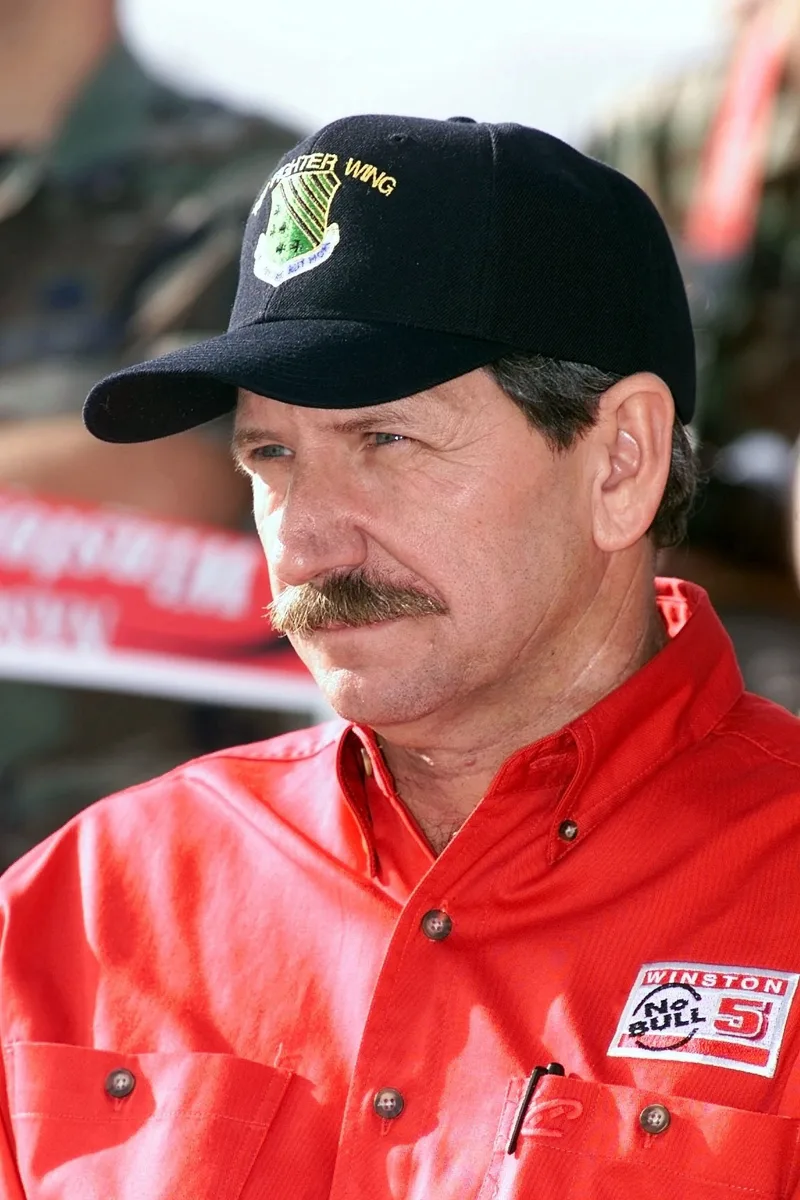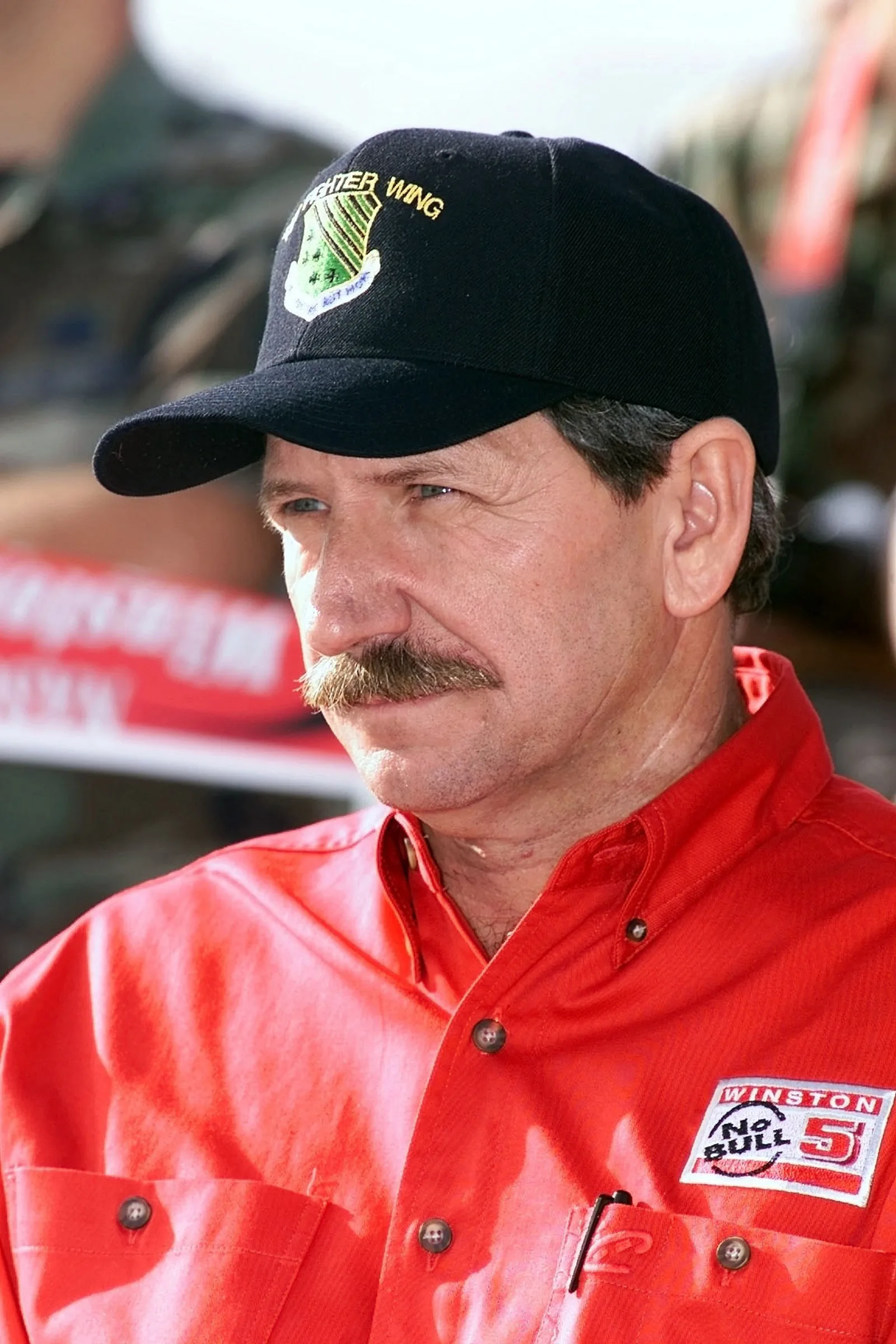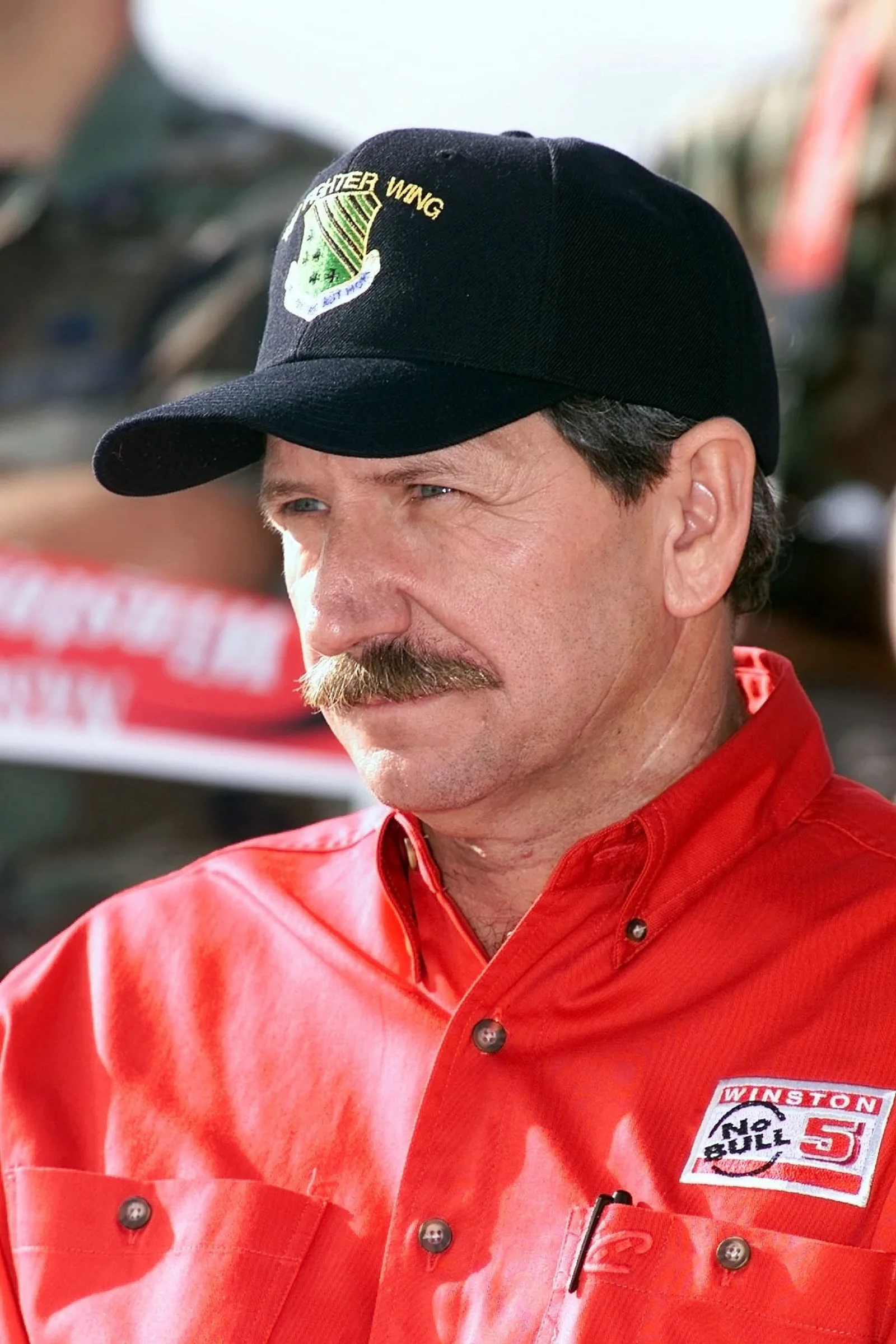
From a Kannapolis short-track family to seven Winston Cup titles, the black No. 3 and the 2001 Daytona 500 crash that reshaped NASCAR safety.
Dale Earnhardt drove in NASCAR's top series from 1975 to 2001, mostly for Richard Childress Racing. Seven titles and a long list of points victories mark his career, and he died at the 2001 Daytona 500.
Dale Earnhardt was an American stock car driver and team owner who raced in NASCAR's top series from 1975 until his death in 2001. Known as the Intimidator for his aggressive style, he won seven championships and 76 points races, and he is widely regarded as one of the greatest drivers in the sport's history. His career ended abruptly at the 2001 Daytona 500, where he was killed in a crash on the last lap.
Where did Earnhardt's racing begin?
Ralph Dale Earnhardt was born on 29 April 1951 in Kannapolis, North Carolina, the third child of Ralph Earnhardt and Martha Earnhardt. Ralph Earnhardt ranked among the strongest short-track competitors in North Carolina, and he claimed a single NASCAR Sportsman title, in 1956. At the age of twelve, in 1963, Earnhardt secretly drove his father's car in a race and came close to victory against one of the older man's rivals.
He dropped out of school to chase his dream of racing, and his father was a demanding teacher. Ralph Earnhardt died of a heart attack in 1973 at the age of 45, and it took many years for his son to feel he had proved himself to him. Earnhardt later spent much of his life on a farm in Mooresville, where he raised cattle and enjoyed hunting.
An Intimidator who drove the black No. 3 to seven titles, and whose final lap at Daytona changed how NASCAR thinks about safety.
When did Earnhardt begin in the Winston Cup?
Earnhardt made his points-race debut in the NASCAR Winston Cup Series at the 1975 World 600 at Charlotte Motor Speedway, the longest race on the circuit. He had already raced in an invitational event at Metrolina Speedway in 1974, and he competed in several more races before he joined a full-time team in 1979. No other NASCAR driver has won at least once in four consecutive decades. His first win came in 1979 and his final two in 2000.
That year he drove for Rod Osterlund Racing and was named Rookie of the Year, despite missing four races with a broken collarbone. He won his first race at Bristol and captured four poles. In his second season, with a new crew chief, he won five times and took his first Winston Cup points championship. He is the only driver to follow a Rookie of the Year title with a championship the next season.
What was Earnhardt's time with Bud Moore and Richard Childress Racing like?
The 1981 season was turbulent. Rod Osterlund sold his team to the entrepreneur Jim Stacy, and after four races Earnhardt left the team. He finished the year driving Pontiacs for Richard Childress Racing and placed seventh in the standings, then departed at the end of the season.
In 1982 and 1983 he drove the No. 15 Wrangler Ford Thunderbird for Bud Moore Engineering, the only full-time Ford ride of his career. The 1982 season was hard. He won at Darlington but failed to finish eighteen of thirty races, and he finished twelfth in points. In 1983 he won at Nashville and Talladega and finished eighth overall.
In 1984 he returned to Richard Childress Racing, taking the No. 3 that Ricky Rudd had driven. Over the next two seasons he won six races, including two at Bristol and one at Martinsville, and his partnership with the team proved to be the foundation of his later success.
How did Earnhardt win his championships?
In 1986 he secured his second Winston Cup title, which was also the first owner's championship for Richard Childress Racing, and he won five races that year. In 1987 he defended the title with eleven victories and beat Bill Elliott by 489 points. He set a modern-era record with four consecutive wins that season, and he won five of the first seven races.
In 1987 he also earned the nickname the Intimidator. During the Winston All-Star Race he was pushed onto the infield grass, yet he kept his car under control, rejoined the track and held on to the lead. The manoeuvre became known as the Pass in the Grass, although he passed nobody while off the track. An angry fan later threatened him, and the FBI provided protection at three tracks until the season's races there passed without incident.
The 1988 season brought a new sponsor, GM Goodwrench, and a change to the black paint that became his trademark. He won three races that year and finished third in points. In 1989 he won five races, but a late spin at North Wilkesboro cost him the title, which Rusty Wallace won by twelve points.
The 1990 season opened well, with wins in the Busch Clash and his heat of the Gatorade Twin 125s. In the Daytona 500 he led for 155 of the 200 laps and was about to win when a tyre went flat after he ran over a metal bell housing on the final lap. He finished fifth. He won nine races that year and took his fourth title, beating Mark Martin by 26 points. He was also the first driver to win the all-star race more than once.
He took his fifth title in 1991, finishing 195 points ahead of Ricky Rudd. A career low came in 1992, when he finished twelfth in points after a difficult season. Crew chief Andy Petree joined the team that year, and Earnhardt returned to the front in 1993. He won six races that season and his sixth title, beating Rusty Wallace by 80 points.
In 1994 he scored his seventh championship, matching the record that Richard Petty held. He won four races that year, and after Ernie Irvan's near-fatal crash at Michigan, he finished more than 400 points clear of Mark Martin. His final title came with the GM Goodwrench team, which changed to Monte Carlo bodies the following year.
What were Earnhardt's late career highlights and setbacks?
In 1995 he won five races, including his first road course victory at Sears Point and the Brickyard 400 at Indianapolis, which he called the biggest win of his career. He lost the title to Jeff Gordon by 34 points. Over the next few years he won the Daytona 500 in 1998, the first major race he had failed to win in nineteen attempts.
His career also included serious injuries. In 1996 he was caught in a multi-car crash at Talladega, and his No. 3 car struck the tri-oval wall. He had a broken collarbone, sternum and shoulder blade. He refused to stay out of the car and drove the next race at Indianapolis, and he took the True Grit pole at Watkins Glen the following weekend. The accident led NASCAR to require the Earnhardt Bar, a brace in the centre of the windshield to reinforce the roof.
He won the 1998 Daytona 500 in his twentieth attempt, after nineteen failures, and he celebrated by driving the car into the infield grass. In 2000 his results rebounded, which was commonly attributed to neck surgery. He won Atlanta by 0.010 seconds over Bobby Labonte, and he took his tenth win at Talladega, which earned him a million-dollar bonus.
What happened at the 2001 Daytona 500?
On 18 February 2001 a three-car collision on the last lap of the Daytona 500 claimed Earnhardt's life. He had been blocking Ken Schrader on the outside and Sterling Marlin on the inside when he made contact with Marlin and went into Schrader. His car hit the outside wall head-on and slid across the banking. Michael Waltrip won the race in the car of his team, with Dale Earnhardt Jr. second.
Earnhardt was pronounced dead at the Halifax Medical Center in Daytona Beach. An autopsy the next day found that he had died from a basilar skull fracture. Public funeral services were held at Calvary Church in Charlotte on 22 February, and he was later buried on his estate in Mooresville after a private service.
How did NASCAR respond after Earnhardt's death?
The crash led to two investigations and a great deal of public discussion about seatbelts and restraint systems. Earnhardt had refused to wear the HANS device, which he found restrictive, and in October 2001 NASCAR required drivers in its three national series to use it. The seatbelt manufacturer whose products were used in his car faced serious questions, and its owner resigned from the company that bore his name.
Richard Childress promised that the No. 3 would never again appear on a black car in GM Goodwrench colours. The car was renumbered 29, and Kevin Harvick took over the seat. Three weeks after the crash, Harvick drove a car that had been prepared for Earnhardt to his first Cup win, at Atlanta. Fans held three fingers aloft on the third lap of races as a tribute, and the television coverage of NASCAR on Fox and NBC fell silent on the third lap until the following year's race at Rockingham.
The number returned in 2014, when Austin Dillon, Childress's grandson, drove a No. 3 car without the GM Goodwrench sponsorship. Earnhardt's name also lives on in several places, including the Earnhardt Tower at Daytona, which opened a month before his death, and the Dale Earnhardt Plaza in Kannapolis. The plaza features a bronze statue of Earnhardt that stands nine feet tall.
Why is Earnhardt's No. 3 so widely remembered?
The black and red No. 3 car is one of the most recognised logos in North American motor racing. Earnhardt drove it for most of his career, from the latter half of 1981 and then from 1984 until 2001. Other drivers have used the number since, and Daniel Ricciardo chose the number 3 for his Formula One career partly because he was a fan of Earnhardt.
What honours did Earnhardt receive?
He was named one of NASCAR's 50 Greatest Drivers in 1998, and he was honoured with the Order of the Long Leaf Pine by North Carolina's governor in 1994. He was posthumously named NASCAR's Most Popular Driver in 2001 and inducted into the inaugural class of the NASCAR Hall of Fame in 2010. ESPN later produced the film 3: The Dale Earnhardt Story, and in 2025 Amazon released a four-part docuseries about his life.