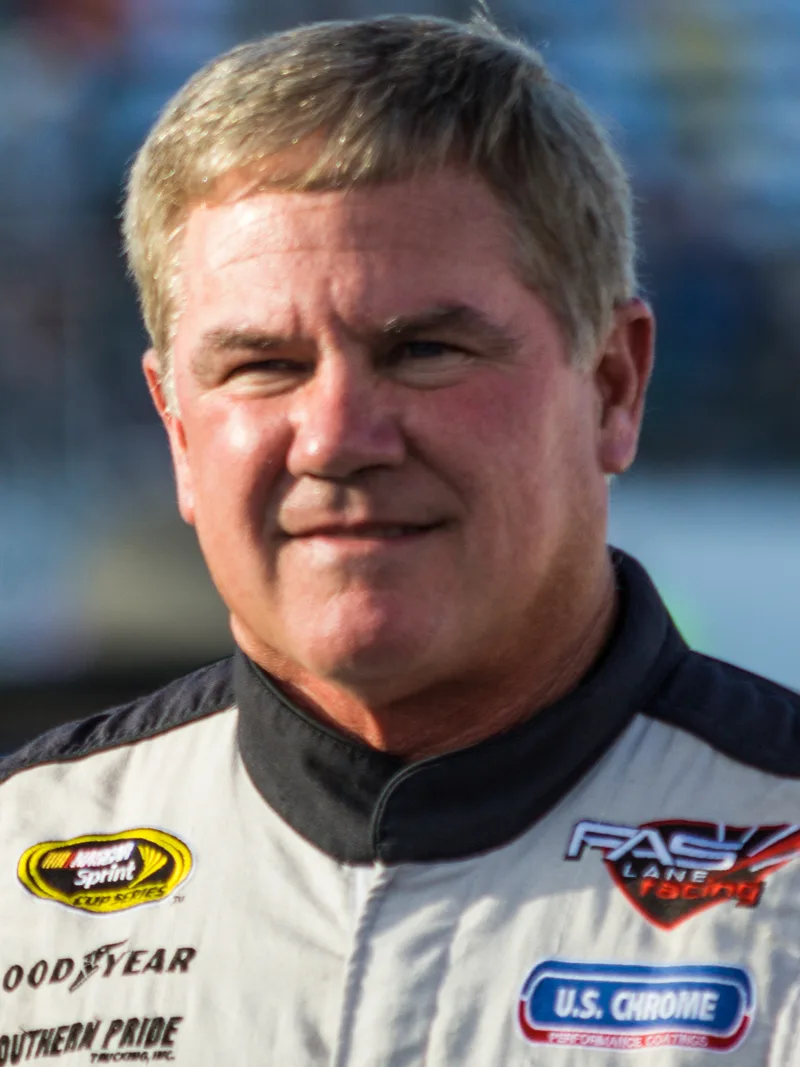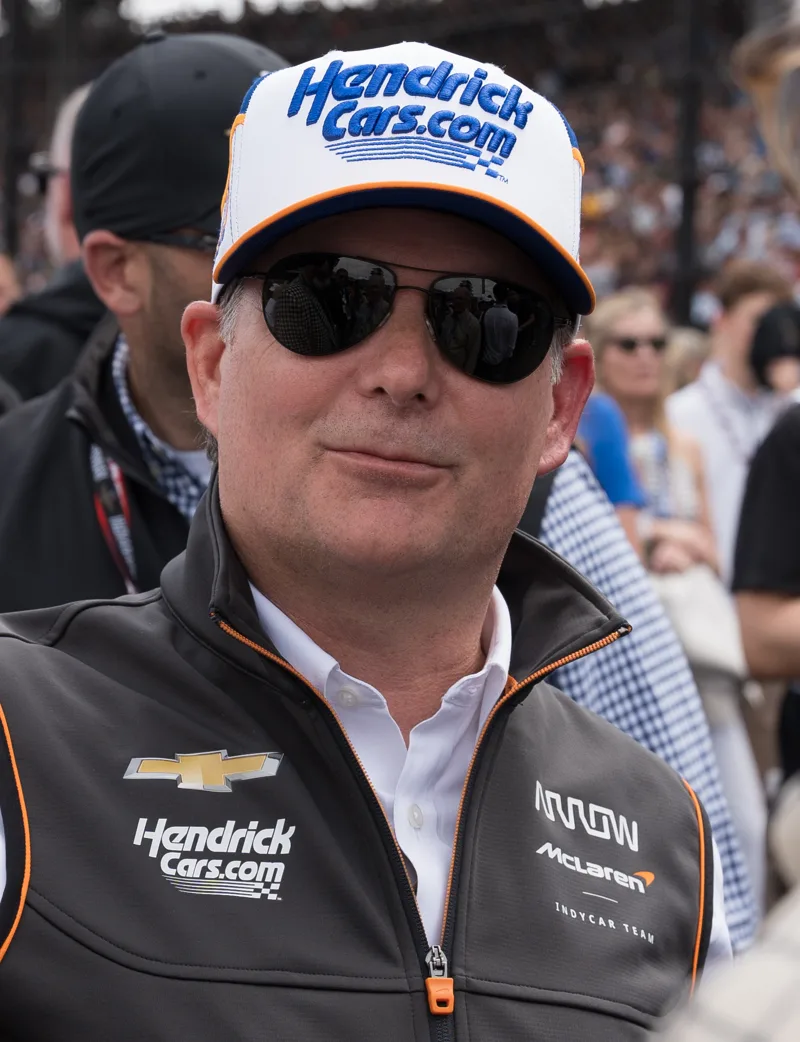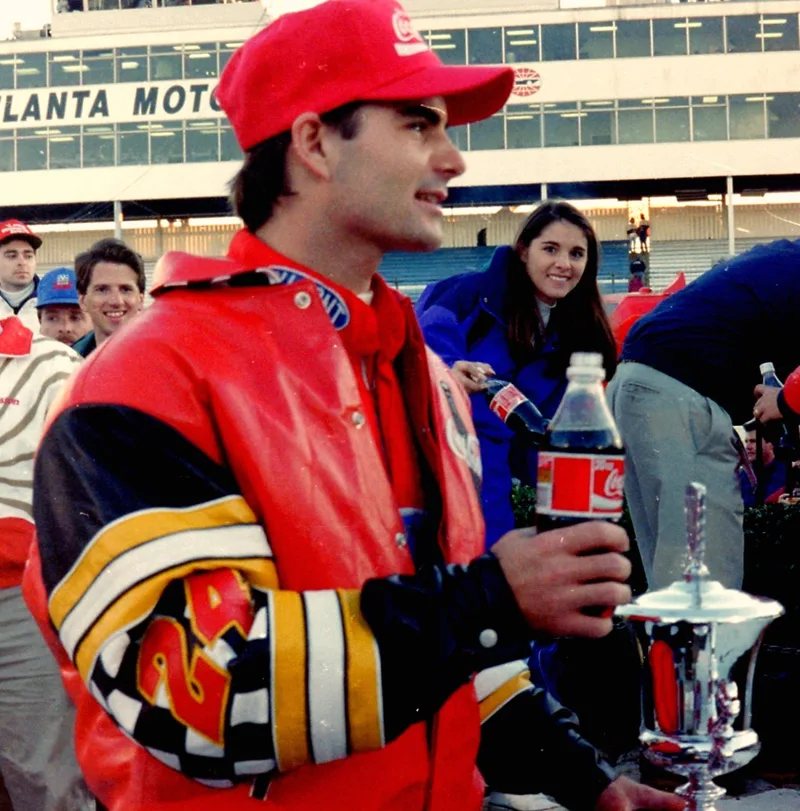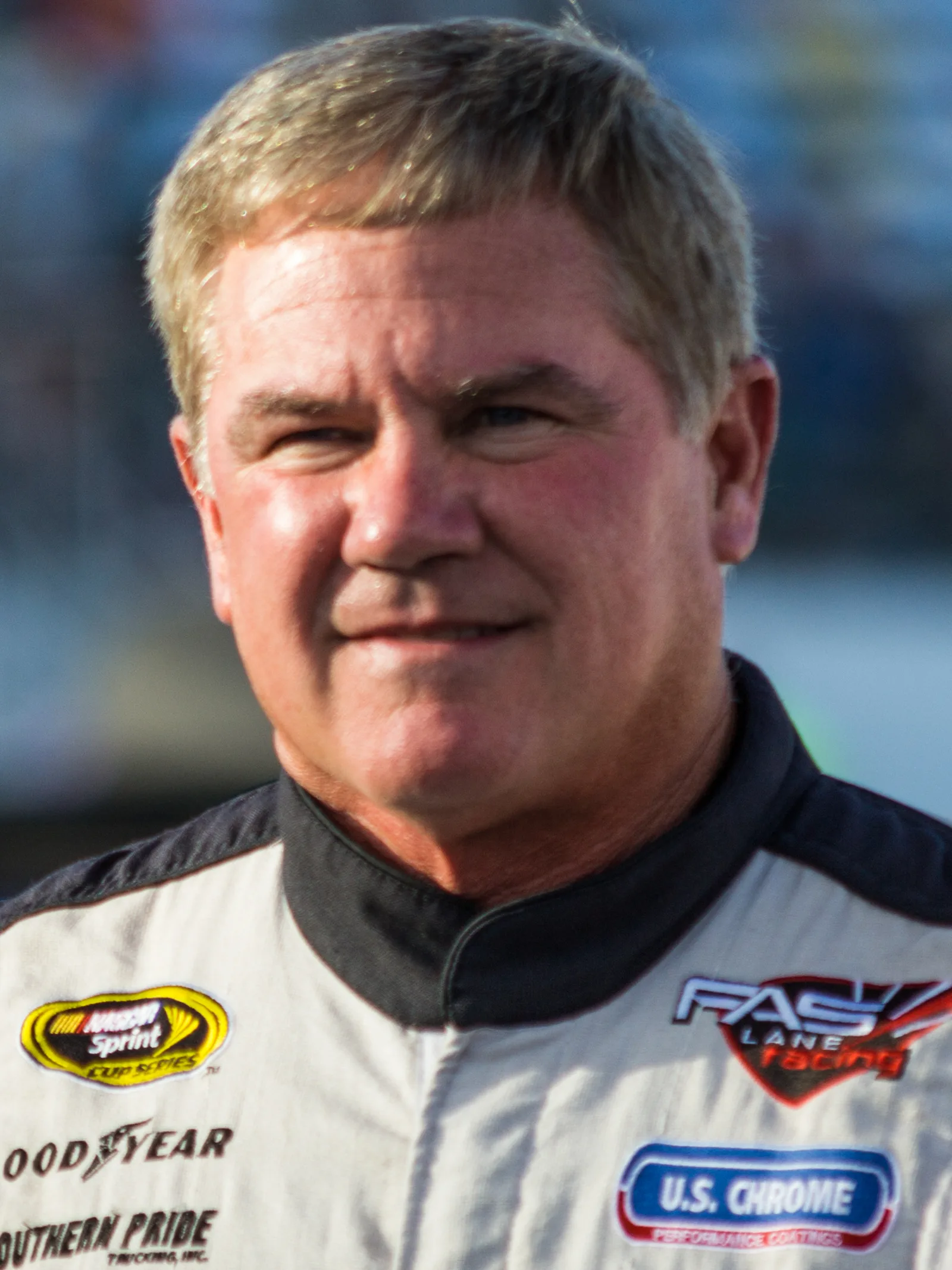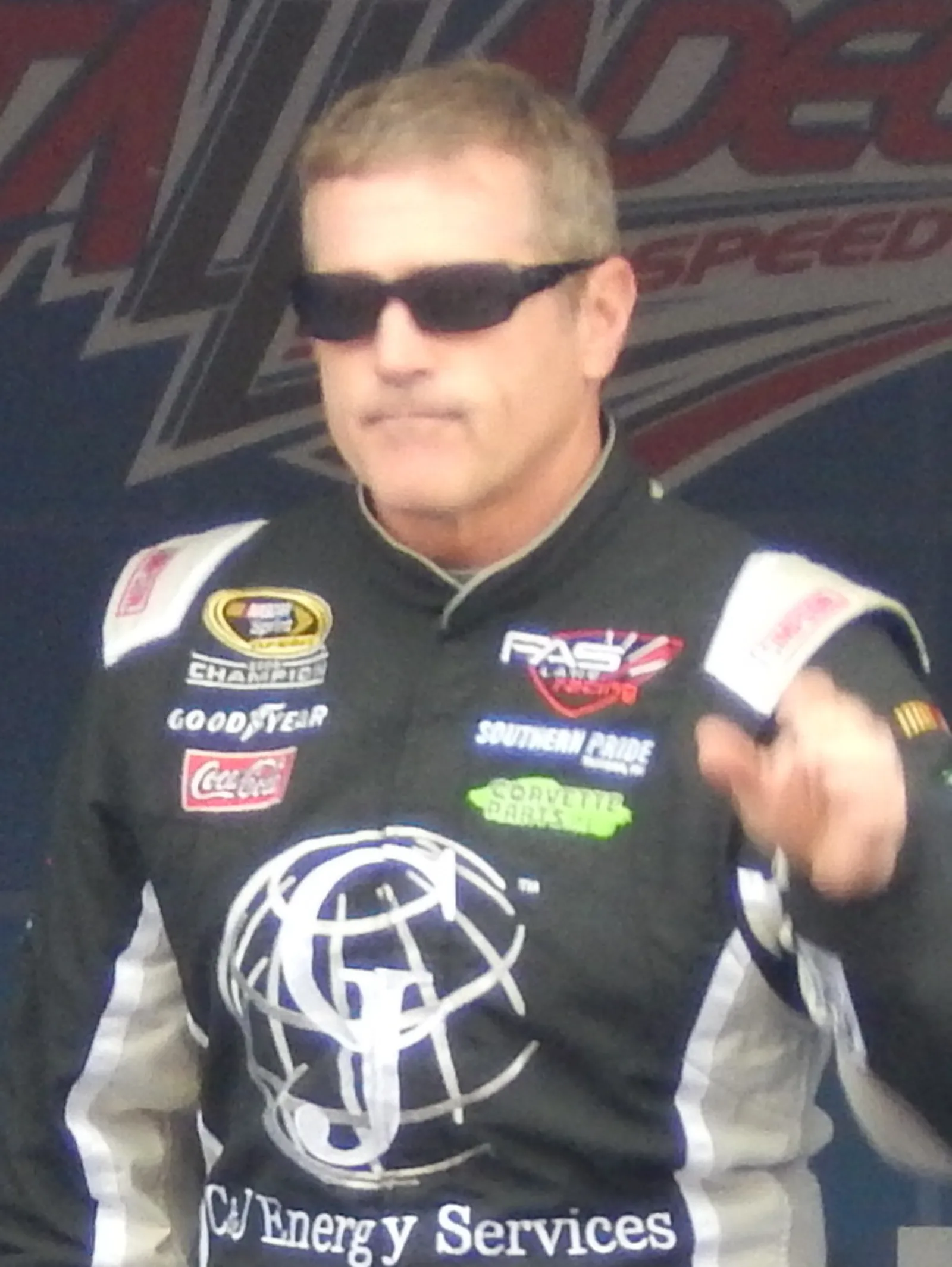
A Texas-born driver who won the Busch title in 1991, the Winston Cup in 2000 and a Martinsville Triple Threat, and who later raced in Europe and the SMART Modified Tour.
Labonte won the 1991 Busch Series title and the 2000 NASCAR Winston Cup championship. He completed that 2000 season without a single did-not-finish result, and later raced in Europe and on the SMART Modified Tour.
Bobby Labonte is an American former stock car driver best known for winning the 2000 NASCAR Winston Cup championship without a single did-not-finish result. He also won the Busch Series title in 1991, took the IROC title in 2001 and completed NASCAR's Triple Threat at Martinsville Speedway.
His career ran from quarter midgets in Texas to a full-time Cup ride for Joe Gibbs Racing, and later to a long run of teams that struggled for sponsorship. He has raced on the SMART Modified Tour since 2021 and has worked as a broadcaster.
Who is Bobby Labonte?
Robert Allen Labonte was born on 8 May 1964 in Corpus Christi, Texas. He is the younger brother of Terry Labonte, and the two are one of only two pairs of brothers to have won NASCAR Cup championships, alongside Kurt and Kyle Busch. Bobby is also the uncle of former Xfinity Series race winner Justin Labonte.
He was the second driver overall, and the first under the revised points system, to win both the Winston Cup title and the Busch Series title since Ned Jarrett. Racing took him from quarter midgets to go-karts before he reached the national stage.
A Busch title in 1991, a Winston Cup title in 2000 with no DNFs, and a career that took him from quarter midgets to Europe.
How did Labonte rise through the Busch Series?
Labonte began racing in 1969 in quarter midgets in his home state of Texas, and he won his first feature a year later. He raced quarter midgets around the United States until 1977, then moved to go-karts in 1978. When Terry advanced to the Winston Cup Series, the family relocated to North Carolina.
His first Busch Series start came in 1982 at Martinsville Speedway, where he finished 30th. In 1985 he ran two races in a car he owned himself at the same track. The first finish paid only $220, but he improved to 17th in the next race. In 1987 he won twelve races at Caraway Speedway and took the track championship, then won six races at Concord Motorsports Park the following season.
Labonte became a full-time Busch driver in 1990, running a No. 44 Oldsmobile from his own team. That season he won two poles at Bristol, collected six top-five finishes and seventeen top-tens, finished fourth in the standings and was voted the series' Most Popular Driver.
The 1991 season was his breakthrough. He won the Busch championship with two victories, ten top-fives and 21 top-tens, taking his first series win at Bristol and a second in August at O'Reilly Raceway Park. In 1992 he won three races at Lanier, Hickory and Martinsville, but he lost the title to Joe Nemechek by three points, the second-closest finish in the history of NASCAR's top three series.
How did Labonte's Cup Series career begin?
Labonte made his first two Winston Cup starts in 1991 with his own team, at Dover and Michigan, finishing 34th and 38th. He moved to the Cup Series full-time in 1993 with Bill Davis Racing, driving the No. 22 Ford Thunderbird as a rookie.
That first Cup season brought his first pole at Richmond, six top-ten finishes and 19th place in the points. He finished second to Jeff Gordon in the Rookie of the Year voting. Meanwhile his own Busch team produced a title of its own, when driver David Green won the 1994 series championship for him.
In 1994 Labonte drove a Pontiac Grand Prix for Bill Davis, collecting one top five and two top tens. He finished 21st in the standings, just missing the top 20 when Todd Bodine gained two places in the final race. At the end of 1994 he left to replace Dale Jarrett in the No. 18 Interstate Batteries Chevrolet for Joe Gibbs Racing.
What did Labonte achieve with Joe Gibbs Racing?
Labonte took his first Cup win in the 1995 Coca-Cola 600, a result he later described as the favourite of his career. That season he also swept the Michigan races and finished tenth in the standings. The Gibbs years that followed brought a steady run of wins.
In 1996 he won the season-ending race at Atlanta, the same afternoon brother Terry clinched the championship, and the two took a victory lap together. He finished eleventh in points that year. In 1997 Gibbs switched to Pontiac Grand Prix cars, and Labonte won the season finale at Atlanta again, finishing seventh in points, his best to that point.
In 1998 he won at Atlanta and Talladega, took pole positions for both Daytona races and finished second to Dale Earnhardt in the Daytona 500. He ended the season sixth in points. His most productive year came in 1999, when he won five Cup races. He took the spring race at Dover and swept both Pocono events, becoming the third driver to do so after Bobby Allison in 1982 and Tim Richmond in 1986.
The 1999 season nearly ended with the title. Labonte broke a shoulder in a crash while qualifying for a Busch race at Darlington, but he drove the Cup race two days later and handed over to Matt Kenseth at the first caution. He finished second in the points to Dale Jarrett, by 201 points.
How did Labonte win the 2000 Winston Cup title?
In 2000 Labonte won four races: the early-season Rockingham race, the Brickyard 400, the Southern 500 at Darlington and the fall race at Charlotte. He took the points lead at California and held it for 25 straight weeks. He won the championship by 265 points over Dale Earnhardt.
His reliability set that title apart. He completed all but nine of the 10,167 laps raced that season and recorded no did-not-finish results at all, and his average finish was 7.4. He became only the second driver to win the championship without a single DNF, and the first to do so since Cale Yarborough in 1977.
What went wrong in the 2001 season?
The 2001 season opened with a seventh in the Bud Shootout. In the Daytona 500 Labonte and teammate Tony Stewart were among eighteen drivers caught in a crash on lap 173. Labonte's hood tore off and became tangled with Stewart's car, which flipped twice. Labonte got out and checked on Stewart before the race was overshadowed by the fatal crash of Dale Earnhardt on the final lap.
At Rockingham he was narrowly beaten to the line by Steve Park, and he did not finish in the top ten again until Martinsville. In the fall at Talladega he was involved in a frightening last-lap crash, in which his car flipped and skidded on its roof. He recovered to win at Atlanta, finished sixth in the points and won the IROC XXV title, the thirteenth consecutive NASCAR driver to take the IROC championship.
Why did Labonte leave Joe Gibbs Racing?
The 2002 season brought one win, at Martinsville in the spring, and a 16th-place finish in the points. He ran a 9/11 tribute car with the phrase Let's roll on its hood, and it was his first short-track win at Martinsville. His teammate Stewart won the championship that year.
In 2003 he bounced back with wins at Atlanta and Homestead, finishing eighth in the points, but in 2004 he failed to win for the first time since 1994 and finished twelfth. In 2005 he had four top-five finishes, one of them a second at Charlotte in the Coca-Cola 600, and he won a Truck Series race at Martinsville. That win completed the Triple Threat at Martinsville, the first time anyone had done so there. He also drove the 24 Hours of Daytona with Terry, Jan Magnussen and Bryan Herta, and that year he was released by Joe Gibbs Racing after eleven seasons.
How did the Petty and Hall of Fame years go?
Labonte joined Petty Enterprises for 2006, driving the famous No. 43. He collected three top-five finishes and eight top-tens and finished 21st in the points. His third at Martinsville that year was his best run. In 2007 he started 21st in the Daytona 500 and ended the season 18th in points, a three-place improvement. In November 2007 he founded Breaking Limits, a full-service marketing agency in Huntersville, North Carolina.
The 2008 season was harder. He had three top-tens but no top-fives and finished 21st, and in December he was released while Petty negotiated a deal with a private equity firm. That deal fell through, and Petty then partnered with Gillett Evernham Motorsports. In January 2009 Labonte was confirmed for the No. 96 Ford Fusion of Hall of Fame Racing, in a partnership with Yates Racing. He recorded a top five at Las Vegas, but sponsorship problems led to Erik Darnell taking over the car for seven of the final eleven races.
Labonte then drove for TRG Motorsports in the No. 71 car. In 2010 his struggles continued. He started 42nd and finished 21st at Daytona, but the team parked the car at Dover after 66 laps because of a lack of sponsorship, and he left the team in June. He then drove for a range of owners, and he competed in every race that season, though he finished in the top twenty only twice.
What happened during Labonte's later Cup years?
In 2011 Labonte replaced Marcos Ambrose in the No. 47 JTG Daugherty Racing Toyota. He finished fourth in the Daytona 500, which earned his 200th Cup top-ten finish. A penalty later that season saw his crew chief fined $50,000 and suspended for four events, and the team and its car chief also received penalties.
He returned to the No. 47 in 2012 and drove it for most of the next two seasons. In 2013 he drove the No. 51 for Phoenix Racing at Michigan, and he was then replaced by A. J. Allmendinger for selected races starting at Kentucky. That ended his streak of 704 consecutive starts, second only to Jeff Gordon. He broke ribs in a cycling accident later that year and missed three races.
In 2014 he drove part-time in a second car for HScott Motorsports. He qualified for his 22nd consecutive Daytona 500 and finished 15th. At the summer Daytona race he qualified fourth for a Richard Childress Racing car but was caught up in the Big One and finished 26th. In December 2014 Go FAS Racing signed him to run the restrictor-plate tracks in 2015, taking over from his retiring brother Terry. He finished 24th at the Daytona 500 that year, 27th at spring Talladega and 23rd in the fall race at Talladega.
In 2016 he ran the four restrictor-plate races for Go FAS, finishing 31st at the Daytona 500, 19th at Talladega, 24th back at Daytona and 31st at the second Talladega race. Go FAS did not retain him afterwards, and as of 2025 he had not raced in NASCAR since.
What did Labonte do in Europe and on modified tracks?
In June 2017 he raced in the NASCAR Whelen Euro Series at Brands Hatch, driving a Ford for Alex Caffi Motorsport. He became the first Cup champion to race in the series, starting 22nd in both races and finishing tenth and fourteenth. In 2018 he joined RDV Competition to drive a Toyota full-time in the Euro Series.
He began racing in the SMART Modified Tour in 2021, winning two features while also competing in the Superstar Racing Experience. In 2022 the two schedules stopped clashing, and he raced full-time on the SMART tour. He currently drives the No. 18L for Hermie Sadler and Bill Stanley on a part-time basis.
How did Labonte build a career in broadcasting and business?
In February 2014 Labonte was announced as a racing analyst for the new NASCAR America programme on NBCSN, making his TV debut early that season. In 2017 he moved to FS1 as an analyst on Race Hub and Race Day. He is today a NASCAR analyst on Fox.
Away from the track he lives in High Point, North Carolina, with his wife Kristin. He runs Breaking Limits, owns a Red Mango yogurt shop on the Duke University campus and co-founded the Longhorn Chassis business with Terry in 2010. Longhorn Chassis builds dirt late model cars. The Bobby Labonte Foundation makes grants to non-profit organisations in the Triad of North Carolina that support children and families.
What does Labonte's record look like?
| Season | Series or team | Highlight |
|---|---|---|
| 1991 | NASCAR Busch Series | Series champion with two wins and 21 top-tens |
| 1993 | Winston Cup, Bill Davis Racing | Rookie season: first pole at Richmond; 19th in points |
| 1995 | Winston Cup, Joe Gibbs Racing | First Cup win in the Coca-Cola 600; tenth in points |
| 1999 | Winston Cup, Joe Gibbs Racing | Five wins; second in points, 201 behind Dale Jarrett |
| 2000 | Winston Cup, Joe Gibbs Racing | Champion with four wins, no DNFs, 265 points clear |
| 2001 | IROC | XXV title |
| 2005 | Truck Series, Martinsville | Win that completed the Martinsville Triple Threat |
| 2011 | Winston Cup, JTG Daugherty Racing | Fourth at the Daytona 500; 200th Cup top-ten |
| 2013 | Winston Cup, JTG Daugherty Racing | Consecutive-start streak ended at 704 |
| 2017 | NASCAR Whelen Euro Series | Tenth and fourteenth at Brands Hatch |
| 2021 | SMART Modified Tour | Two features won |