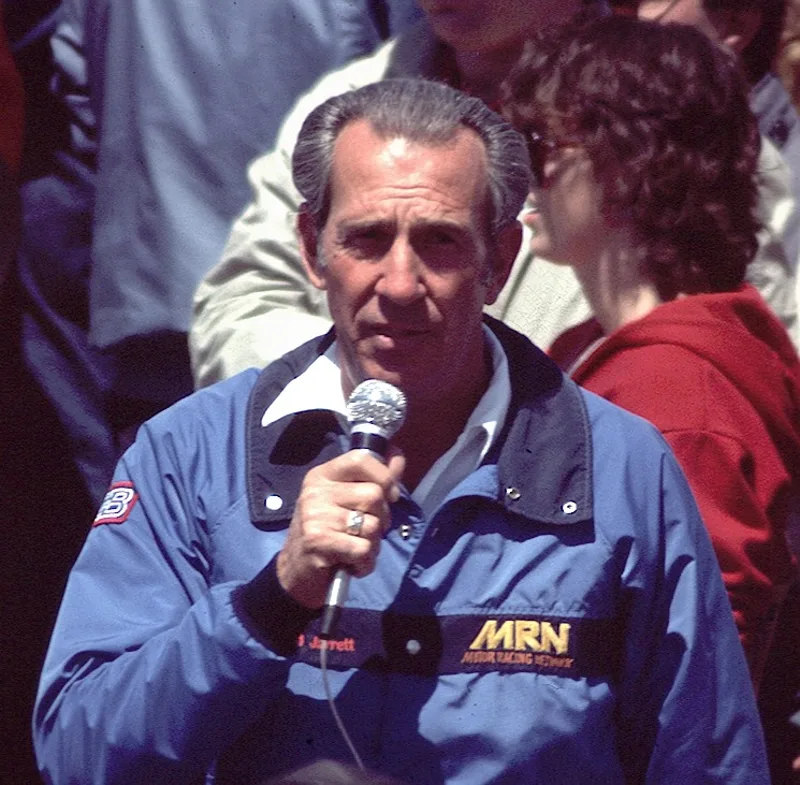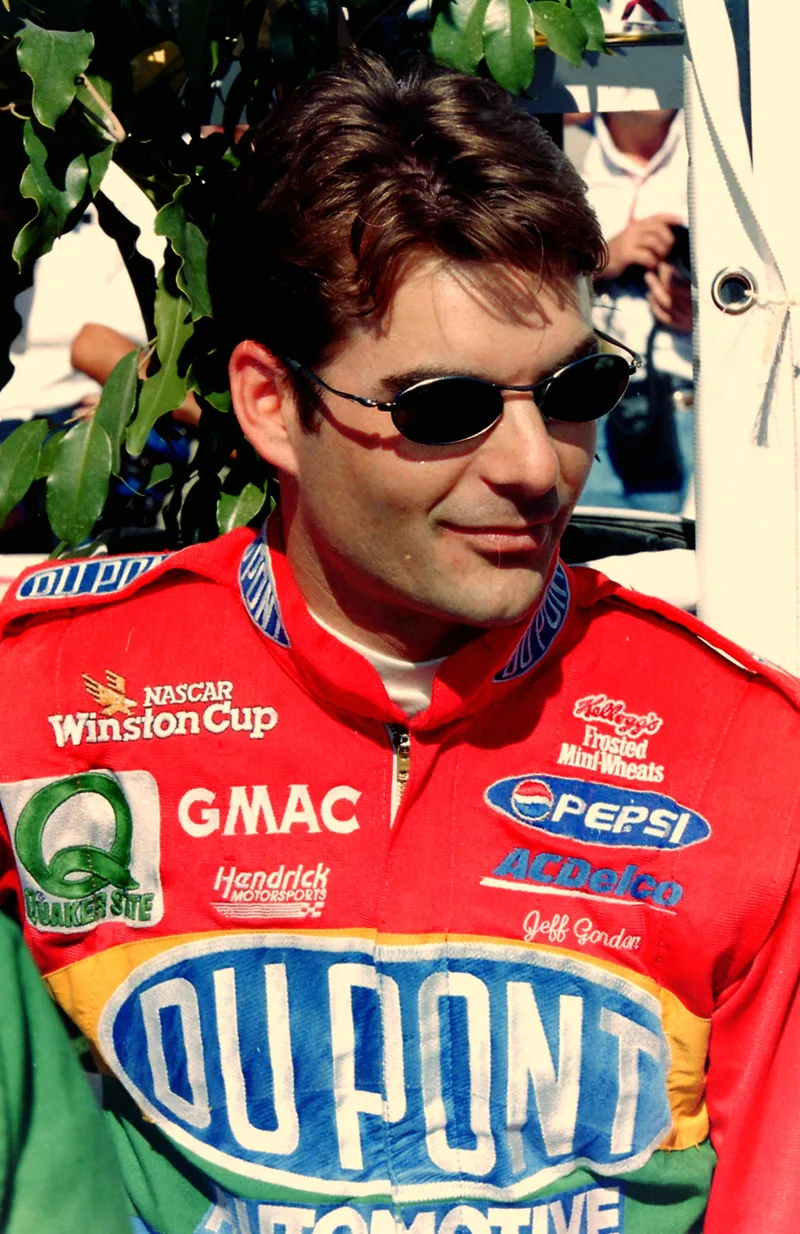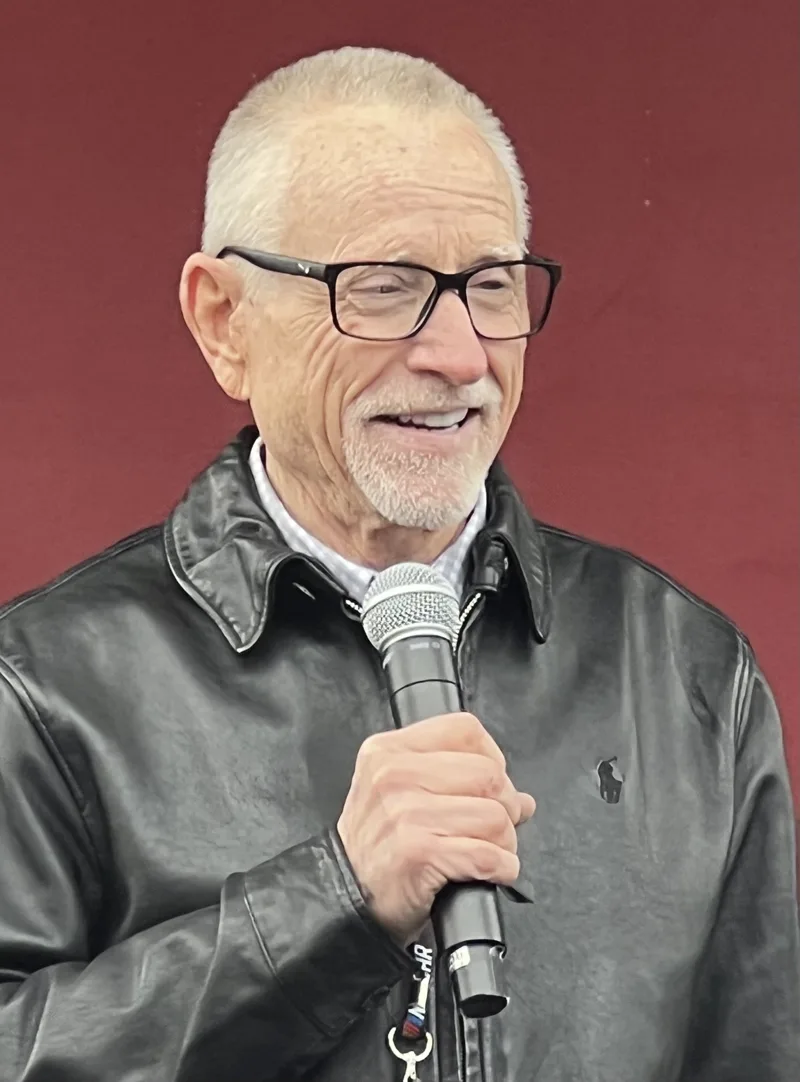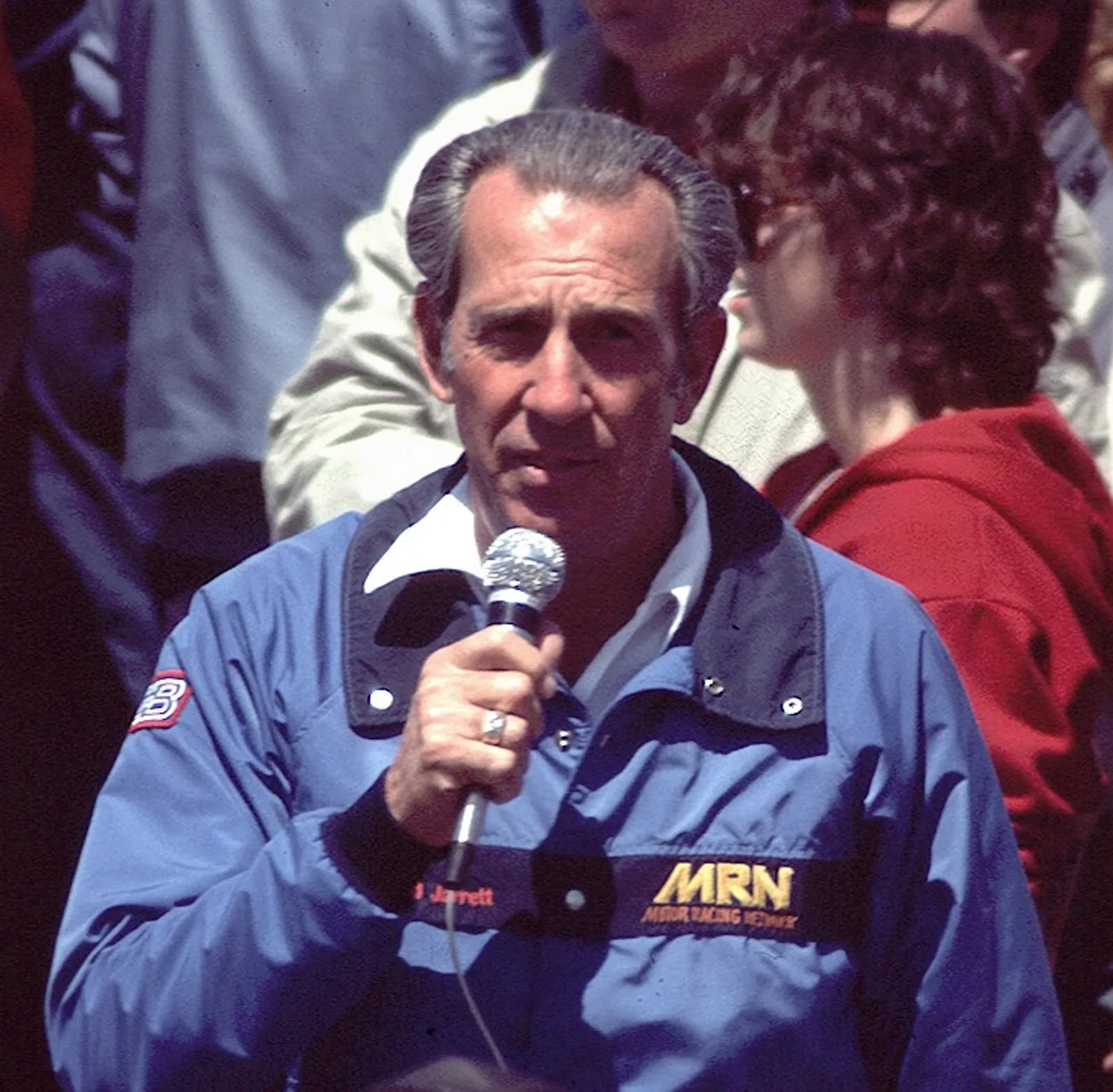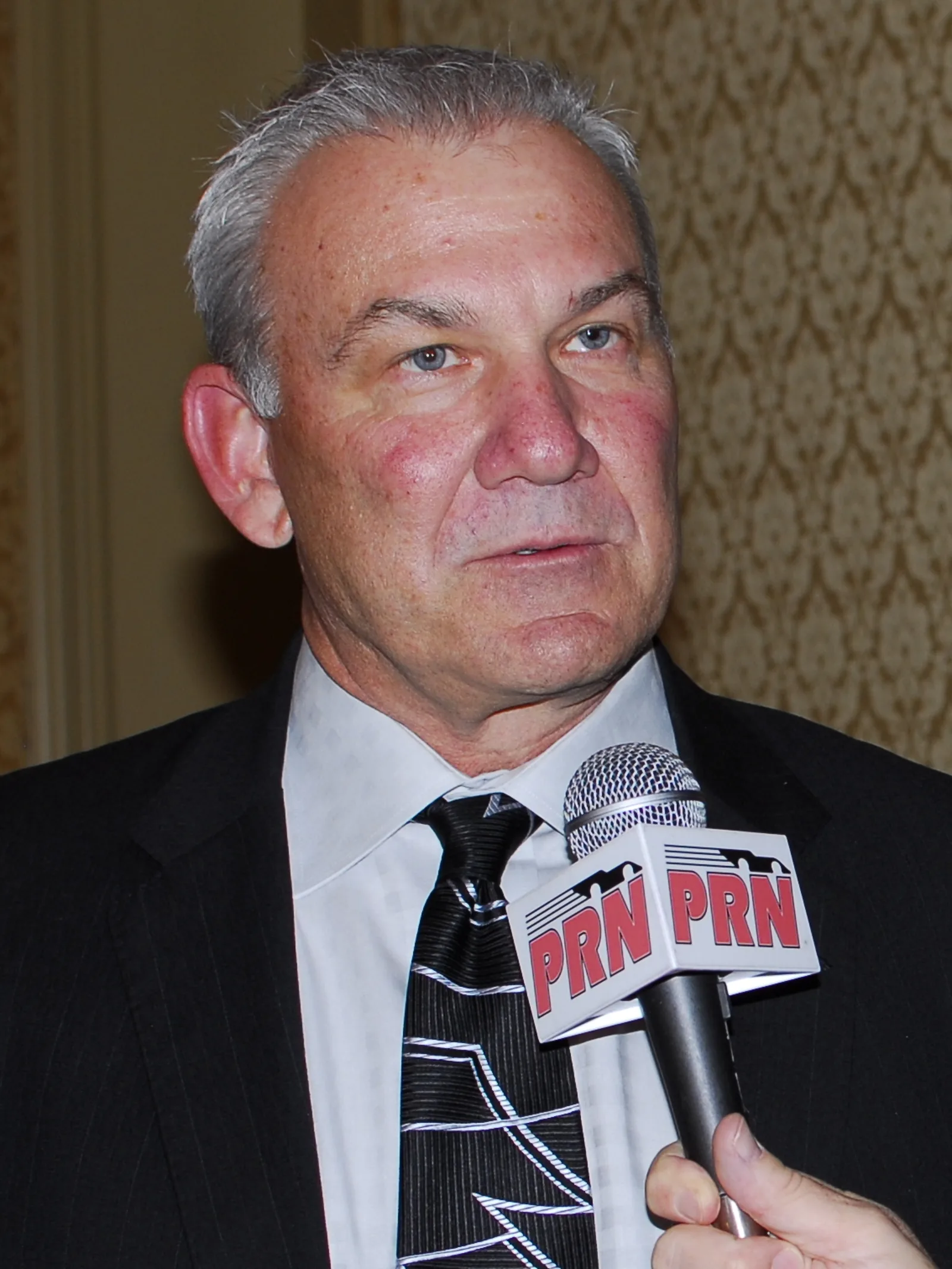
A North Carolina driver who won the Winston Cup title in 1999 and later became one of NASCAR's most familiar television voices.
Dale Jarrett is an American former NASCAR driver who won the Winston Cup championship in 1999 and the Daytona 500 three times. He drove from 1984 to 2008 before becoming a racing analyst, first for ESPN and then for NBC Sports. He is the son of two-time champion Ned Jarrett.
Dale Jarrett's career produced a 1999 Winston Cup title and three Daytona 500 victories, and afterwards he became one of NASCAR's best-known television voices. His driving career ran from 1984 to 2008, with spells at Joe Gibbs Racing and Robert Yates Racing that produced most of his biggest moments.
Jarrett's path was shaped by his family, his early years at a local speedway and a long Busch Series apprenticeship. This article follows his career from the Hickory short tracks to the 1999 title, the lean years that followed and his move into the broadcast booth.
Who is Dale Jarrett?
Dale Arnold Jarrett was born on 26 November 1956 in Conover, North Carolina. He drove in NASCAR's top series from 1984 until 2008, won the Daytona 500 three times and claimed the championship in 1999. Since leaving full-time driving he has worked as a racing analyst, first for ESPN and later for NBC Sports.
Ned and Martha Jarrett raised three children. Dale sits between his older brother, Glenn, and his younger sister, Patti. Ned competed in the Grand National ranks from 1953 to 1966 and took two titles, in 1961 and 1965. After retiring, Ned managed Hickory Motor Speedway and later became a broadcaster who called Cup races.
Three Daytona 500 wins and a 1999 title shaped a career that later moved into the broadcast booth.
How did Jarrett choose racing over golf?
As a teenager Jarrett was a capable golfer. He led the Newton-Conover High School golf team to three conference titles and earned the school's top athlete award in his final year. He declined a full golf scholarship at the University of South Carolina, choosing instead to follow his father into racing.
Golf came to him by age twelve, and he also played football, basketball and baseball at school. After graduating in 1975 he went to work at Hickory Motor Speedway, where his father was the manager. He continued to play golf, but the job at the speedway set the course for what followed.
What did his first racing years at Hickory achieve?
Jarrett's first professional race came in April 1977 in the Limited Sportsman Division at Hickory. He started last in a 1968 Chevrolet Nova built by Andy Petree and Jimmy Newsome, finished ninth and realised racing was the work he wanted to do.
He stayed in the Limited Sportsman class for two years, then moved up to the Dash Series and later to the Late Model Sportsman Division, where he earned his first victory. Those seasons gave him long nights of short-track experience.
By 1982 he was competing for car owner Horace Isenhower in the Late Model Sportsman Series. He collected fourteen top-ten finishes, a best of third at Hickory and sixth in the standings. In 1983 he earned four poles and seventeen top-five finishes, which put him fifth in the points.
How did his Busch Series career develop?
Jarrett's first Busch Grand National victory arrived in 1986 at Orange County Speedway, near Rougemont, North Carolina. A second win followed at Hickory in 1987, and the best run of his Busch years came in 1990 and 1991, when he won at Bristol, Charlotte, Rockingham and Darlington twice.
Ervin, the crew chief, and Ron Hutter, the engine builder, were the people behind those wins. He retired from the series with eleven wins.
In 1984 he had sponsorship from Econo Lodge, Valvoline and Budweiser, and that year he produced six front-row starts and nineteen top-ten finishes. His fourth place in the Busch Grand National standings that season was his career-best finish in the series.
How did his Winston Cup seasons compare?
His Winston Cup career began at Martinsville in 1984, in a No. 02 Chevrolet for Emanuel Zervakis, when he qualified 24th and finished 14th. He ran two more races that year and then built a schedule across several teams. The table below highlights his notable seasons and where they placed him in the points.
| Season | Team | Notable result |
|---|---|---|
| 1987 | Eric Freelander | 26th in points, runner-up for Rookie of the Year |
| 1988 | Cale Yarborough and others | 23rd in points, eighth at Riverside |
| 1990 | Wood Brothers Racing | 25th in points after missing the first five races |
| 1991 | Wood Brothers Racing | First Cup win at Michigan, 17th in points |
| 1992 | Joe Gibbs Racing | Two top-five finishes, 19th in points |
| 1993 | Joe Gibbs Racing | Daytona 500 win, fourth in points |
| 1995 | Robert Yates Racing | First Cup win at Pocono, 13th in points |
| 1996 | Robert Yates Racing | Daytona 500 win, third in points |
| 1997 | Robert Yates Racing | Seven wins, runner-up to Jeff Gordon |
| 1998 | Robert Yates Racing | Three wins, third in points |
| 1999 | Robert Yates Racing | Champion, four wins, 24 top-fives |
| 2000 | Robert Yates Racing | Daytona 500 win, fourth in points |
| 2004 | Robert Yates Racing | 15th in points, first winless season since 1992 |
| 2006 | Robert Yates Racing | Best finish fourth at Kansas, 23rd in points |
Those seasons were uneven, but the trajectory was clear. Jarrett moved from modest midfield results with unsponsored cars to regular top-five finishes, and the Yates years gave him the equipment to challenge for titles in a way his earlier teams could not.
What happened in the 1993 Daytona 500?
Jarrett won the 1993 Daytona 500 after a long battle with Dale Earnhardt, a contest that became known as The Dale and Dale Show. It was his first win in the race and it came in the first season of his time at Joe Gibbs Racing, a young organisation that was still finding its feet.
He had finished 1992 with two top-five finishes but had dropped to 19th in points, so the Daytona win was a major turnaround. He went on to record thirteen top-five finishes in 1993 and finished fourth in the standings.
The season was not without friction. In a spring race at Bristol, Jarrett hurled his helmet at Bobby Hillin Jr.'s car after Hillin had hit him while a lap down.
What did the Robert Yates years deliver?
Jarrett signed with Robert Yates in 1995, driving the No. 28 Texaco Ford while Ernie Irvan recovered from injury. With engines supplied by Yates and sponsorship from Mac Tools, he scored four Busch Series wins that season, although one was later disqualified for an unapproved engine part. His first Cup victory for Yates came at Pocono.
A planned Hooters sponsorship for a second Yates car fell through, so Yates ran the No. 88 car full-time instead, with Ford's Quality Care Service and Ford Credit divisions taking on the sponsorship. In 1996 Jarrett won the second Daytona 500 of his career, the Coca-Cola 600, the Brickyard 400 and another Michigan race, and kissing the bricks at Indianapolis began a custom that other teams still follow.
How did he win the 1999 championship?
Jarrett took the lead in the 1999 standings after his first win of the year at the Pontiac Excitement 400, and he kept it for the rest of the season. He finished 201 points clear of Bobby Labonte, adding four victories, 24 top-fives and a record 29 top-tens for the modern era.
The title run came after he had struggled with gallbladder problems in 1998, which kept him out of an exhibition race in Japan. He had an operation during the offseason and returned for 1999 in better shape. His average finish of 6.76 across the year underlined how consistent the season was.
The four wins came at Richmond, Michigan, Daytona and Indianapolis.
That same year he left the Busch Series, having won eleven races there. He also became a part-time team owner, partnering with NFL quarterback Brett Favre to field a No. 11 Rayovac Ford driven by his son Jason. Kenny Irwin Jr. and Steve Grissom also drove for the operation during its early seasons.
How did his later Cup years play out?
After the 1999 title, Jarrett won the Daytona 500 for a third time in 2000, but Ford reduced its role and United Parcel Service became his primary sponsor. His results slipped to fourth in the standings, and he won only one other race that season.
The sponsor story of those years was unusual. United Parcel Service signed on as his primary backer and then ran a promotional campaign that tried to persuade him to take the wheel of its well-known brown delivery truck in a race.
Then, in 2001, he won at Darlington, Texas and Martinsville and briefly traded the points lead with Jeff Gordon, but he finished fifth and suffered a concussion after a heavy impact at the new Kansas Speedway. In 2002 he reunited with crew chief Todd Parrott and won at Pocono and Michigan to recover to ninth in the standings.
His 2004 season produced fifteenth in points and no wins, the first winless year since 1992. In 2005 a Busch Series incident with Shane Hmiel at Bristol led to a NASCAR fine for Hmiel, and he won for the last time in Cup at Talladega, finishing fifteenth in points.
In 2006 UPS followed him to Michael Waltrip Racing, where he drove a Toyota with the No. 44 on it. His best finish that year was fourth at Kansas, and he ended 23rd in points, the last of his seasons with Yates.
What did his final seasons as a driver look like?
Jarrett's last full seasons were marked by penalties, provisional rules and a changing team structure. In 2007 he took the pole for the Budweiser Shootout, but a fuel additive penalty against his team pushed him beyond the top 35 of the owner standings, leaving him to rely on past-champion provisionals.
He started 43rd in the 2007 Daytona 500 and finished 22nd. He missed twelve races that year because he could no longer rely on provisionals. In 2008 he stepped away from points racing following the Food City 500.
At the pre-race drivers' meeting for the 2008 Food City 500, he thanked his competitors and told them to enjoy the sport. He then handed the No. 44 ride to David Reutimann and turned his attention to television.
How did his broadcasting career develop?
Jarrett first joined ABC's Nationwide Series coverage as an announcer in 2007, and in 2008 he became a permanent member of ESPN's NASCAR team. He succeeded Rusty Wallace as the lead racing analyst, a role that gave him a central place in the network's coverage.
In 2015 he moved to NBC, where he worked on the network's NASCAR coverage.
How is his career honoured today?
Jarrett was named one of NASCAR's 50 Greatest Drivers in 1998, and he won the ESPY for Best Driver in 2000. He was inducted into the NASCAR Hall of Fame in 2014 and named one of NASCAR's 75 Greatest Drivers in 2023.
He also received the 2000 Best Driver ESPY Award, and the NASCAR Hall of Fame recognised him in its 2014 class. He also received the Richard Petty Driver of the Year award in 1997 and 1999, while the Motorsports Hall of Fame of America recognised him in 2025. The Dale Jarrett Foundation carries his name.