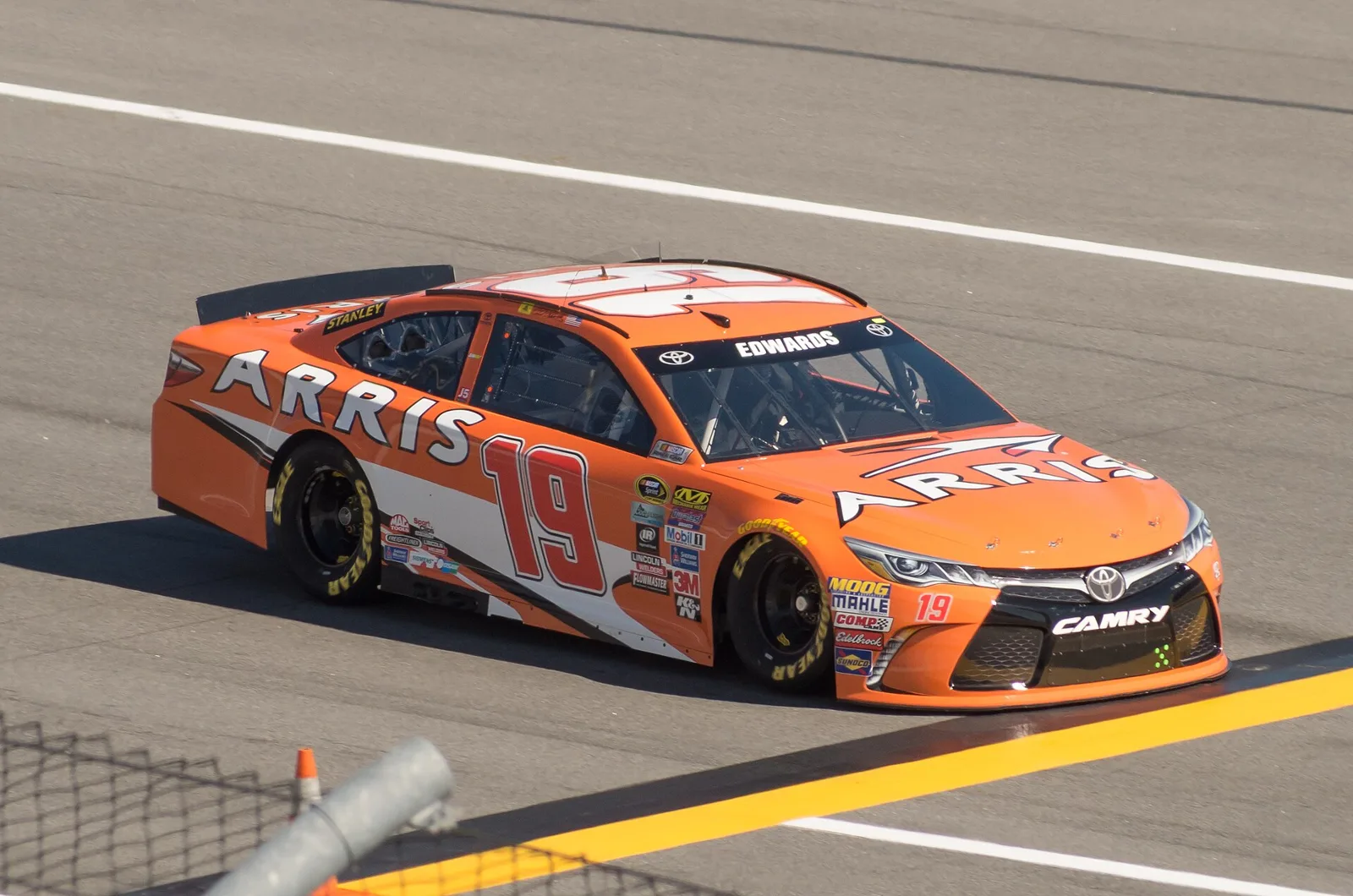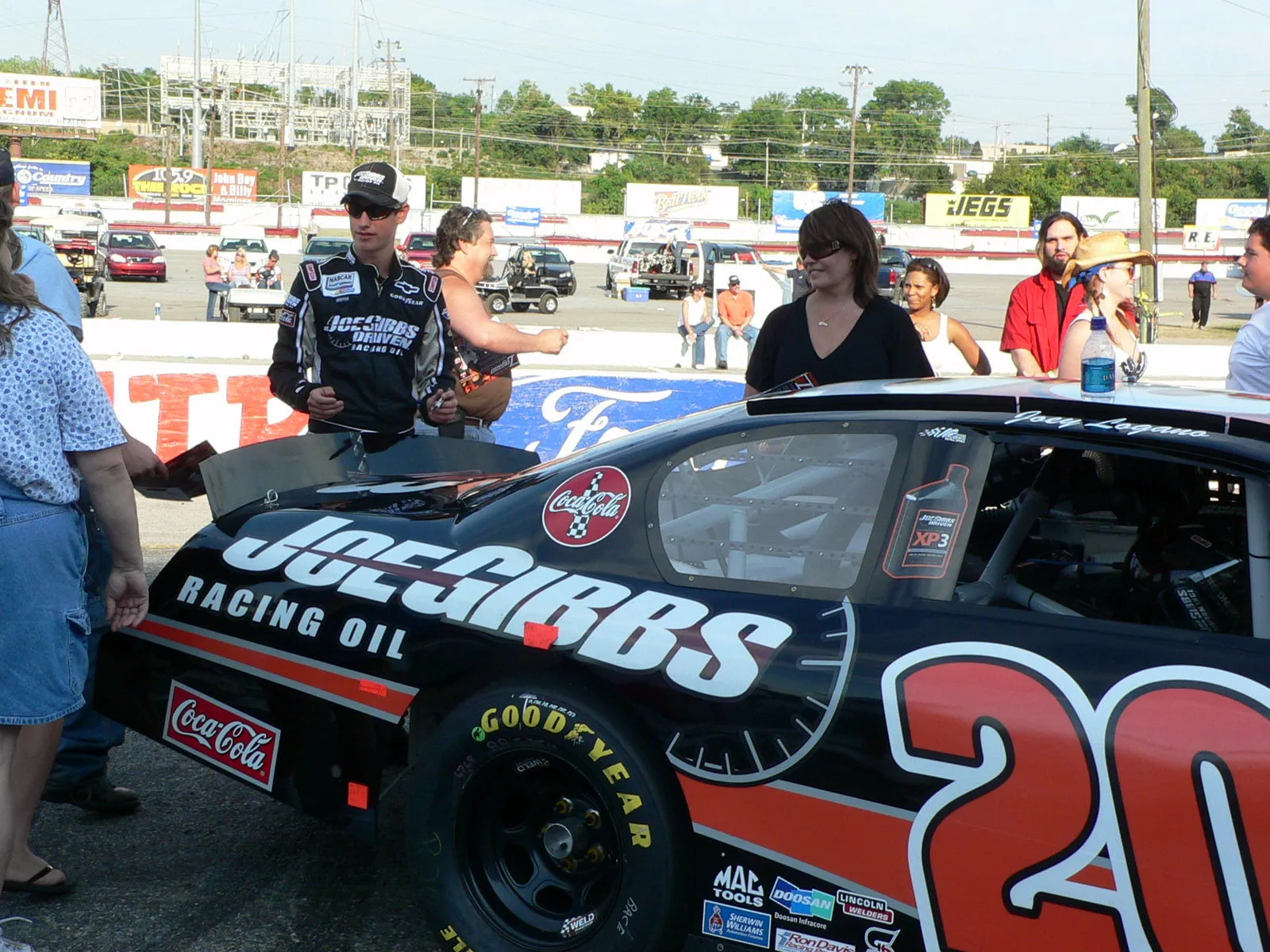
Founded by the former football coach Joe Gibbs in North Carolina, the team won three titles with General Motors cars, switched to Toyota in 2008 and took the first Toyota Cup title in 2015.
Joe Gibbs Racing is a NASCAR organisation founded in 1992 in North Carolina by Joe Gibbs. It won three titles with GM cars, switched to Toyota in 2008, and has five Cup Series championships among its honours.
Joe Gibbs Racing is an American professional stock car organisation founded by the former Pro Football Hall of Fame coach Joe Gibbs. It was founded in Huntersville, North Carolina, and it has won five Cup Series championships, four O'Reilly Auto Parts Series titles and one ARCA Series championship. Its origins trace back to Gibbs's work with Don Meredith, who is now the team's executive vice president, and construction of the Huntersville facility began in 1998.
What is Joe Gibbs Racing?
Joe Gibbs Racing, or JGR, was run by Gibbs together with his son J. D. Gibbs, who was the team's president until his death in 2019. J. D. Gibbs had been named team president in 1997. The team has grown from a single-car effort into one of the largest operations in NASCAR, with full-time entries across the Cup and O'Reilly Auto Parts Series.
The team fields four full-time Cup entries, with Denny Hamlin, Chase Briscoe, Christopher Bell and Ty Gibbs at the wheel of Toyota Camrys. The line-up mixes experienced drivers such as Hamlin with younger talent such as Gibbs. Its O'Reilly Auto Parts Series programme runs four full-time Toyota GR Supras, and its driver development work has produced some of the sport's best-known names.
A team built on General Motors titles that moved to Toyota, won the 2015 Cup title and turned its development programme into a pipeline of champions.
How did JGR win its early titles with General Motors?
For the team's first 16 seasons it ran cars from General Motors, winning three championships: two in Pontiac Grand Prix cars and one in a Chevrolet Monte Carlo. The team won more than 70 NASCAR races in Chevrolet and Pontiac equipment during that period.
The team's early days were built on a relationship with GM that began to look less secure in the late 2000s. Officials felt the organisation was treated as less important than other GM teams, including Hendrick Motorsports and Richard Childress Racing. Those concerns helped push the team towards Toyota.
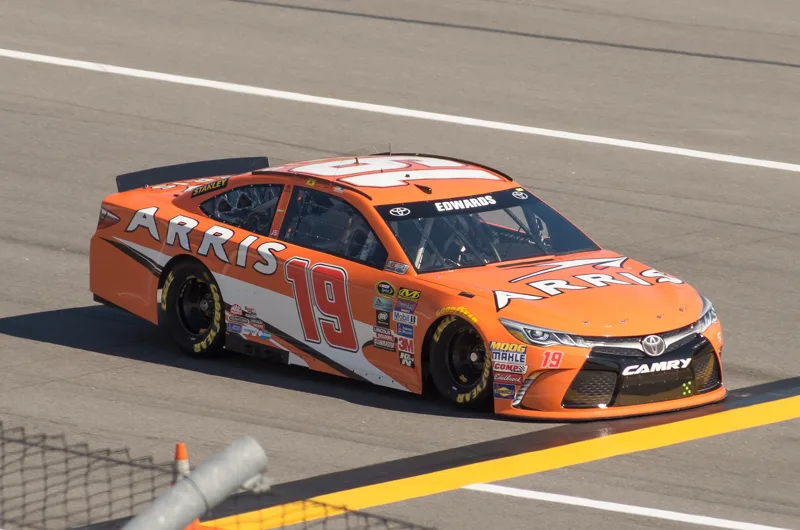
The team's two-car operation began in 1999 with Tony Stewart's No. 20 Home Depot car. In 2005 the No. 11 FedEx car arrived for Denny Hamlin, owned by Coy Gibbs, and in 2015 the No. 19 car was added for Carl Edwards, who followed former Roush Racing teammate Matt Kenseth to JGR.
Why did JGR switch from GM to Toyota?
In September 2007 team officials announced that they would switch to Toyota, which had just entered the Cup Series that year, when their General Motors contract ended at the close of the season. Joe Gibbs said Toyota offered the team resources and options that it could not afford at GM.
The switch began in the 2008 season, and JGR was among the first major teams to race Toyota in the Cup Series. Toyota brought the team its first Premier series championship in 2015, with Kyle Busch's victory. The move reshaped the organisation, which became one of the best-known Toyota operations in the sport.
In 2012 JGR closed its in-house Sprint Cup engine programme and merged with the California-based Toyota Racing Development, which provides engines to JGR and to 23XI Racing. That merger made Toyota Racing Development central to the team's engine work. The team also builds engines for its own Xfinity Series operations and for the ARCA Menards Series.
How did the development programme produce drivers?
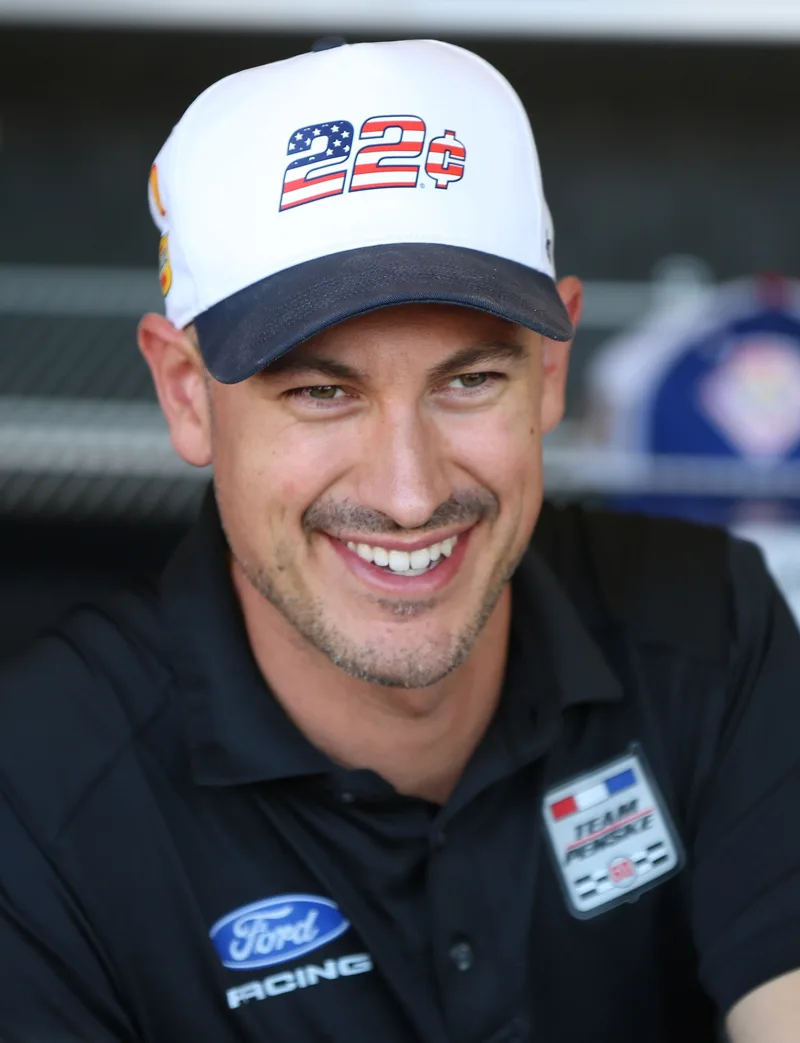
The team has a driver development programme that groomed future Cup winners Joey Logano and Aric Almirola. Logano also won the Camping World East Series title with JGR, now known as the ARCA Menards East Series, and the team won the 2021 ARCA Menards Series championship with Ty Gibbs.
Reggie White, a former NFL player, joined the team in 2004 on a diversity initiative. Almirola, Marc Davis and Bubba Wallace were among the drivers it fielded, and the scheme served as the template for NASCAR's Drive for Diversity.
Development drivers also raced in the ARCA series from 2004 and 2005 with the No. 2 car, run with Shaver Motorsports. Denny Hamlin finished third in the 2004 season finale at Talladega, and J. J. Yeley and Aric Almirola also ran as part of their development deals.
How did the truck and ARCA programmes work?
Between 2000 and 2002 Joe Gibbs ran trucks numbered 20 and 48 in the Craftsman Truck Series, driven by his sons Coy and J. D. Gibbs. Coy ran 12 races in 2000 and then full seasons in 2001 and 2002, while J. D. ran eight races across the three years. The programme gave the family hands-on experience in running a team.
From 2004 to 2006 JGR drivers raced in the Truck Series for Morgan-Dollar Motorsports, and from 2010 through 2022 they competed through Kyle Busch Motorsports, which used JGR-built engines. That partnership ended after the 2022 season when Busch left the organisation. Earlier, in 2006, JGR contracted Spears Motorsports to field Aric Almirola in its No. 75 truck for his rookie Truck season, and he finished 18th in points after three top-tens.
The No. 18 ARCA car became the team's proving ground. Riley Herbst drove it in 2017 and 2018, while Ty Gibbs won six races in 2020 and ten of 20 in 2021 on his way to the title. William Sawalich won the ARCA East championship in 2023 and again in 2024. JGR announced a full-time car for Herbst on 15 December 2016, and Matt Tifft ran the 2017 opener at Daytona because Herbst was not yet eligible. In 2020 Gibbs made 16 starts and won six of them, with Herbst taking the remaining four, and he finished fifth in the driver's standings despite missing four races. In 2021 he won ten of the 20 races and finished in the top three 17 times on the way to the title, and he also won standalone ARCA West and East events at Phoenix and Dover.
What controversies has JGR faced?
In 2008 NASCAR found that the throttle pedals on both JGR cars at the Michigan race had been manipulated with magnets a quarter-inch thick, to stop the accelerator from going fully open. Seven crew members were suspended indefinitely, and two drivers and the team were penalised 150 points apiece. NASCAR had earlier made a rule change aimed at Toyota after the 2008 Chicagoland race, requiring a smaller restrictor plate to cut an estimated 15 to 20 horsepower. The magnet discovery came after the August 16, 2008 Nationwide Series race at Michigan, when NASCAR used a dynamometer to test several manufacturers' cars.
Joe Gibbs issued a statement taking full responsibility and promising to investigate how the incident happened. The episode remains one of the most serious penalties in the team's history. The team also drew criticism over the closure of smaller teams that had formed technical alliances with it and with Toyota Racing Development, including Furniture Row Racing after 2018 and Leavine Family Racing in 2020.
In February 2026 JGR filed suit against a former senior official, Chris Gabehart. The team says he took confidential material and then joined Spire Motorsports in a leadership role. Gabehart had served as the team's competition director, a role that gave him access to its internal workings. The team is seeking damages of at least $8 million, and it added Spire as a defendant days later. The team also asked for a temporary restraining order that would stop Gabehart working in a comparable competitive role for Spire during the non-compete period.
What is the motocross side of the business?
In 2008 Gibbs branched into motorcycle racing, forming the JGRMX team to compete in the AMA motocross and Supercross championships. The team made its debut in January 2008 at the Anaheim Supercross, and it has been managed by Gibbs's son Coy.
James Stewart replaced Justin Brayton in 2012 and won the Oakland and Daytona Supercrosses for the team, before the two parted ways in May 2012. Justin Barcia won two nationals in 2015, and in 2019 the line-up included the two-time Supercross champion Chad Reed. Josh Grant won the opening Supercross round at Anaheim in 2009, and Davi Millsaps finished second in points in 2012. In 2017 the team switched from Yamaha to Suzuki and added a 250cc effort, and for 2018 it became the official factory Suzuki programme.
What happened to ownership and the family?
In 2021 JGR formed a technical alliance with 23XI Racing. In June 2023 it sold minority stakes to Harris Blitzer Sports and Entertainment, founded and managed by Josh Harris and David Blitzer, and to Arctos Partners. Gibbs became a limited partner of HBSE in the transaction.
J. D. Gibbs had begun treatment for neurological symptoms in 2015, and he died in January 2019 after complications of a degenerative neurological disease. A memorial service was held on 25 January 2019.
What are the key results?
| Series | Result | Year |
|---|---|---|
| NASCAR Cup Series | Championship, Pontiac Grand Prix | Early years |
| NASCAR Cup Series | Championship, Chevrolet Monte Carlo | Early years |
| NASCAR Cup Series | First Toyota Premier series title, Kyle Busch | 2015 |
| Camping World East Series | Championship, Joey Logano | Early years |
| ARCA Menards Series | Championship, Ty Gibbs | 2021 |
| ARCA Menards Series East | Championship, William Sawalich | 2023 |
| ARCA Menards Series East | Second consecutive championship, William Sawalich | 2024 |
| ARCA Menards Series | Combination race win, Brent Crews at Phoenix | 2025 |
What is the legacy of Joe Gibbs Racing?
JGR's legacy is a long run of titles across two manufacturers and several series, built on a team culture that combined winning with driver development. Its record spans Cup, O'Reilly, ARCA and development titles, which together make it one of the broadest championship records in NASCAR. Its move from GM to Toyota shows how a team can change its partners without losing its identity.
The organisation's ownership changes in 2023 and its ongoing legal fight in 2026 mark a new chapter. In 2026 the team also shuttered its ARCA Menards Series programme. The next period will test whether the team can keep its strong record while the sport's business structure evolves. Few teams in the sport have kept a family at the centre of operations for so long.