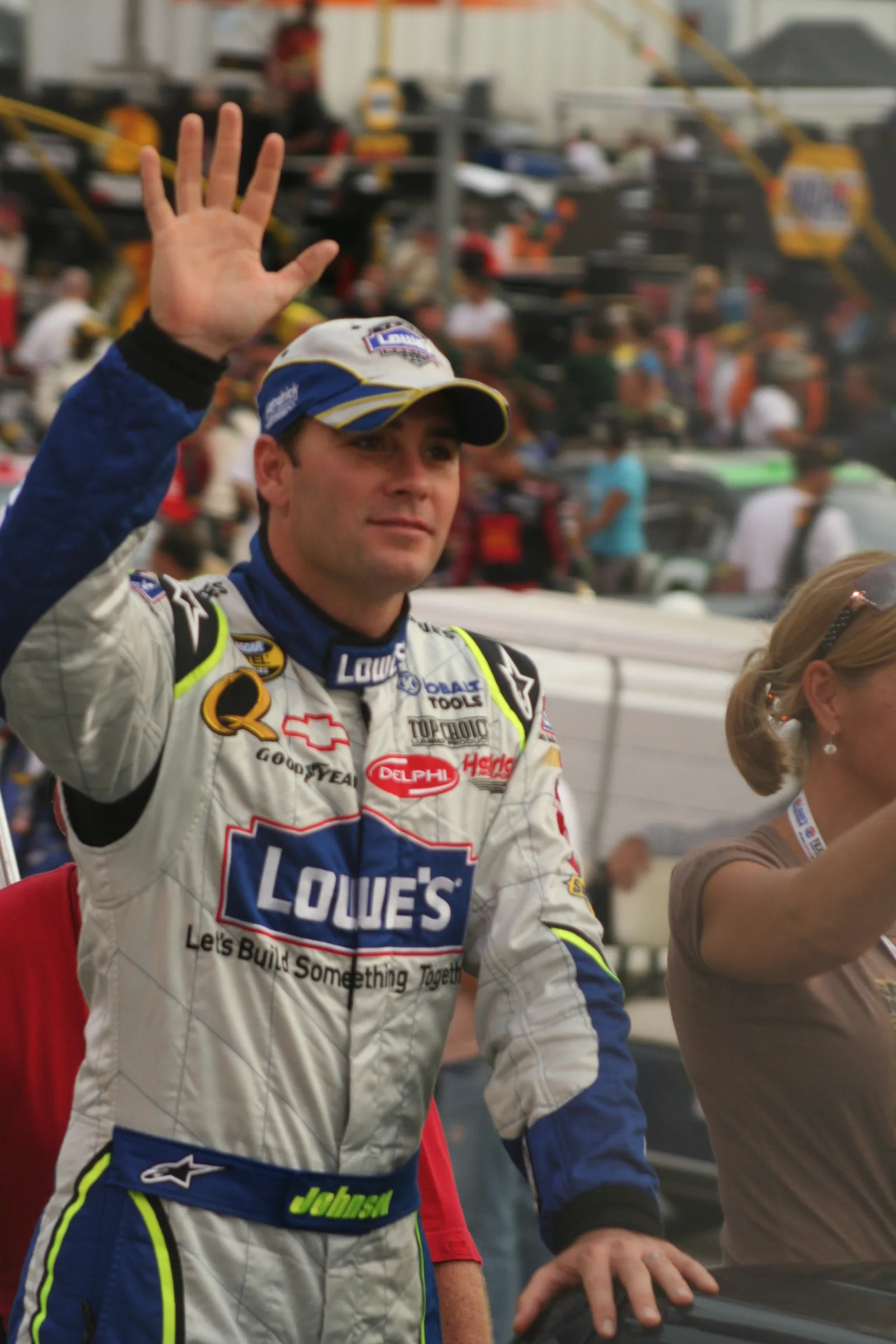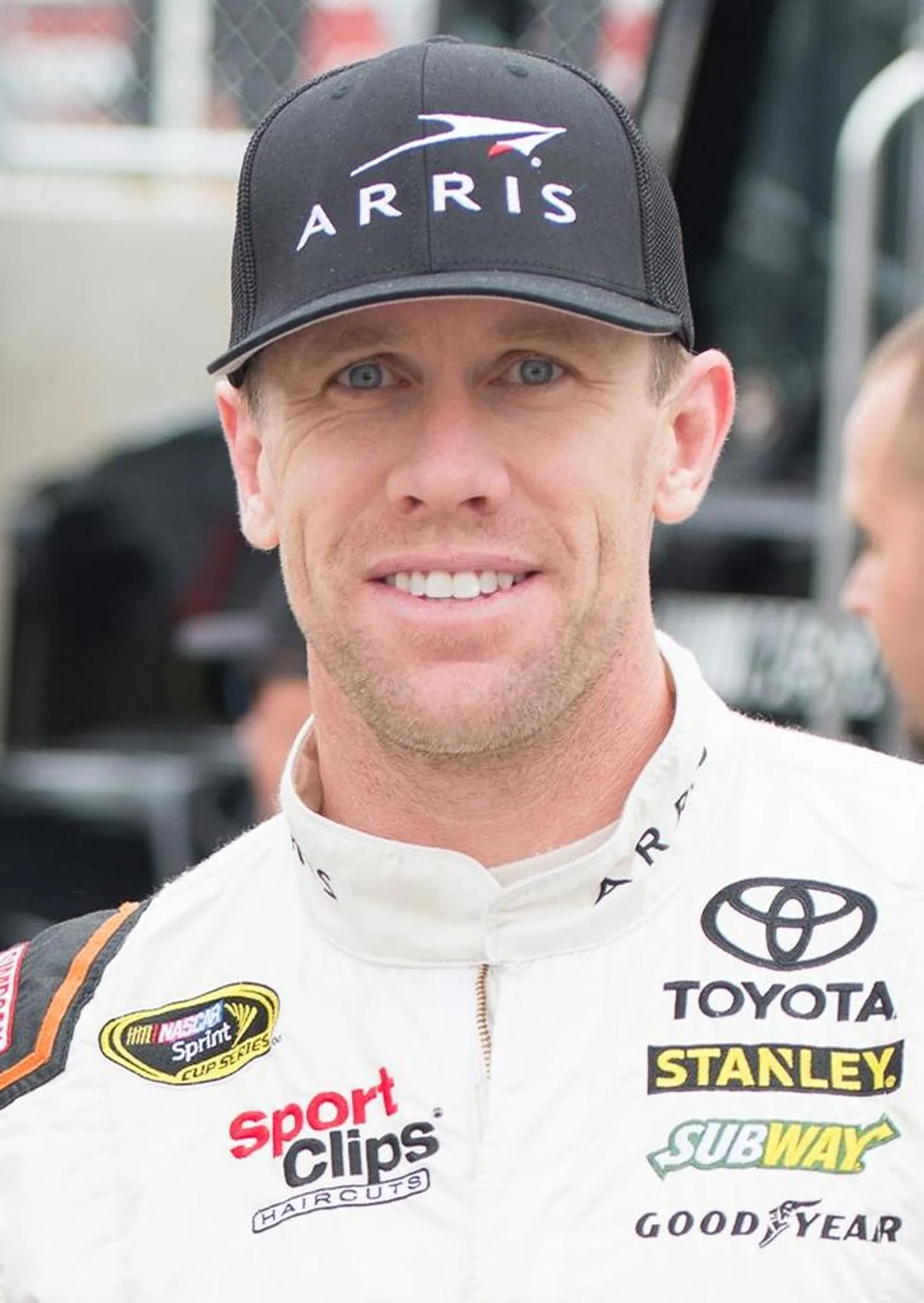
A Missouri driver whose Roush Fenway years produced a Busch title, a near miss at the Cup championship and a signature victory celebration.
Carl Edwards is a former NASCAR driver who ran full-time in the Cup Series from 2005 to 2016. He won the 2007 Busch Series crown and was a Cup runner-up in 2008 and 2011. He retired from full-time racing in January 2017 after joining Joe Gibbs Racing in 2015.
Carl Edwards was one of the most recognisable NASCAR drivers of the 2000s and 2010s, known for his aggressive driving and for a victory celebration that made him a crowd favourite. He came close to winning the Cup championship twice, and he won the Busch Series title in 2007 before his full-time Cup career ended in 2016.
Edwards spent most of his career with Roush Fenway Racing before a late move to Joe Gibbs Racing. The following sections follow that path from short-track starts to championship battles. His record covers the Busch Series years, the big Cup seasons of 2008 and 2011, the crashes that tested him and the years of building a profile beyond the track.
Who is Carl Edwards?
Carl Michael Edwards Jr. was born on 15 August 1979 in Columbia, Missouri, and he retired from full-time NASCAR racing in January 2017. He claimed the 2007 NASCAR Busch Series crown, and in 2008 he was runner-up in the Cup standings. He later worked as an analyst, and in 2025 the NASCAR Hall of Fame honoured him.
Edwards graduated from Rock Bridge High School in Columbia in 1997. He enrolled at the University of Missouri for three semesters of engineering, but he found that university study was getting in the way of his racing ambitions. While pursuing his goals he worked as a substitute teacher.
Two near misses at the Cup title, a Busch crown and a signature backflip kept Carl Edwards in fans' memories.
How did he reach NASCAR's top series?
Edwards' breakthrough came in 2002, when he drove seven Craftsman Truck Series races for MB Motorsports. His best finish was eighth at Kansas Speedway. He also made one Busch Series start for Bost Motorsports at Gateway International Raceway, finishing 38th, and that run was enough to impress Jack Roush.
In 2003 Roush signed him as a full-time Truck Series driver in the No. 99 Ford F-150. He won at Kentucky Speedway, took three victories in the season and won Rookie of the Year honours. He finished eighth in the points, and in 2004 he added three more wins, including the season-opening race at Daytona International Speedway, which lifted him to fourth in the standings.
His Cup debut came in August 2004 at Michigan International Speedway, where he replaced Jeff Burton in the No. 99 Ford Taurus. He finished tenth in that race and continued to drive the car for the rest of the season, which set up his move into full-time competition the following year.
What did his breakout 2005 season deliver?
In 2005 Edwards committed to running the full Cup and Busch schedules. On 19 March he won the Aaron's 312 at Atlanta Motor Speedway, his first Busch Series win. The following afternoon he won the Golden Corral 500 at that same venue, edging out Jimmie Johnson by a mere two hundredths for his first Cup win.
He became the first driver to win his first Busch and Cup races in the same weekend, and he joined the small group of eleven drivers to have won in all three of NASCAR's top series. His Busch Series season ended in a rookie title, and his Cup season finished third in the points, with teammate Greg Biffle winning the tiebreaker for second.
The year also included a rain-shortened Busch race at Nashville that cost him a lot of points. Edwards had persuaded Jack Roush to hand the wheel to Hank Parker Jr., but Parker finished 20th and Edwards scored nothing, which later dropped him to fourth in the standings.
What did his 2006 and 2007 seasons show?
The 2006 season tested his endurance. Edwards finished in the top ten twenty times, yet he won no races, and a wreck at Richmond dropped him to 35th, three laps down. That result cost him a place in the Chase, the playoff format that decided the title, and it showed how fine the margins were.
Recovery came in 2007. Edwards broke a 52-race winless streak with a victory in the Citizens Bank 400, then suffered a dislocated thumb in a multi-car crash during a Nebraska late model event. He returned to win at Bristol, and he won again at Dover during the Chase before finishing ninth in the final standings.
How did his Cup seasons compare year by year?
| Season | Team | Notable result |
|---|---|---|
| 2005 | Roush Fenway Racing | Four Cup wins, third in points |
| 2006 | Roush Fenway Racing | Winless, missed the Chase |
| 2007 | Roush Fenway Racing | Three wins, ninth in points |
| 2008 | Roush Fenway Racing | Nine wins, second in points |
| 2009 | Roush Fenway Racing | Winless, second-best finish at Pocono |
| 2010 | Roush Fenway Racing | Phoenix win, fourth in points |
| 2011 | Roush Fenway Racing | Runner-up on a tiebreaker against Tony Stewart |
| 2012 | Roush Fenway Racing | Out of the Chase, his first absence since 2006 |
| 2013 | Roush Fenway Racing | Two wins, thirteenth in points |
| 2015 | Joe Gibbs Racing | Coca-Cola 600 and Darlington wins, fifth in points |
| 2016 | Joe Gibbs Racing | Three wins, Championship 4 finalist |
Why did the 2008 championship slip away?
The 2008 season was the strongest of Edwards' career. He opened the year with the Auto Club 500, followed it with the UAW-Dodge 400 at Las Vegas and took the points lead for the first time. Those early wins put him at the top of the standings.
NASCAR penalised his car after the Vegas race, when inspectors found an oil tank cover that was off. Edwards was docked driver points and lost the bonus points he had earned for the win. Crew chief Bob Osborne received a six-race suspension and a fine, and the team owner lost owner points.
Edwards kept winning through the summer, taking Pocono, Michigan and Bristol, and he finished with nine wins, the most of his career. He lost the Cup championship to Jimmie Johnson by 69 points. At Homestead Johnson finished fifteenth yet still took the title. The Chase format decided the outcome that year.
What happened in the 2009 Talladega crash?
In April 2009 Edwards was leading the final lap of the Aaron's 499 at Talladega when a move went wrong. Brad Keselowski touched him, and Edwards spun backwards and went airborne. Ryan Newman's car struck him, and his car flipped into the catch fence, injuring eight fans.
Edwards climbed out and ran across the finish line on foot, to the cheers of the crowd. Although he crossed the line on foot, he was still credited with a DNF. The crash remains one of the most dramatic moments of his career.
That season was winless in the Cup series, but he had a strong year in the Nationwide Series. He won five races and finished second in the standings, 210 points behind champion Kyle Busch. His best Nationwide result was at Montreal, where he passed Marcos Ambrose on the final turn of the final lap. He has said that race remains his favourite winning performance.
How did his Roush years end?
In 2010 a retaliation against Brad Keselowski at Atlanta led to a three-race probation and a parked car for the rest of the race. The season improved after the Chicagoland race, and in November he won at Phoenix, breaking a long winless stretch that had started at the 2008 Ford 400.
The following week he qualified second at Homestead and dominated the race, finishing ahead of champion Jimmie Johnson. That late-season run took him to fourth in the points standings. The Roush team later pointed to Chicagoland as the turning point of the year. Edwards finished second to David Reutimann there, and his form rose after that, with poles at Watkins Glen and Richmond and laps led at Atlanta and Richmond.
In 2011 he took the Kobalt Tools 400 at Las Vegas and, later that spring, the NASCAR Sprint All-Star Race. The title battle came down to a tie with Tony Stewart, who won the tiebreaker on the basis of five wins to Edwards' one.
His last Roush win came at Sonoma in June 2014, a road course victory. Earlier that year he had nearly won the All-Star race from pole, but Jamie McMurray got by him with eight laps left. He had announced in August of that year that he was joining Joe Gibbs Racing for 2015.
What were his final seasons with Joe Gibbs Racing like?
At Joe Gibbs Racing Edwards drove the No. 19 Toyota, and in 2015 he won the Coca-Cola 600 after leading late, snapping a 31-race winless streak. He also won at Darlington and finished fifth in points. The team change gave him a fresh start after the Roush years.
In 2016 he won the Food City 500 from pole, leading 276 of 500 laps. At Richmond he got past teammate Kyle Busch on the final lap, the first such move in that track's history. He also took a rain-shortened event at Texas, which earned a Championship 4 berth at Homestead, where a restart contact with Joey Logano ended his title hopes.
He announced his retirement in January 2017, and Daniel Suarez replaced him. In his press conference he described the choice as a personal one, made without a fallback plan.
How did he build a career beyond the car?
Edwards was a popular figure in media. He appeared on The Price Is Right in 2009, presenting both showcases on one episode. He guest hosted WWE Raw on 8 February 2010, and he appeared briefly as a state trooper from West Virginia in Logan Lucky (2017).
He also raced in other formats. He won the 2007 Prelude to the Dream at Eldora Speedway, a dirt late model race organised by Tony Stewart, and at the 2008 Race of Champions he defeated Michael Schumacher in the individual event before losing to David Coulthard in the next round.
His celebration became part of his brand. He became known for backflipping off his car after wins, a style borrowed from sprint car driver Tyler Walker, and his backflips featured in Ford commercials in 2006.
How is his career remembered?
Edwards joined NASCAR's 75 Greatest Drivers list in 2023, and the NASCAR Hall of Fame honoured him in 2025. His Busch championship in 2007 was the last one awarded before the series was taken over by Nationwide sponsorship, and it remains a title he holds.
He remains a familiar voice in NASCAR coverage, now as an analyst for NASCAR on Prime Video. Earlier he had appeared as a guest analyst for NBC at a Richmond Xfinity race and for Fox at Texas. His legacy rests on his near misses, his celebrations, his 2025 Hall of Fame induction and his later media work. His son Michael joined Toyota Gazoo Racing as a development driver in 2026, which adds a new chapter to the family's motorsport story.