A Kansas City track that opened in 2001 after a string of lawsuits, then gained a casino and an infield road course on the way to today's schedule.
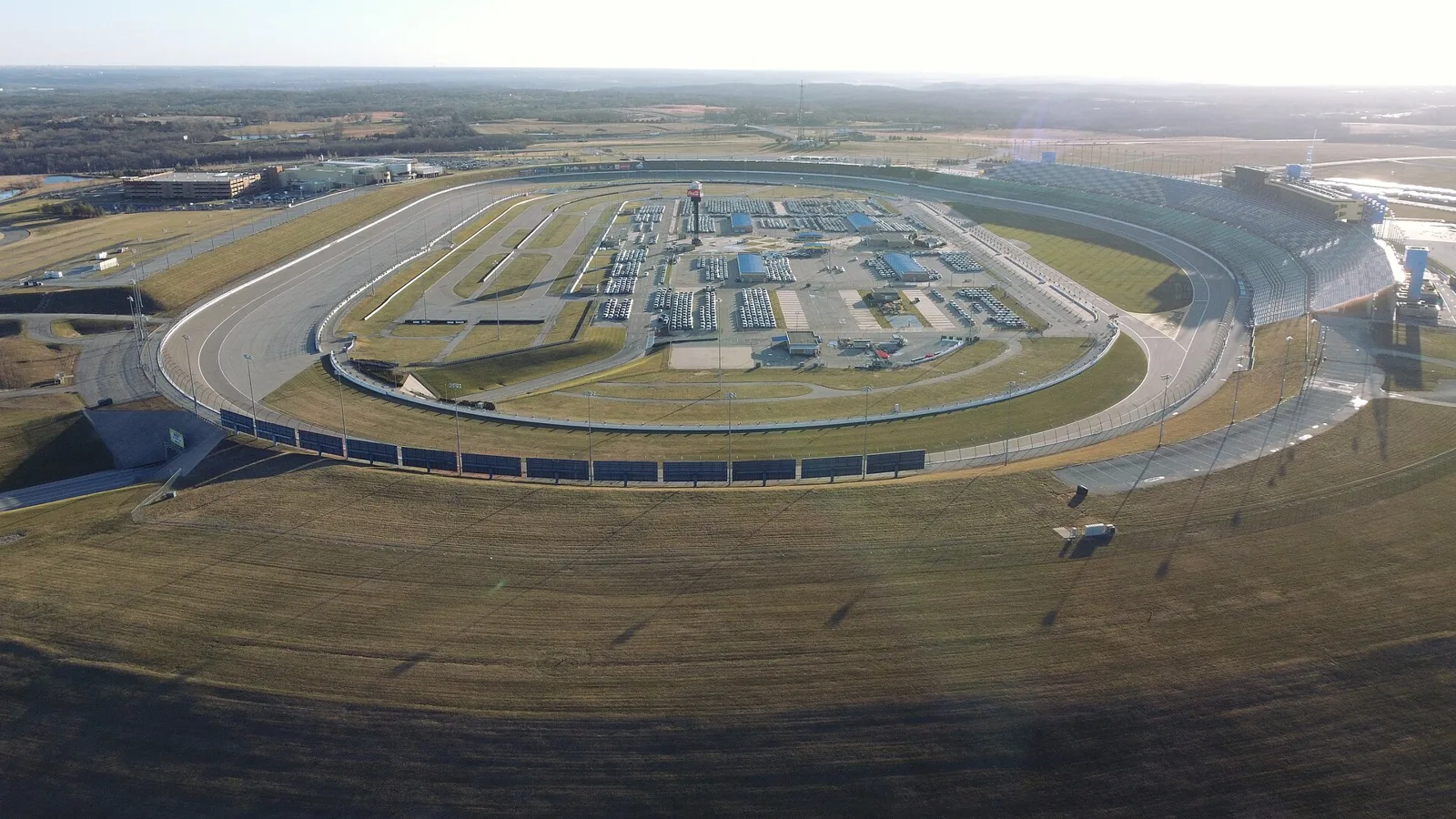
Kansas Speedway is a 2.414 km (1.500 mi) tri-oval in Kansas City, Kansas, that opened in 2001 and is owned by NASCAR. Its infield road course forms a roval, and the Hollywood Casino next door opened in 2012 after a long fight over licensing and design.
Kansas Speedway is a tri-oval in Kansas City, Kansas, that began racing in 2001 and is now owned by NASCAR. An infield road course lets the track run a roval, and a casino built beside the track has been part of the complex since 2012.
Where is Kansas Speedway and how is the track laid out?
The speedway sits in Wyandotte County beside major interstates that serve the Kansas City area. Its oval is 2.414 km (1.500 mi) long, and an infield road course of 3.814 km (2.370 mi) forms a roval when combined with the oval.
The turns use progressive banking, rising from 17 degrees on the bottom lane to 20 degrees on the top lane. The frontstretch is banked 10 degrees and the backstretch 5 degrees, so the straights are far flatter than the turns.
The infield road course has six turns and was built in 2012 as part of renovations. Grant Lynch, who was track president during construction, said the initial plans already included an infield road course, which was not finished until the later work.
Measurements vary by sanctioning body. IndyCar has used a length of 2.446 km (1.520 mi) for its races, which differs from the figure given above.
When the complex was built it covered 1,250 acres and was planned to hold around 75,000 people. Capacity has changed a great deal since then, which is covered in the renovation section below.
A track that faced a run of lawsuits before its first lap now runs two NASCAR weekends beside a casino and an infield road course.
How was the track planned and funded?
The International Speedway Corporation began searching for a Midwest site in December 1996 with a plan worth $100 million for a 120,000-seat track. After the Gardner, Kansas, bid was abandoned, the company settled on land near Interstate 70 and Interstate 435 in October 1997.
By April 1997 the company had narrowed 16 candidate sites. Sites in Platte County, Missouri and in Wyandotte County, Kansas, were among those still considered, and Gardner had been dropped after residents and officials there grew concerned about nearby housing and heavy traffic.
Projections were ambitious. A firm linked to the track predicted that a single event would bring $12.8 million in tax revenue, followed by $6.1 million in later years, and local sports officials forecast $2.28 billion in economic activity by 2003.
The Kansas City area was named the company's No. 1 choice in July 1997, and county officials entered negotiations by mid-August. Early plans called for 75,000 seats with room to expand to 150,000, and the budget was put at almost $200 million.
The project later rose to more than $252 million, and a $287 million budget was touted in November 1999. Kansas lawmakers approved a tax break that ran until 2027 unless the law changed, and Governor Bill Graves signed the bill after it cleared both chambers.
Support for the project was strong. Officials from both Kansas and Missouri lobbied the company, and the proposal drew relatively positive public reaction in the community.
Why did lawsuits delay construction?
The land purchase affected 146 residents and some property managers. Objections, including an April suit by 11 homeowners, pushed construction back and moved the opening date from 2000 to 2001, which started a run of legal setbacks before the track had even opened.
Officials in Wyandotte County and Kansas City offered incentives to persuade homeowners to move, and by July the government was considering eminent domain. On July 10 the state's highest court backed the company and the government in a unanimous ruling that relied on the Fifth Amendment.
Residents then appealed to the US Supreme Court on July 20. Nine days after that appeal, 13 property owners filed another suit over relocation packages, and $95 million of revenue bonds were held back until it was resolved.
In September a property owner, Donna L. Laughery, filed a further suit over the terms of incentive payments, and the state's top court declined to hear the case directly. A summary judgment was granted in late October.
The case was dismissed in November, and in January 1999 the company sold $95.6 million of bonds that restarted the project. Lesa France Kennedy, the company's executive vice president, did not state an opening date at that point.
Construction had started several months earlier, yet the company's Grant Lynch described the chances of opening in 2000 as 'very small'. The track finally opened to the public later, in June 2001.
When did the track open and who raced first?
Kansas Speedway opened to the public on June 2, 2001, and the opening race was won by ARCA driver Jason Jarrett. A doubleheader pairing a truck race with an Indy Racing League race followed a month later, and Jeff Gordon won the first Winston Cup race in September.
Ricky Hendrick and Eddie Cheever took the wins in that doubleheader, giving the venue an early mix of stock cars and open-wheel machines on the same weekend.
Seating grew quickly. More than 80,000 grandstand seats were in place by November 2001, and the count reached 83,000 two years later. The expected 150,000 seats never arrived, because an uncertain economy led the leadership to take a more cautious approach to expansion.
Grant Lynch stepped down in 2002, and vice president Jeff Boerger took over control of the track. Boerger later stepped down from track leadership in 2010 to run Kansas Entertainment and the casino, and Patrick Warren was promoted to run the track in March 2010.
How did the Hollywood Casino get built?
The Hollywood Casino at Kansas Speedway opened on February 3, 2012, on a 268,000 square foot site that overlooks the second turn. Its path ran through competing bids, a $705 million Hard Rock plan and, finally, a scaled-down Hollywood-themed design approved on December 1.
The finished casino is a joint venture between the track and Penn Entertainment, and its design takes its theme from the Hollywood area of Los Angeles. The building was planned to overlook the second turn of the oval.
When Penn Entertainment took over the partnership, the Hard Rock branding was dropped in favour of a Hollywood theme. The plan that the state finally approved left out the hotel.
A 2004 plan from two tribes, the Kickapoo and the Sac and Fox Nation, proposed a state-regulated casino west of the track with a $210 million budget. By March 2005 the Speaker of the Kansas House said the tribal compact was dead unless the tribes allowed the state to inspect slot machines.
In 2007 the track and the Cordish Corporation teamed up to compete with proposals from Las Vegas Sands and Pinnacle Entertainment. The track's own proposal, with a 500 room hotel, carried an estimated cost of roughly $600 million, and it promised that no land would be taken by eminent domain.
Legal challenges followed. Americans For Prosperity-Kansas filed a lawsuit in March 2008, and on June 27 the state's top court held that state-owned casinos were allowed under the constitution. In late summer Lesa France Kennedy endorsed the bid and offered a promise of a second Cup weekend.
The Kansas Lottery approved a $705 million Hard Rock casino on September 19, but the Cordish partnership backed out in December during the recession. Penn Entertainment bought out Cordish in September, and the merged plan was cut to $521 million.
The Kansas Lottery then approved a Hollywood-themed proposal without a hotel at $386 million on December 1. Groundbreaking came on April 30, 2010, and the topping out ceremony was held on March 23, 2011, before the casino opened on February 3, 2012.
What races take place at the speedway today?
Two Cup Series weekends are held each year, one in spring with the AdventHealth 400 and one in fall with the Hollywood Casino 400. The Kansas Lottery 300 and the Heart of America 200 are support races for the Cup weekends.
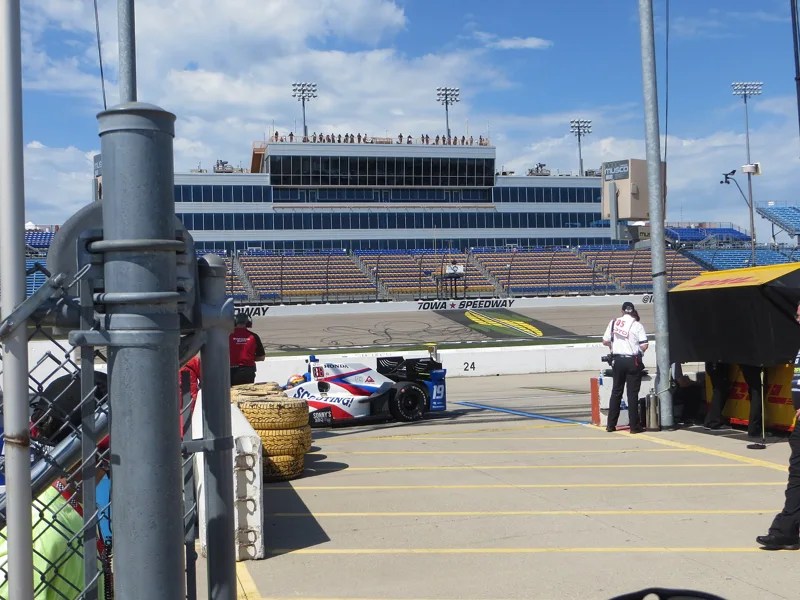
IndyCar declined to renew for 2011, citing schedule clashes with NASCAR and the second weekend that had been added. The IndyCar race had run annually until 2010.
Sports car racing has also used the road course. The Rolex Sports Car Series ran a Grand Prix there first on August 17, 2013, and it returned for a second race in June 2014.
Other events include the Richard Petty Driving Experience, which lets members of the public drive racecars on the track, and the American Royal World Series of BBQ, which has been held there since 2016.
The 2011 Kanrocksas Music Festival lineup included Eminem, The Flaming Lips, Kid Cudi and Primus. The 2013 edition was cancelled in May after ticket sales fell short.
Early years and the second Cup weekend
NASCAR confirmed a second Cup weekend in August 2010, and the track announced lights for night racing at the same time. The next month IndyCar announced its departure from the track.
Community support carried the project through its setbacks. State senators Nancey Harrington and Ben Vidricksen praised the track when lawmakers visited in March 2000, and by August 2000 80% of tickets for the Cup race had been sold.
The track's president from 2010, Patrick Warren, had been the marketing and sales chief before taking the top job. He was promoted in March 2010 at a time when the casino was entering construction.
Renovations and capacity changes
On July 8, 2011, the track announced a repaving and reconfiguration of the oval, along with the new infield road course. Variable banking was increased from 15 degrees to 20 degrees as part of the work. The announcement came the year after the second Cup weekend had been confirmed, so the changes were made with a fuller NASCAR schedule in view.
The capacity figures are the clearest sign of the decline in the track's crowds. Capacity fell over the following years. The track held a peak of 82,000 in the mid-2000s, and by 2019 the figure had dropped to 48,000 from 64,000.
Since its opening in 2001 the track has stayed on the NASCAR calendar in some form. It has come through lawsuits, a long casino fight and several changes to its capacity and layout to reach the present schedule.
| Item | Detail |
|---|---|
| Oval length | 2.414 km (1.500 mi) |
| Roval | 3.814 km (2.370 mi), six infield turns |
| Turn banking | 17 to 20 degrees, progressive |
| Opened | June 2, 2001 |
| Casino opened | February 3, 2012 |
| Renovation announced | July 8, 2011 |
| Capacity | 82,000 at peak; 48,000 in 2019 |