A Florida complex born from a bid for a Grand Prix, shaped by hurricane recovery and a long fight over tax money, and still hosting NASCAR's season finale.
Opened in 1995 as the Homestead Motorsports Complex, this 2.414 km (1.500 mi) Florida oval was shaped by a bid for the Grand Prix of Miami and the 1992 hurricane recovery. NASCAR now operates it, and it hosts one Cup weekend a year.
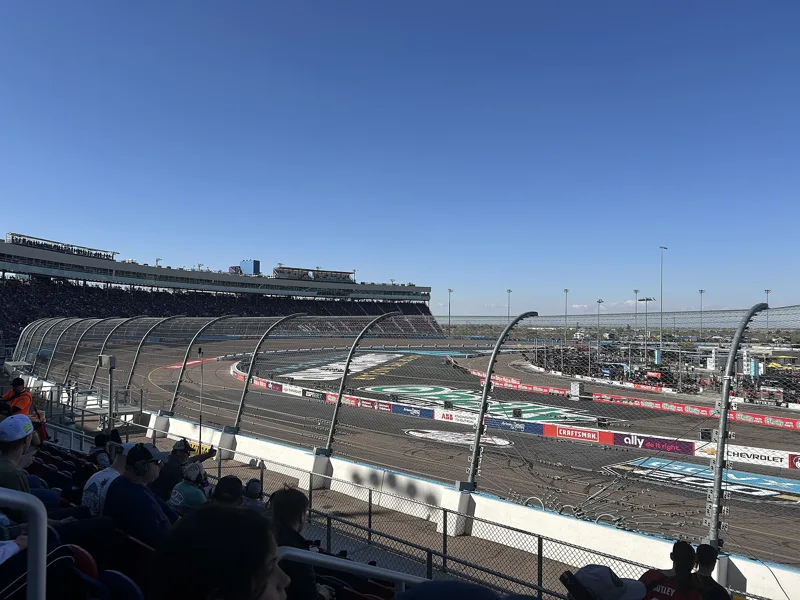
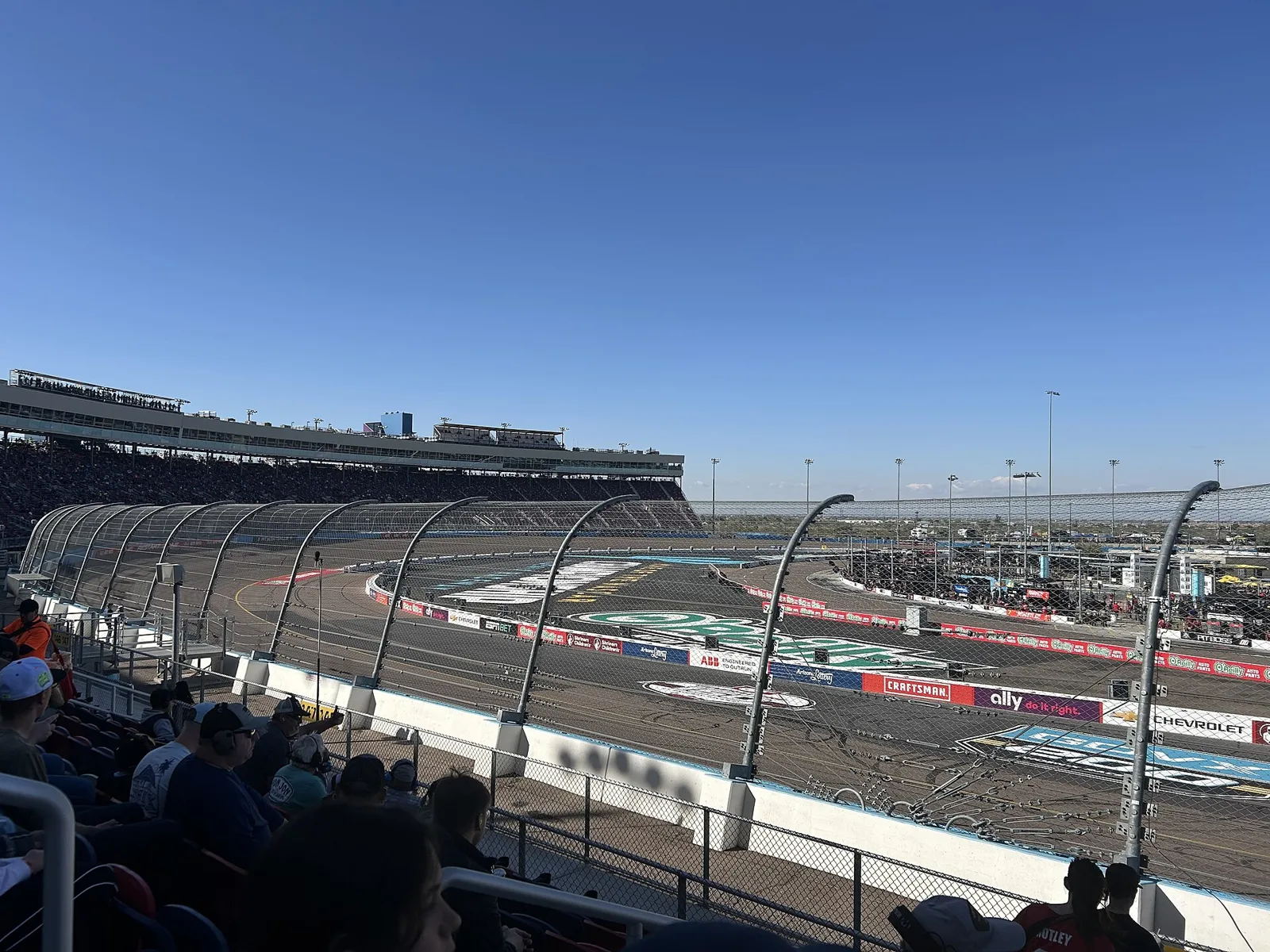
Homestead-Miami Speedway is a 2.414 km (1.500 mi) oval in Homestead, Florida, which has hosted NASCAR, IndyCar and FIA GT races since it opened in 1995. Its infield road course, which uses parts of the oval, gives the venue a roval layout.
Where is Homestead-Miami Speedway and how is it laid out?
Its oval runs 2.414 km (1.500 mi), with turns banked between 18 and 20 degrees and straights banked 4 degrees. The complex also features a roval of 3.7 km (2.3 mi) with 11 turns, which combines the oval with a specially built infield course.
The banking was much gentler before 2003, when the turns were only 6 degrees and the straights 3 degrees. A reconfiguration that year raised the turns to the present 18 to 20 degrees, and it drew positive reactions from drivers and NASCAR officials.
The first design was a rectangle similar to the Indianapolis Motor Speedway, with a 2.210 mi (3.557 km) road course of 13 turns. NASCAR timed the rectangle at 1.510 mi (2.430 km), while CART used 1.527 mi (2.457 km), so the measurements depended on the series.
The site covers about 650 acres near US Route 1 and Florida State Road 821. The infield holds a lake that is 27 m (90 ft) deep and stretches 0.80 km (0.5 mi) by 0.201 km (0.125 mi), where fishing tournaments are held from time to time.
A two-story media center of 18,000 square feet was built in 2008. The art deco aesthetic, created by Day One, combines aqua blue, tan and purple.
A Florida speedway built on a bid for a Grand Prix and a hurricane-hit city's hopes still hosts NASCAR's season finale.
Why was the speedway built in Homestead?
The promoter Ralph Sanchez began planning a permanent home for the Grand Prix of Miami in 1991, after the event had been run on city streets. He first sought a state tourist-tax bill that would have paid for a facility in Miami-Dade County, and the bill passed the Florida House and Senate.
The Grand Prix of Miami had been run on city streets in Miami before Sanchez looked for a permanent venue. His permanent-site plan took shape over the following two years.
The Florida tax bill passed the state House in March 1991, and the Senate in May. The budget that December gave Sanchez $9 million, while he had asked for as much as $20 million.
Sanchez had also considered a site at Amelia Earhart Park, but residents nearby objected strongly, and the plan was dropped.
Sanchez then proposed a 2.1 mi (3.4 km) track on the Munisport landfill in North Miami. The plan drew heavy opposition from residents and cities, and the Munisport proposal was dead by October 18, 1992, after the North Miami council had approved it on June 26.
Hurricane Andrew had struck South Florida, and Homestead's city manager, Alex Muxo, saw an opportunity to bring the project into the city. The Metro-Dade Finance Committee promised $11 million in November 1992, and Homestead added $1.7 million the following February.
Hotel taxes of $20 million were signed off for the facility by the Metro-Dade Commission on July 27, 1993. That gave Sanchez more than half of the budget he needed, and the plans unveiled in August described a 350-acre complex with two ovals and the original road course.
How did construction run into trouble?
Groundbreaking took place on August 24, 1993, with Bill France Jr., NASCAR's president, present as a dignitary. Work stopped eight days later after environmental groups and agencies complained that land was being cleared without the necessary permits. The stop came only weeks after the ceremony.
Work did not restart until May 1994, when the city obtained all the permits it needed, which meant an eight-month delay. The projected cost then rose by about $6 million, and the developers scaled back the first race by removing grandstands. The halt was tied to a lack of environmental permits, which had to be secured before work could continue. Those permits were the main obstacle at that stage.
Financial problems continued into 1995. The city considered selling bonds, and by April the developers still owed around $11 million to contractors. Wayne Huizenga offered a $20 million loan in exchange for a minority ownership stake, and the final budget was put at $59 million.
The completed complex was planned to hold 65,000 seats, along with 70 condominiums and an oval layout similar to the Indianapolis Motor Speedway. Its first race in November 1995 was a Goody's Dash event, followed the next day by a Busch Series race that drew a crowd of 65,000.
What happened in the early years of racing?
Chad Little made the first tire tests on August 9, 1995, and he praised the oval layout. Little was enthusiastic about the layout, and the tests were the first sign that the oval would work. Multi-car tests later that autumn produced several crashes, including one that injured the driver Mike Harmon.
Busch Series drivers criticised the track surface as too slippery outside the racing line, and Sanchez responded by placing a polymer on the track. The first open-wheel race followed on March 3, 1996, when Jimmy Vasser won a CART event.
The four corners were repaved and widened in 1996, after complaints that the track offered too little passing. Renovations that year totalled $17 million and focused on bathrooms, hospitality centers and television screens.
The first fatality at the venue came in 1997, when John Nemechek suffered brain injuries in a Truck Series crash. The oval was reconfigured that year at a cost of $8 million, with work starting on March 24 and finishing by November.
How did ISC and NASCAR take control of the track?
The France family's International Speedway Corporation and Roger Penske's company each bought 40% of Miami Motorsports in late July 1997. The city had changed its lease to allow the France family to purchase the venue, which made the deal possible.
Skuza confirmed a Winston Cup date for 1999, and the venue gained room for 71,763 permanent seats, which was 21,000 more than before.
In November 1997 Sanchez handed over day-to-day control, and by March 1998 his ownership had been bought out, with ISC and Penske each raising their stakes to 45%. The complex was renamed Homestead-Miami Speedway in July 1999.
The city's lease changes had a cost. By 2001 the city was estimated to have lost $34 million to $51 million in potential profit since 1999, after its agreements were altered to win a Cup date.
ISC bought Penske's share in the same month, giving it 90% of the company, and in September 2001 it bought out Huizenga's share, which gave it full control of the lease. A Miami Herald columnist criticised the arrangement, which left the city with little share of the profits.
Track milestones at a glance
| Milestone | Detail |
|---|---|
| Opened | 1995 as Homestead Motorsports Complex |
| First open-wheel race | March 3, 1996, won by Jimmy Vasser |
| Oval reconfiguration | 1997, $8 million |
| Renamed | Homestead-Miami Speedway, July 1999 |
| Full ISC control | September 2001 |
| Turn banking raised | 2003, to 18 to 20 degrees |
| Capacity | 43,000 as of 2019 |
Which series race at Homestead-Miami today?
The track hosts one NASCAR weekend each year, headlined by the Straight Talk Wireless 400 on the Cup Series. The O'Reilly Auto Parts Series race is the Hard Rock Bet 300, and the Craftsman Truck Series race is the Baptist Health 200.
Homestead has been the venue for season finales of all three NASCAR series from 2002 to 2019. The finale moved to Phoenix in 2020, and in 2026 the finales return to Homestead for all three series after a six-year gap.
Formula E made its debut at the facility in 2025 with the Miami ePrix, racing on the road course. Turn 1 was tightened for the occasion, and the backstretch gained a chicane.
How has the track's open-wheel history developed?
Indy Lights raced on the superspeedway oval from 1996 to 1999 and again from 2003 to 2010, giving the track a steady stream of support racing. Toyota Atlantic also appeared on the original road course in 1996 and 1997, and again on the modified road course in 2000.
The Grand Prix of Miami moved to the facility from a street course in Miami in 1996, and CART sanctioned the event until 2000. The Indy Racing League took over sanctioning in 2001, and the race moved to the season finale in 2009.
IndyCar's Homestead event ended after the 2010 season, which closed a 17-year tenure at the track. Several other open-wheel series also raced there, including the Toyota Atlantic Championship and the Indy Lights series.
Formula Regional Americas cars ran at the venue in 2020, and the FIA GT Championship came in 1998 and 1999. Trans-Am appearances continued at intervals until 2018.
How has safety and capacity changed over the years?
Jeff Clinton was killed in a 2002 practice crash for a Grand American Sports Car race, and Paul Dana died during practice in 2006 for the Toyota Indy 300. Both deaths came during practice sessions rather than in races. Clinton's crash happened during practice for a sports car race, while Dana's came in the lead-up to an open-wheel event.
The 2003 banking change came after drivers complained that passing was too difficult. The reconfiguration was finished in time for the November Ford 400.
SAFER soft wall barriers were announced in 2003 as part of the reconfiguration. Permanent lights were installed in 2005 after the Air Force approved them, and a luxury Turn One Tower was planned at $14 million the same year.
The venue was planned for 65,000 seats, but capacity fell as the years passed. It was down to 46,000 by 2014, and the figure reported in 2019 was 43,000.
Who runs the track now and what else happens there?
In 2009 Gray stepped down as president, and Matthew Becherer succeeded him. In 2011 the track lobbied for 12,000 more seats, and the proposal was approved that July, yet the seat count still fell to 46,000 by 2014. Becherer left the post in late 2019, and Al Garcia, the venue's senior vice president of operations, replaced him.
NASCAR bought out ISC's stake in October 2019, taking control of the lease. ISC had held most of the company since 1999. That is why the lease now sits with NASCAR. The purchase meant the lease passed from ISC to the sanctioning body that runs the events. Al Garcia led the track until 2024, when Guillermo Santa Cruz became president. The track has been run by NASCAR's own operations staff since then. The city of Homestead still owns the venue.
Since 2021 the facility has hosted a Christmas lights drive-thru display featuring more than one million lights.