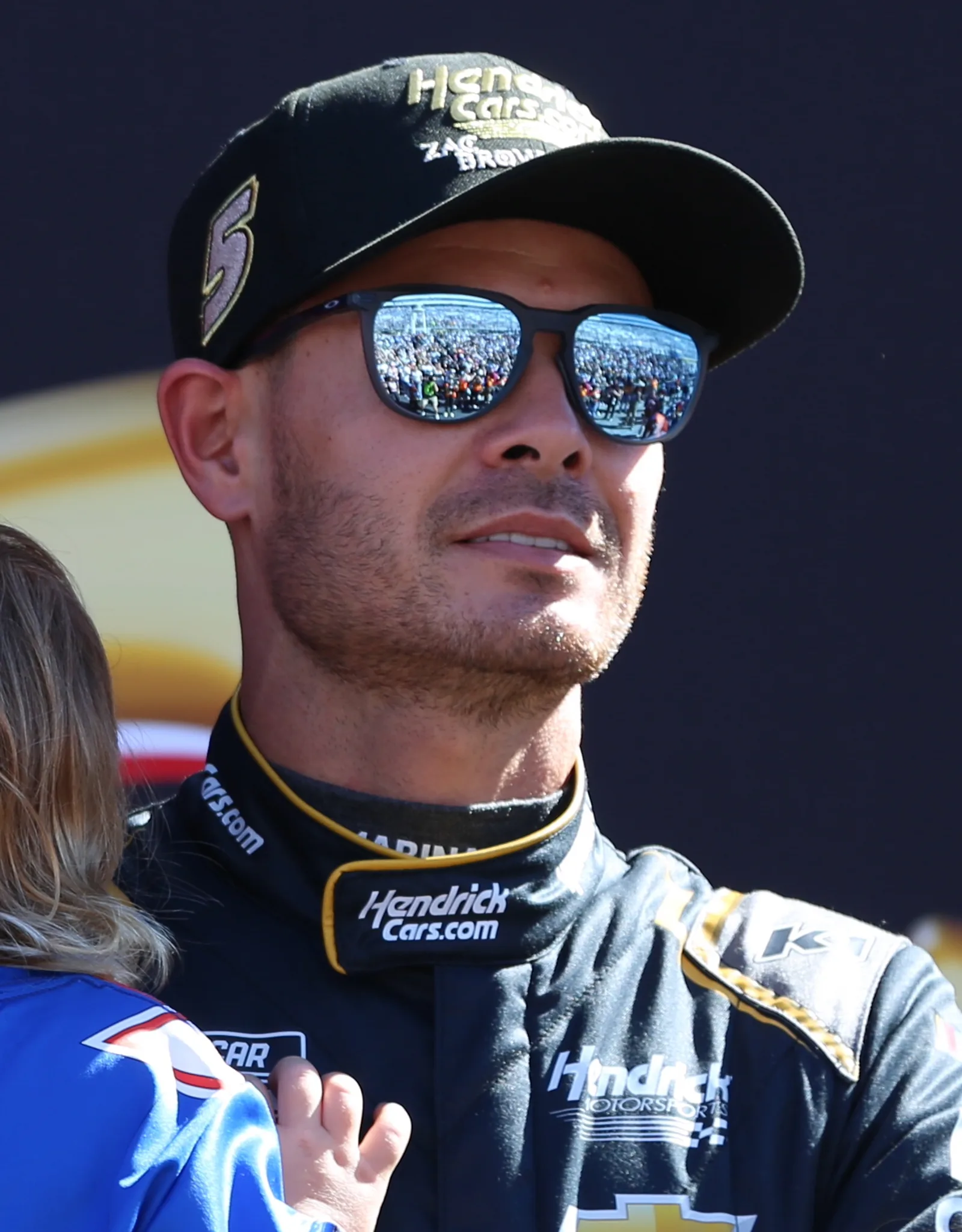
A season of new charters, a new TV deal and a first international race in 67 years, ending with Kyle Larson's second title at Phoenix.
NASCAR's 2025 top-tier stock car championship was its 77th season in the United States. Kyle Larson won the title at Phoenix Raceway on 2 November, finishing third in the final race to take his second Cup crown and the first since 2021.
Kyle Larson took the 2025 NASCAR Cup Series crown after 36 points races, finishing third in the season finale at Phoenix Raceway to win his second title. It was the final year of the elimination-style playoffs that had been used since 2014, and the first season run under a new charter cap and a seven-year broadcast contract.
What was the 2025 NASCAR Cup Series?
The 2025 campaign was the 77th year of top-tier stock car racing in America and the 54th of the modern Cup era. The schedule opened with the Cook Out Clash on 2 February and closed at Phoenix Raceway on 2 November, when Larson clinched the title.
Joey Logano, driving for Team Penske, came in as the reigning champion after winning the 2024 title. This was also the opening season of NASCAR's new broadcast agreement, which runs until 2031, and the first year since 2008 in which Tony Stewart held no ownership role in the organisation now called Haas Factory Team.
Two newcomers attracted attention. Katherine Legge's first Cup start was the Shriners Children's 500 race, held in March, and she became the first woman in the series since Danica Patrick in 2018. Helio Castroneves, a four-time winner of the Indianapolis 500, also made his first start in the Daytona 500, which he reached through a new exemption rule.
The year was also the last full-time campaign for Kyle Busch, a two-time champion, who died from sepsis caused by pneumonia on 21 May 2026.
The last elimination-style playoff, a new charter cap, and a champion who finished third in the final race.
How did the new charter agreement change the teams?
The new charter agreement capped each team at three charters, and 2025 was the first season it applied. Hendrick Motorsports and Joe Gibbs Racing were the only organisations allowed to keep their four charters apiece under the grandfather rules, and the rest of the field had to fit within the limit.
Stewart-Haas Racing shut down after 2024, and its charters were spread among three teams. 23XI Racing, Front Row and Trackhouse each used a 2024 purchase to add a third entry in 2025. Riley Herbst drove the No. 35 at 23XI, Noah Gragson the No. 4 at Front Row, and Shane van Gisbergen the No. 88 at Trackhouse.
The last Stewart-Haas charter stayed with Gene Haas, whose team is now Haas Factory Team and runs the No. 41 for Cole Custer. RFK Racing rented a third charter from Rick Ware so that Ryan Preece could race the No. 60 full-time.
Several organisations also changed name or appeared for the first time. JTG Daugherty Racing turned into Hyak Motorsports after Jodi and Tad Geschickter departed. JR Motorsports made a single Daytona 500 start with Justin Allgaier in the No. 40 and said it had no further Cup races planned. Tricon Garage fielded its first car in the series at Daytona with Martin Truex Jr. in the No. 56, and MBM Motorsports changed its entry to Garage 66.
Chevrolet continued with its Camaro-bodied cars, which carried the ZL1 name because the Camaro itself was dropped after 2023 with no successor.
Which drivers changed teams in 2025?
The biggest moves followed from the Stewart-Haas shutdown. Noah Gragson went to Front Row Motorsports, Josh Berry joined the Wood Brothers, Ryan Preece moved to RFK Racing and Chase Briscoe signed with Joe Gibbs Racing. Michael McDowell and Zane Smith also traded places between Spire Motorsports and Front Row.
Shane van Gisbergen and Riley Herbst graduated to full-time Cup racing after a season in the Xfinity Series in 2024. Martin Truex Jr. stepped back from full-time competition at the end of 2024, freeing the No. 19 car for Joe Gibbs Racing.
A few drivers moved between series. A. J. Allmendinger returned to full-time Cup work with Kaulig Racing's No. 16, while Cole Custer left an Xfinity Series programme he had run for two full seasons to come back to the Cup Series. Daniel Hemric went back to the Truck Series, and Ty Dillon took over Kaulig's No. 10 after the car was renumbered from No. 31.
Part-timers had busy seasons too. Connor Zilisch, aged 18, debuted for Trackhouse in Round 3. He fell from his car after an Xfinity race the day before a Watkins Glen weekend and broke a collarbone, so Trackhouse withdrew the No. 87 from the Cup race. Burt Myers, a modified driver, made his official Cup debut at Martinsville after competing in the exhibition preliminaries.
What sponsorship and manufacturer changes shaped the season?
Sponsors moved around too. Kroger went from Hyak Motorsports to RFK Racing, King's Hawaiian left RFK for Joe Gibbs Racing's No. 11, and Progressive Insurance then took an 18-race deal on that car. Amazon Prime agreed a multi-year sponsorship of Chase Elliott's No. 9.
Other brands took new roles. WeatherTech put its name on Trackhouse's No. 88 for van Gisbergen, and Red Bull returned as a backer of Trackhouse's two cars, the Nos. 87 and 88, for several races. Campbell's partnered with Joe Gibbs Racing through a deal with Harris Blitzer Sports and Entertainment, an investor in the team, and Traveller Whiskey, working with Chris Stapleton, backed JR Motorsports at Daytona.
FedEx, which had supported Joe Gibbs Racing and Denny Hamlin, did not return for 2025, a decision announced at the end of 2024.
What rules changed in 2025?
The new Open Exemption Provisional let world-class drivers run a race that earns no championship points, no playoff points and no prize money, and gives no tiebreak help. A winner still kept the trophy and All-Star eligibility, and the runner-up earned first-place points without playoff eligibility.
Damaged cars were given more flexibility. A car could drive or be towed to the garage, and repairs on pit road ran against a 7-minute clock, extended to 8 minutes at Atlanta. Once the clock ran out, the car had to head to the garage to carry on, but it kept its place in the race.
Playoff regulations also tightened. A driver granted a playoff waiver for missing a race lost all current and future playoff points and was capped at 2,000 points when the playoffs began. Manufacturers could be penalised with points, wind tunnel hours or RCFD runs for rule breaches, and a bonus point went to the fastest lap in points races, excluding the Daytona Duels.
Entries also had a new limit. Just before the Brickyard 400, NASCAR gained discretion to cap the field at 40 entries. If more than 40 cars were entered, the provisional field expanded to 41. Four open teams could claim grid positions through the fastest lap in the first qualifying round, and up to six could do so through owner points.
How did the 2025 schedule change?
The calendar, released on 29 August 2024, contained 36 points races: 30 on ovals, five on road courses and one on a street course. Four further non-championship events on ovals were also planned, with start times set on 13 November.
Several venues changed. The Atlanta event known as the Quaker State 400 went back into the regular season, opening NASCAR's in-season tournament. Separately, the Clash relocated from the Los Angeles Memorial Coliseum to Bowman Gray Stadium, the first Cup race held there since 1971, and Richmond gave up a date to make room for a new Mexico City race.
The Mexico City event was a points race, the first of its kind held outside the United States since 1958. Easter Sunday was left free of racing, the first such gap since 2021, falling between the Food City 500 and Jack Link's 500. The Circuit of the Americas race was converted to a new layout, a change NASCAR announced on 20 November 2024.
How did the early season unfold?
The season began with the Cook Out Clash at Bowman Gray Stadium. Chase Elliott started from pole, led 171 of 200 laps and won, his first Clash victory. Austin Dillon, Zane Smith and Ty Gibbs all failed to qualify in the 23-car field.
Bubba Wallace took the first Duel, leading 21 laps and collecting 10 points. The second Duel was awarded to Austin Cindric, who was ahead of Erik Jones when a caution was flagged just before the line.
At the Daytona 500, William Byron finished ahead of Tyler Reddick and Jimmie Johnson, winning for a second year running and becoming only the fifth driver to take consecutive editions of the race. Weather delays and two red flags stretched the event to nearly four hours, and on the final lap Cole Custer's contact with Denny Hamlin caused a major accident. It was Hendrick Motorsports' 10th Daytona 500 victory, the most for any race team.
Christopher Bell then produced three consecutive wins. He won his first Atlanta race in round two, took the EchoPark Automotive Grand Prix in round three and finished the run at Martinsville in round four. No driver had managed three in a row since Kyle Larson in 2021, and none had done it since the Next Gen car arrived.
Larson had a dominant spring on the short tracks. He won at Bristol twice in a row, leading 411 laps in the second race, and at Kansas he led 221 laps, swept the stages and set the fastest lap. His 30th career win came in round six, and the Kansas victory was his second straight there in the spring.
Which races defined the summer?
Chase Briscoe had a strong run around the middle of the year. He took pole for the Coca-Cola 600 and the Brickyard 400, having already started from pole at the Daytona 500, which made him the first driver to win poles at those three races in one season. He was also the first Indiana native to win the Brickyard pole.
Bubba Wallace then won the Brickyard 400 itself, his first Crown Jewel victory and the first by an African-American driver in a major race at Indianapolis Motor Speedway. The win also ended a 100-race drought without a victory, which had begun at the 2022 Hollywood Casino 400.
The Coca-Cola 600 ended with a surprise. William Byron took all three stages, a feat last seen in 2021, yet Ross Chastain got past him with six laps left and won from 40th on the grid.
Shane van Gisbergen was the year's road-course specialist. He won the Viva Mexico 250 in the rain, a return to victory after the 2023 Grant Park 220, then took the Grant Park 165 street race and swept that weekend. He added the Toyota/Save Mart 350 and the Go Bowling at The Glen race, and his four wins as a rookie passed Tony Stewart and Jimmie Johnson for the most in a season by a first-year driver. He added a fifth win at the Roval.
Denny Hamlin had a productive year. He led 274 laps in round seven on his way to a first win of 2025, then repeated the result the following week. He later took the Michigan race, his first there since 2011, shortly before his third child arrived, and in round 21 he held off Chase Briscoe at Dover for a second straight win there.
How did the playoffs unfold?
The playoffs covered ten races, from Round 27 to the finale, and used elimination rounds to narrow the field to a Championship 4. When two drivers were level for the final Round of 8 place, the tiebreak decided it, and Joey Logano advanced over Ross Chastain at the Roval on that basis.
Chase Briscoe was the standout of the first half of the playoffs. He swept the stages and led 309 laps in the Southern 500, becoming the first back-to-back winner of that race since Greg Biffle in 2005 and 2006. He later won the YellaWood 500 to secure a Championship 4 berth, his first with Joe Gibbs Racing.
| Round | Race | Winner | Detail |
|---|---|---|---|
| 27 | Cook Out Southern 500 | Chase Briscoe | Led 309 laps; back-to-back winner |
| 28 | Enjoy Illinois 300 | Denny Hamlin | Led 75 laps; Toyota's 200th Cup win |
| 29 | Bass Pro Shops Night Race | Christopher Bell | Bowman, Dillon, van Gisbergen and Berry eliminated |
| 30 | Mobil 1 301 | Ryan Blaney | Hamlin spun Ty Gibbs on lap 111 |
| 31 | Hollywood Casino 400 | Chase Elliott | First multi-win season since 2022 |
| 32 | Bank of America Roval 400 | Shane van Gisbergen | Fifth straight road course win |
| 33 | South Point 400 | Denny Hamlin | 60th career win; first Championship 4 since 2021 |
| 34 | YellaWood 500 | Chase Briscoe | First Championship 4 berth, first with Joe Gibbs Racing |
| 35 | Xfinity 500 | William Byron | Swept stages; Byron and Larson reached the Championship 4 |
| 36 | Cup Series Championship Race | Ryan Blaney | Larson finished third and took the title |
Who won the 2025 championship?
Kyle Larson won the 2025 title, his second Cup championship and his first since 2021. He finished third in the Phoenix finale, a race that Ryan Blaney won for his first Phoenix victory, holding off Brad Keselowski and Larson. The title was settled by the championship standings, not by the race result.
Denny Hamlin led most of the final race and was just three laps from the flag. A late caution, after William Byron cut a tyre and hit the wall, reduced his lead. On the overtime restart, Larson's crew took two tyres at the pit stop while Hamlin took four, which gave Larson track position over him.
The title was decided by a restart and a tyre call. Blaney won the race, but Larson's third-place finish was enough to give him the championship.
Why did the 2025 season matter?
The season marked the end of an era for NASCAR's elimination-style playoffs, which had decided the title since 2014. It was also the first year of the seven-year broadcast deal, the first season under the three-charter cap and the first international race in 67 years.
The charter cap set the rules for every team except the two that were grandfathered. Only Hendrick Motorsports and Joe Gibbs Racing kept four charters, so the new ceiling now limits how other organisations can expand, buy charters or lease cars.
For drivers, the year showed how quickly a season could turn. Van Gisbergen, who had won three Supercars titles with Triple Eight Race Engineering, set a rookie record for wins in one season. Larson's title and Hamlin's near miss at Phoenix showed how a championship can turn on one caution and one pit stop decision.