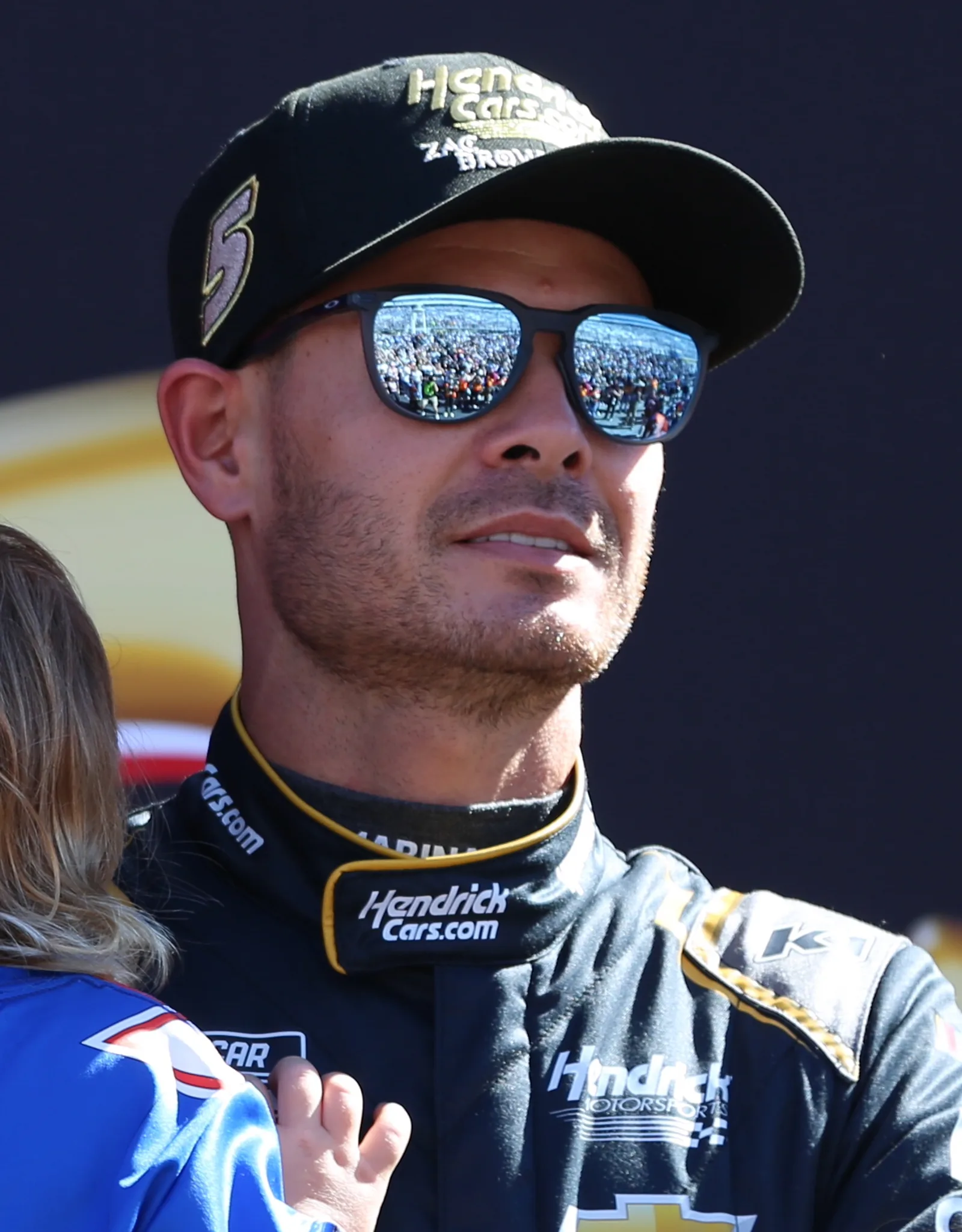
A rain-delayed season opener, three red flags and a final-lap crash that took out most of the field, with William Byron keeping his line to win back-to-back.
The 2025 Daytona 500, won by William Byron of Hendrick Motorsports for the second year in a row, was the 67th running of the event. Three red flags and a final-lap crash that took out most of the field stretched it to nearly eight hours.
The 67th Daytona 500 started the Cup season for 2025. Byron of Hendrick Motorsports took his second consecutive win after a late-race tangle between Hamlin, Custer and Briscoe, who were all fighting for the lead on the final lap. The race finished nearly eight hours after the start, because thunderstorms had interrupted it repeatedly.
Why was the 2025 Daytona 500 significant?
The event took place at Daytona International Speedway on 16 February 2025, the opening race of the season. Shane van Gisbergen made his Daytona 500 debut after signing with Trackhouse Racing, and the field topped 40 entries for the first time since 2015.
Haas Factory Team, JR Motorsports and Tricon Garage also made their debuts that day, adding fresh names to a field that was already crowded.
The field included Helio Castroneves, who was guaranteed a place under the Open Exemption Provisional rule. Two-time Daytona 500 winner Byron, seventh-place finisher Jimmie Johnson and polesitter Chase Briscoe all entered the weekend with strong reputations, and the race would test the nerve of every one of them.
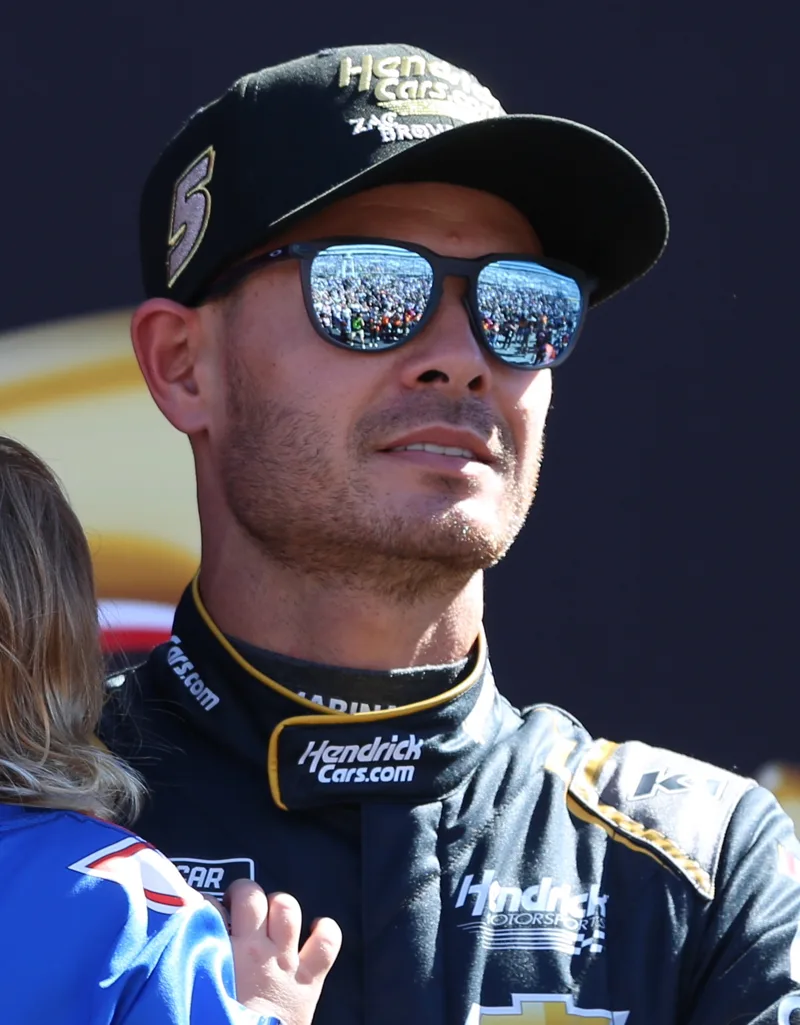
William Byron kept his line through the chaos and won the Daytona 500 for the second year running.
How did the track and format shape the weekend?
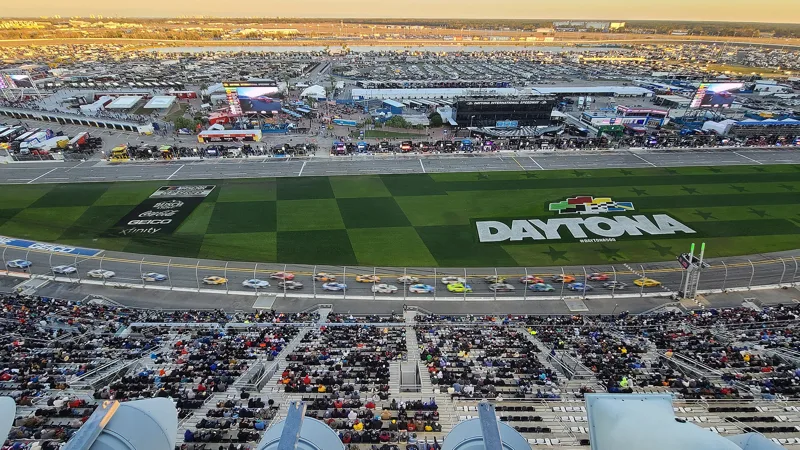
Daytona is one of three NASCAR superspeedways, alongside Atlanta Motor Speedway and Talladega Superspeedway. Its standard layout is a four-turn track 2.5 miles (4.0 km) long, with turns banked at 31 degrees and a front stretch banked at 18 degrees, where the finish line sits.
The Duels set the starting order for most of the field. Two races of 60 laps, each 150 miles (240 km), filled positions three to 32. Odd-numbered qualifiers went into the first Duel and even-numbered qualifiers into the second, while the four fastest drivers who had not locked in a place took positions 33 to 36.
How did qualifying and practice go?
Hamlin was quickest in first practice, lapping in 48.005 seconds, or 187.480 mph (301.720 km/h) on average. Chase Briscoe then won the pole with a lap of 49.249 seconds, or 182.745 mph (294.100 km/h) on average. Among the open entries, Truex and Johnson were the quickest in qualifying.
William Byron led the second practice at 46.172 seconds, which equated to 194.923 mph (313.698 km/h). Brad Keselowski was quickest in the final practice session, with 46.558 seconds at 193.307 mph (311.097 km/h). The speeds gave an early indication of the cars that would be strong in the race.
How did the race begin?
Weather moved the start forward, and the engines fired at 1:46pm instead of the planned 2:50pm. After parade laps that included two with President Trump, the green flag fell at 2:06pm. Briscoe led the opening lap, but on lap 5 Dillon edged Byron at the line after a side-by-side moment.
Showers caused the first stoppage at 2:20pm, after only eight laps. The race restarted at 5:30pm after a delay of 3:09:59, with the early laps run behind the safety car so the pit lane could dry. A second red flag at 5:54pm lasted until 6:15pm, and teams then pitted to make the stage without another fuel stop.
Who controlled the first stage?
Logano, reigning champion, led the restart with a crowd of cars side by side behind him. Byron took the lead on lap 31, and Logano regained it on lap 35. A three-wide fight on lap 42 involving Elliott and Busch ended with Logano ahead. Busch was chasing his first Daytona 500 win in his 21st attempt.
A caution on lap 62 followed a collision in the west banking between Hamlin, Zane Smith and Josh Berry. Austin Cindric's car also clipped Smith, and Berry was eventually forced out. Logano was the leader when the stage ended, which earned him ten championship points and one playoff point.
What happened in the second stage?
Stage two resumed on lap 71. Logano slowed on the restart after debris got into his throttle body, and traffic bunched on the bottom line. Nemechek dived low to avoid the jam, but Ross Chastain turned up into Helio Castroneves and started a chain reaction. Logano later blamed debris for overheating, and he lost a lap.
Chastain, Castroneves and Martin Truex Jr. retired from the wreck. Ryan Blaney inherited the lead, and the stage was then a long battle of three-wide racing and fast position changes. Blaney won the stage on the last lap of the segment, lap 130, after a close finish with Cindric.
How did the final stage unfold?
The final segment was 70 laps long. Teams pitted for tyres and fuel, because the 15-year-old asphalt had lost grip and handling had become critical. Blaney led the restart on lap 138, but Bubba Wallace took the lead on lap 139, and the lead changed hands again and again through the middle of the stage.
A piece of debris in Turn 1 on lap 162 caused the sixth caution, and crews who stopped could reach the finish on fuel. Cindric exited pit road in front and was in the lead for the restart with 35 laps left, but Wallace moved ahead once the race went green.
A serious backstretch incident on lap 186 caught several leaders, including Logano, Blaney and Busch. Logano and Busch were the only drivers who retired from it. Corey LaJoie was out front when the caution came, and he took the restart with eight laps remaining.
What was the last-lap crash?
The restart came on lap 193, and Cindric grabbed the lead. Denny Hamlin then took the lead as the cars crossed the line. A lap later Christopher Bell tried to pass Hamlin side by side, and Cole Custer turned him into the outside wall, setting off the third big accident of the race.
Ryan Preece's car ramped off Bell's and flipped, landing on its wheels before hitting the outside wall. The wreck eventually took ten cars out, with Bell, Preece and Bubba Wallace among those who retired. It was Preece's second flip at Daytona, and his first, almost a year and a half earlier, saw his car barrel roll ten times. The race was then stopped for six minutes of debris clean-up.
Pit lane opened for the lead lap cars, and the restart on lap 200 was held under green-white-checkered rules. Cindric went to the front with a push from Custer, but Custer ended up spinning after being turned by Chase Briscoe, and the cars behind collected him into an 11-car pile-up. Hamlin spun and Corey LaJoie spun to the inside as well.
Who won the race?
William Byron was seventh when the crash began and managed to avoid the wreck on the high line. He took the lead and held off Tyler Reddick over the final lap. It was Byron's second straight Daytona 500, and his victory made him the first driver since Denny Hamlin in 2019 and 2020 to win consecutive races.
Reddick stayed close behind Byron through the final third of the last lap but could not get by.
Johnson took third, and Briscoe and Nemechek came home fourth and fifth in that order on a long afternoon. Alex Bowman, Ryan Blaney, Austin Cindric, Justin Allgaier and Chris Buescher finished in the top ten, and Legacy Motor Club had two cars in the top five for the first time.
| Finishing order | Driver |
|---|---|
| 1 | William Byron |
| 2 | Tyler Reddick |
| 3 | Jimmie Johnson |
| 4 | Chase Briscoe |
| 5 | John Hunter Nemechek |
| 6 | Alex Bowman |
| 7 | Ryan Blaney |
| 8 | Austin Cindric |
| 9 | Justin Allgaier |
| 10 | Chris Buescher |
How were the stages run?
The race was split into three stages of 65, 65 and 70 laps. Logano earned ten championship points and one playoff point for the stage one win, Blaney took stage two on lap 130, and the final 70-lap segment decided the race.
How did Penske perform?
Team Penske was a major story for much of the afternoon. Logano and Austin Cindric, teammates, dominated large parts of the race, and Logano took the first stage. Cindric later took the lead on the green-white-checkered restart with a push from Cole Custer.
Logano retired in the lap 186 incident, while Cindric finished eighth. Their speed made the team look like a contender for much of the afternoon, even though the finish belonged to Byron. Logano also led laps early on, showing the organisation had the pace.
What did the newcomers bring?
Shane van Gisbergen was one of the newcomers to watch. His car took damage from the lap 71 stack-up and slowed, but it still made minimum speed and kept racing. He remained in the race but was slower than before the stack-up. The debutant teams were part of that story, and JR Motorsports earned its first Cup top ten.
What were the race statistics?
The race had 56 lead changes among 15 different drivers, with eight cautions for 47 laps. Those figures underline how much the afternoon was shaped by stoppages. Three red flags lasted 3 hours, 36 minutes and 33 seconds in total. The race itself took 3 hours, 53 minutes and 26 seconds, at an average speed of 129.159 mph (207.861 km/h).
Media coverage was split across several outlets. Fox carried the television broadcast with Mike Joy, Clint Bowyer and Kevin Harvick in the booth, while the Motor Racing Network provided the radio call, simulcast on Sirius XM NASCAR Radio.
Why did the 2025 race matter?
The race confirmed that Byron could win a long, disrupted superspeedway event twice in succession, and it showed how quickly a season could turn on a single restart. Johnson's podium, Allgaier's first top ten since 2015 and the Legacy Motor Club result all added to the story.
For JR Motorsports the result was its first top ten in the Cup Series. For Legacy Motor Club, a top-five double was a new high. The race also underlined the danger of superspeedway racing, where a single line choice can decide the outcome.
The race also opened the season with a reminder of how fragile a superspeedway race can be, as crashes and red flags changed the outcome several times.