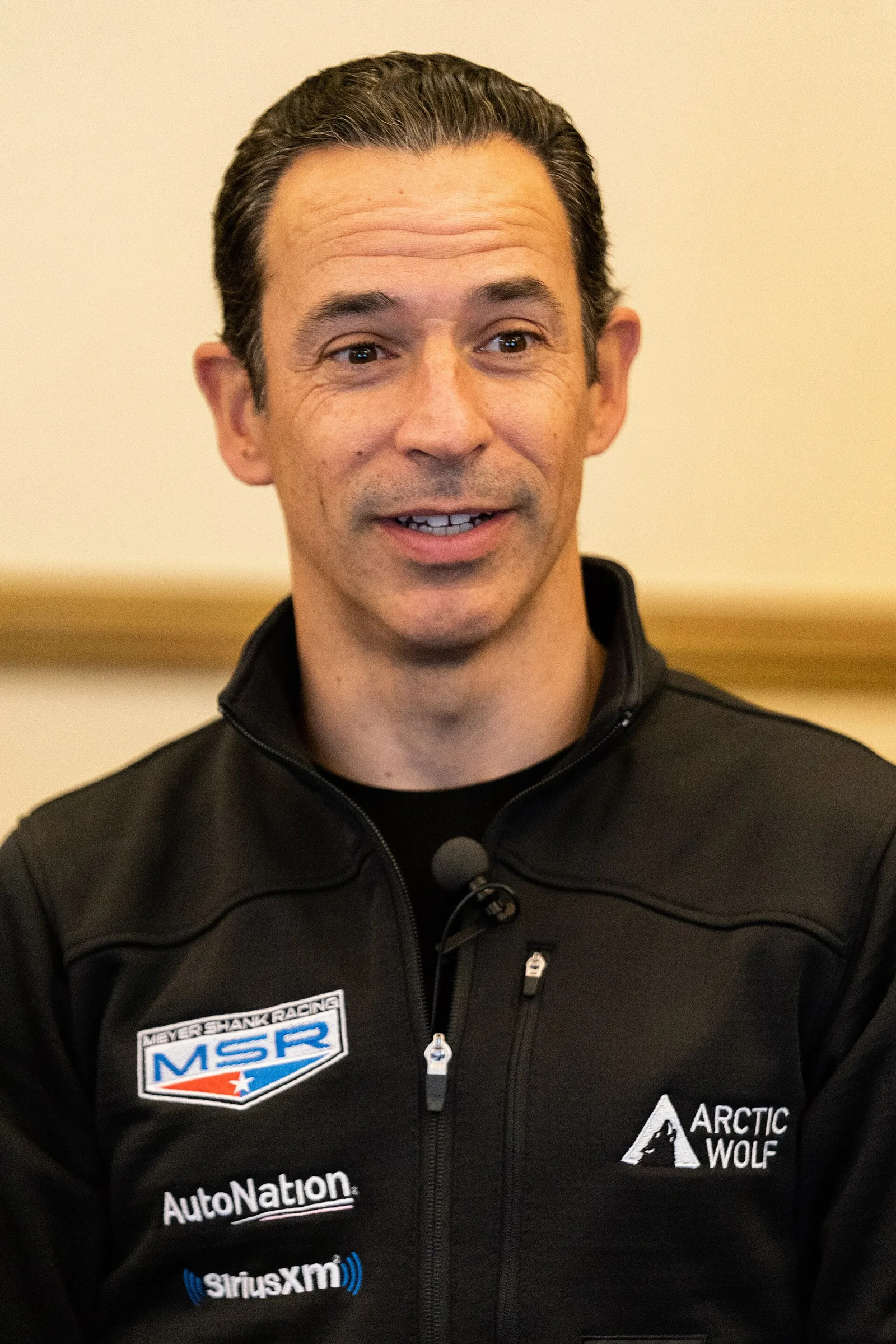
The Brazilian who won the Indianapolis 500 four times, took the IMSA championship in 2020 and became one of IndyCar's most popular drivers.
Helio Castroneves is a Brazilian driver who has won the Indianapolis 500 four times, in 2001, 2002, 2009 and 2021. He was IndyCar runner-up four times, and he won the 2020 IMSA SportsCar Championship with Team Penske. He is also a three-time winner of the 24 Hours of Daytona.
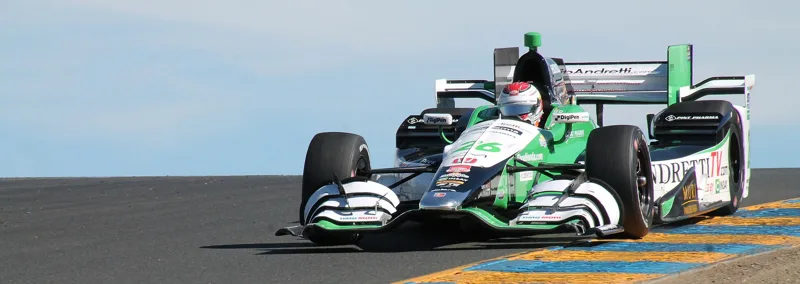
Brazilian Helio Castroneves is one of only four drivers to have won the Indianapolis 500 four times. He now races in Brazil's Stock Car Pro Series with Mercado Livre Racing, and he drives part-time in IndyCar for Meyer Shank Racing in the No. 06 car. His career has run from karting in Sao Paulo to the top of American open-wheel racing, and then into sports cars, touring cars and television.
How did Castroneves begin racing?
Castroneves began competitive go-karting at the age of 10, then progressed to car racing in Formula Chevrolet Brazil, Formula 3 Sudamericana, British Formula Three and Indy Lights. He entered CART in 1998 with Bettenhausen Racing and in 1999 with Hogan Racing, finishing second with both teams.
As a child he watched his father's minor stock car team race on weekends, and he was once smuggled into a car's trunk in racing overalls and a helmet to get inside the circuit. His first go-kart came from race driver Alfredo Guarana Menezes on his 11th birthday. Ayrton Senna, the three-time Formula One champion, was a major early inspiration.
In late 1991, aged 16, he moved into car racing with Formula Chevrolet Brazil. He was championship runner-up with one victory and 92 points in an eight-round season. The 1993 Formula 3 Sudamericana season followed, and he finished runner-up to Fernando Croceri with four victories and eight podiums, scoring 57 points.
In 1994 he finished second overall in the Brazilian Formula Three Championship with three victories, four poles and 52 points. The following year he moved to British Formula Three with Paul Stewart Racing, finishing third in the drivers' championship with 169 points and six podiums. His father sold business assets to help finance that campaign.
In 1996 he drove for Tasman Motorsports in Indy Lights, winning at Trois-Rivieres and finishing seventh overall with 84 points. A run of accidents and difficulty with English frustrated him, and he briefly consulted a sports psychologist. In 1997 the same team gave him a second year, and he finished runner-up to Tony Kanaan with three wins and 152 points.
Four Indianapolis 500 wins, four IndyCar runner-up seasons and a catchfence celebration that earned him the nickname Spider-Man.
What was his CART career like before Penske?
In 1998 Castroneves drove for Bettenhausen Racing in CART, with a Reynard 98I-Mercedes-Benz. He achieved his first career top-ten finish with a ninth at Long Beach, and his best result of the year was second at the Miller 200 at Milwaukee. He finished seventeenth in the drivers' championship with 36 points.
In 1999 Hogan Racing signed him, and the unreliable Lola-Mercedes gave him a hard season. He took his first CART pole position at Milwaukee, and he finished second at Gateway. He ended the year 15th in the points with 48.
After Greg Moore died in an accident at the 1999 Marlboro 500, Penske hired Castroneves on a three-year contract. Sponsor Marlboro had pressed for a replacement by that date, and the deal was completed in a matter of days.
In 2000 Penske switched to Honda engines and Firestone tyres. Castroneves led the final 24 laps to win the Detroit Grand Prix, his first series victory. He added wins at Mid-Ohio and at Laguna Seca, finishing seventh in the points with 129 and becoming the first winner of the Greg Moore Legacy Award.
In 2001 he led all 82 laps from pole at Long Beach for his fourth career win. He won at Detroit again and took a third victory at the Miller Lite 200. He ended that season fourth in the drivers' standings with 141 points, after a title challenge that faded late in the year.
How did he win the Indianapolis 500 in 2001?
Castroneves debuted in the Indy Racing League in 2001, driving Penske's Dallara with an Oldsmobile engine. He won the Indianapolis 500 at his first attempt, qualifying 11th and leading the final 52 laps.
He switched to the IRL full time in 2002, because Marlboro wanted Penske to focus on the American market. Penske changed engine suppliers from Oldsmobile to Chevrolet for its Dallara IR-02. At Phoenix for the second race of the season, he won from pole after passing his teammate de Ferran late on.
The 2002 Indianapolis 500 was won in controversial circumstances. With a lap and a half remaining, CART driver Paul Tracy overtook him for the lead just as a caution light came on for a two-car accident. IRL officials rejected an appeal from Tracy's team, and Castroneves's second successive Indianapolis win was confirmed.
Over the next nine races he never finished lower than ninth, and he battled de Ferran and Hornish for the title. At the final round in Texas he needed a win and a Hornish finish of third or lower. He finished second, just 0.010 seconds behind Hornish, and ended the season as runner-up with 511 points.
What did the Penske years look like from 2003 to 2008?
Before the 2003 season Penske let him test for the Toyota Formula One team at Paul Ricard. Castroneves impressed Toyota, but the team had already signed Cristiano da Matta. He stayed with Penske, and he finished third in the 2003 points with 484. That was after two second places at Richmond and Kansas and a win at Nazareth.
Penske switched from Toyota to Honda before 2006. Castroneves won at St. Petersburg and Motegi, leading 184 laps from pole at Motegi, and he entered the Indianapolis 500 with a 42-point lead over Wheldon. Handling problems then sent him into the turn four barrier, and he finished 25th. He still ended the year third with 473 points.
In 2007 he won at St. Petersburg, led 95 laps from pole, and claimed his third Indianapolis pole. The race ended third after electrical and fuelling problems. He took six top-nine finishes that season and finished sixth overall with 446 points.
In 2008 Castroneves finished runner-up to Scott Dixon with 629 points. In the final race he needed to win and hope that Dixon finished eleventh or lower. He started 28th after a track limit penalty, beat Dixon by 0.0033 seconds, but Dixon's points lead kept the championship with him.
What happened in the tax evasion case?
In late 2008 an IRS jury charged Castroneves with conspiracy and six counts of tax evasion over $5.5 million of income from 1999 to 2004. He was acquitted of the tax counts in April 2009 and prosecutors dropped the conspiracy charge in May. He later paid back taxes and settled a civil claim for about 10 percent of the amount sought.
The issue began with his first Penske contract, signed in November 1999. Alan Miller, who negotiated it in a hurry, struck out Moore's name and wrote in Castroneves's name. He also changed the name of Moore's promotion company, which implied that Castroneves owned it. The defence argued that the company listing was a clerical error.
The case was heard in Miami in March 2009, and closing arguments came on 10 April 2009. A guilty verdict could have meant a maximum sentence of six and a half years, deportation as a non-American citizen, and the loss of his endorsement contracts and his place at Penske.
The jury deliberated until 17 April, acquitting him of the six tax evasion counts but failing to agree on conspiracy. Prosecutors dropped that charge on 22 May, and Castroneves was back driving at Indianapolis by then. A few months later he hand-delivered a check to the IRS for the back taxes.
About two years later the IRS filed a 6.21 million dollar civil suit for more taxes and fraud penalties. The case settled before trial for about 10 percent of what the IRS had claimed.
How did he fare in IndyCar from 2009 to 2017?
Castroneves signed a multi-year contract with Penske from 2009. He won the Indianapolis 500 for a third time, qualifying fastest and leading 66 laps. Two races later he won at Texas, his second victory of the year, and he finished fourth overall with 433 points.
The 2014 Indianapolis 500 ended in a second place, just 0.0600 seconds behind Ryan Hunter-Reay. It was the second-closest finish in the race's history. He finished runner-up to his teammate Will Power in the championship, with 609 points.
From 2015 to 2017 he was regularly on the podium. He finished fourth overall in 2015 with 453 points and in 2016 with 504 points. His 2017 season ended fourth with 598 points, after a late duel with Takuma Sato at Indianapolis had given him second place there.
How did sports car racing become his main focus?
After the 2017 season Castroneves stepped down from full-time IndyCar to join Penske's IMSA SportsCar Championship programme. He drove the 2017 Petit Le Mans, qualifying on pole and finishing third.
In 2020 Castroneves and Taylor won four races together, including Road America, Road Atlanta and Mid-Ohio. They then clinched the title at the season-ending 12 Hours of Sebring by one point over Briscoe and van der Zande, his first title in auto racing.
He won the 2021 24 Hours of Daytona with Wayne Taylor Racing, sharing the car with Filipe Albuquerque, Rossi and Taylor. He then won at Daytona again in 2022 and 2023, the latter as a third successive victory for him in the race.
What did the 2021 Indianapolis 500 win mean?
Castroneves signed with Meyer Shank Racing for six races in 2021, after an approach from team owner Michael Shank in late 2020. He had asked the team for more races but was refused. At Indianapolis he passed Alex Palou late in the race to win his fourth Indianapolis 500, matching the record for wins.
He struggled for form after that victory, and he went on to finish 22nd in the 2021 standings with 158 points. He returned full time in 2022, his first full season in five years. He finished seventh at Indianapolis that year and placed 18th overall with 263 points, his least successful full-time season.
In 2024 he replaced Tom Blomqvist in the No. 66 car at Detroit and at Road America, finishing 25th and 19th. He qualified 22nd for the 2025 Indianapolis 500 and finished 13th, a position that rose to 10th after post-race penalties. He was 25th in the 2026 race.
How is Castroneves remembered by fans?
Beyond the cockpit, Apolo Ohno encouraged him to join Dancing with the Stars in 2007. He was paired with Julianne Hough, and they won the final with a higher share of the public vote than the singer Mel B. He later wrote the autobiography Victory Road in 2010, and in 2025 he added a NASCAR Cup start at the Daytona 500 to a career that also included the International Race of Champions and V8 Supercars.
Castroneves is one of the most popular drivers in IndyCar. His habit of climbing the catchfence after a victory earned him the nickname Spider-Man. The host of RPM 2Night, John Kernan, gave him the nickname.
In December 2004 he met Pope John Paul II, and he later addressed a congress on how Catholicism had shaped his life and racing career. He has also been inducted into several halls of fame, including Indy Lights in 2014, Team Penske in 2020 and the Indianapolis Motor Speedway Hall of Fame in 2025.
Career summary by series
| Series | Years | Teams | Standout result |
|---|---|---|---|
| IndyCar and CART | 1998 to 2026 | Bettenhausen, Hogan, Penske, Meyer Shank Racing | Four Indianapolis 500 wins; runner-up in 2002, 2008, 2013 and 2014 |
| IMSA SportsCar Championship | 2017 to 2023 | Penske, Wayne Taylor Racing, Meyer Shank Racing | 2020 champion; Daytona 24 Hours wins in 2021, 2022 and 2023 |
| NASCAR | 2025 | Trackhouse Racing | Daytona 500 debut, 39th |
| Stock Car Pro Series | 2025 | RTR Sport | 30th in the standings with 216 points |