Ryan Hunter-Reay held off Helio Castroneves by 0.0600 seconds in the 98th Indy 500, the first American-born winner since 2006, after a late crash and a red flag.
Carpenter had started from pole at 231.067 mph, but Hunter-Reay's win came after a closing duel with Helio Castroneves. The margin was 0.0600 seconds, the race averaged 186.563 mph, and a red flag helped set up the finish.
Ryan Hunter-Reay won the 98th Indianapolis 500 on Sunday, May 25, 2014, holding off Helio Castroneves by 0.0600 seconds. He was the first American-born winner since Sam Hornish Jr. in 2006. The race averaged 186.563 mph (300.244 km/h), the second-fastest 500 in history, and it was run under a new two-day qualifying system.
Who won the 2014 Indianapolis 500?
Hunter-Reay beat Helio Castroneves by 0.0600 seconds in a closing battle that swapped the lead several times over the last laps. Marco Andretti finished third, Carlos Munoz fourth and Juan Pablo Montoya fifth. Kurt Busch took sixth and the Rookie of the Year award.
Hunter-Reay was the first American winner in eight years. Andretti Autosport placed three drivers in the top four, with Busch also among the top six finishers from that team. The win came after a red flag that lasted nearly 11 minutes.
The race had 34 lead changes among 11 drivers. Its average speed was the second-fastest in the history of the 500, and the lap times reflected how fast the cars had been running all month.
A 0.0600-second margin, a red flag with nine laps left, and a finish that went down to the last corner.
How did the new qualifying format work?
Qualifying for 2014 was held over two days, with the pole position not decided until the second day. The first day, Saturday May 17, let every car make an attempt, and the fastest 33 were locked into the field. The top nine from Saturday then moved to the Fast Nine Shootout, which was held on Sunday at 2 p.m.
On Sunday May 18, cars that had posted times from 10th to 33rd made their attempts from 10:15 a.m. onwards. Saturday's times were erased, so Sunday's runs set the starting lineup for those positions. This eliminated Bump Day, the traditional scramble for places at the back of the field.
The engine rules changed too. Every engine from 2014 onward had to use twin turbochargers, and single-turbo units were no longer permitted. Grid penalties for unapproved engine changes were removed, and points deductions replaced them. The Indianapolis 500 also had its championship points doubled, along with the Pocono 500 and the MAVTV 500 at Fontana.
Who took pole, and how fast was the field?
Ed Carpenter won pole with a four-lap average of 231.067 mph (371.866 km/h), his second consecutive pole at Indianapolis. He became the eleventh driver to win pole in two consecutive years, and the speed was the fastest qualifying average since 2003. The 33-car field averaged 229.382 mph (369.155 km/h), the fastest overall average in the history of the 500.
On the first day Carpenter set the fastest speed of the day and led the nine drivers who advanced to the Fast Nine Shootout. During the early session on Sunday, Juan Pablo Montoya set the fastest time and qualified 10th. In the Fast Nine Shootout Carpenter took the pole, and he held off a field that included Hunter-Reay and Castroneves.
Carpenter's pole run came after he had earlier set the fastest lap of the month during Fast Friday, which was cut to a 19-minute session by rain. His 230.522 mph lap was the first 230 mph lap at the Speedway since 2003.
What happened during practice?
Practice began with a refresher test on Tuesday April 29 for Kurt Busch and Jacques Villeneuve, and both passed without incident. Rookie Orientation followed on May 5, and six of the seven drivers passed all three phases of the official rookie test. Sage Karam passed only the first two phases because of mechanical problems.
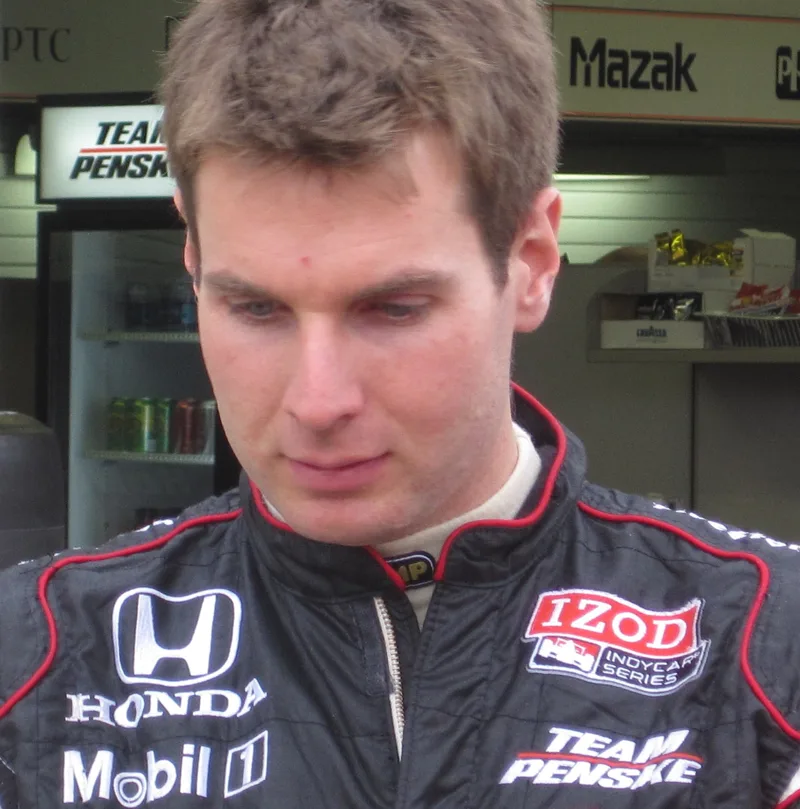
Opening Day saw Team Penske sweep the top of the speed chart. Will Power drove the fastest lap at 223.057 mph (358.975 km/h), and Helio Castroneves completed the most laps, with 82. E. J. Viso drove for Andretti Autosport in place of James Hinchcliffe, who had been concussed by debris during the Grand Prix of Indianapolis.
Ryan Hunter-Reay became the first driver to break 225 mph during practice, with a lap of 225.025 mph (362.143 km/h) during the final hour of Monday May 12. Simon Pagenaud, who had won the Grand Prix of Indianapolis, then became the first driver over 226 mph, and Castroneves went over 227 mph on Thursday.
Rain kept the cars off the track for most of Fast Friday. Six different drivers topped the speed chart across the six practice days, and the most serious incidents involved Jack Hawksworth, who crashed in turn three, and Kurt Busch, who crashed at the exit of turn two on the post-qualifying practice day.
Who was in the field?
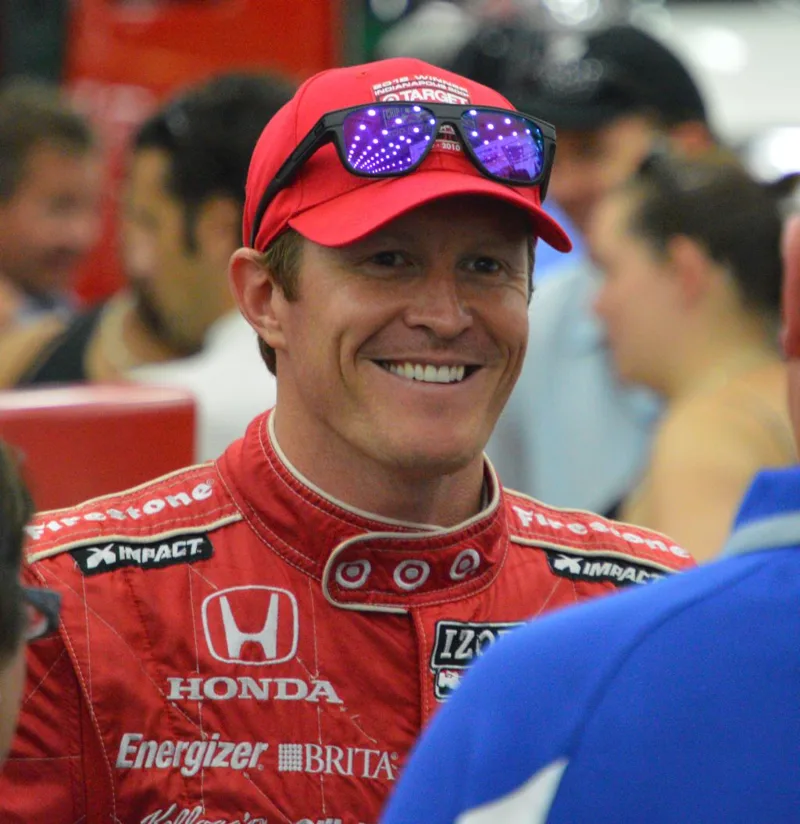
The race had six former Indianapolis 500 winners entered, including two drivers returning after more than a decade. Defending champion Tony Kanaan and Scott Dixon drove for Chip Ganassi Racing. Three-time winner Helio Castroneves returned with Penske, and he was joined by Juan Pablo Montoya, the 2000 winner, who was back at the Speedway after time in Formula One and NASCAR.
Jacques Villeneuve returned to the 500 with Sam Schmidt Motorsports, his first start since his 1995 victory. Buddy Lazier, the 1996 winner, also came back with Lazier Partners Racing, and Kurt Busch entered with Andretti Autosport to attempt the Indy and Charlotte Double Duty.
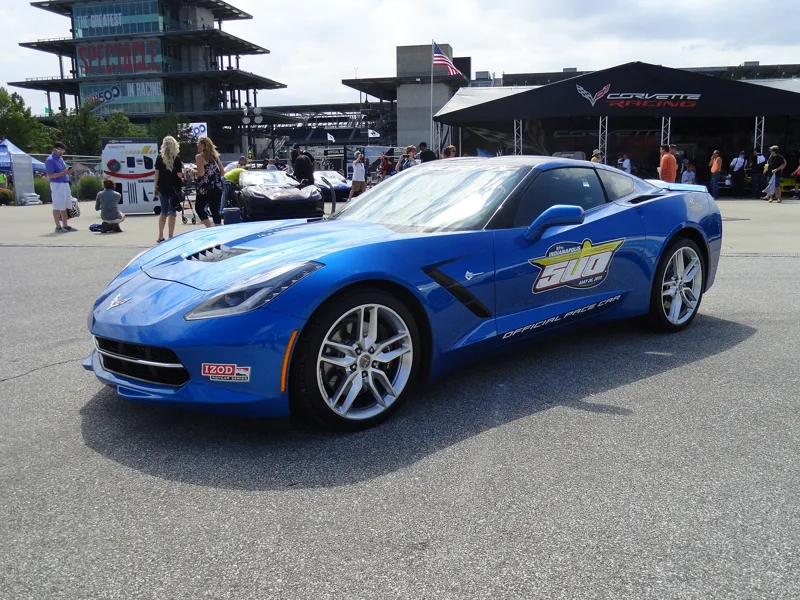
Dario Franchitti, a three-time Indy 500 winner and four-time IndyCar champion, had retired after a crash at Houston in 2013 and was named as the pace car driver. Busch was the first NASCAR champion to enter the Indianapolis 500, and the race was notable because at least one champion from each of Formula One, IndyCar and NASCAR was in the field.
How did the race unfold?
The race started on a cloudless morning. James Hinchcliffe grabbed the lead into turn one and led the first nine laps, before Ed Carpenter took the lead on lap 10. The race then went caution-free for 149 laps, the longest such run since records began in 1976.
That run also set a record for the most consecutive laps from the start before the first yellow. The modern era record had been 66 laps in 2000, and a 1954 race was reported to have gone 110 laps. Graham Rahal retired after 44 laps with electrical problems, and Buddy Lazier was sidelined by clutch issues.
Tony Kanaan's race fell apart on lap 66, when he ran out of fuel. He returned to the track after a 43-second pit stop, but a broken starter forced him back into the pits seven laps later, and he finished 18 laps down. At the halfway point Hunter-Reay was leading and had set a race record average speed of 211.871 mph.
Charlie Kimball spun and crashed on lap 149, bringing out the first yellow. Scott Dixon crashed in turn four ten laps after the green returned, which ended a run of 1,733 consecutive laps completed at the Speedway since the 2006 race.
With 25 laps to go, Hunter-Reay led Carpenter, Townsend Bell, James Hinchcliffe and Castroneves on the restart. Carpenter and Bell went side by side into turn one, and Hinchcliffe dived to the inside, making three abreast. Hinchcliffe touched Carpenter, and both cars spun into the outside wall. Carpenter said afterwards that he would have punched Hinchcliffe had he not been recovering from a concussion.
The green came out on lap 180 with Hunter-Reay in front, and the lead passed between Marco Andretti, Castroneves and back to Hunter-Reay. On lap 191 Townsend Bell crashed hard in turn two, damaging the SAFER barrier, and officials stopped the race with fewer than nine laps left. The red flag lasted nearly 11 minutes while the debris and damage were cleared. The stoppage drew some criticism, but most fans and competitors praised it, because eight of the previous twelve Indianapolis 500s had finished under caution.
The race restarted with six laps to go, and Hunter-Reay led into turn one with Castroneves tucked in behind him. With five laps to go Castroneves made a slingshot pass on the inside to take the lead. On the next lap Hunter-Reay dived below the white line to regain the front going into turn three.
With two laps to go Castroneves went round the outside to retake the lead, and then Hunter-Reay made a slingshot pass to the outside on the main straight to take it back again. Castroneves drafted and tried a late move on the outside, but Hunter-Reay held him off and won by 0.0600 seconds.
What were the main results?
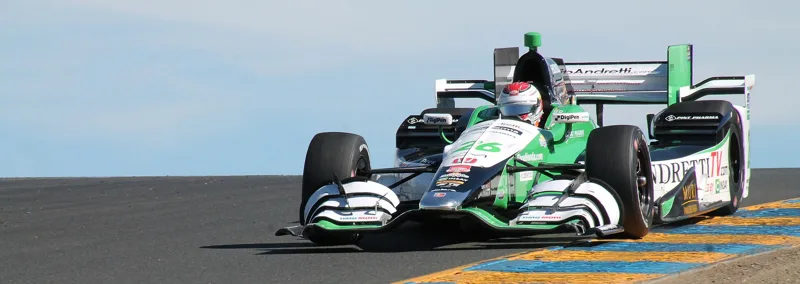
Hunter-Reay won, Castroneves was second and Marco Andretti third. Carlos Munoz was fourth and Juan Pablo Montoya fifth, and the top three cars had been nose to tail on the final lap. Busch finished sixth and then flew to North Carolina to try the Coca-Cola 600.
| Finish | Driver | Note |
|---|---|---|
| 1st | Ryan Hunter-Reay | Won by 0.0600 seconds; first American-born winner since 2006 |
| 2nd | Helio Castroneves | Retook the lead twice in the final laps |
| 3rd | Marco Andretti | Andretti Autosport; close behind the leaders at the end |
| 4th | Carlos Munoz | Andretti Autosport |
| 5th | Juan Pablo Montoya | First Indy 500 since his 2000 win |
| 6th | Kurt Busch | Rookie of the Year; then raced the Coca-Cola 600 |
| Pole | Ed Carpenter | 231.067 mph four-lap average; second consecutive pole |
Busch was trying to become the second driver to complete 1,100 miles in one day, but his engine blew at the Coca-Cola 600 after 271 of the scheduled 400 laps. Hunter-Reay's victory gave Andretti Autosport a strong day, with three cars in the top four.
How was the race broadcast?
ABC carried the race for the fiftieth consecutive year, and Allen Bestwick made his Indianapolis 500 debut as a play-by-play announcer. Dario Franchitti joined the ABC booth as a guest analyst during pole qualifying, and Carb Day was carried by NBC Sports Network.
On radio, Paul Page returned to the booth to anchor the broadcast, replacing Mike King, who had resigned after 2013. The radio audience reached 11 million listeners on 400 terrestrial affiliates. Gary Lee, a former IMS Radio announcer, died about two months after the race.