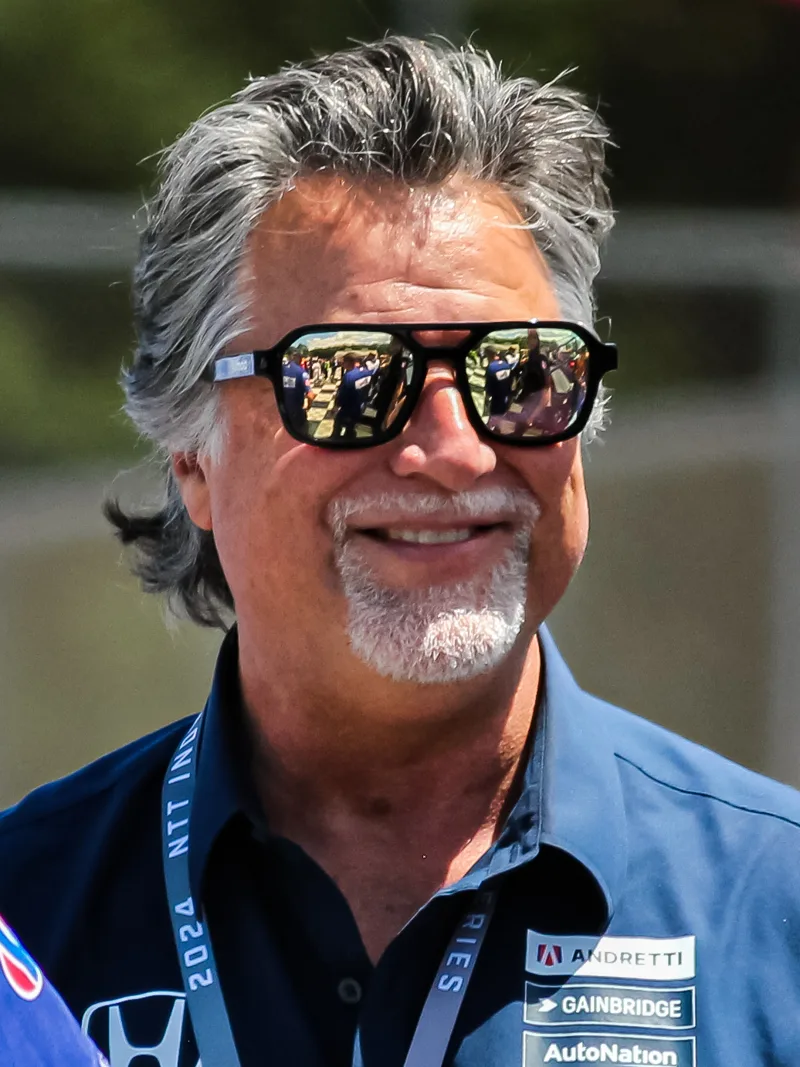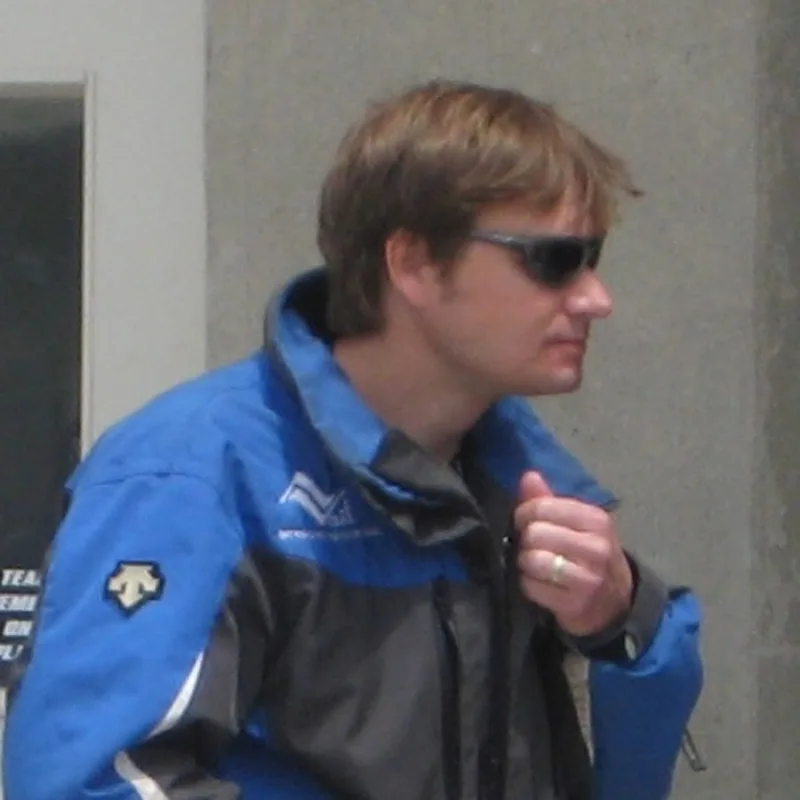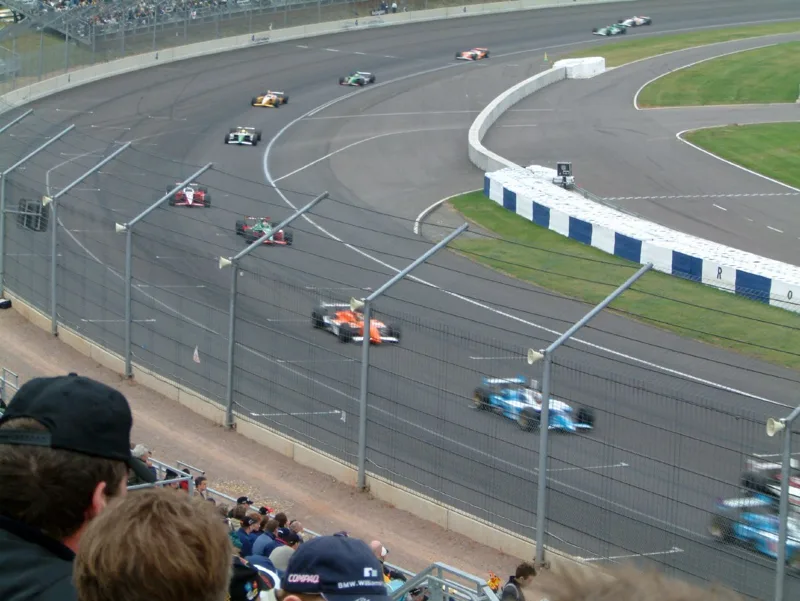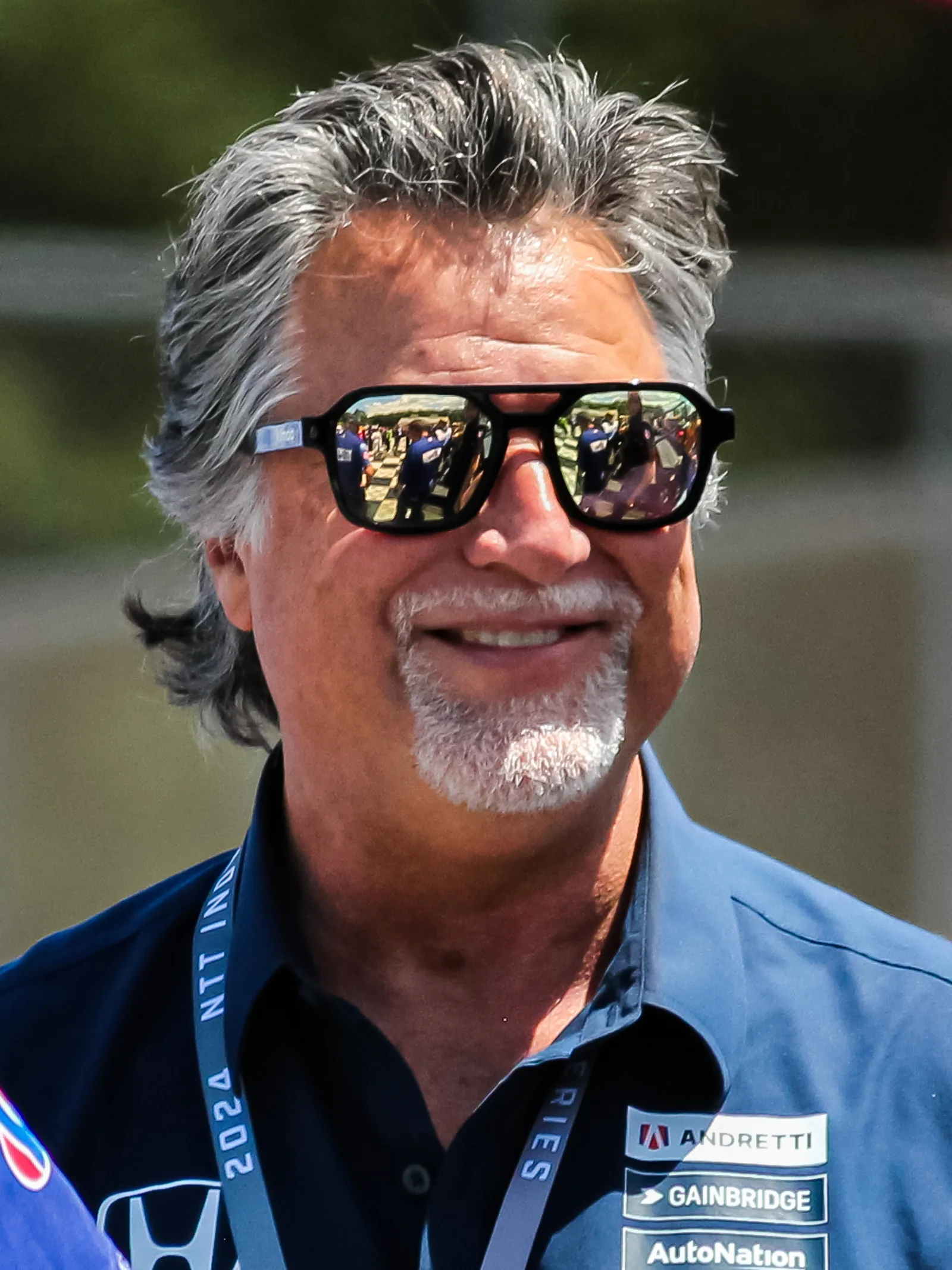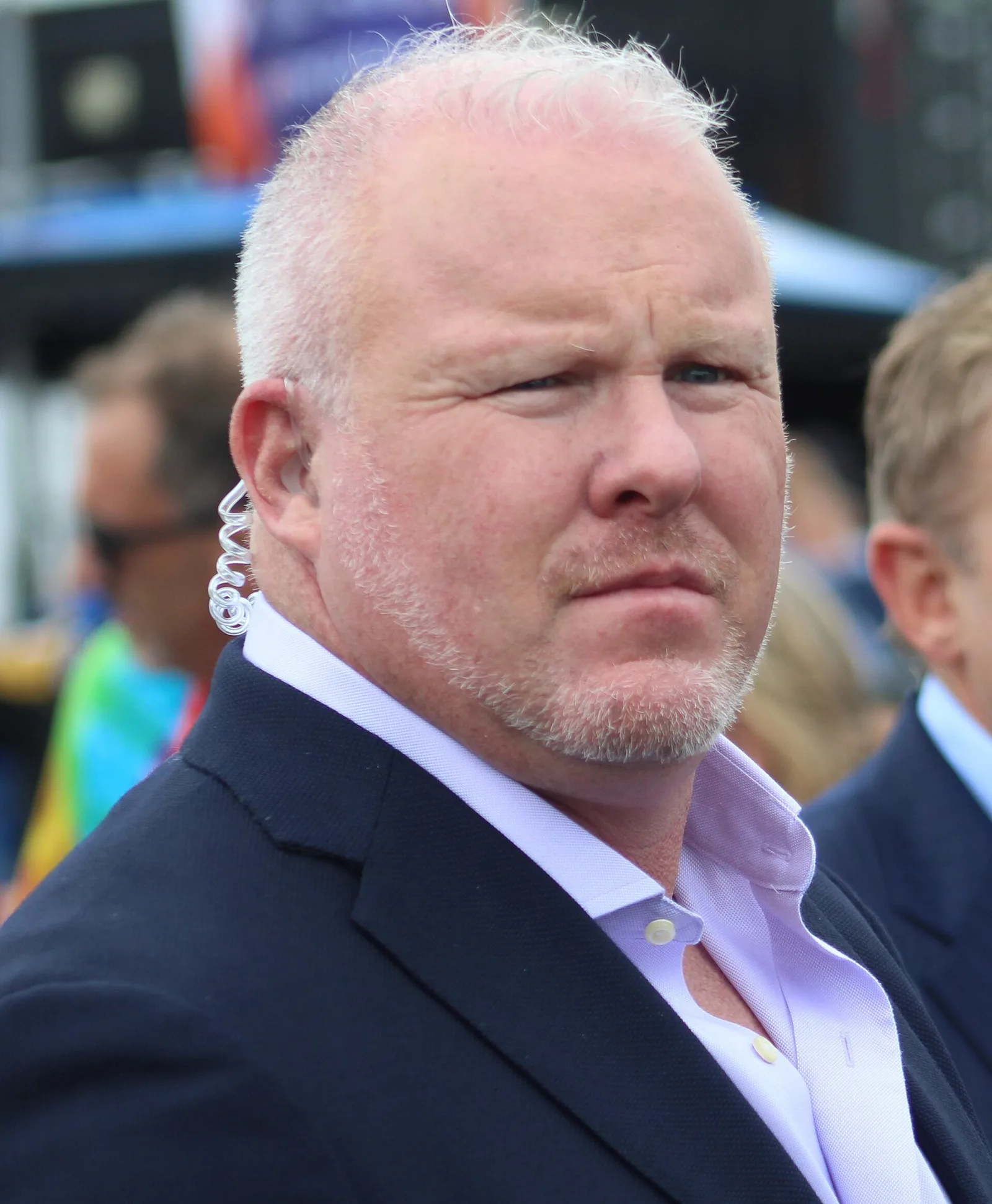
A Canadian-American driver who won the 2003 CART title with Forsythe Racing after years of aggressive racing at Penske, Team Green and beyond.
A Canadian-American driver, Paul Tracy won the 2003 CART title with Forsythe Racing after earlier success in the American Racing Series and years at Penske and Team Green. He later moved into stadium racing, touring cars and broadcasting, and he was honoured by several halls of fame.
Paul Tracy is a Canadian-American driver who raced in CART, Champ Car and the IndyCar Series, and who won the CART championship in 2003. He was known for an aggressive driving style and a bad-boy image, which earned him the nickname The Thrill from West Hill.
His career ran from karting in Ontario to the top of American open-wheel racing, with a long spell at Penske, a difficult period at Team Green and a late title with Forsythe Racing. Later he took his talents to sports cars, stadium racing and touring cars, and he became a respected broadcaster. This article follows that path season by season.
Who is Paul Tracy?
Paul Anthony Tracy was born on 17 December 1968 in Scarborough, Ontario, and grew up in a working-class area east of Toronto. His parents were Tony Tracy, a Northern Ireland-born painter who ran his own firm, and Vivienne Tracy, who was English. He is a dual Canadian-American citizen.
His father's business paid for his early racing. Tony had emigrated to Canada in the 1960s, and the family's painting income funded karts, cars and travel to events across Central and Eastern Canada and the northern United States. Tracy often had to prepare and maintain his own kart because his father worked long hours.
A teenage Can-Am winner who later took the CART title with seven wins in one season.
How did he rise through karting and early car racing?
Tracy had a mini-bike at four and his first go-kart at five. By his teens he had two Canadian Senior Karting titles, and in his first full senior season he took 91 of the 94 starts. He stopped karting at fifteen, when his father arranged for Scott Goodyear to teach him how to drive and set up race cars.
His first car season in 1985 was a strong one. He placed third in Formula Ford 1600, with one victory and the Rookie of the Year title, and in the CASC series he became the youngest Canadian Formula Ford champion. The following year he moved up to Formula 2000 and finished fourth overall in the Canadian championship.
The 1986 Can-Am finale at Canadian Tire Motorsport Park gave him his only Can-Am victory. He took it from pole, and at 17 he became the youngest winner in the series' history. That win opened the door to a career in American open-wheel racing.
In 1988 he raced in New Zealand, where he finished third in the International Formula Pacific series alongside David Brabham. He then joined the American Racing Series, the development series of CART, and won its season-opening round at Phoenix. He finished tenth in the championship and was named Rookie of the Year.
In 1990 he dominated the American Racing Series with Landford Racing, winning nine of fourteen races. He set records for pole positions in a season, with seven, and for consecutive victories, with four. He clinched the championship with three races to spare, finishing with 214 points.
How did his Penske years shape him?
Tracy's CART debut came in 1991 with Dale Coyne Racing at Long Beach, where an overheating engine dropped him to 22nd. Roger Penske then offered him a testing contract, and Tracy moved to Pennsylvania to work with the team, helping to evaluate the team's machinery alongside Emerson Fittipaldi and Rick Mears, both CART champions.
His first race for Penske ended in August 1991 at Michigan, when he crashed and broke a fibula and tibia. He still returned to finish seventh at Nazareth, and he finished as the third-best rookie in the standings. The following year he raced eleven times for Penske, with second places at Detroit and Mid-Ohio.
The 1992 season also brought his first CART pole, at Road America, and a twelfth-place finish in the championship with 59 points. He had proved that his speed was real, even if the results were still uneven.
In 1993 he drove full-time for Penske after Mears retired. The start was difficult, with five of the first six races ending through mechanical failure or accidents. Then he started second at Long Beach and won his maiden CART race, leading 81 of 105 laps.
Tracy followed that victory with the Grand Prix of Cleveland, where he led 69 laps from pole, and then, one week later, the Molson Indy Toronto. He also led 130 laps at New Hampshire before Nigel Mansell passed him with four laps left, and he finished the season with 157 points, third in the standings.
The 1994 season began with unreliability and a multi-car crash at Phoenix, but he grew stronger. He took Detroit after a collision with teammate Al Unser Jr., and at Nazareth he led 192 of 200 laps. He also won the Laguna Seca race from pole, and he finished the year third overall with 152 points.
What did his later seasons with Newman/Haas and Penske bring?
In 1995 Tracy moved to Newman/Haas Racing on a three-year contract, replacing the retired Mario Andretti. He won at Surfers Paradise, the venue of the Australian Indy Car Grand Prix, getting past teammate Michael Andretti with eight laps to go, and he took the championship lead at one point in the season before finishing sixth with 115 points.
In 1996 he returned to Penske in a PC-25 with a Mercedes engine. He had recently undergone radial keratotomy, and a practice crash at Michigan broke his sixth vertebra. He missed a round at Mid-Ohio, but he still scored three poles and finished thirteenth in the standings.
The 1997 season was better for results. Tracy scored his first win in 27 races at Nazareth, leading 186 of 225 laps, and then won the Rio 400 and the Motorola 300. He finished fifth in the points with 121, but his public criticism of the Penske car and the team's engine and tyre choices strained the relationship, and Penske released him two years early.
How did his Team Green years go?
Tracy signed with Team Green for 1998, driving a Reynard-Honda, and his season was marked by accidents and a first-race suspension the following year. He finished thirteenth in the championship with 61 points, but Team Green offered stability after the Penske years.
In 1999 he won the Miller Lite 225 at Milwaukee, when a late pit stop by Jimmy Vasser left the way open. He also won the Texaco Grand Prix of Houston, and he finished third in the championship with 161 points. Team Green required him to tone down his expectations, and the team's engineering consultant was assigned to help him remain calmer.
The 2000 season began well. He qualified third at Homestead, then took the Toyota Grand Prix of Long Beach, which put him top of the standings, but a pit-lane incident at Detroit and a crash at Portland cost him momentum. He won two consecutive races at Road America and Vancouver, and he finished fifth with 134 points after an engine failure at California.
Team Green's 2001 season produced fourteenth in the standings with 73 points, and it was his first winless year since 1998. In 2002 he won at Milwaukee, leading 184 of the 250 laps, and finished eleventh with 101 points.
That same year he made his IRL debut in the Indianapolis 500. He was running second with a lap and a half left when he overtook Helio Castroneves just as a caution flag appeared for another crash. IRL officials awarded the victory to Castroneves, and Tracy has maintained since then that he won the race.
How did he win the 2003 championship?
Tracy joined Forsythe Racing for 2003. He opened the year by winning at St. Petersburg, leading 71 of the 105 laps, then won the next race at Monterrey and the Toyota Grand Prix of Long Beach. Three straight wins to open a season was a feat last managed by Al Unser in 1971.
The title race was a close battle with Bruno Junqueira, who took the lead at Milwaukee after Tracy had three poor performances. Tracy regained the lead with three podiums and a pole at Portland. He won the Molson Indy Toronto from pole and then took the Molson Indy Vancouver, and he later won at Mid-Ohio to reclaim the lead.
The championship was decided at the wet-weather Lexmark Indy 300, where Tracy finished 13th while Junqueira crashed with ten laps remaining. That result gave Tracy the title, with seven wins for the season. It was the high point of a career that had seen many crashes and disputes along the way.
What happened to his CART career after 2003?
In 2004, the series was renamed Champ Car World Series after CART went bankrupt. Tracy stayed with Forsythe and won at Long Beach and Vancouver, finishing fourth in the standings with 254 points. He was loyal to the series, and he considered its cars better than the IRL machines he had criticised.
The 2005 season was consistent. He started on pole at Long Beach and finished second, led 192 of 225 laps at Milwaukee and took the Grand Prix of Cleveland from pole. He led a race-high 107 laps at Las Vegas before a collision ended his race, and he finished fourth in the championship with 246 points.
In 2006 he took three second places in Houston, Toronto and Montreal, but an ATV accident in Las Vegas also left him with a fractured shoulder blade. He finished seventh in the standings. The following year he won at Cleveland, finishing eleventh with 171 points, and he had signed a five-year extension the year before.
After unification with the IRL, Tracy raced part-time for several teams, including KV Racing, Vision Racing, A.J. Foyt Enterprises and Dreyer and Reinbold. His best results were sixth places at Edmonton in 2009 and 2010. In 2011 a fifteen-car crash at the Las Vegas season finale killed Dan Wheldon, an accident in which Tracy was involved, and Tracy later chose to stop racing, since he had wanted a full-time seat.
How did his career move beyond open-wheel racing?
Tracy's interests extended well beyond open-wheel cars. He raced in NASCAR's Busch and Truck series in 2006 and 2008, he entered sports car races through the Rolex Sports Car Series and he drove in the Stadium Super Trucks in Toronto between 2013 and 2016, finishing in the top ten in four of five races.
He also competed in the Trans-Am Series and the Bathurst 12 Hour. In 2016 he and Gary Moore claimed the B class at the Indy Legends Charity Pro-Am, driving a 1965 Ford Mustang. His 2019 Bathurst appearance ended after 189 laps with an engine failure.
In 2021 he began racing in the Superstar Racing Experience. He won a podium at Stafford in 2022, but he was suspended in July 2023 after a five-car accident that he started. He also won the first race of the NASCAR Brasil Sprint Race in 2023, his first auto racing victory since 2007.
What did he do in broadcasting?
Tracy began analysing IndyCar races for Sportsnet in 2013. He joined NBCSN's IndyCar team the following year and stayed until 2021, when his contract was not renewed. NBC's producers allowed him to give his racing opinions without dumbing them down, and his presence was linked to a rise in ratings.
In late 2018 NBC Sports looked into a social media post that appeared to make a racist comment about immigrants. It cleared him after deciding that he had not written the post. He also appeared in 13 episodes of the Speed series Battle of the Supercars in 2010.
How is his career remembered?
Tracy has received honours from several bodies. In 1990 the British Racing Drivers' Club presented him with the Bruce McLaren Trophy as the Commonwealth's most promising driver, and in 1991 the Canadian Racing Drivers' Association named him its top driver of the year. He was also voted CART's Most Popular Driver in 2002 and 2003.
He holds places in three halls of fame: Long Beach's Motorsports Walk of Fame, Canada's Motorsport Hall of Fame and an Ontario sports honour roll. His life was documented in a 2001 biography, Never Too Fast: The Paul Tracy Story, written by Paul Ferriss.
His legacy is shaped by a mix of talent and controversy. The nickname captured both his speed and his reputation for clashes.
How did his CART results compare season by season?
| Season | Team | Result |
|---|---|---|
| 1993 | Penske Racing | Five wins, third in points with 157 |
| 1994 | Penske Racing | Three wins, third overall with 152 |
| 1995 | Newman/Haas Racing | Two wins, sixth with 115 |
| 1996 | Penske Racing | Three poles, thirteenth with 60 |
| 1997 | Penske Racing | Three wins, fifth with 121 |
| 1999 | Team Green | Two wins, third with 161 |
| 2000 | Team Green | Three wins, fifth with 134 |
| 2003 | Forsythe Racing | Seven wins, champion |
| 2004 | Forsythe Racing | Two wins, fourth with 254 |
| 2005 | Forsythe Racing | Fourth with 246 |
| 2007 | Forsythe Racing | One win, eleventh with 171 |