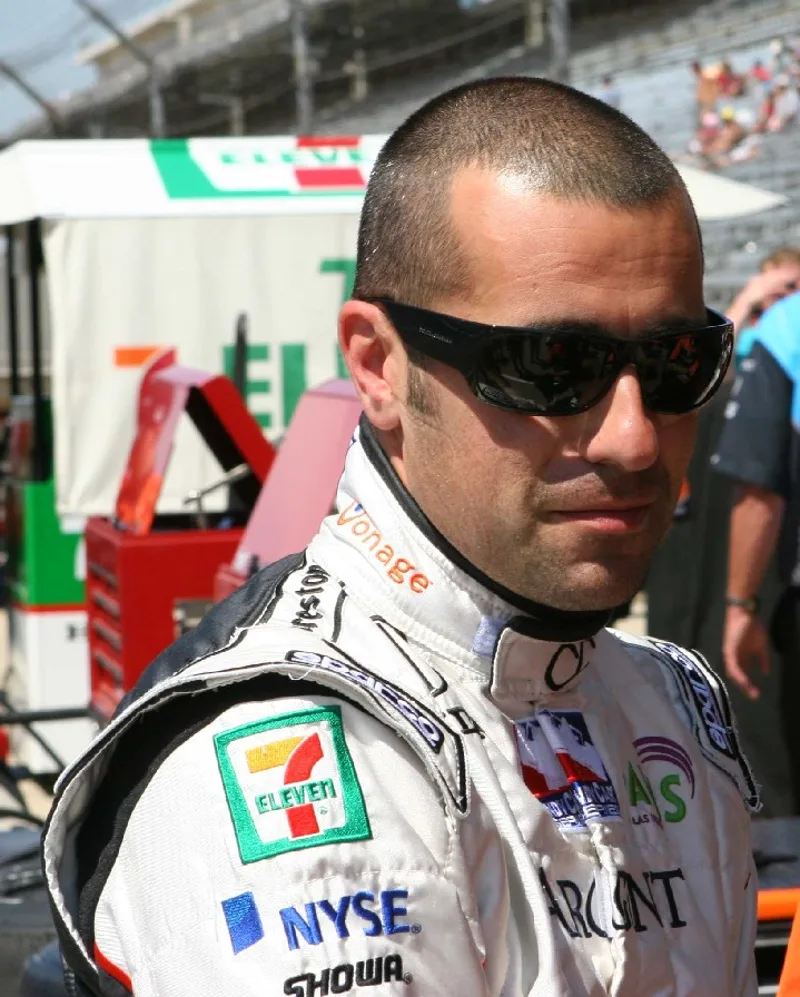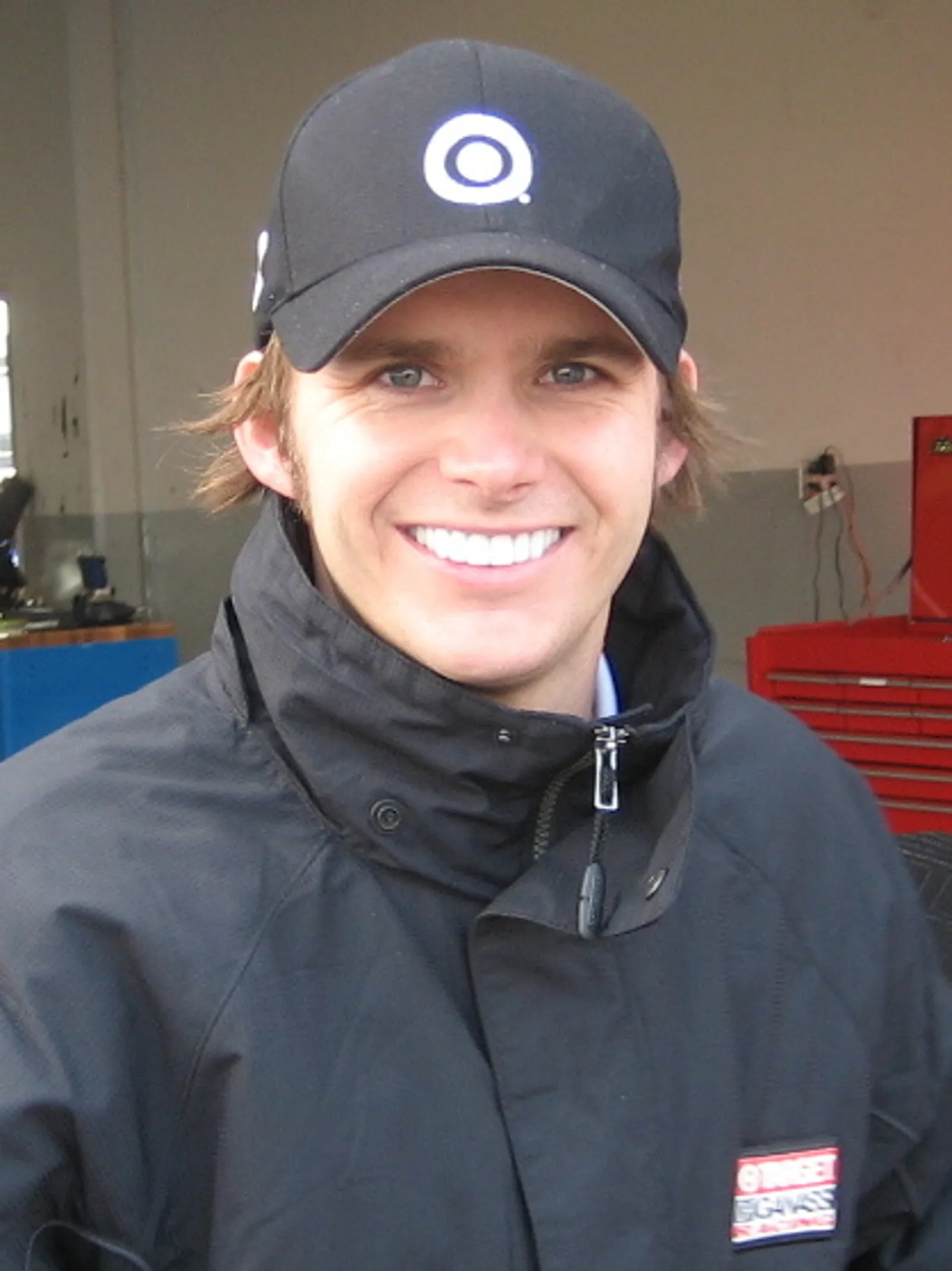
The Emberton-born driver who took the 2005 IndyCar title, won the Indianapolis 500 in 2005 and 2011, and died after a crash at Las Vegas in October 2011.
Dan Wheldon was a British racing driver who won the 2005 IndyCar Series championship for Andretti Green Racing. He won the Indianapolis 500 in 2005 and again in 2011, and he was killed in a multicar crash at Las Vegas Motor Speedway in October 2011, aged 33.
Daniel Clive Wheldon was born in Emberton, Buckinghamshire, on 22 June 1978. He began karting as a child, moved to the United States in 1999 and went on to win titles in several American series. He won the Indianapolis 500 twice, and the first of those wins made him Britain's first winner since Graham Hill in 1966.
His career ended in a crash at the 2011 season finale in Las Vegas. The investigation that followed found several contributing factors and no single cause.
How did Wheldon get started in karting and Britain?
Wheldon began karting at four but could not race competitively until he was eight, because of age limits. He won the RAC British Cadet Karting Championship three times, from 1988 to 1990, and took the British B Junior title in 1992. He also won the 1995 FIA Formula Ayrton Senna Memorial World Cup at Suzuka.
Clive, his father, raced karts as a young man, and his mother kept the times for Clive. He first raced a self-built 60cc kart in the gaps between events, and later moved up to a 100cc kart. He was inspired by Nigel Mansell, and he was sponsored by All Kart owner Bruno Ferrari.
He progressed to formula cars in 1996 with Team JLR in Formula Vauxhall Junior. He won at Brands Hatch, Silverstone and Oulton Park, and finished second overall after a title duel with Luciano Burti and Tim Mullen. In both 1996 and 1997 he reached the final shortlist for the BRDC McLaren Autosport prize for young drivers.
In 1997 he was fourth in both the British and European Formula Ford championships for Andy Welch Racing, with three British victories. In 1998 he moved to the Van Diemen team, finished third in both series and was second at the Formula Ford Festival at Brands Hatch. That period also produced a rivalry with the future Formula One champion Jenson Button.
From karting in Buckinghamshire to two Indianapolis 500 wins, and a final race in Las Vegas that ended his life.
Why did he move to the United States?
Wheldon went to America in January 1999 for a Formula Ford 2000 test, and he won the 1999 U.S. F2000 National Championship at his first attempt. Without enough funding to reach the British Formula Three or Formula Renault series, he took the opportunity offered by his former team principal Ralph Firman Sr. and by Jayhard/Primus Racing's owner, Jon Baytos.
In 1999 jet lag and frequent trips home affected his early form, but he won six races and eleven top-ten finishes. He was named the series' Rookie of the Year and later inducted into its Hall of Fame.
In 2000 he moved up to the Toyota Atlantic Championship with PPI Motorsports. He won the season-opening round at Homestead-Miami on debut, which made him the first driver in the series to win on his debut. He added a win at Laguna Seca and finished runner-up with 159 points.
For 2001 he joined the PacWest Lights team in Indy Lights, the step below IndyCar. He won at Gateway Motorsports Park and at Road Atlanta, placed in the top ten at every round and finished runner-up with 149 points. He was named the 2001 Indy Lights Rookie of the Year.
How did he start in IndyCar?
Wheldon joined Panther Racing as a test driver in June 2002 and drove its second car in the final two races of that season. He then joined Andretti Green Racing for 2003, and when Dario Franchitti was injured in a motorbike accident, Wheldon drove in his place. He finished seventh in his first race at Motegi, and he was named the 2003 IndyCar Rookie of the Year.
His first Indianapolis 500 came that year. He qualified fifth, but late in the race he struck a retaining wall and finished 19th. Once Franchitti returned, Wheldon was retained by the team following the retirement of its owner and mentor Michael Andretti, and he finished the season 11th in the points with 312.
He returned to Andretti Green Racing for 2004 and finished second overall with 533 points. He took his first career pole at Phoenix and his first series win at Motegi, leading an event-high 192 laps from pole. He added wins at Richmond, where he held off Helio Castroneves on the final lap, and at Nazareth.
How did the 2005 championship season unfold?
Wheldon won the 2005 season opener at Homestead-Miami from 11th on the grid, leading 158 of 200 laps. He won at St. Petersburg, his only road-course victory in the series, and at Motegi for the second year running. Those early wins set the tone for the season.
His most celebrated result was the Indianapolis 500. He swapped the lead with Danica Patrick until she slowed with fuel trouble, then made the decisive pass with seven laps to go. He became the first British winner of the race since Graham Hill in 1966.
At Pikes Peak he took his fifth win of the year, matching Sam Hornish Jr.'s 2002 record for victories in a season. At Chicagoland he led 88 laps to set a new series record with his sixth win. He clinched the title before the penultimate round with a practice lap at Watkins Glen, and he finished the season with 628 points.
His 102-point lead meant the title was secure with one race left. He finished sixth at California to complete the campaign, and he was named the 2005 Autosport British Competition Driver of the Year.
Why did he leave Andretti Green for Chip Ganassi Racing?
Wheldon left Andretti Green Racing for Chip Ganassi Racing in 2006, switching to Dallara chassis and Honda engines after Toyota withdrew. Ganassi had opened informal talks after rumours that Wheldon might leave Andretti Green. Wheldon wanted to make sure his future in the IRL was secure and that he stayed competitive.
He won the season-opening Toyota Indy 300 at Homestead-Miami. At the Indianapolis 500 he qualified third and led a race-high 148 laps before a pit stop for a puncture dropped him to fourth. He achieved eight top-ten finishes and two pole positions, at Kansas and Nashville.
The 2006 title went to the final round, where Wheldon won at Chicagoland but lost the championship on the tie-break to Hornish. Hornish had won four races to Wheldon's two, and the two drivers were level on points.
In 2007 he won at Homestead for a third successive year, a new series record, and he took a second victory at Kansas. A late collision with Marco Andretti at Indianapolis cost him the lead of the points. He finished fourth in the final standings with 466 points, after a confrontation with Danica Patrick at Milwaukee that was settled in a private meeting with IndyCar president Brian Barnhart.
What happened in the Panther and Herta years?
Wheldon won at Kansas in 2008, becoming the first driver to win two consecutive races there. He won again at Iowa and donated the winnings to help victims of the tornadoes and flooding in the state. He finished fourth in the points with 492 and left Chip Ganassi Racing at the end of the year. He felt betrayed after learning that Tony Kanaan had opened talks with Andretti Green.
He returned to the one-car Panther Racing team for 2009 and finished second at the Indianapolis 500 after starting 18th. He ended that season tenth in the points with 354. In 2010 he was second at the Indianapolis 500 again, and he finished ninth in the standings with 388.
Despite strong showings, he never won a race for Panther. He filed a 383,400 dollar lawsuit against team owner John Barnes over unpaid salary and earnings, and the two reached a settlement on 1 October 2010. Wheldon then had no full-time seat for 2011.
How did he win the 2011 Indianapolis 500?
Wheldon missed the first four races of 2011 while looking for a team. Bryan Herta offered him a car from his low-budget operation, Bryan Herta Autosport, and he qualified sixth. On the final lap, Hildebrand crashed leaving turn four, and Wheldon took the lead to win.
He became the first driver to win the Indianapolis 500 while leading only the final lap. The car was a 2003 Dallara leased from Sam Schmidt Motorsports.
What happened at Las Vegas in October 2011?
The 2011 IZOD IndyCar World Championship at Las Vegas Motor Speedway carried a challenge. A prize of 5 million dollars would be shared equally between a driver and a random fan if the driver won from the back of the grid. Organisers could not find an international driver for the challenge, so it passed to Wheldon, who accepted.
He was frustrated that his car was slower than the others, and he felt it would be difficult to stay with the pack unless the issue was solved. He was also reporting for ABC in the warm-up laps, and he defended the event and the series on air.
On lap 11 of the planned 200, a fifteen-car accident began between turns one and two. Wheldon was in 24th place and on the left side of the track to avoid the pile-up. As he tried to slow, his car hit the rear wheel of Charlie Kimball's car, and it was launched into the air toward the catchfence.
His car rotated and travelled parallel to the fence before striking a fencepost on its right-hand side. The impact tore the chassis, and the post struck the lower part of his helmet. He was extricated by the trackside safety team and airlifted to hospital, where he was pronounced dead.
The race was abandoned after a five-lap formation salute, and his No. 77 was displayed alone atop the scoring pylon. An autopsy on 17 October determined that he died of blunt trauma to the head. He was the first driver killed in IndyCar competition since Paul Dana in 2006.
His funeral at St. Petersburg, Florida, drew almost 1,000 mourners. A second memorial took place in his home town of Emberton in November, and he was buried at Calvary Catholic Cemetery in Clearwater, Florida.
The investigation into the crash was released on 15 December 2011. It found that several factors had coincided, including the catchfence around the track and the unlimited track movement during racing, and that none could be singled out as the sole cause.
How has his legacy been honoured?
Dallara named its new single-specification chassis, the DW12, in his honour two days after his death. Its bumper and nerf bar section was designed to prevent similar crashes in single-seater racing.
A charity race in his honour was held in Milton Keynes on 6 December 2011, and he was posthumously awarded the Gregor Grant Award for lifetime achievement. A street sign named Dan Wheldon Way was unveiled in St. Petersburg on 7 March 2012, and Franchitti dedicated his 2012 Indianapolis 500 win to Wheldon.
Autosport named him one of the 50 greatest drivers never to race in Formula One in 2013. He was inducted into the Indianapolis Motor Speedway Hall of Fame in May 2019. The book Lionheart: Remembering Dan Wheldon appeared in May 2016, and a 2023 documentary, The Lionheart, covered his death and legacy.
Career summary by series
| Series | Years | Teams | Standout result |
|---|---|---|---|
| U.S. F2000 | 1999 | Jayhard/Primus Racing | Champion at his first attempt |
| Toyota Atlantic | 2000 | PPI Motorsports | Runner-up with 159 points |
| Indy Lights | 2001 | PacWest Lights | Runner-up with 149 points |
| IndyCar | 2002 to 2011 | Panther, Andretti Green, Chip Ganassi, Bryan Herta | Series champion in 2005; Indianapolis 500 wins in 2005 and 2011 |
| Sports cars | 2005 and 2006 | Howard-Boss, Chip Ganassi Racing | 24 Hours of Daytona win in 2006 |