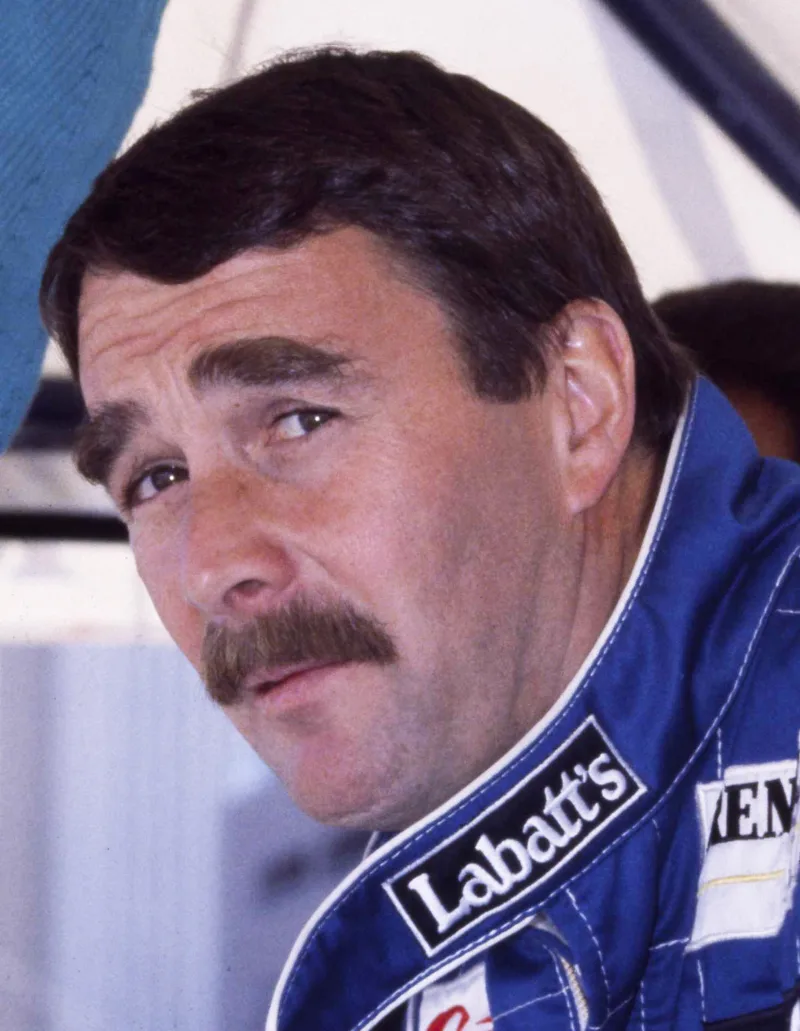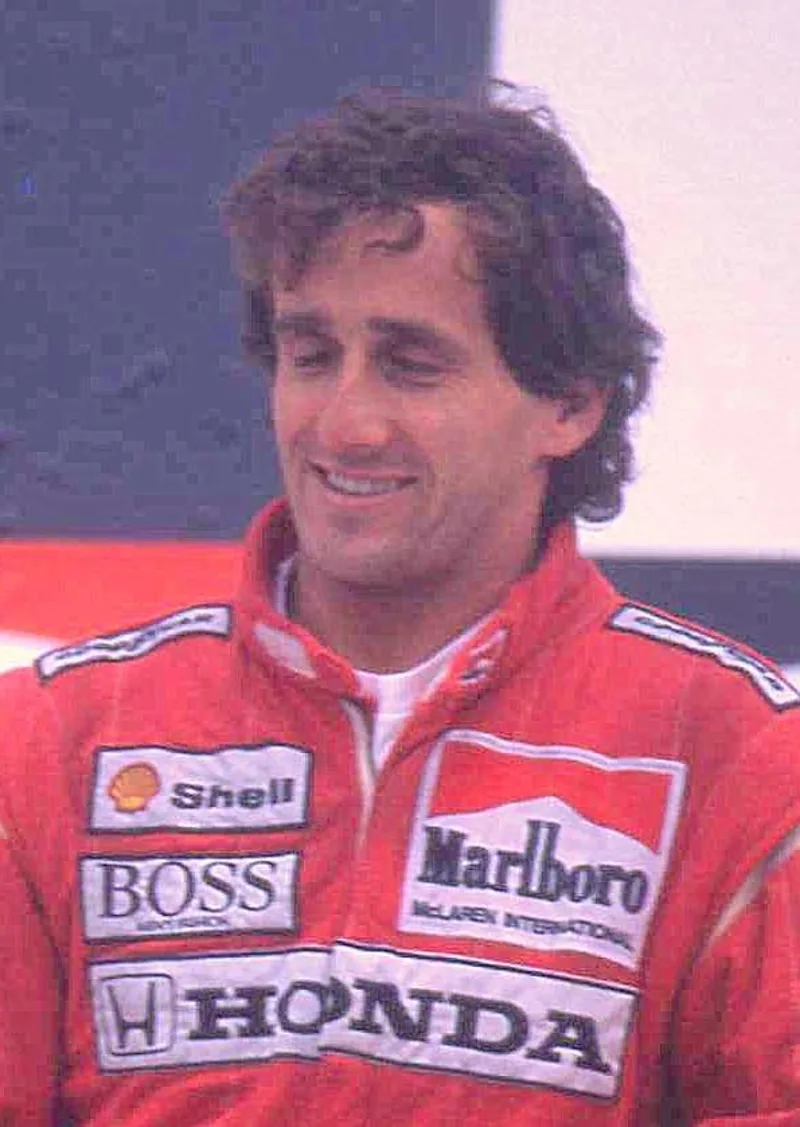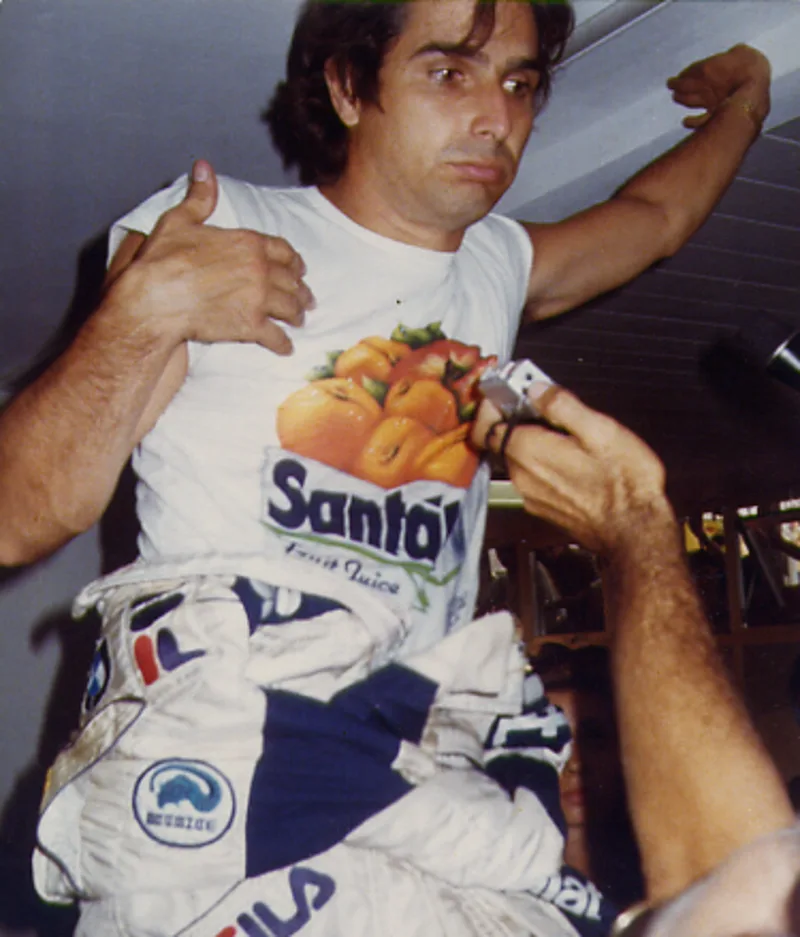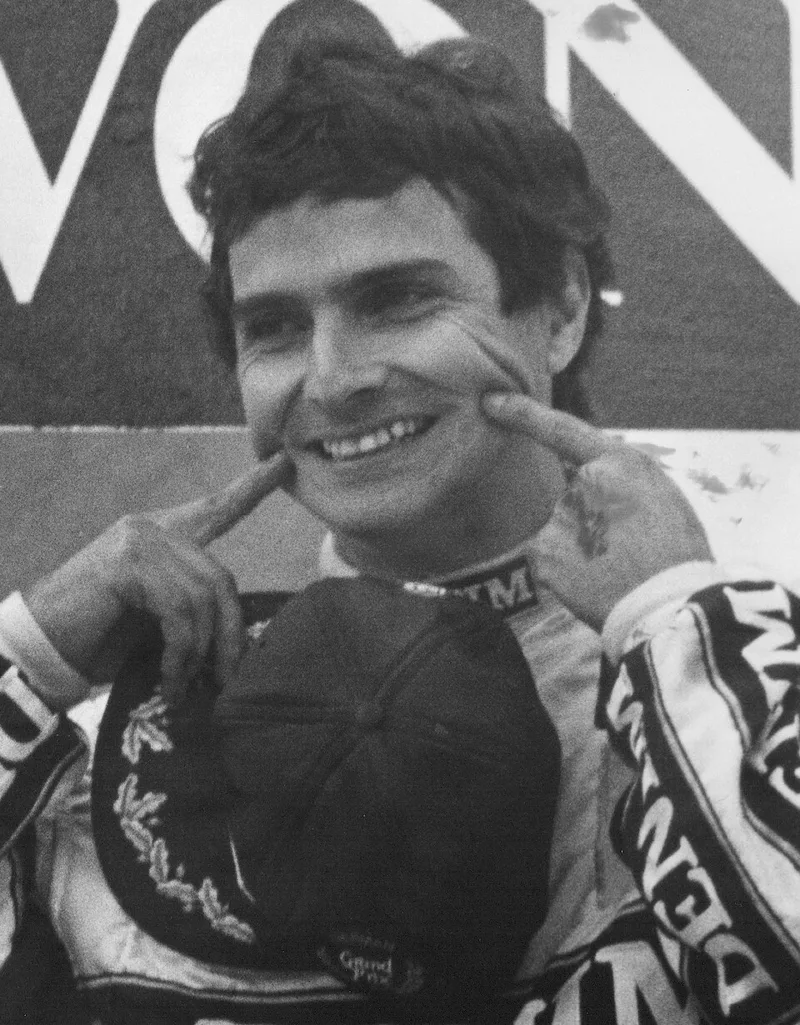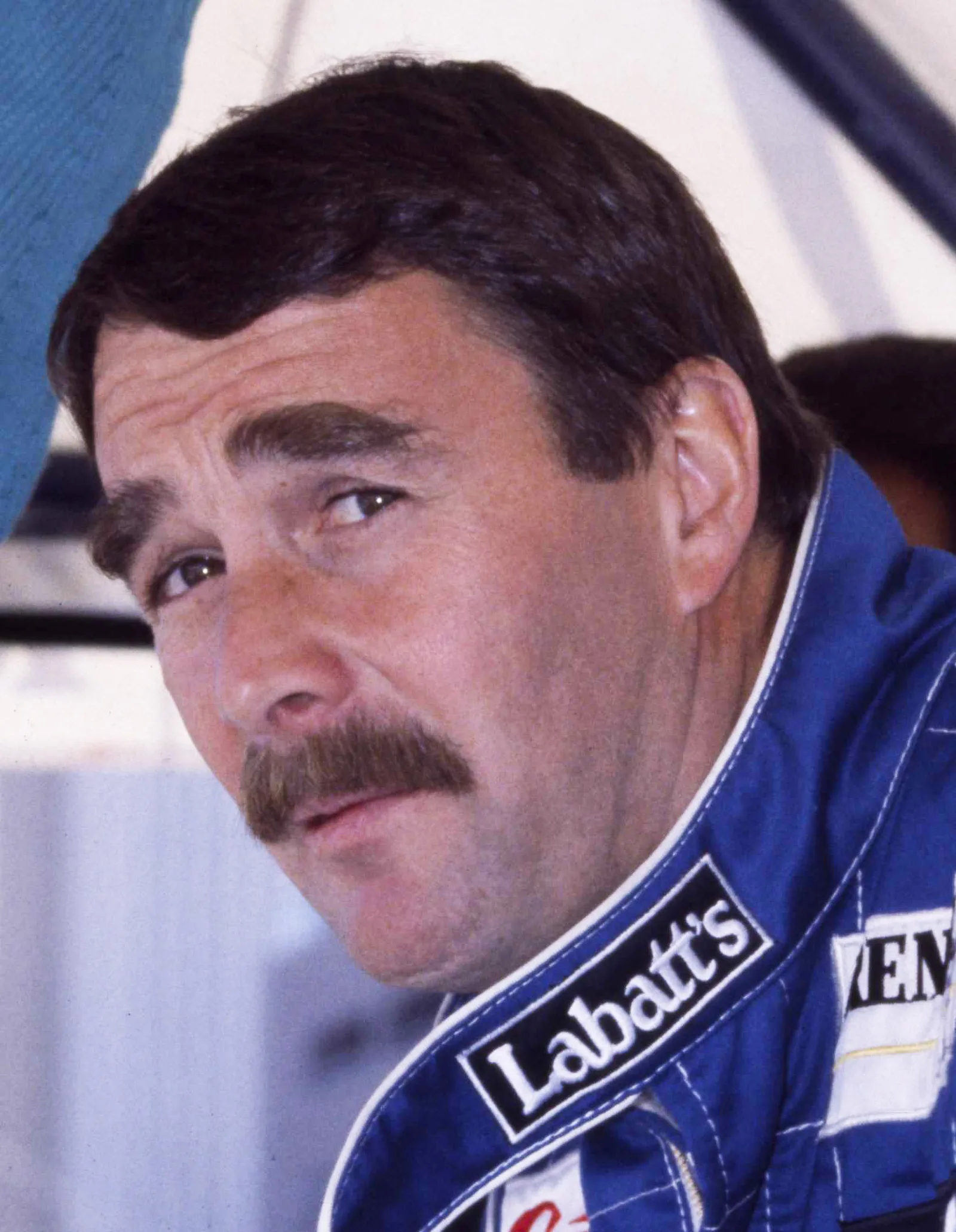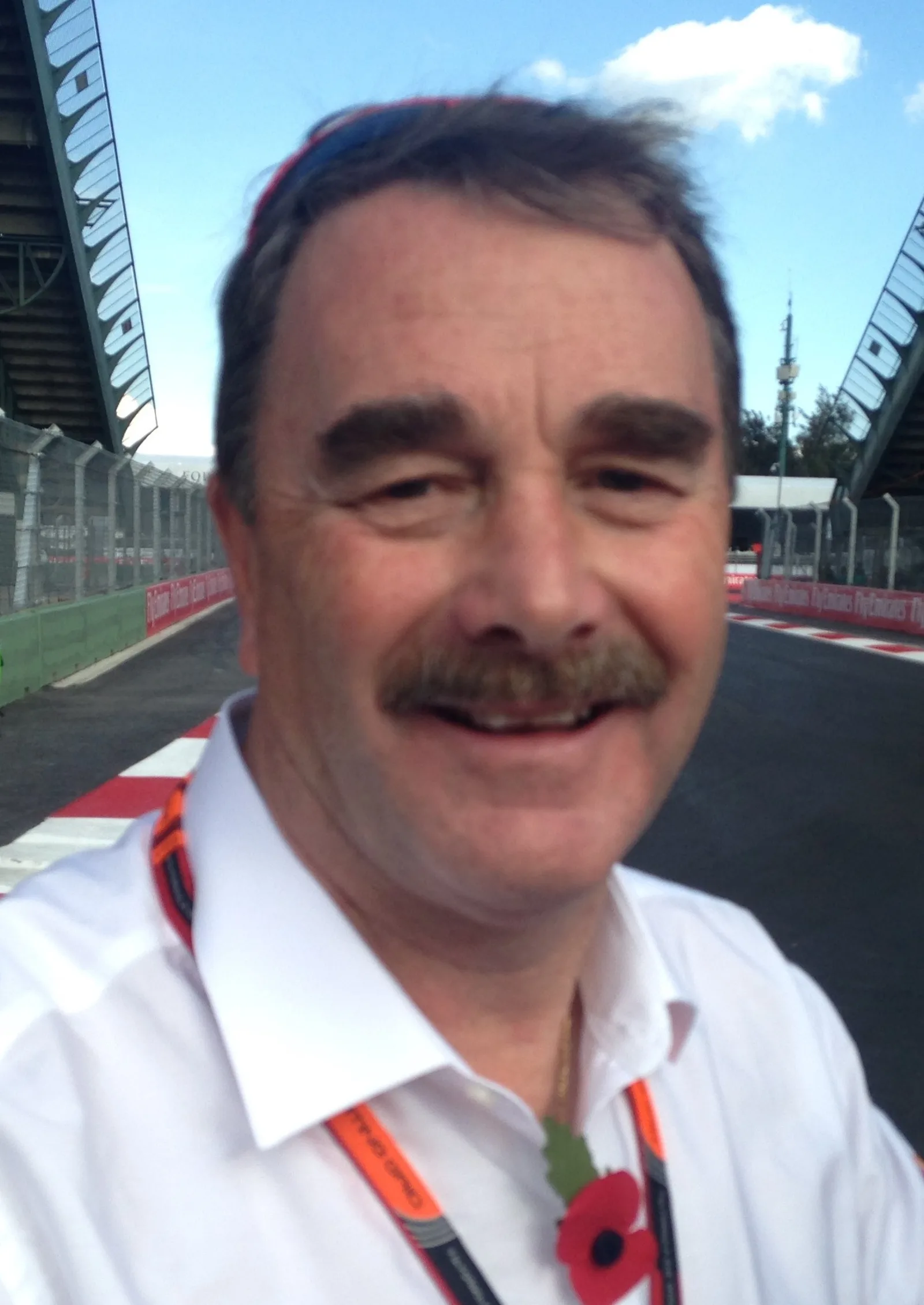
From a broken neck and a Lotus test seat to the 1992 world title and the 1993 CART championship, the career of the driver with the red number 5.
Nigel Mansell was a British driver who competed in Formula One from 1980 to 1995 and won the 1992 world championship with Williams. He also took the 1993 CART title, a double no other driver has matched, and he finished with 31 Grand Prix wins.
Nigel Mansell is a British former driver who raced in Formula One from 1980 to 1995 and won 31 Grands Prix. He was world champion with Williams in 1992, and in 1993 he took the CART IndyCar title, making him the only driver to hold both crowns at the same time. His red number 5 became one of the most recognisable cars of its era.
Who was Nigel Mansell?
Mansell came into the world on 8 August 1953 in Upton-upon-Severn, Worcestershire, and was raised in Hall Green, Birmingham. He started his racing career slowly, paying for his own progress up the ranks. By 1977 he had won 33 of the 42 races he entered and become British Formula Ford 1600 champion.
That title came despite a broken neck from a qualifying accident at Brands Hatch. Doctors warned he might never drive again, but he discharged himself from hospital and returned to racing.
A broken neck, a Lotus test seat and a red number 5 that became one of the most recognisable cars of its era.
How did his early single-seater career develop?
A Lola T570 Formula Three test at Silverstone ended in fourth place, and it convinced him that he was ready for a higher formula. His first Formula Three season opened with a pole position and a second place. The team's deal with Unipart required Triumph Dolomite engines, far weaker than the Toyota units.
After three seventh places and a fourth in his final race with that team, he joined David Price Racing. He won in the series at Silverstone and finished eighth in the championship. A collision with Andrea de Cesaris then produced a violent cartwheeling crash, and he was hospitalised again with broken vertebrae.
How did Colin Chapman's Lotus give him a Formula One chance?
Lotus boss Colin Chapman had noticed his driving. Mansell, concealing the extent of his injury with painkillers, performed well enough in a tryout at Paul Ricard to be considered for the second seat alongside Mario Andretti in 1980. Elio de Angelis got the seat, but Mansell was appointed a test driver for the Norfolk-based team.
His test work impressed Chapman enough to give him three Formula One starts in 1980, in a development version of the Lotus 81. At Austria a fuel leak in the cockpit caused painful burns before the start, and an engine failure ended the next race. At Imola an accident left him unable to qualify.
What were his full-time years at Lotus like?
His time as a full-time Lotus driver, from 1981, was hard going. The cars were unreliable, and his team-mate Elio de Angelis regularly beat him. Out of 59 starts with the team he finished only 24, and his best result was third place, which he achieved five times across the four years.
Chapman had given him the race seat after Andretti's move to Alfa Romeo left a gap. Mansell chased strong results through those seasons, but a shock win at the 1982 Austrian Grand Prix went to de Angelis, who was frequently quicker than his less experienced colleague.
What changed at Lotus after Chapman died?
Chapman's contract extension, running to the end of 1984, made Mansell wealthy. Mansell became close to him, and he was devastated when Chapman died in 1982. Relations at the team soured under Peter Warr, who did not rate Mansell highly either as a driver or as a person.
Warr's view was that de Angelis had been the team's number one, and the figures bore that out. De Angelis out-qualified Mansell ten times to three in 1982. In 1983 de Angelis had exclusive use of the turbocharged Renault 93T. Mansell did not drive a turbo car until the British Grand Prix, where he worked up from 16th to second before settling for fourth in a rushed new 94T.
In 1984 he finished in the top ten of the standings for the first time and claimed his first pole. At Monaco he passed Alain Prost in the wet to lead, but he lost control on the painted lines and retired on lap 15. Lotus then signed Ayrton Senna for 1985, and Mansell moved to Williams.
How did the 1984 Dallas race become memorable?
At the 1984 Dallas Grand Prix, one of the hottest races on record, Mansell led for half the distance after starting from pole. Close to two hours behind the wheel in 104 F (about 40 C) left him collapsing as he pushed the car home, which still earned sixth and a point.
His final race for Lotus, in Portugal, ended with a brake failure with 18 laps remaining. In his autobiography Mansell later said the team had refused him the brake pads he wanted for that race.
Did the Williams years start in 1985?
In 1985 Frank Williams signed Mansell to drive alongside Keke Rosberg, the 1982 champion. He was given car number 5, and from the Canadian Grand Prix it was repainted red to distinguish it from Rosberg's. The Red 5 name came from BBC commentator Murray Walker, and it stayed with him.
His most dramatic moment that year came in practice for the French Grand Prix, when he left the road at the Courbe de Signes at more than 322 km/h (200 mph) and suffered a concussion. He missed the race. The season otherwise promised much, with second at Belgium and then his first win, at Brands Hatch in the European Grand Prix, after 72 starts. A second straight victory followed at Kyalami in South Africa.
What was the 1986 championship like?
For 1986 Mansell had the FW11, a car capable of winning regularly, and a new team-mate in the twice champion Nelson Piquet. He won five Grands Prix. At Jerez he finished second to Ayrton Senna by only 0.014 seconds, one of the tightest finishes the sport has seen.
The title battle went to Adelaide, where Alain Prost, Piquet and Mansell were all still in contention. Mansell needed third place to guarantee the title, but his left-rear tyre exploded with 19 laps to go. He wrestled the car to a halt at the end of the main straight, and Prost took the title. That year also earned him the BBC's Sports Personality award.
Off the track the Williams team was in crisis. Frank Williams was seriously injured in a road accident after a pre-season test and was left tetraplegic. He returned for the British Grand Prix, where Mansell and Piquet finished 1-2 at Brands Hatch. Honda, which regarded Piquet as the team's number one driver, was unhappy with how the team was run.
How did Mansell's Williams career unfold in 1987 and 1988?
In 1987 Mansell won six more races, including an emotional home win at Silverstone, a recovery from 28 seconds down with 30 laps left. A qualifying accident at Suzuka then injured his back and cost him the last two races. Piquet took his third title by scoring steadily, while Mansell often ran into trouble.
The 1988 season was a sharp contrast. Honda's turbo engines had gone to McLaren, so Williams ran a naturally aspirated Judd V8. The team's active suspension, which had worked with the turbo engine, struggled with the lower power output. Mansell appeared in 14 races and completed only two, both of them podium finishes. One was second at Silverstone, where the team had switched overnight to a passive suspension setup.
Chickenpox then forced him out of the Belgian and Italian Grands Prix that summer, and Martin Brundle and Jean-Louis Schlesser took his places.
Why did Mansell join Ferrari?
Mansell was the last driver personally chosen by Enzo Ferrari before the founder's death in August 1988, and he later called it one of the greatest honours of his career. Enzo presented him with a 1989 Ferrari F40 as a gift. In Italy the tifosi called him il leone, the lion, because of his fearless driving.
His debut year began in Rio. At the 1989 Brazilian Grand Prix he won, an unlikely result at a track he disliked and at the home race of his rival Piquet. He had expected the new electronic gearbox to fail, and he later joked that he had almost booked an early flight home.
The rest of 1989 was marked by gearbox and other problems, a disqualification in Canada and a black flag in Portugal for reversing in the pit lane. Mansell still finished fourth in the championship, helped by a second Ferrari win in Hungary, where he passed Ayrton Senna's McLaren on lap 58 and never gave up the lead.
Why was 1990 so hard at Ferrari?
Reliability problems forced Mansell to retire from seven races in 1990. Alain Prost, the reigning champion, became the team's lead driver. At the British Grand Prix Mansell found that his car had been swapped with Prost's without anyone telling him. He announced during the season that he would retire at its end.
One highlight was a daring pass on Gerhard Berger at the Peraltada corner, where the Ferraris had recorded forces of 4.7g in practice. The corner was later renamed in his honour. Mansell scored a single win, at Portugal, and finished second in Australia, ending the year fifth in the championship.
How did Mansell return to Williams in 1991?
His retirement plans changed when Frank Williams asked him back. Mansell agreed only if a list of conditions was satisfied, among them undisputed number one status over Riccardo Patrese. Williams called the demands impossible, yet three weeks on he was back in a Williams car. Williams signed Mansell on 1 October 1990, paying him 4.6 million pounds a season.
Five wins came in 1991, the Spanish Grand Prix among them, where he ran alongside Senna at more than 320 km/h (199 mph). At Silverstone, when Senna's car died on the final lap, Mansell eased over on his lap of honour and let Senna hitch a ride on his sidepod. The pair had clashed in the pits after a 1987 Belgian first-lap tangle.
Williams had chosen to race its new semi-automatic gearbox early in the year, and that cost points. By Monaco Senna led the championship comfortably, and Mansell finished second there. In Canada his car stopped half a lap from the finish, and Mansell ended runner-up for a third time, again behind Senna.
How did Mansell win the 1992 world title?
Mansell won his first five races of 1992, a run not matched until Michael Schumacher in 2004. At Monaco a loose wheel nut sent him into the pits. He closed the gap from 5.2 seconds to 1.9 seconds in two laps, but he finished just 0.2 seconds behind Senna.
At Silverstone he won the British Grand Prix, his 28th victory, which beat Jackie Stewart's record of 27 wins for a British driver. He was crowned world champion at 39 at the Hungarian Grand Prix, where second place secured the title in the fewest races since the 16-race format began.
That season also brought a record nine wins and 14 pole positions. The nine wins stood until Michael Schumacher surpassed them in 2002. Mansell's approach included a psychological edge. Before the weigh-ins he reportedly starved and dehydrated himself, weighing half a kilogram less than his team-mate Patrese.
What led to his departure from Williams?
In 1992 Mansell pushed for an extension, and the team agreed a handshake deal for 1993 and 1994, followed by a written contract. He was slow to return it and then asked for more money. He said he had not been told that Alain Prost had signed for 1993, and that Ayrton Senna had offered to drive for no salary.
Williams made an 11th-hour offer at Monza, but by then Mansell had announced his retirement from Formula One.
How did his CART title come about?
Mansell joined Newman/Haas Racing for the 1993 CART series, partnering Mario Andretti. In his opening race at Surfers Paradise he started from pole and won. A few weeks later a crash at Phoenix severely injured his back. At the Indianapolis 500 he led before finishing third.
He won at New Hampshire on his 40th birthday, and five wins in total earned him the 1993 CART title. He was still the reigning Formula One champion when he won it, which made him the only driver to hold both titles at once. He received the ESPY Award for Best Driver in 1994.
What was his 1994 return to Williams like?
After the CART season Mansell rejoined Williams for 1994. The team had changed since he left, and Senna had been killed at Imola earlier in the year. David Coulthard took Senna's seat for most of the season. Williams brought Mansell back for the French race and the closing three rounds, paying him about 900,000 pounds per race.
He took his final Grand Prix victory at Adelaide, the last race of the season. He had been told to shield Damon Hill from Michael Schumacher, but at the start both drivers slipped past him and touched, and Schumacher won his first title.
Why did he join McLaren for 1995?
Williams chose David Coulthard for 1995, so Mansell signed for McLaren. The team's title sponsor, Marlboro, wanted a world champion, while McLaren and its engine supplier Mercedes preferred a lower-profile man. Because the narrow cockpit did not suit him at first, Mark Blundell stood in for the opening two rounds.
His car was ready in time for Imola, where a clash with Eddie Irvine left him tenth and out of the points. After two races he retired, saying he did not want to make up the numbers. In 2015 he said he had been wrong to leave McLaren so soon and should have stayed to help improve the car.
What did his touring car and sportscar racing involve?
In 1993 Mansell was knocked unconscious in a crash at the TOCA Shootout at Donington Park. He returned in 1998 to the British Touring Car Championship with three rounds in a Ford Mondeo, racing number 55 because James Thompson already held number 5. At Donington he led several laps in the wet and finished fifth.
In 2005 he won the inaugural Grand Prix Masters race at Kyalami, and he went on to take that series' championship. He later later sports car outings alongside Leo and Greg included the 2010 Le Mans event, where a puncture led to a crash after five laps.
How did the Red 5 become his trademark?
Mansell's Williams car carried number 5 from 1985. At first the 5 and the 6 on the two Williams cars looked alike from a distance, so his number was made red to stand out. Murray Walker began calling him Red Five, and the name stuck through his Williams years and into his CART career with Newman/Haas.
In 1994 his four rounds back at Williams saw him in car number 2, painted red, while Hill carried number 0. In 2004 he bought a yacht from Sunseeker, one of his long-time sponsors, and named it Red 5.