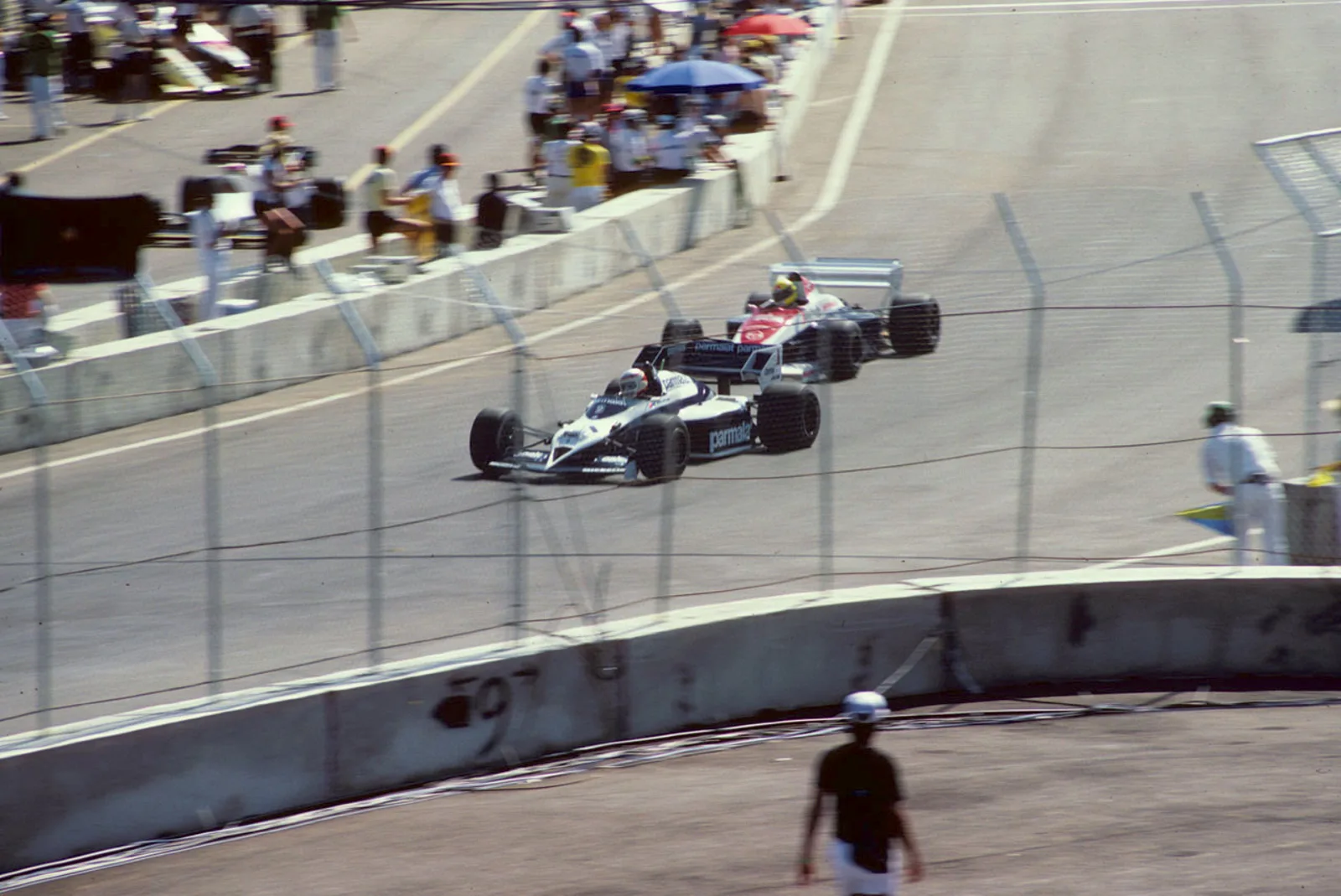
A one-off Formula One race at Fair Park, run in extreme heat on a breaking track, ended with Keke Rosberg's win and Nigel Mansell collapsing short of the line.
Keke Rosberg won the 1984 Dallas Grand Prix in a Williams-Honda, ahead of Rene Arnoux and Elio de Angelis. Held at Fair Park in extreme heat on a breaking track, it was Rosberg's only win of 1984 and the one Formula One race staged in Dallas.
The 1984 Dallas Grand Prix was a Formula One race held on 8 July 1984 at Fair Park in Dallas, Texas. It was the only Formula One running of the event, and it took place in heat that climbed past 100 degrees F (38 degrees C) on a surface that began to break apart before the race was over.
Who won the 1984 Dallas Grand Prix?
Keke Rosberg won the 67-lap race in a Williams-Honda, his only victory of the 1984 season. Rene Arnoux finished second for Ferrari, and Elio de Angelis took third for Lotus. It was the ninth round of the 1984 World Championship.
Rosberg was not the favourite on the grid. He started eighth, and he worked his way up the field to third before he took the lead from Nigel Mansell in the later stages of the race.
Heat, a breaking track and a gearbox failure combined to make Dallas a one-off, but Rosberg's win is still remembered.
Why did Dallas host a Formula One race?
The event was conceived to show that Dallas was a world-class city. Carroll Shelby, the American racing driver and car builder who grew up in Dallas, served as race director. The circuit was laid out on the Texas State Fair Grounds with help from Chris Pook, the founder of United States Grand Prix West.
Preparations were troubled from the start. Managerial difficulties and disagreements between Formula One personnel and local organisers made the work harder, and opinions about the venue were mixed. Lotus team principal Peter Warr said he was very impressed with Dallas, but Formula One's leader, Bernie Ecclestone, was much less enthusiastic about turning the fair's livestock coliseum into a race garage.
What was the track like?
The course was tight and twisty, and it included two hairpin curves and several chicanes. The layout was seen as interesting, and most drivers liked it, although some felt that a chicane or two made the circuit tighter than it needed to be.
The main problem was the surface. There were few run-off areas, and the crumbling asphalt made the track feel more like a rallycross course than a Grand Prix circuit. The surface was already bubbling before qualifying, and after a few laps it began to break apart in earnest.
How hot was the race weekend?
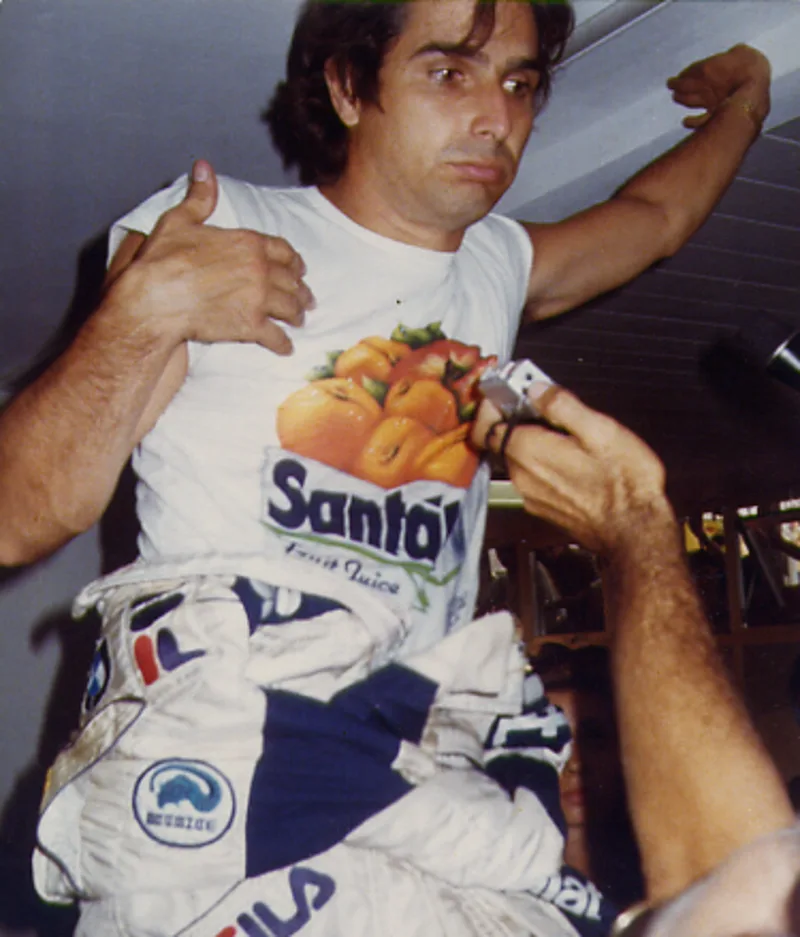
After the first practice session on Friday, the Lotus drivers described the temporary course as the roughest they had ever raced on. Nelson Piquet asked which would fail first in the oppressive heat: the asphalt, the drivers or the cars.
Qualifying took place as temperatures rose past 100 degrees F (38 degrees C). Goodyear recorded a track temperature of 150 degrees F (66 degrees C), the highest in its 20 years of racing.
Why did the race start so early?
The race was scheduled for 11 am on Sunday, three hours earlier than usual, because of the heat. The warm-up was planned for 7:45 am, which was too early for some drivers, and Jacques Laffite reportedly arrived at the circuit in his pyjamas.
The warm-up was then cancelled. A Can-Am race on Saturday, run over 50 laps, had damaged the circuit so badly that crews worked through the night. A backhoe dug up the broken asphalt, and quick-dry cement replaced it, with work continuing until 30 minutes before the start.
Who was on the front row for Dallas?
Mansell took pole position, his first in Formula One, and de Angelis started alongside him in the other Lotus-Renault. Both Lotus drivers qualified on the front row for the first time since the 1978 Dutch Grand Prix at Zandvoort. That year Mario Andretti and Ronnie Peterson had qualified first and second in the revolutionary Lotus 79.
Arnoux qualified fourth, but his engine misfired on the formation lap and he started from the back of the field. By the end of the first lap he had already passed seven cars.
| Finish | Driver | Car | Note |
|---|---|---|---|
| Winner | Keke Rosberg | Williams-Honda | His only win of the 1984 season |
| Second | Rene Arnoux | Ferrari | Started from the back after a misfire |
| Third | Elio de Angelis | Lotus-Renault | Passed Mansell in the closing stages |
| Sixth | Nigel Mansell | Lotus-Renault | Pole sitter, classified three laps behind |
How did the race unfold?
Mansell led for almost half the race from his pole position. Senna spun on the first lap as the changing surface caught him out. Derek Warwick overtook de Angelis, whose engine was misfiring, and then pulled alongside Mansell several times, but he could never get past. Warwick retired after a spin on lap 11.
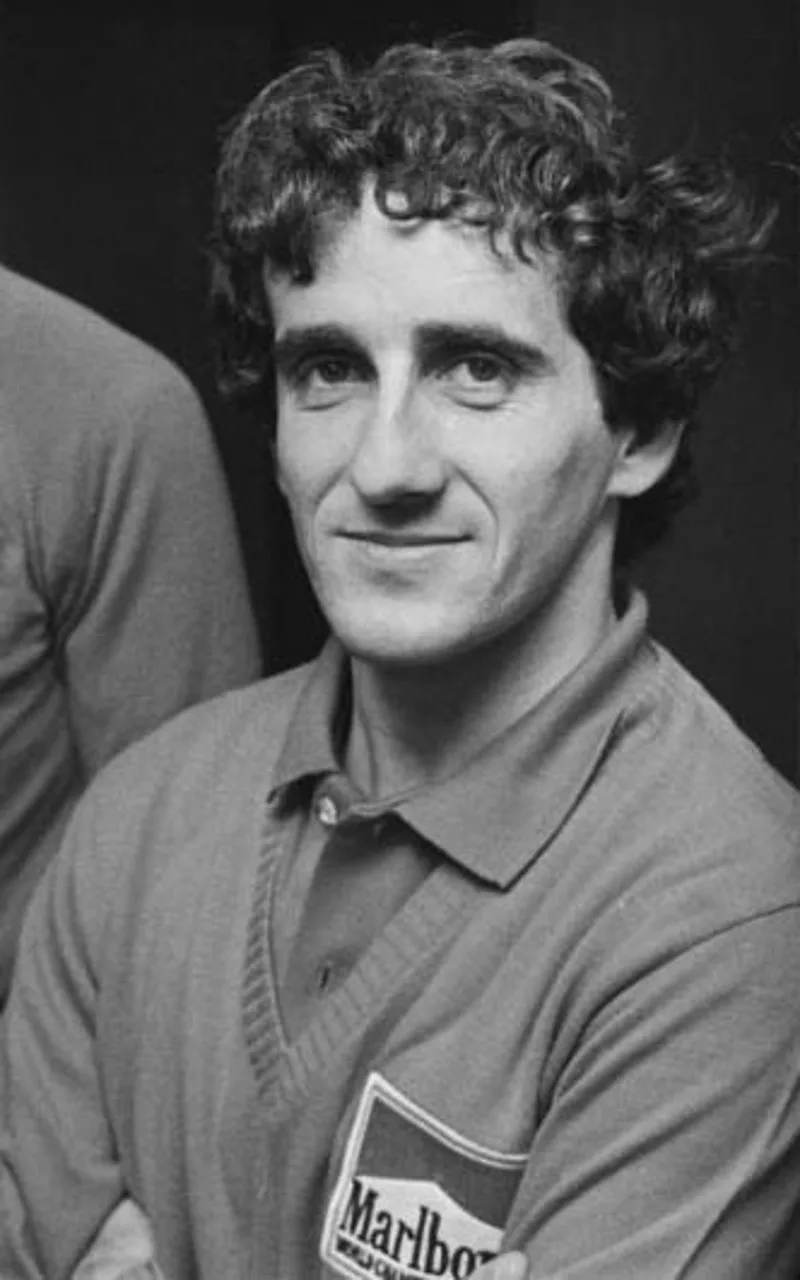
Rosberg worked his way forward, and Prost briefly overtook him before Rosberg took the place back. Rosberg finally forced Mansell into a big enough mistake to take the lead. Mansell tried to fight back, but Rosberg shut the door on him, and Mansell's front tyres were fading quickly.
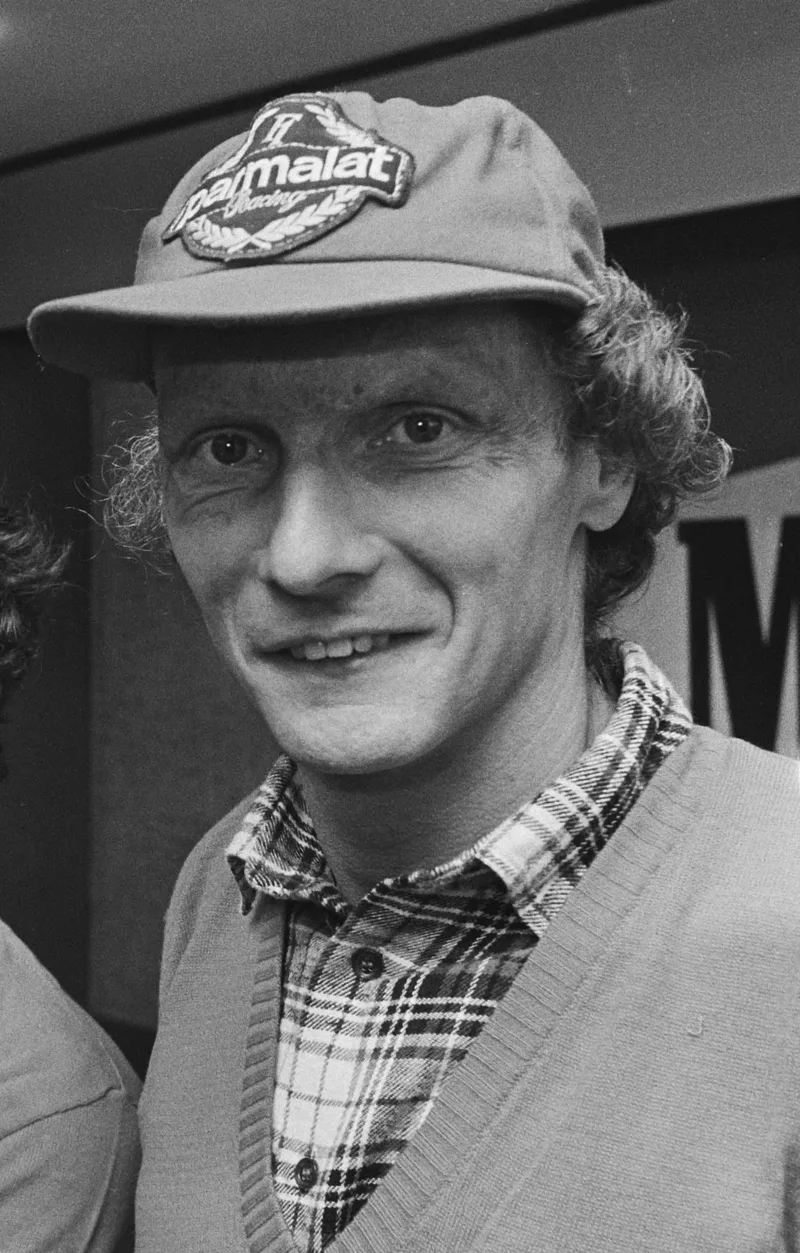
Prost took the lead from Rosberg on lap 49 and quickly opened a 7.5-second gap. Eight laps later he struck a wall and damaged his front-right wheel rim, and he stopped on track. Lauda stopped on the same spot after hitting a wall himself, and Alboreto also clipped a wall and stopped with tyre damage.
Rosberg inherited a lead of 10 seconds over Arnoux. He held on to score his only victory of the year, helped in part by a water-cooled skullcap. The two-hour time limit was reached one lap short of the scheduled 68, and the race ended there.
Why did Mansell collapse at the finish?
Mansell had been leading the race for almost half of it, but a gearbox failure ended his chance. He coasted around the final corner with his visor up and his seat belts hanging over the side of the car. On the home straight he leaped out of his black Lotus and tried to push it to the finish line.
He collapsed from exhaustion and the oppressive heat before he reached the line. He was classified sixth, three laps behind the winner.
How did drivers cope with the heat?
Rosberg wore a water-cooled skullcap, a device that was common in NASCAR. Piercarlo Ghinzani, who finished fifth after overtaking the collapsed Mansell, had a bucket of cold water thrown over him at a pit stop.
Huub Rothengatter was another driver who looked for relief. After he retired, he went straight to a spectator area and collected several cups of water to pour over himself.
What happened to Senna in the race?
Ayrton Senna retired on lap 47, while running fourth, after hitting the wall. He was furious when he returned to the pits and told his race engineer, Pat Symonds, that he could not understand how it had happened, because he had taken the corner no differently from before.
His team did not believe him at first. Senna pushed for an inspection of the wall after the race, and it was found that an earlier crash had moved the barrier by 4-10 mm (0.2-0.4 in) into the track. Symonds later said the precision of Senna's driving had struck him in that moment.
Why was the Dallas race a one-off?
The heat was a major reason why the event did not return. The following year the Australian Grand Prix took its place on the calendar. Formula One returned to Texas in 2012, when the United States Grand Prix moved to the Circuit of the Americas in Austin, but that race has always been held in October or November, well away from the Texas summer.
Co-organiser Larry Waldrop said in 2022 that the July date had been chosen to reduce the risk of rain. He regretted that the organisers had not anticipated how the Texas summer would affect the event and the pavement.
What happened to the organisers afterwards?
Financial problems and safety concerns led to the 1985 race being cancelled. The race organiser, Dallas Grand Prix of Texas Inc., had signed a contract with the Formula One Constructors' Association for five races in Dallas. Don Walker bought out Buddy Boren's share in late 1983 and sidelined Waldrop, and the arrangement fell apart.
The company entered bankruptcy in March 1985, which ended any chance of a follow-on Formula One race at Fair Park. Walker and the company were investigated by the FBI and the Securities and Exchange Commission over allegations that money had been taken from the company to fund his lifestyle.
Residents of the nearby Fair Park neighbourhood also objected. The area was majority Black and low-income, and councilwoman Diane Ragsdale criticised the organisers for not consulting neighbours and for ignoring noise concerns. Ragsdale and the Dallas Black Chamber of Commerce filed a lawsuit, and Boren later held a 1988 Trans-Am race at Fair Park after agreeing to donate some receipts to charity.