A racing driver turned car builder, from the 1959 Le Mans win to the AC Cobra, the Ford GT40 and the Shelby Mustangs.
Carroll Shelby was an American racing driver and car builder. He shared the win at the 1959 24 Hours of Le Mans, created the AC Cobra and helped develop the Ford GT40, which won Le Mans from 1966 to 1969.
Carroll Shelby was an American racing driver whose career moved from the cockpit to the design studio. He co-drove the Aston Martin that won the 1959 Le Mans race, built the AC Cobra and then helped Ford develop the GT40. Those three steps shaped American performance cars for the following decade.
Who was Carroll Shelby before he raced?
Carroll Hall Shelby was born on 11 January 1923 in Leesburg, Texas, and his family moved to Dallas when he was seven. He was fascinated with speed from an early age, and he graduated from Woodrow Wilson High School in 1940. A heart valve condition troubled him from childhood and stayed with him for life.
He enrolled in the aeronautical engineering programme at the Georgia Institute of Technology. He then enlisted in the US Army Air Corps on 11 April 1941, eight months ahead of Pearl Harbor. He trained as a pilot in Texas, graduated as a staff sergeant pilot in September 1942 and was commissioned as a second lieutenant that December.
Shelby worked as a flight instructor and test pilot, flying types such as the Beechcraft AT-11 Kansan and the Curtiss-Wright AT-9 Jeep. He later flew the Boeing B-29 Superfortress out of Denver, Colorado. After being discharged following V-J Day, he ran a dump truck firm, spent 1948 and 1949 as an oil-well roughneck and started a poultry farm, which went bankrupt in 1952.
A Le Mans winner who went on to shape the Cobra, the GT40 and a generation of American performance cars.
How did Shelby's driving career unfold?
Shelby began racing as an amateur in 1952, when he drove Ed Wilkin's MG TC in the Norman event in Oklahoma. He kept the number 98 for the rest of his motorsport career. He travelled to Europe in 1954 to drive for Aston Martin and stopped racing in October 1960 because of his health.
The 1954 season was his breakthrough in Europe. Aston Martin's team manager, John Wyer, had met him in Buenos Aires and asked him to race a DBR3 at Sebring, where an axle failure ended his run. That July he joined a three-car factory team at Silverstone alongside Peter Collins and Roy Salvadori, and the team took the top three places.
That summer he also drove for Donald Healey at the Bonneville Salt Flats, where Austin-Healey cars set about 70 Class D national speed records. Shelby set 17 of them himself. He was later severely injured in a crash in an Austin-Healey at the Carrera Panamericana.
By 1956 he had won 30 more races in Ferraris and launched Carroll Shelby Sports Cars in Dallas. He set a record of 10 minutes 21.8 seconds at the Mount Washington Hillclimb in a Ferrari 375 GP roadster. A crash at Riverside in September 1957 required 72 stitches and plastic surgery, but he returned in November and won at the same circuit.
In 1958 he joined Aston Martin's European sports car effort and drove a DBR1 at the Nurburgring. He also raced three Formula One events for Scuderia Centro Sud in a Maserati 250F, including the Portuguese Grand Prix.
Why did the 1959 Le Mans win matter?
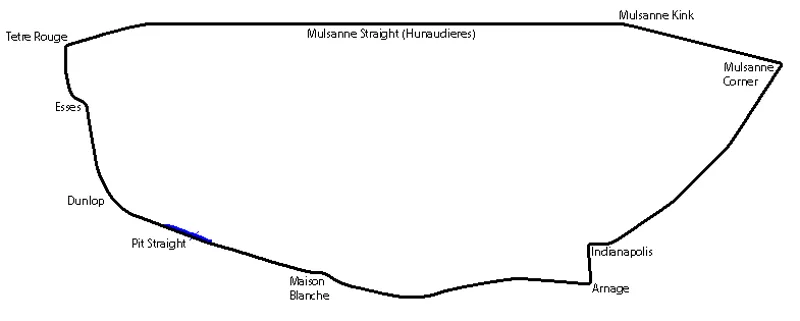
Shelby and Roy Salvadori shared an Aston Martin DBR1 to victory at the 1959 Le Mans race in June. Shelby later said it was probably the greatest thrill he had ever had in racing, and he believed the result helped him win further deals in the years that followed.
He had come close to Le Mans success the year before. In 1958 he was partnered with Salvadori but fell ill with dysentery a few hours into the race, and Stuart Lewis-Evans took over his seat. The 1959 result therefore rewarded a long run of European sports car work rather than a single good race.
That season he also raced Aston Martin's DBR4 in the Dutch, British, Portuguese and Italian Grands Prix. His final year of racing included the Riverside Grand Prix win in a Birdcage Maserati in 1960, and his last race was the Los Angeles Times Grand Prix.
How did the AC Cobra come about?
Shelby wanted a light sports car with an American V8 that could be driven to the track and raced. He combined an AC Ace chassis with Ford V8 engines, and the first prototype, CSX0001, went into production in March 1962. 75 were sold by the end of that year, and about 100 had been built by April 1963.
The idea grew from his visits to small European sports car factories. He believed a 300 brake horsepower V8 in an Austin-Healey type chassis could produce a car weighing less than 2,600 lb (1,180 kg). By September 1961 he had approached Charles Hurlock at AC, who agreed to supply chassis on credit, and Dave Evans at Ford agreed to supply engines on similar terms.
The engines were 221 cu in (3.6 L) and 260 cu in (4.3 L) V8s. The prototype was called the Carroll Shelby Experimental and was marketed as the Shelby AC Cobra, before becoming the AC Cobra and later the Ford Cobra. The first run used the 260 cu in engine, and a 289 cu in (4.7 L) unit followed. A 427 Cobra prototype dates from October 1964.
How did the Cobra compete in GT racing?
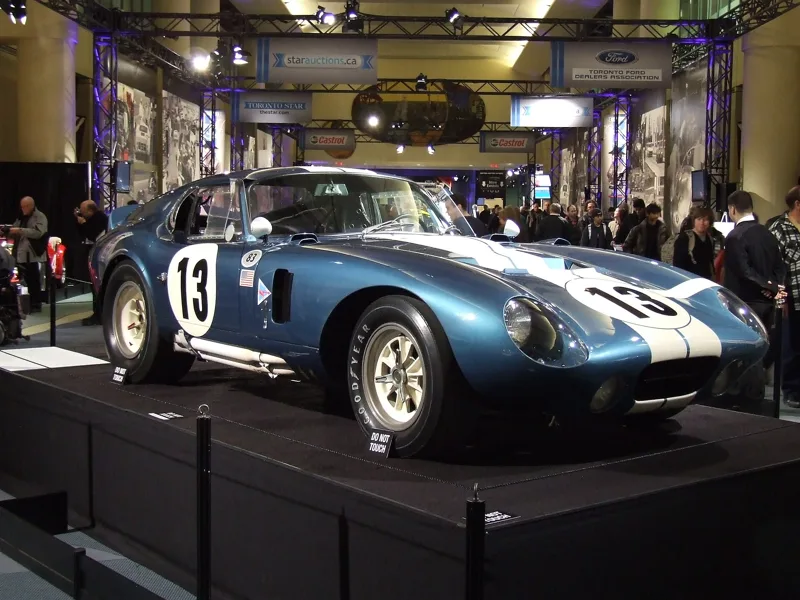
Shelby's team began racing the Cobra at Riverside in October 1962. Experience in 1963 showed that the open roadster body was too draggy for high-speed circuits, so a lower-drag enclosed coupe body took its place. The resulting Daytona Coupe won three GT classes in 1964, among them Le Mans and the Goodwood Tourist Trophy.
The Daytona Coupe also took the 1964 Sports Car Club of America U.S. GT Championship. The following year the team's Cobra took the International Championship for GT Manufacturers. Success with the coupe then drew Shelby American into Ford's sports prototype programme more deeply than before.
How did Shelby work on the Ford GT40?
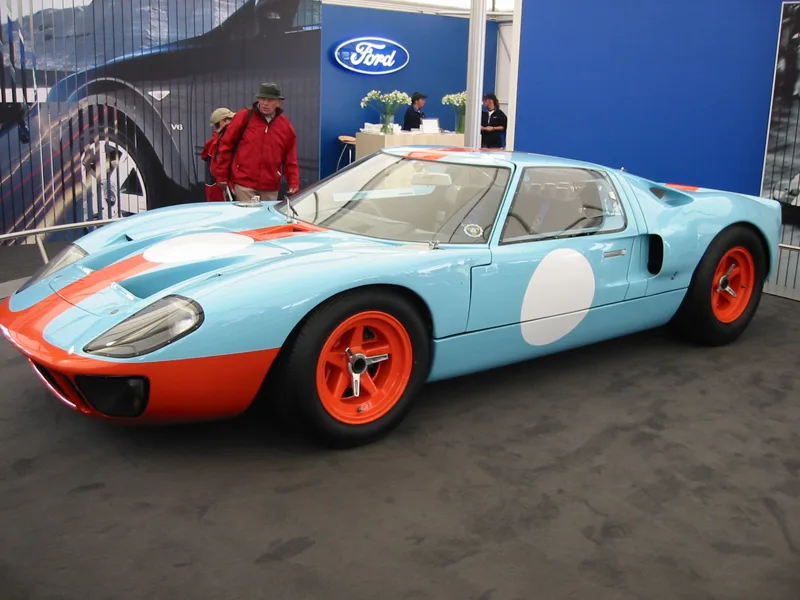
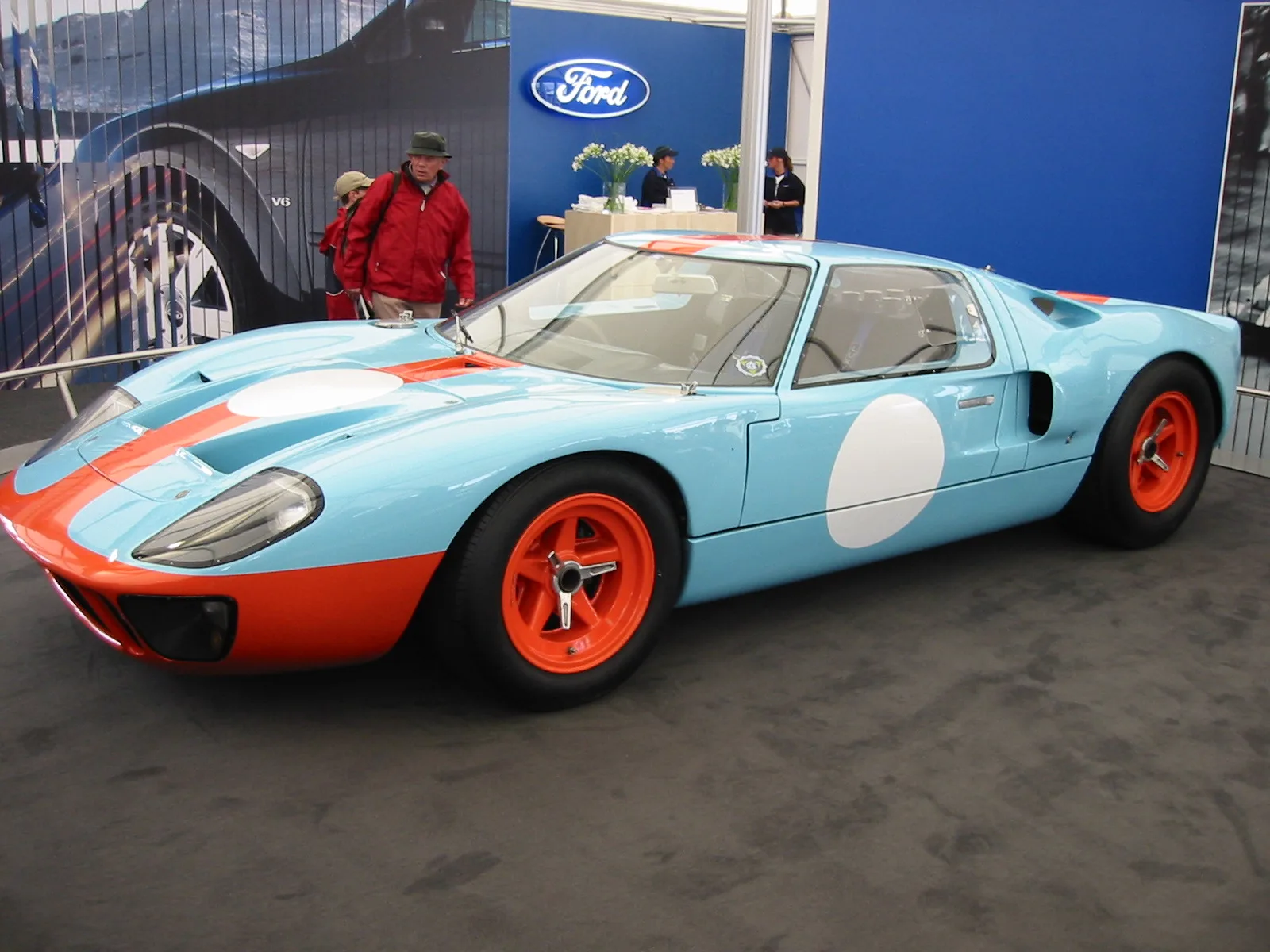
After the Daytona Coupe's success, Shelby-American took on a bigger role in Ford's GT40 programme. Shelby revised the transmissions and running gear to improve reliability, and the GT40 Mark II used a 7.0-litre (427 cu in) Ford engine. The Mark II gave Ford the 1966 World Sportscar Championship constructors' title after a 1-2-3 finish at Le Mans.
The programme ran into setbacks in 1966, including the loss of Ken Miles, who died in August. Shelby was brought in to finish developing a lightweight prototype with an aluminium honeycomb chassis, and the result was the Mark IV. It won the 1967 12 Hours of Sebring and was then prepared for another record-breaking Le Mans finish.
Dan Gurney started a podium tradition by spraying champagne after the win. The Mark IV marked the end of Shelby's prototype racing, because new engine displacement limits for the class ended Ford's use of its engines. The GT40 took Le Mans wins in 1966, 1967, 1968 and 1969. Even in 2026 it is the only American-built winner of the race, and the 2019 film Ford v Ferrari, which won an Oscar, dramatised the story with Matt Damon as Shelby.
What did Shelby add to the Mustang?
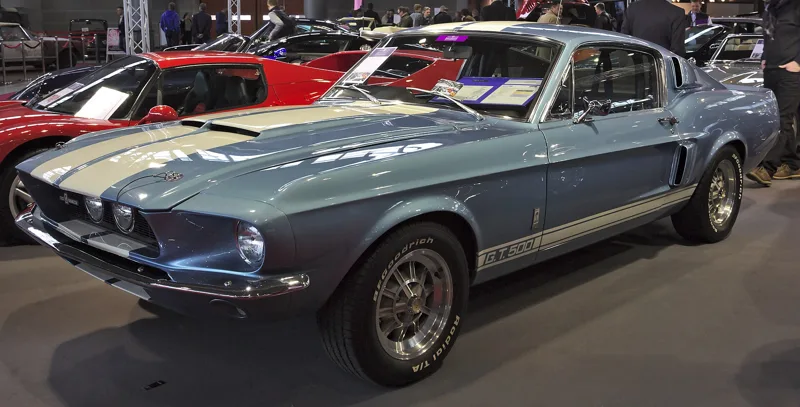
Shelby's racing success led to a joint project with Ford that produced the Mustang-based GT350 from 1965 and the GT500 from 1967. Shelby built these cars through 1968, and after that Ford produced Shelby GT models in-house. A new GT500 debuted at the 2005 New York show and went on sale in summer 2006.
The 2007 GT500 used a supercharged and intercooled Modular V8 with four valves per cylinder. Ford rated the car at 500 hp (507 PS; 373 kW), with torque of 480 lb ft (651 N m). Shelby had no direct role in the design, but he advised Ford and its Special Vehicle Team, and the car gained wider rear tyres. The coupe's starting price was $40,930 and the convertible's was $45,755.
In 2006 Shelby worked with the Hertz Corporation to produce 500 Shelby GT-H rental Mustangs, a similar idea to an earlier Shelby rental special. Each had a Ford Racing power pack that raised the 4.6 L V8 to 325 hp (242 kW), plus a custom hood and black and gold styling. Consumer Shelby GTs followed through Ford dealers, with 5,682 built for 2007 and 2,300 for 2008.
What were the Series 1 and the later projects?
The Series 1 roadster was unveiled at the 1997 Los Angeles Auto Show as a modern take on the original Cobra. It used Oldsmobile's 4.0 L Aurora V8 and was the only car Shelby ever built from a clean sheet of paper. It built 249 production cars as model year 1999 cars before ownership changed.
Once the 1999 certificate expired, re-certifying the car became too costly, so later cars were delivered as component cars without an engine or transmission. The supercharged version reached 0-60 mph in 4.1 seconds. It came with power steering, power disc brakes and factory air conditioning.
Other projects included the 2004 Ford Shelby Cobra Concept, a retro body on a reworked Ford GT chassis powered by a 6.4 L V10 producing 605 hp (451 kW). It won Best In Show at the Detroit International Auto Show but was not built. The 2005 GR-1 coupe concept followed, and neither concept reached production. Shelby also advised Chrysler on the Dodge Viper.
What were the key milestones in Shelby's career?
| Year | Milestone |
|---|---|
| 1952 | First race, an MG TC at the Norman Grand Prix; number 98 adopted |
| 1954 | Austin-Healey Bonneville records, 17 set by Shelby; Aston Martin three-car team at Silverstone |
| 1956 | Sports Illustrated driver of the year; Carroll Shelby Sports Cars opens in Dallas |
| 1959 | Le Mans win with Roy Salvadori in an Aston Martin DBR1 |
| 1960 | Retires from driving for health reasons; last race at the Los Angeles Times Grand Prix |
| 1962 | Cobra production starts in March; 75 sold by the end of the year |
| 1964 | Daytona Coupe wins three GT classes, including Le Mans |
| 1966 | GT40 Mark II gives Ford the constructors title; Ford finishes 1-2-3 at Le Mans |
| 1967 | Mark IV wins at Sebring; GT500 Mustang launched |
| 1997 | Series 1 unveiled at the Los Angeles Auto Show |
| 2012 | Dies on 10 May, aged 89 |
How is Shelby remembered?
Shelby is remembered as a driver who won Le Mans and as a builder whose cars shaped American performance. Motorsport and automotive halls of fame recognised him from 1991 onwards, and in 2008 he received the Automotive Executive of the Year Award. Cobra continuation cars are still built today, and the Shelby name remains on high performance Mustangs.
The International Motorsports Hall of Fame honoured him in 1991 and the Motorsports Hall of Fame of America and Automotive Hall of Fame in 1992. The Diecast Hall of Fame followed in 2009, and he joined the SCCA Hall of Fame on 2 March 2013.
Beyond racing, Shelby funded scholarships for the automotive programme at Northeast Texas Community College in his home town of Leesburg, which renamed the course after him. He also set up the Carroll Shelby Children's Foundation to pay medical bills for children with heart disease who could not afford treatment.
His memoir, The Carroll Shelby Story, was first published in 1967 and reissued in 2019 for the release of Ford v Ferrari. A 2014 film, Need for Speed, featured the last Mustang Shelby was building when he died, and the film's team pushed it to 234 mph.