AC's 1953 to 1963 sports car, built with AC, Bristol and Ford engines, plus the one-off specials and race entries that followed.
Built by AC Cars in Thames Ditton between 1953 and 1963, the Ace was a two-seat sports car offered with three engine choices. About 220 AC Aces and 466 Ace-Bristols were produced, and the design became the base for the Cobra.
The AC Ace was a sports car built by AC Cars at Thames Ditton from 1953 to 1963. It came with AC, Bristol or Ford engines, and it became the base from which the AC Cobra was developed.
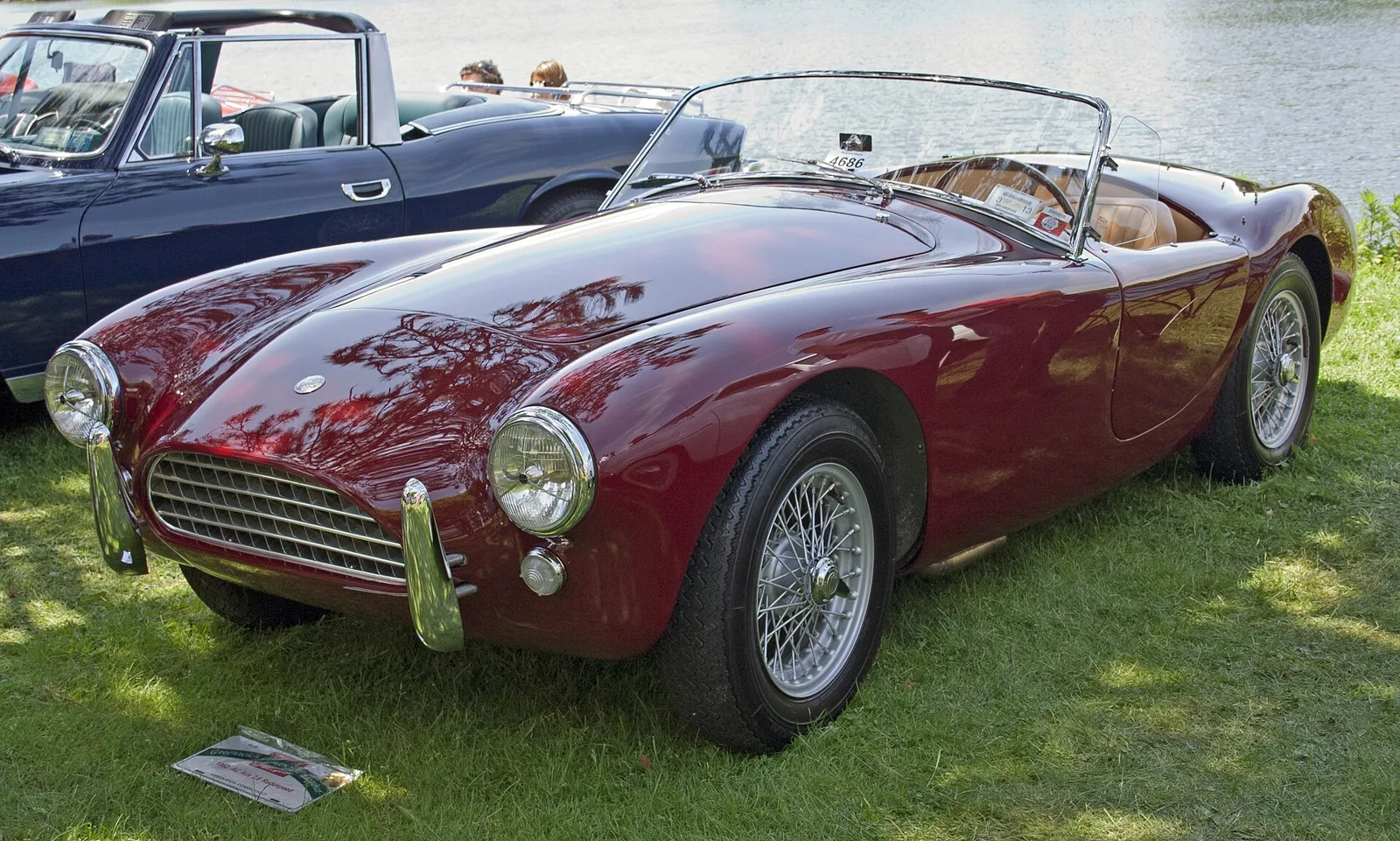
AC's post-war cars were built around the 2-Litre range, but the Ace of 1953 gave the company its reputation. It married a light tubular frame to a two-seat aluminium body, and a hard-top coupe called the Aceca joined it in 1954.
Where did the Ace design come from?
AC needed a replacement for its ageing 2-Litre, and it adopted a design by John Tojeiro. The car had a tubular ladder frame, independent suspension using transverse leaves, and an open two-seater body in alloy. Its body may have been inspired by the Ferrari 166 MM barchetta.
The Aceca hard-top coupe followed in 1954, with an early form of hatchback rear door and a timber-framed alloy body. Chassis codes began with AE for cars with AC engines, BE for Bristol engines and RS for Ford units.
An X after the first two letters marked an export model. The Bristol-engined export chassis BEX 289 is one example of that system, and it features again later in the story.
A tubular-frame two-seater from Thames Ditton that became the basis for the Cobra.
Which engines did the Ace use?
The first cars used AC's own 2-litre overhead-cam straight-six, rated at 100 bhp (75 kW). A 1954 road test from Motor reported 103 mph (166 km/h) flat out, with 11.4 seconds to 60 mph. Fuel use was 11.2 L/100 km, or 21.0 mpg-US.
That engine was hardly a sporting unit, and the company felt the modern chassis needed something more powerful. The Bristol option followed in 1956: a 2-litre straight-six rated at 120 bhp (89 kW), with three downdraught carburettors and a four-speed gearbox.
The Bristol version reached 116 mph (187 km/h), and 0-60 mph took roughly nine seconds. Overdrive could be specified from 1956, and front disc brakes became optional in 1957 and standard in 1958. The Bristol engine remained on offer until the end of Ace production.
How did the Ford-engined 2.6 model differ?
In 1961 a 2.6-litre straight-six Ruddspeed option arrived, built around a Ford Zephyr 6 engine that Ken Rudd had tuned. Tuned examples produced 170 bhp (127 kW), reached 130 mph (209 km/h) and covered 0-60 mph in 8.1 seconds.
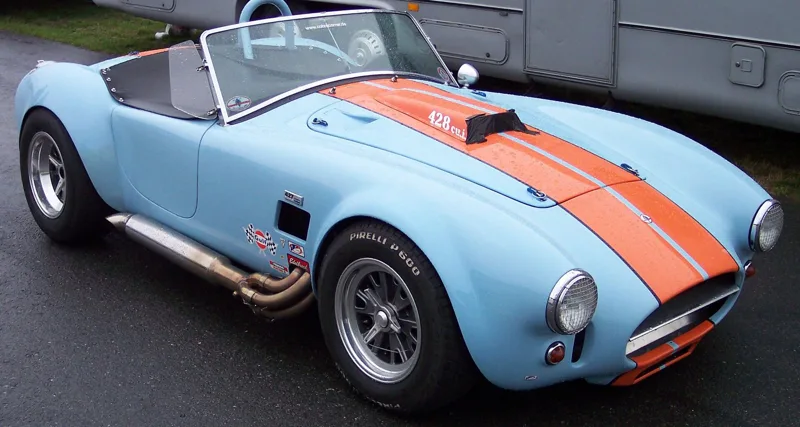
Three Weber or SU carburettors fed it, and the head was either cast iron from Ford or an alloy Mays unit. Fitting the engine meant changing the frame and moving the steering box, and the lower bonnet and smaller grille carried over to the Cobra, though people often credit Carroll Shelby.
Only 37 of the 2.6 cars were made, as the Cobra soon drew buyers away. The AC-powered chassis AE 1191 was renumbered RS 5000 to become the prototype, without the bodywork changes given to the other 2.6 cars.
How did the Ace lead to the Cobra?
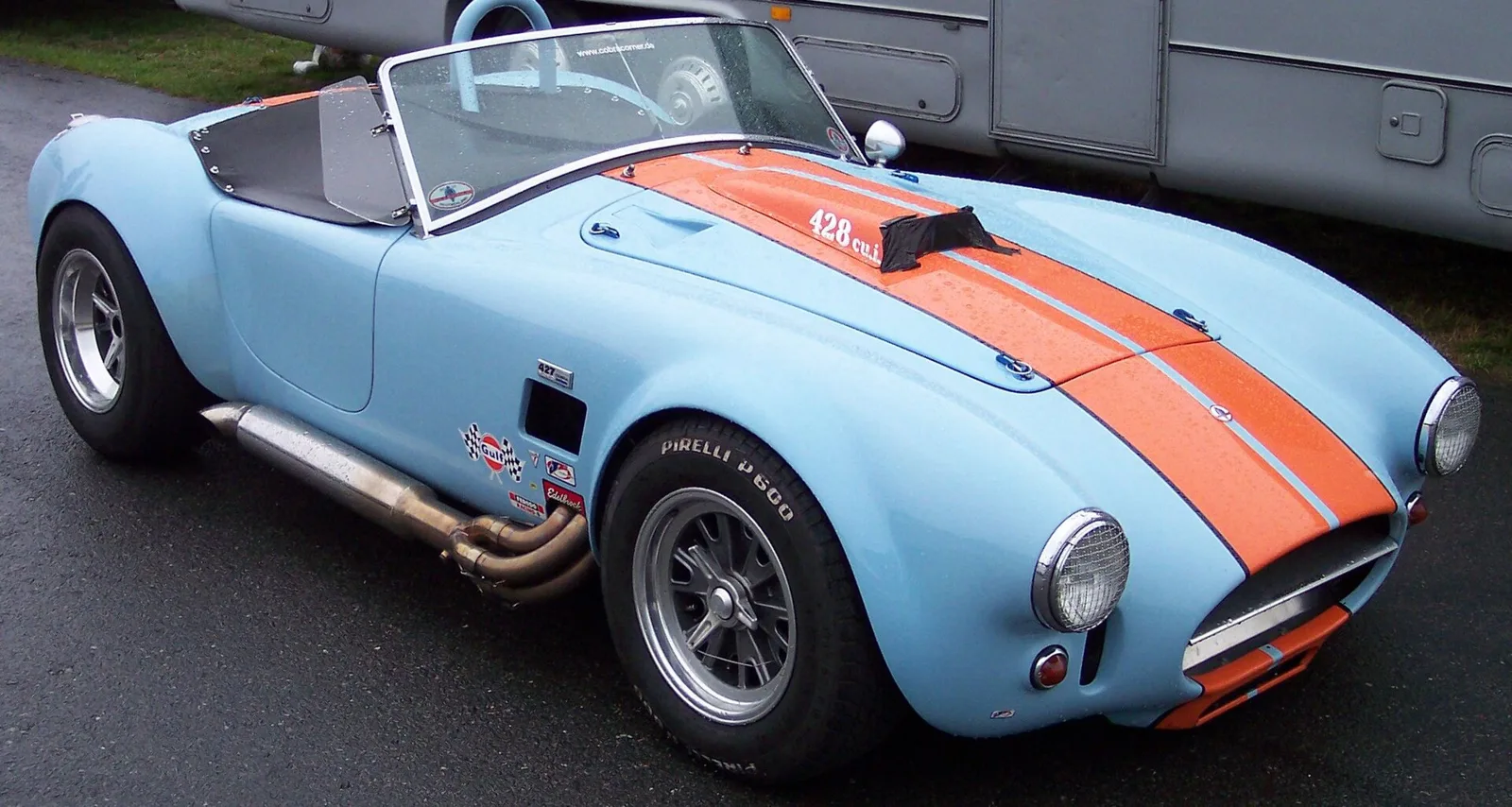
In 1961 Carroll Shelby asked AC's owner, Charles Hurlock, to fit a Ford V8 into the Ace chassis. AC built an Ace 3.6 on chassis CSX2000, and the car was finished in the United States with a 260 cu in (4.3 L) V8.
Shelby arranged for Ford to supply two engines, and the 3.6 L (221 cu in) version was shipped to Thames Ditton. Among the changes was a Salisbury 4HU differential with inboard brakes, borrowed from the Jaguar E-type.
The car was reportedly complete late in 1961 and was tested by AC in January 1962 before it went to the United States. CSX2000 is considered the very first AC Cobra, and the Ace itself was built for one more year after the Cobra debuted.
What was the AC Ace LM prototype?
The Ace LM was a one-off built in 1958 for the Hurlock brothers to race at Le Mans and other long-distance events. Designed by John Tojeiro, it used chassis LM5000 and weighed only 737 kilograms (1,625 lb). It was driven at Le Mans in June 1958, and later raced at Goodwood.
The Ace LM had a lightweight tubular chassis without the ladder structure, double wishbones with coil-over dampers at the front, and a new independent rear layout. Its open aluminium body was low, with a long overhang front and rear, and the body was styled by Cavendish Morton.
Both engine and transmission came from Bristol, using a Bristol Type 100D2/S unit. The rules changed after the Goodwood event, and the car was ineligible for the next class event in the sports car championship. The Bristol drivetrain went back to the manufacturer, and the racer was sold engineless.
The car was later rebuilt and acquired by a collector.
What was the Ace Bristol Zagato?
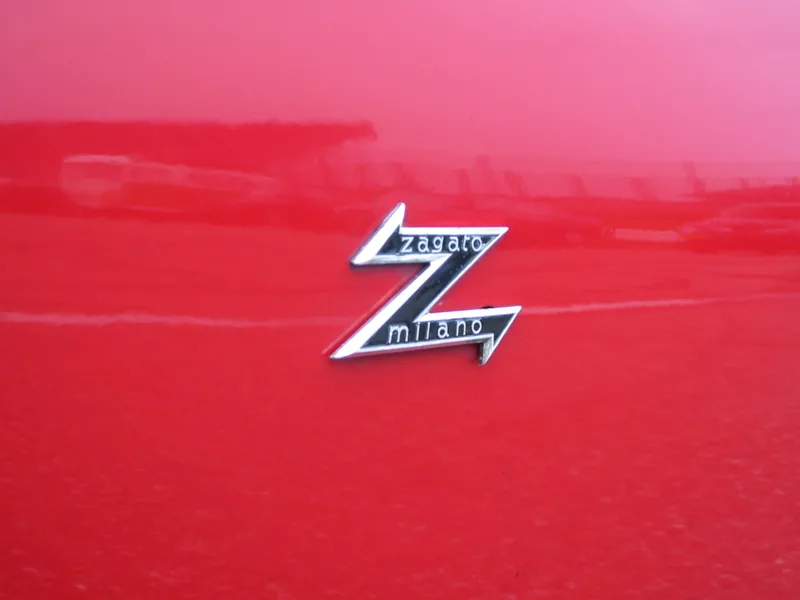
The Ace Bristol Zagato was a 1958 fixed-head coupe built by Zagato on a Bristol-engined export chassis, BEX 477. It won its class up to 2000 cc at the Coupes du Salon on 5 October 1958. The idea came from a 1957 Geneva meeting between the Swiss importer Hubert Patthey and Elio Zagato.
Zagato built a body of thin aluminium sheet with its trademark Double Bubble roof, with vaults over both seats to give headroom in the low coupe. Patthey then sold the coupe to John Gretener, a British expatriate who used it for hill climbs on the shores of Lake Geneva.
The car went back to England, where Kevin Jackson owned it, and racing driver Jo Siffert later acquired it for events, including historic runs. The Mille Miglia was among those events. Feldman, an American, bought it from the defunct Rosso Bianco collection in 2000 and restored it himself.
The Zagato is powered by a 130 hp (97 kW) Bristol six at 5750 rpm, with torque of 174 N-m (128 lb-ft) at 4500 rpm. It is 3,848 mm long and 1,245 mm tall, weighs 862 kg (1,900 lb) ready to run, and tops out at 185 km/h (115 mph). It takes 7.7 seconds to reach 60 mph and 16.1 seconds to reach 100 mph.
What was the Ace-Aigle?
The Ace-Aigle was a special, based on a Bristol-engined car, that was built in Aigle, Switzerland, on the chassis BEX 289. It was the first Ace to come from the factory with front disc brakes, and it was driven at the 1960 Le Mans race but was not classified.
Patthey sold it on to Charles Voegele, who kept it as a personal car. A 1959 accident on the Col de la Faucille left it badly damaged, and the Gachnang brothers, Claude and George, rebuilt it at their Aigle workshop.
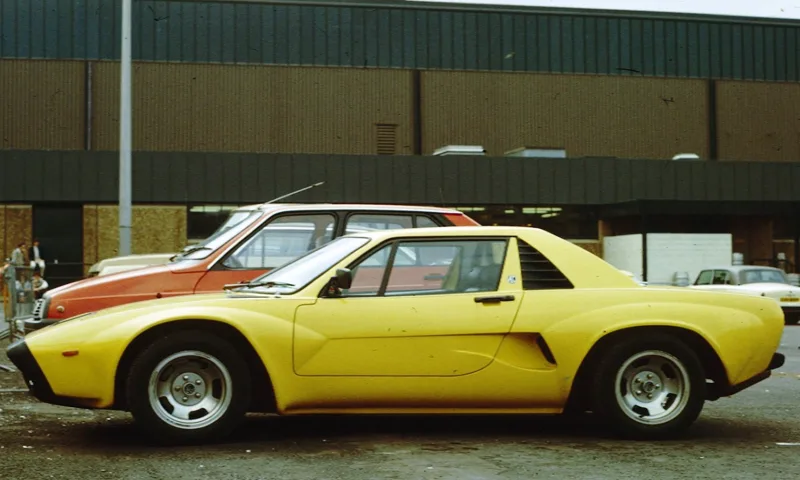
The rebuilt car had a glass-reinforced plastic nose that sat lower, longer and rounder than the factory original, with recessed headlamps behind plexiglas covers. It also had a fixed hardtop with Zagato-style double bubble roof and an all-new suspension underneath.
Its trail went cold for years, until it resurfaced in 2011 and was booked for the 2012 Le Mans Classic. Some suggest the bodywork was done by Carrozzeria Aigle, but the origin of the work remains uncertain.
Which other one-off Aces were built?
A modified Ace Bristol, chassis BEX 1192, appeared at Le Mans in 1962, the last Ace before the Cobra took over. Its owner was a French private entrant, and its bodywork had faired-in headlights similar to BEX 289.
Another car described as an Ace-Jaguar was listed at the Brighton Speed Trials and a Weston race, both with S. or S. H. Richardson at the wheel. If it used a Jaguar engine, it would most likely have had some version of the XK engine.
How did the Ace race at Le Mans?
The marque's cars appeared at Le Mans in 1957 and again in 1958. In 1959 Ted Whiteaway and John Turner brought their Ace Bristol, registration 650BPK, to the finish, taking the 2,000 cc GT class and seventh overall. They finished behind six 3-litre cars.
Like the Cobra, the Ace has been copied: the Hawk Ace is one example, and such replicas are scarcer than the real thing.
What are the AC Ace specifications?
| Specification | Detail |
|---|---|
| Production | 1953 to 1963; about 220 AC Aces and 466 Ace-Bristols |
| AC engine | 2-litre overhead-cam straight-six, 100 bhp (75 kW); 103 mph (166 km/h) top speed in 1954 road test |
| Bristol engine | 2-litre straight-six, 120 bhp (89 kW); 116 mph (187 km/h) top speed |
| Ford 2.6 | 2,553 cc (155.8 cu in); 170 bhp (127 kW) when tuned; 130 mph (209 km/h); 0-60 mph in 8.1 seconds |
| Shelby 3.6 | 3.6 L (221 cu in) Ford V8 on chassis CSX2000; 260 cu in (4.3 L) in the United States |
| Zagato coupe (BEX 477) | 130 hp (97 kW) at 5750 rpm; 862 kg (1,900 lb); 185 km/h (115 mph) |
| Ace LM prototype (LM5000) | 737 kg (1,625 lb); Bristol Type 100D2/S engine |
| 1959 Le Mans car | 2,000 cc GT class win; seventh overall |