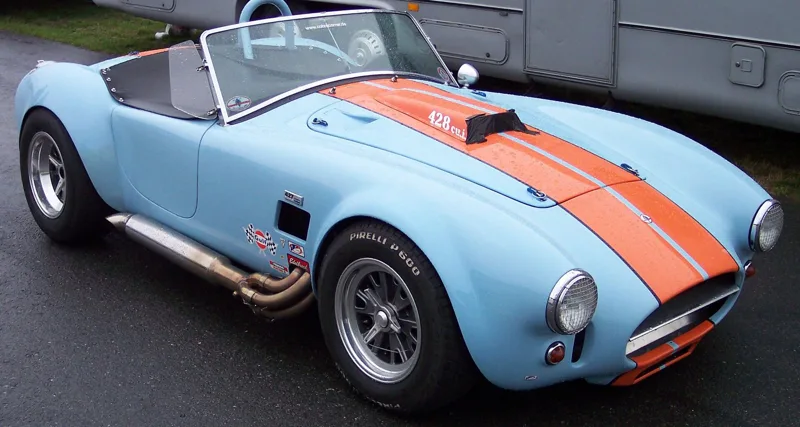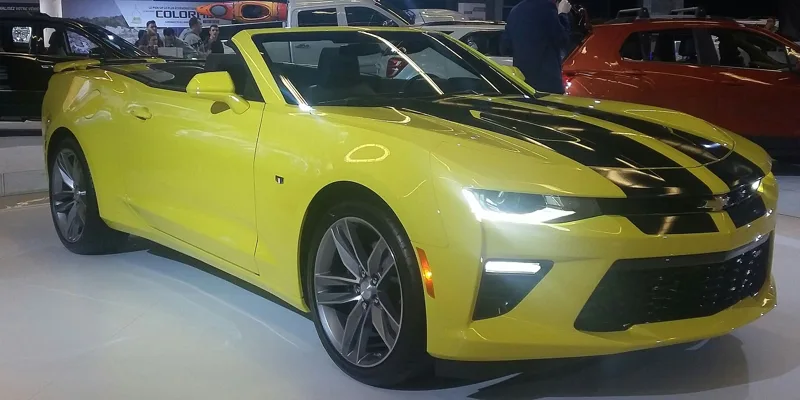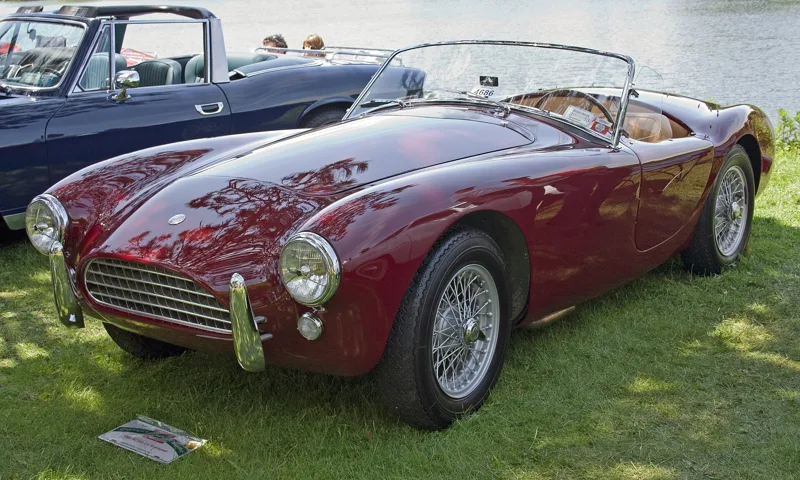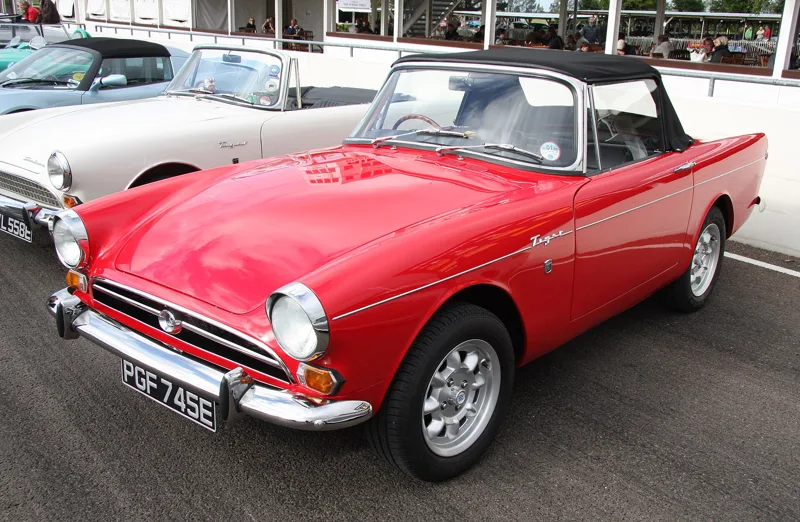
From the 1965 GT350 to the 760 hp Predator-powered GT500, Shelby's Mustangs combined Ford V8 power with racing credentials and limited-run special models.
Shelby's Mustang variant was split between two builders: Shelby American made the cars from 1965 to 1967 and Ford from 1968 to 1970. The GT350 arrived in 1965 with a sloping rear roofline, and the GT500 followed in 1967 with a 428 cu in V8 under its bonnet.
The Shelby Mustang was a high-performance Ford Mustang variant, built by Shelby American from 1965 to 1967 and by Ford from 1968 to 1970. The GT350 debuted in 1965 as a sportsroof fastback, and the GT500 followed with a larger V8. Its return in 2005 came with the fifth-generation Mustang.
How did the Shelby Mustang begin?
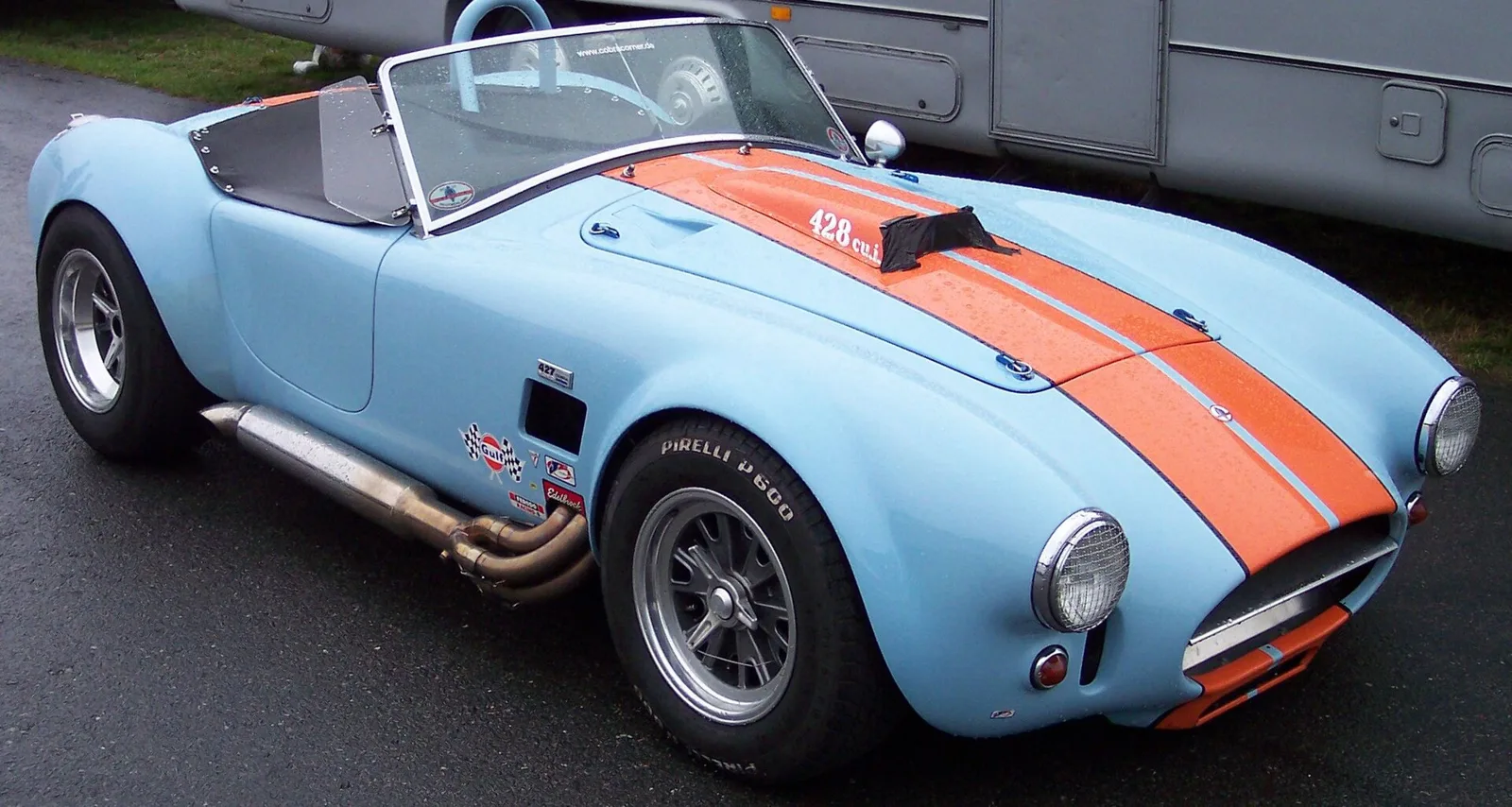
Shelby's GT350 work began as AC Cobra production wound down, and the Mustang carried the Cobra emblem and paint scheme. The 1965 and 1966 GT350s were built at Ford's San Jose plant under VIN R.
The 1965 GT350 was the sportsroof fastback Mustang in its sporting form. Production of the 1965 model reached 562 units, and the car was finished in Wimbledon White with Guardsman Blue rocker stripes.
Le Mans stripes were fitted to about 28 percent of 1965 cars.
The 1966 cars continued the GT350 programme into its second year. Ford took control of engineering in October 1966. Shelby's California operation ended in May 1967, and Shelby personnel moved to Ionia, Michigan on 18 August 1967.
Ford's performance Mustang badge carried Carroll Shelby's name from a 1965 fastback to a 760 hp GT500.
What engines did the GT350 and GT500 use?
The 1965 GT350 used a 289 cu in (4.7 L) K-Code V8 rated at 271 hp (202 kW; 275 PS), and the modified output rose to 306 bhp (310 PS; 228 kW) at 6,000 rpm. Torque was 446 N m (329 lb ft) at 4,200 rpm.
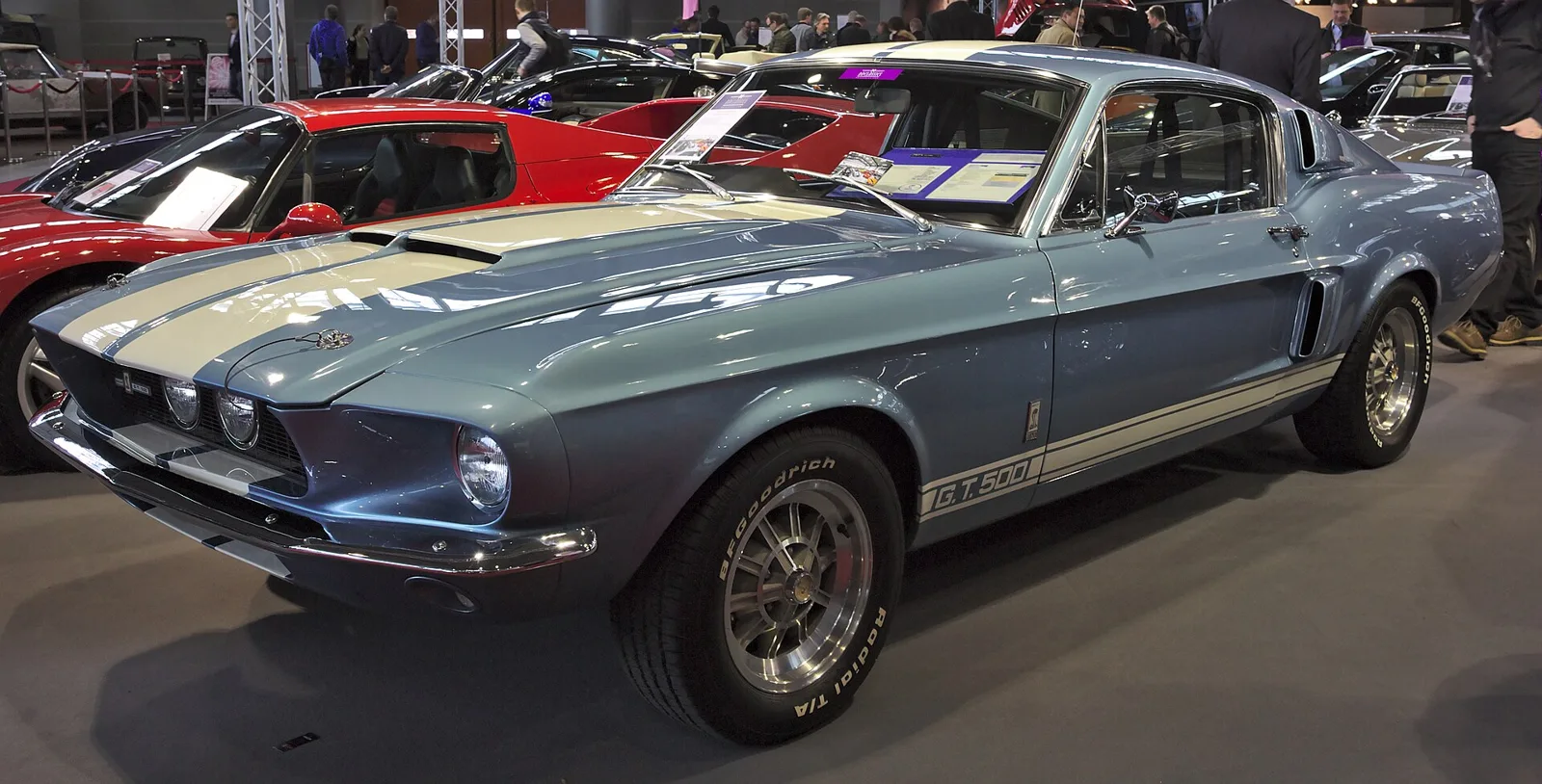
The 1967 GT500 added a 428 cu in (7.0 L) Interceptor V8 with 355 bhp (360 PS; 265 kW) at 5,400 rpm. In 1967 the GT500 sat beside the GT350 in the range, with a larger engine.
A supercharger is a compressor driven by the engine that forces more air into the cylinders, and the later GT500s relied on one for their increased output. The 2020 GT500 paired its 5.2 L Predator V8 with a 2.65 L supercharger.
The 1967 GT350 kept the 289 K-Code, and it gained a COBRA aluminium valve cover. The 1968 Shelby GT350 used a 302 V8 with 250 hp, while the 1968 GT500KR used a Cobra Jet 428 rated at 335 hp.
The 1969 GT350 used the 351 cu in V8, and the 1969 GT350 and GT500 lost the Cobra tag.
How were the 1968 to 1970 cars built?
Shelby Mustangs for 1968 were built in New Jersey under VIN T, and they were modified by A.O. Smith.
The 1968 to 1970 cars belonged to a period when Ford was building the Shelby name under its own arrangements. Shelby ended his agreement with Ford in summer 1969. Of the 1969 cars, 789 unsold examples were re-VINed as 1970 models, which kept the stock moving.
A separate European project produced nine 1971 Shelby Mustangs, made by Claude Dubois in Belgium.
How did Hertz fit into the GT350 story?
Hertz bought 1,003 fastbacks as rental Rent-a-Racer cars, and the first 85 Hertz cars had four-speed manual transmissions. Ford later bought 800 more Hertz cars with black paint and automatics.
The Hertz cars were refurbished and sold to the public as GT350H models, a label that described the cars once they were no longer rentals. That route gave some rental cars a second life with private owners.
The 2006 GT-H was gold-on-black and Hertz-only, with 500 built. In 2016 a GT-H was built as 140 cars for the Hertz Adrenaline Collection.
What were the GT350R race cars?
A total of 34 GT350R race cars were built for SCCA competition. The GT350 won the B-Production championship for three straight years.
The 2015 GT350R was 130 lb (59 kg) lighter than the GT350, and it used Carbon Revolution wheels, the first on a mass-production road car.
The GT350R was built on the GT350 platform. The GT350R-C race car, built with Multimatic, recorded three wins in its debut season.
How did the GT500 develop after 2007?
The 2007 GT500 used a 5.4 L supercharged V8 with 500 hp (507 PS; 373 kW). The 2013 GT500 moved to a 5.8 L supercharged V8 with 662 bhp (494 kW), and the 2020 GT500 used a 5.2 L Predator V8 with 760 hp (567 kW; 771 PS).
The 2010 GT500 was limited to 2,000 units, while the 2011 GT500 used an aluminium 5.4 L engine and 5,100 cars were built. The 2011 model produced 550 bhp.
The 2013 GT500 carried a manufacturer's top speed claim of 202 mph (325 km/h), and the convertible was limited to 155 mph (249 km/h).
The 2020 GT500 produced 847 N m (625 lb ft) of torque, and the 2020-2022 GT500KR was limited to 180 units.
How did the GT350 evolve in the 2010s?
The Shelby GT/SC kit offered a 525 hp or 624 hp Whipple supercharger for the Mustang, and it gave owners a way to raise output after purchase.
The 2011 GT350 was a post-title upgrade with 430 hp naturally aspirated, and it reached 0-60 mph in 3.7 seconds. The supercharged version produced 525 hp (391 kW), with up to 624 hp available.
The 2012 GT350 convertible was the first GT350 convertible since 1970. In 2014 production was 87 cars, made up of 73 coupes and 14 convertibles.
The 2015 GT350 introduced a flat-plane crank 5.2 L Voodoo V8 rated at 526 hp (533 PS; 392 kW). A flat-plane crankshaft arranges the crank pins in one plane, a layout that suits high-revving engines, and the Voodoo used that design. In 2019 the GT350 moved to the 5.2 L engine block from the GT500, and the 2020 GT350 received minor updates with new colours.
What were the rarest Shelby Mustangs?
The only Shelby GT convertible was car 0139, built in 1967. The Super Snake used a 650 hp (485 kW) 427 FE GT40 engine, and its low build numbers made it one of the scarcer special models.
The 2008 GT500KR produced 540 bhp (547 PS; 403 kW), and 1,712 cars were built in total. Low build numbers, rather than price alone, define the rarest examples in this group. The GT-H FR1 Power Pack added 25 hp to the 2006 GT-H, which made the Hertz-only car a more potent version.
What special editions did Shelby build?
The 2008 GT-C offered 215 Grabber Orange coupes for Southern California, and the 2008 Barrett-Jackson edition had 100 cars at US$38,980 MSRP. The 2011 GTS 50th Anniversary Edition was limited to 100 units.
The 2007-2009 Super Snake produced 605 hp (451 kW), and the 2012 Super Snake Limited Edition was rated 750 hp (559 kW). The 2015 Super Snake had a 650+ hp supercharged 5.0 L.
The 2012 Super Snake 50th Anniversary had 50 black and gold cars, and the 2017 Super Snake 50th Anniversary had 500 units. The 2016 Terlingua was limited to 50 cars with over 750 hp (560 kW).
What was the Code Red?
The Code Red prototype was shown with 1,000 bhp in 2008, and the production Code Red used a 5.2 L twin-turbo V8 of over 1,000 hp (750 kW). Production was limited to 10 cars per year.
The Shelby 1000 street car produced 920 hp (686 kW), and the track version made 1,100 hp (820 kW).
What is the story behind Eleanor?
Eleanor appeared in Gone in 60 Seconds in 1974 and again in 2000, when it was based on a 1967 Mustang Fastback. The 1974 car was a 1971 Mustang redressed as a 1973 model.
Denice Halicki won a 2008 trademark case against Carroll Shelby. In 2022 the Shelby Estate won a case against Halicki, and it stated that Eleanor was not protected by copyright.
Unique Performance was a 2002 partnership that drew mismanagement complaints, and police raided the firm on 1 November 2007.
How did Ford revive the Shelby name?
Ford revived the Shelby name in 2005 for the fifth-generation Mustang, which had been on sale for some time before that revival.
The revival began with the CS6 supercharged V6, which made 350 hp (261 kW) and was the first new Shelby-badged car of the period. The 2007 Shelby GT used a 4.6 L V8 with 319 hp (238 kW), and the plan was to build up to 6,000 cars.
The 2011 GTS kit allowed a V6 or V8 to be fitted to Mustangs. The 2017 GTE V8 produced 456 hp (340 kW).
What do the Shelby engine names mean?
Several engine names recur in the Shelby story. K-Code was the code for the 289 V8 in the 1965 GT350, Interceptor named the 428 cu in V8 in the 1967 GT500, and Cobra Jet described the performance 428 option of 1968.
Predator is the name of the 5.2-litre V8 in the 2020 GT500, and Voodoo is the name of the flat-plane unit in the 2015 GT350. Super Snake was the name Shelby used for its most powerful special versions, from the 2007 cars to the 2017 anniversary model.
The Whipple supercharger was the brand used in the GT/SC kit, which let owners raise the output of a Mustang after purchase. Ionia, Michigan became the base for Shelby personnel from 18 August 1967, after the California operation had closed in May.
What are the Shelby Mustang specifications?
The Shelby Mustang's core figures run from the 1965 GT350's 289 cu in V8 to the 2020 GT500's 760 hp Predator engine. The table below sets out the main figures across the range.
| Specification | Detail |
|---|---|
| Built | Shelby American 1965 to 1967, Ford 1968 to 1970 |
| 1965 GT350 engine | 289 cu in (4.7 L) K-Code V8, 271 hp (202 kW; 275 PS) |
| 1965 GT350 modified | 306 bhp (310 PS; 228 kW) at 6,000 rpm |
| 1965 GT350 torque | 446 N m (329 lb ft) at 4,200 rpm |
| 1965 production | 562 units |
| 1967 GT500 | 428 cu in (7.0 L) Interceptor V8, 355 bhp (360 PS; 265 kW) |
| 2007 GT500 | 5.4 L supercharged V8, 500 hp (507 PS; 373 kW) |
| 2013 GT500 | 5.8 L supercharged V8, 662 bhp (494 kW) |
| 2015 GT350 | 5.2 L Voodoo flat-plane V8, 526 hp (533 PS; 392 kW) |
| 2020 GT500 | 5.2 L Predator V8, 760 hp (567 kW; 771 PS), 847 N m (625 lb ft) |
| 2012 Super Snake Limited Edition | 750 hp (559 kW) |