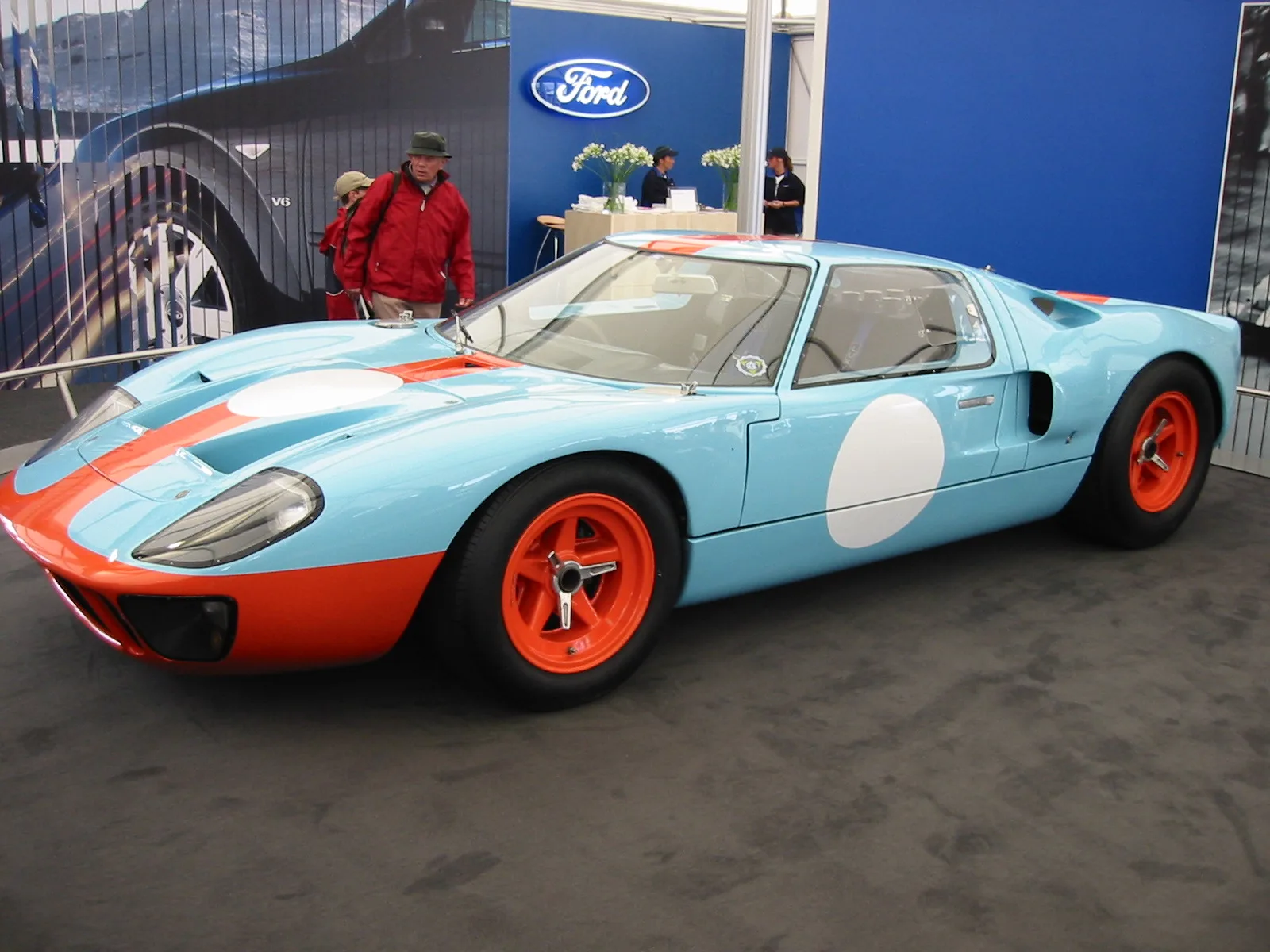
Henry Ford II's grudge, a Lola-based GT40, a staged photo finish and the driver who lost the win he had led.
Ford built the GT40 after a failed 1963 deal to buy Ferrari. At Le Mans in June 1966 Ford finished 1-2-3 in a staged formation, and the ACO's starting-position rule made Bruce McLaren and Chris Amon the winners over Ken Miles and Denny Hulme.
In June 1966 three Ford GT40 Mk II cars crossed the Le Mans finish line together, ending Ferrari's six-year run. The car that won was not the one that had led for most of the day, and the reasons are still argued over.
Why did Ford want to beat Ferrari?
Ferrari had won the 24 Hours of Le Mans six years running from 1960 to 1965, and Henry Ford II had wanted a Ford there since the early 1960s. According to reports, an approach in 1963 suggested Enzo Ferrari might sell to Ford, which then spent several million dollars on audits and legal talks.
Ferrari cut off the talks at a late stage over who would control racing. He was reportedly angered by a condition that would have barred him from the Indianapolis 500 again, because Ford ran Lotus cars there with its own Indy V8. Henry Ford II was enraged, and ordered his racing arm to find a builder who could produce a car capable of beating Ferrari in endurance racing.
Ford talked to Lotus, Lola and Cooper. Cooper lacked any grand touring or prototype background, and its Formula One results were slipping. Lola's mid-engined Mk6 already used a Ford V8 and had made a noted performance at Le Mans in 1963, although it did not finish.
What happened on the last lap remains the subject of speculation.
How was the GT40 born?
Lola's owner and chief designer, Eric Broadley, agreed to a one-year personal collaboration with Ford and sold it two Mk6 chassis. Ford hired John Wyer, a former Aston Martin team manager, and sent Roy Lunn, the man behind the mid-engined Mustang I concept, to England. Work began at the Lola factory in Bromley.
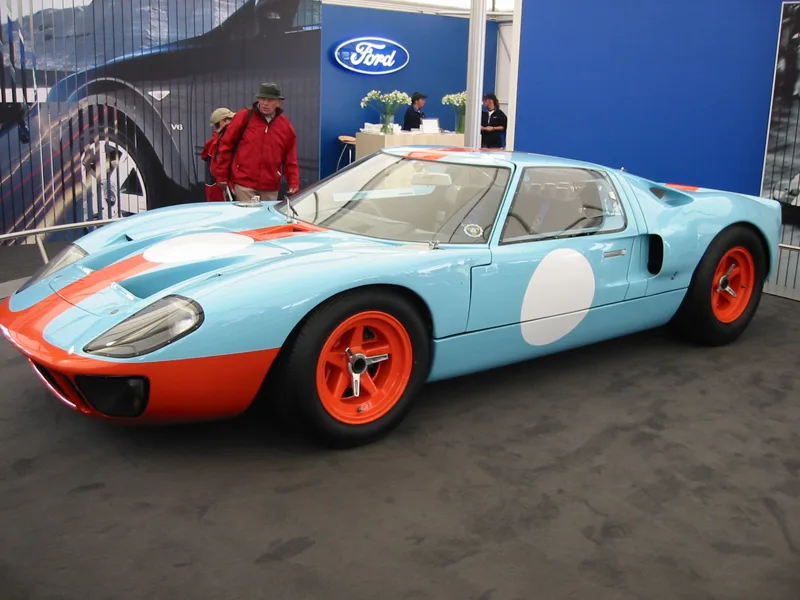
The team moved to Slough near Heathrow at the end of 1963, where Ford set up a subsidiary called Ford Advanced Vehicles. The first chassis was delivered on 16 March 1964, and the first car, GT/101, was unveiled on 1 April. A completed competition car cost 5,200 pounds, powered by a 4.7-litre Fairlane V8 with a Colotti transaxle.
The name explains itself. GT stands for grand touring, and 40 is the car's height in inches, taken at the top of the screen, where 1.02 m was the lowest the rules allowed.
Early results were dismal. At the 1964 Nurburgring 1000 km the car retired with suspension failure, and at Le Mans that year all three entries retired, although the Ginther and Gregory car led from the second lap until its first stop. After the Nassau race in 1964 the programme passed to Carroll Shelby, and the engineering moved to Dearborn, Michigan.
What did Carroll Shelby bring to the project?
Shelby had won Le Mans himself in 1959 as a driver, with Roy Salvadori in an Aston Martin DBR1, and retired from driving in 1960 for health reasons. In 1962 he founded Shelby American, whose Cobra and Daytona Coupe had taken the GT class at Le Mans in 1964.
For Ford he changed the running gear, particularly the transmissions, to improve reliability, and designed the Mark II around Ford's 7.0-litre (427 cubic inch) engine. His first race with the programme, the Daytona 2000 km in February 1965, was a win for Ken Miles and Lloyd Ruby. A month later Miles and Bruce McLaren were second overall at Sebring and first in the prototype class, although the rest of 1965 was a disappointment.
Who was Ken Miles?
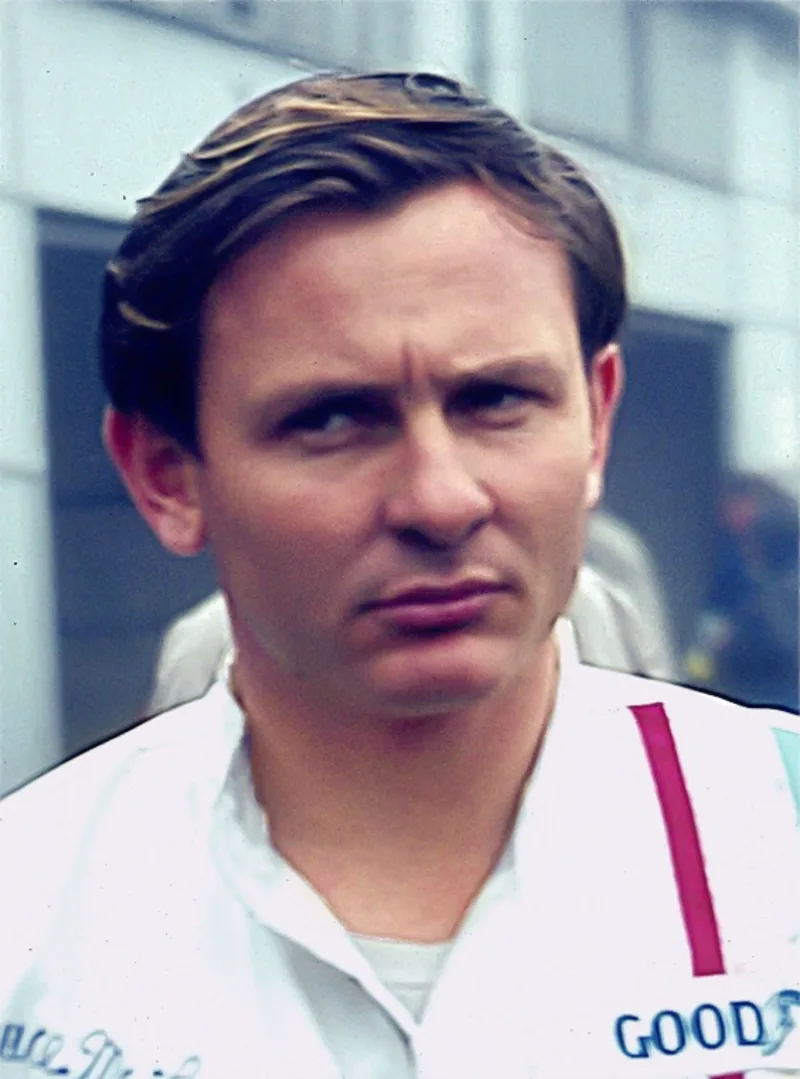
Born in Sutton Coldfield on 1 November 1918, Miles left school at 15 and became an apprentice at Wolseley Motors. In the Second World War he served as a tank commander and rose to staff sergeant, landing in Normandy on 15 June 1944. He moved to Los Angeles in 1952 and, in 1953, won 14 straight SCCA races in an MG-based car he had designed and built himself.
He became Shelby-American's chief test driver in 1963. Miles called himself a mechanic first and a driver second, and described driving as a hobby. His broad Birmingham accent and dry humour earned him the nicknames Teddy Teabag and Sidebite from the American crew. He was known for courtesy on the track.
How did the Mk II line up against its rivals?
| Car | Engine | Power |
|---|---|---|
| Ford GT40 Mk II | 7-litre Ford NASCAR V8 | About 550 bhp, registered as 485 hp |
| Ferrari 330 P3 | 4-litre V12 with fuel injection | 420 bhp |
| Chaparral 2D | 5.3L Chevrolet small-block V8 | 420 bhp |
| Matra M620 | 1.9-litre BRM V8 | 245 bhp |
Ford's engine was a NASCAR unit, registered below its real output after Ford lowered the rev limit for the 24-hour race. Ferrari's answer to the Mk II was the 330 P3. It was wider and shorter than the P2 it replaced, with the same 4-litre engine now fuel-injected, and strikes in Italy had cut into its preparation.
What happened before the race?
The ACO received 103 entry requests, and the grid held 43 prototypes and only three GT cars. Ford copied Ferrari's habit of overwhelming numbers, entering 15 Mk IIs, of which eight were accepted. Six were built and prepared by Holman and Moody, and all eight were finished in Mustang colours.
Shelby ran three cars for Dan Gurney and Jerry Grant, for Miles and Denny Hulme, and for Bruce McLaren and Chris Amon. Hulme had taken the seat that Ruby lost after a plane crash. Alan Mann Racing ran two more, and Holman and Moody brought three as backups. Ford had already won the first 24 Hours of Daytona and the 12 Hours of Sebring that year, with Miles and Ruby.
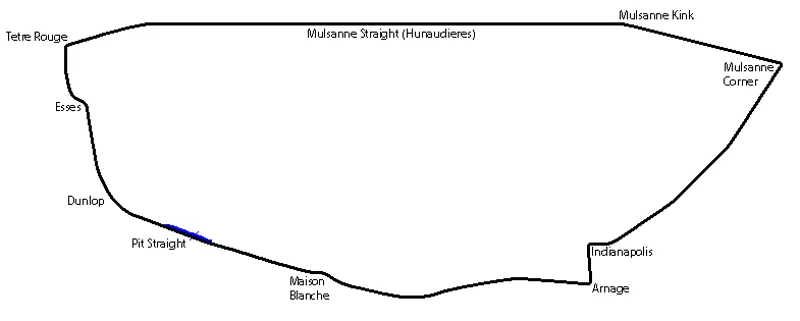
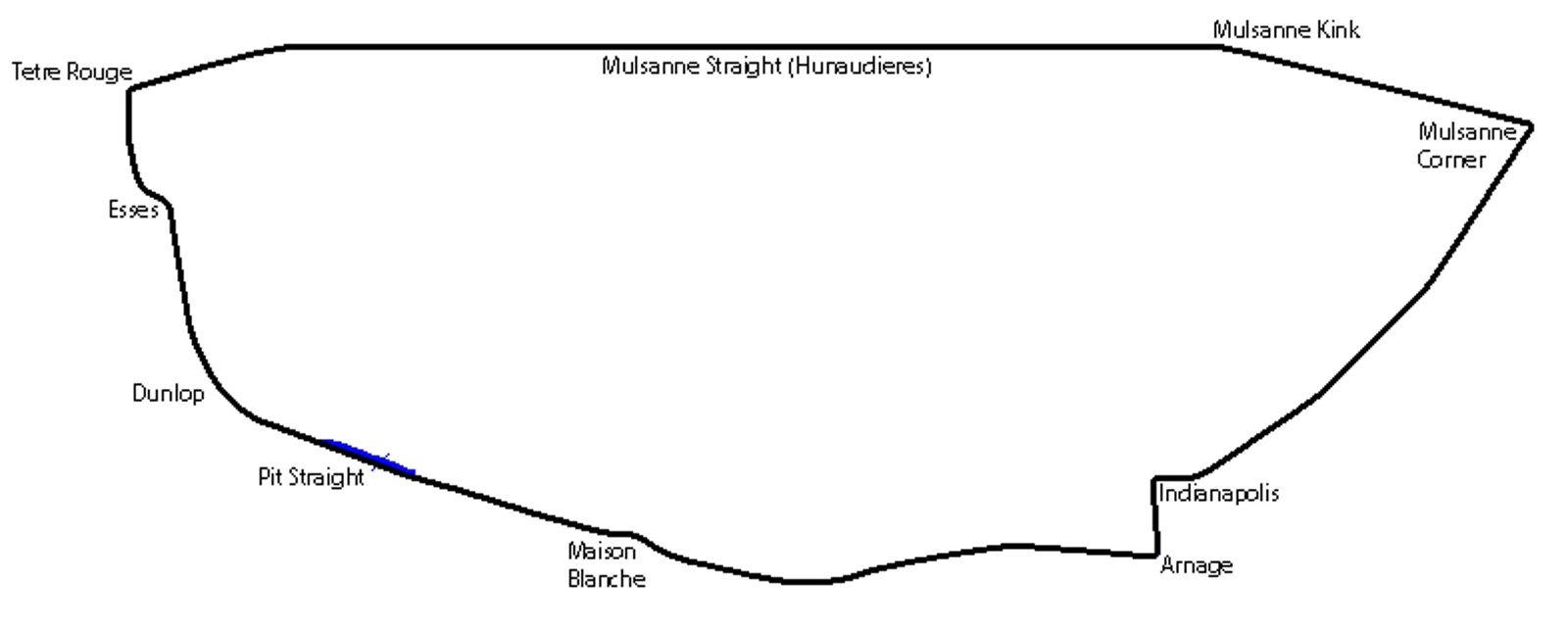
The April test weekend was marred by the death of Walt Hansgen, whose Ford aquaplaned on the pit straight and hit a sandbank at about 190 km/h (120 mph). In qualifying Gurney set the fastest lap, 3:30.6, a second faster than team-mates Miles, Gardner and McLaren. Ginther's Ferrari was fifth on 3:33.0.
Why did John Surtees walk out on Ferrari?
Surtees, Ferrari's 1964 world champion and its fastest driver, had agreed with team manager Eugenio Dragoni that he would play the hare, setting a hard early pace to draw out and wear down the Fords. He was still recovering from a big accident the year before, and would hand over to Ludovico Scarfiotti if he tired.
During race week Dragoni changed the plan. With new FIAT chairman Gianni Agnelli due at the race, he put Agnelli's nephew Scarfiotti in first. Surtees went to Maranello to argue with Enzo Ferrari, was not listened to, and quit the team.
Ford had its own practice drama. Dick Thompson collided with a slower Ford GT40 at Maison Blanche, and the team was told it was disqualified for leaving the scene. Ford's racing director Leo Beebe threatened to withdraw every Ford, and the car stayed in the race, but Thompson himself was barred.
How did the 1966 Le Mans finish unfold?
Miles and Hulme in the number 1 car held a four-lap lead over McLaren and Amon in the number 2. That disintegrated when the number 1 car had to pit for replacement brake rotors after a wrong set was fitted a lap earlier. The correct rotors had been taken by the number 2 crew.
In the final hours the two cars ran close, and Ford officials faced a choice. They could let the drivers race and risk a breakdown or crash, dictate an order and upset one pair, or arrange a tie with both cars crossing side by side. They chose the tie, and Shelby told McLaren and Miles just before the last stint.
Then the ACO told Ford that starting positions would count in a close finish. The number 2 car had lined up some 60 feet (18 m) further back, so it had covered slightly more ground and would win a tie. Ford officials later admitted that their difficult relationship with Miles, the top contract driver, also weighed on the decision.
What happened on the last lap is disputed. Miles is said to have slowed suddenly just before the line, bitter at the decision, and McLaren is said to have accelerated to rob him. One version has McLaren starting just over 14 metres back and finishing 6 metres ahead, according to photographs and official data. McLaren's car was declared the winner.
It was the first overall Le Mans win for the GT40 and the first big European victory for an American manufacturer since Jimmy Murphy won the 1921 French Grand Prix in a Duesenberg. The Ford Mk II also won the constructors' title in the 1966 World Sportscar Championship.
What happened to Ken Miles?
Miles died on 17 August 1966, testing the Ford J-car at Riverside. The J-car was a GT40 prototype with an aluminium honeycomb chassis and a breadvan-shaped Kammback tail. Near the bottom of the track's downhill back straight, which is a mile (1.6 km) long, and at an estimated top speed of over 200 mph (320 km/h), the car flipped and caught fire, and he was thrown out and killed instantly.
The crash was blamed in part on the untried aerodynamics, since the long, low tail generated lift at speed, and in part on an experimental chassis with no roll cage. It was the second fatal accident in the programme in five months, and Ford ordered a roll cage in future cars. His son Peter was almost 16 and witnessed the crash. McLaren died testing a car in 1970.
What came after the 1966 win?
The J-car was redesigned and renamed the Mk IV, which won both of the races it started, the Sebring 12 Hours and Le Mans, in 1967. Gurney and A. J. Foyt drove it to the Le Mans win, making it the only all-American victory in the race's history, from drivers and team to chassis, engine and tyres. On the podium Gurney shook his bottle and sprayed the champagne, and the habit stuck.
The high speeds led to a rule change from 1968 that limited prototypes to 3.0 litres, which removed the Mk II and Mk IV. The older Mk I, with a 4.9-litre engine, still qualified as a sportscar, and the private JW Gulf team won Le Mans with it in 1968 and 1969.
How does the film compare with what happened?
Ford v Ferrari, the Oscar-winning film of 2019, dramatised what Shelby and Miles did at Le Mans. In parts of Europe it carries the title Le Mans '66. Christian Bale plays Miles, with Caitriona Balfe as his wife Mollie and Noah Jupe as Peter.
Peter Miles said in a 2019 interview that he has not been back to Le Mans since a visit with his father in 1965.
What became of Shelby and the GT40 name?
Shelby died on 10 May 2012. In 2003 he and Ford resumed ties, and he served as technical advisor on the Ford GT project. The International Motorsports Hall of Fame honoured him in 1991. In 2001, years after his death, the Motorsports Hall of Fame of America inducted Miles.