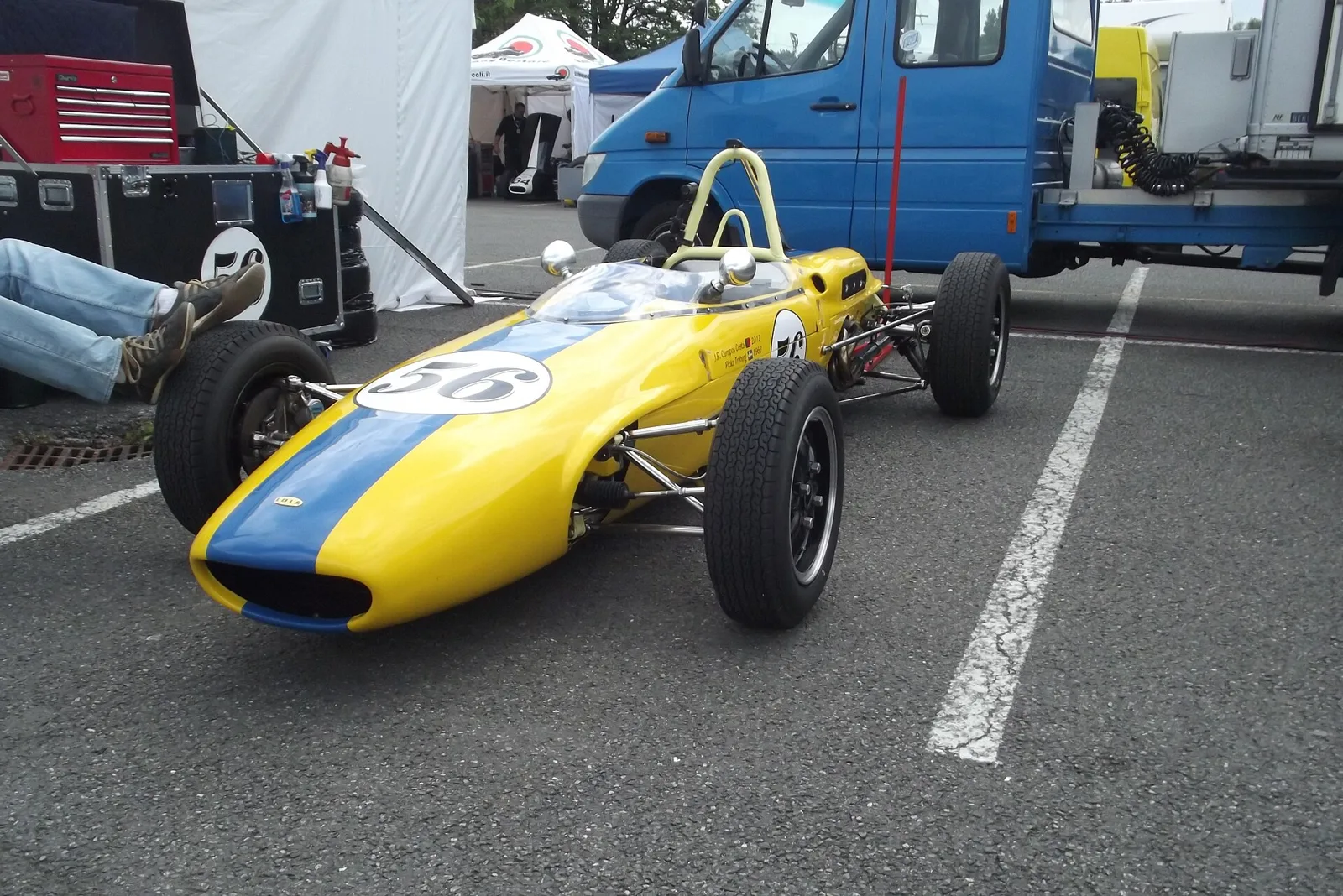
From a 1956 home-built special to Formula One, Indy car and sports car machinery, the story of the man behind Lola Cars.
Eric Broadley was the British engineer who founded Lola Cars and served as its chief designer. He began with a home-built special in 1956 and went on to build Formula One, Indy car and sports car machinery. He sold Lola to Martin Birrane in 1997 and died in 2017, aged 88.
Eric Broadley was a British engineer and entrepreneur who founded Lola Cars and designed its machinery for decades. Starting with a home-built special in 1956, he produced machinery that raced in Formula One, at Indianapolis and in sports car events. He is widely described as one of the most influential car designers of the post-war period.
How did Broadley's racing begin?
Broadley began racing in the years after the war as a member of the 750 Motor Club, building his own cars around Austin 7 chassis as most of his rivals did. His first car, the Broadley Special, was completed in 1956 to suit the rules of the Ford Ten Special class, using a 1,172 cc side valve engine from an early Ford.
In his youth, in the late 1940s, Broadley was indentured to a building company, then worked as a quantity surveyor. Motor racing took up much of his spare time, and the Broadley Special became an immediate success, winning local and national events across Britain.
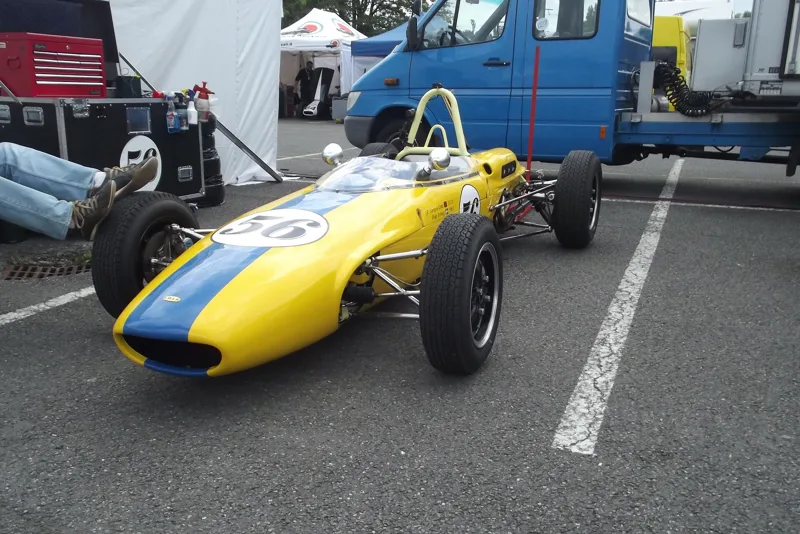
Drivers who wanted something other than a Lotus XI began asking for a similar machine. Broadley designed a space frame chassis to take a more powerful Coventry Climax engine with a BMC A-series gearbox, and the result became the Lola Mk1. He later admitted that the Mk1 had more power than his own driving skill could use.
Even so, in 1958 Broadley became the first person to go round Brands Hatch's Indy circuit in less than a minute. Once sorted, the Mk1 beat Lotus XIs with great regularity, and Peter Ashdown, for one, won many races, among them a class victory and a sixth place overall at the 1959 Tourist Trophy. Demand from other privateers led to three further copies in 1958, and that work gave birth to Lola Cars Ltd.
A home-built special in 1956 grew into a company whose cars raced in Formula One, at Indianapolis and in sports car events.
What did Lola build in the early 1960s?
Lola's first single-seat open-wheeled car was the Mark 2 for Formula Junior, launched in 1960. Its front engine was a design mistake, because the formula soon belonged to rear and mid-engined cars, but forty-two examples were still sold. Broadley's Mk1 production continued too, with thirty-five more built through 1962.
Broadley's Mark 3 of 1961 moved the engine behind the driver, but it consistently finished behind contemporary Lotuses and Coopers. Broadley set up in West Byfleet, Surrey, using 2,000 pounds of his own savings, and the company grew from there.
How did the Lola Mk4 reach Formula One?
In 1961 Reg Parnell asked Broadley to design a Formula One chassis for the Bowmaker-Yeoman Racing Team, even though Broadley had little experience at that level. The Mk4 used a tubular spaceframe with an unusual front suspension, and the team first ran a Coventry-Climax four-cylinder engine before a V8 became available.
John Surtees and Roy Salvadori were quick in the car, and Surtees put one on pole for its first race, the 1962 Dutch Grand Prix. The car failed to finish. Surtees was later runner-up in the British and German Grands Prix, while Bowmaker-Yeoman left Grand Prix racing at the end of 1962 and sold its Mk4s for Tasman series racing.
In Australasia Surtees won the New Zealand Grand Prix, a race outside the World Championship. In 1963 Parnell sold one car to Bob Anderson, who won the non-championship Rome Grand Prix as an independent entrant, while Chris Amon ran seventh in the British Grand Prix in another car.
How did the Lola GT lead to the GT40?
The Mark 6, shown at the 1963 Racing Car Show as the Lola GT, carried a Ford 4.2-litre V8 under a fibreglass body. Its 250 hp (186 kW) was enough to threaten the 1963 Le Mans race until the gearbox failed and David Hobbs crashed. That performance caught the eye of Ford, which was looking for a route to victory at Le Mans.
Ford offered Broadley a two-year contract to redesign the GT, and the work was carried out by Ford Advanced Vehicles at a factory on the Slough Trading Estate. The resulting GT40 differed from the Mark 6 in many ways, not least in its steel chassis where the Mark 6 used aluminium. Relations with his American employers were often strained, and Broadley clashed with them at several points.
Broadley quit after 12 months. Because the plant was in the name of Lola Cars, he kept it, and Ford had to move to another factory on the estate. The newly independent company's first cars were Mark 5As for the Midland Racing Partnership, redesignated Mark 53, and the Mark 54 Formula Two single-seater gave Richard Attwood seconds at Pau, Albi and the Nurburgring.
What made the T70 important?
The T70 sports car, introduced in 1965, was patterned on the Mark 6 and the GT40, but it was a fresh design and proved one of the most successful sports cars of its time. Lola offered it with 5.4 or 6.2-litre Chevrolet engines and either a Hewland four-speed or a ZF five-speed gearbox.
The FIA created Group 9, later Group 7, for the T70 alone. In British events Surtees raced one, and his highlights included a Guards Trophy win at Brands Hatch in a works example. Fifteen T70s were sold in 1965, and an improved Mk2 introduced in 1966 went on to sell thirty-two copies.
Sports cars after the T70
In 1967 Broadley designed a coupe body for the Aston Martin twin cam engine so the car could compete in European prototype racing. The Aston engine proved heavy and unreliable, causing retirements at the Nurburgring and Le Mans, so Surtees switched to a 5.7-litre Chevrolet, which exposed weaknesses in the suspension.
Privateers Hawkins and Epstein won the Spa race, and Hawkins and Love finished second at the Kyalami Nine Hours. Homologated as a Group 4 coupe with the Chevrolet engine in 1968, the design sold over one hundred copies to privateers. Denny Hulme won the Tourist Trophy that year.
The Mk3B, officially the T76, arrived in 1969 with new bodywork and less weight. Mark Donohue and Chuck Parsons won the 24 Hours of Daytona for a one-two Lola finish, and Jo Bonnier and Herbert Muller finished second at the Austrian round. Lola finished third in the championship.
How did Lola fare at Indianapolis and in Can-Am?
Broadley's first Indianapolis car, a Type 80 with a 4.2-litre Ford, was unsuccessful. In 1966 team owner John Mecom commissioned three upgraded T90s, and they went to Jackie Stewart, Graham Hill and Rodger Ward. Hill took the win after Stewart's car fell out of the lead on lap 190, while Al Unser finished second in a heavily modified T90 in 1967.
In Can-Am, Broadley improved the T70 in 1967, but McLaren's dominance left Lola with only one win, Surtees' victory at Las Vegas. In 1968 he returned to Indianapolis with the T150, which could run two- or four-wheel drive. Four-wheel drive proved better, although the extra grip could not prevent Unser from crashing.
The T160, meant to succeed the outclassed T70 in Can-Am, was also built by Broadley, and several went to American privateers. Surtees broke with Lola, and his planned Chevrolet-powered car, prepared by Weslake, was uncompetitive. In 1969 the T162 was run over by McLaren, and only seven examples were built.
Which single-seaters came out of Lola in the late 1960s?
Lola's F2 T100 of 1967 was a new monocoque, but its BMW radial-valve engine caused problems. Moving to a Cosworth FVA engine turned it into a competitive car, giving Surtees victories at Zolder and Mallory Park, plus a runner-up finish at Reims. A later revision, the T102, was supplied to BMW.
Honda's 1967 Formula One chassis came out a touch overweight, yet it was light enough to secure victory at the Italian Grand Prix. Broadley also built the T140 spaceframe single-seater for Formula A, which became the T142 for the British Formula 5000 series. The T190 FA and F5000 car followed, and Frank Gardner perfected it into a race winner at Thruxton and Silverstone before Broadley stretched it into the T192.
Lola in the 1970s
In the 1970s Lola's customer programme covered Formula Ford and Formula Vee at one end, Formula Atlantic and Can-Am at another, and Formula Two and Formula Three in between. By 1972 the company was almost alone in providing customer cars, and the T280, built at the request of Jo Bonnier, showed that it could still be quick.
Lola lacked a dedicated development team despite Gardner's presence, but few of its cars were real failures. The sheer range of models was the company's trademark in those years.
What was Broadley's role at Haas-Lola?
Broadley was named chief engineer for the Haas-Lola Formula One project in 1985, a team that competed across the 1985 and 1986 seasons. Its THL1 and THL2 chassis came from Neil Oatley and a young Ross Brawn, and they were often listed in results as Lolas. Lola Cars was not officially involved, because Carl Haas, the team owner, was closely linked to Broadley.
Lola chassis also went to the Larrousse team from 1987 to 1992. In 1990 Aguri Suzuki finished third at the Japanese Grand Prix in an LC90 designed by Broadley and Chris Murphy. In 1993 BMS Scuderia Italia raced the Broadley-designed T93/30, a car that was uncompetitive.
Why did Lola try to run its own Formula One team?
Broadley wanted a works team that would run under Lola ownership. A prototype named the T95/30 was tested by Allan McNish in late 1994 and early 1995, and in late 1996 Broadley announced the entry. The plan had been to enter in 1998, but the team moved it forward a year because of commercial pressure from sponsors, mainly the title sponsor MasterCard.
MasterCard wanted to launch an F1 Club for cardholders as a source of funding for Lola. Broadley had hoped to build an in-house V10 engine, in the manner of Ferrari, but it was not ready in time, so Lola used the Ford ECA Zetec-R V8 that Forti had run in 1996.
Broadley and Chris Saunders had penned the T97/30, which was unveiled on 20 February 1997 in a London hotel. Broadley said the team aimed to take the title within four years. Vincenzo Sospiri and Ricardo Rosset were signed to drive.
How did Lola's 1997 Formula One season go?
At the 1997 Australian Grand Prix the Lola cars were at the bottom of the qualifying timesheets by a wide margin. The rules then in use from 1996 to 2002 required a qualifying time within 107% of pole, and Sospiri and Rosset were more than 11 and 12 seconds off Jacques Villeneuve's pole in his Renault-powered Williams. Neither Lola qualified for the race.
On 26 March 1997 Lola announced it would withdraw from the Brazilian Grand Prix because of financial and technical problems. Its staff had already reached Interlagos and returned to the team base at Huntingdon, and Lola then left the World Championship altogether. Testing at Silverstone, shortly after Melbourne, had left both cars slowest again, more than 9 seconds off the front runners.
What happened to Lola Cars after 1997?
The Formula One disaster pushed Lola Cars into administration in 1997, and the company was sold that year to the businessman Martin Birrane. Birrane owned it until it closed in 2012. Broadley later said in 2008, in Motor Sport, that the F1 project had been a disaster.
He pointed to a separate composites venture that was failing to take off, his worsening health, and heart bypass surgery shortly before the project began. He said he did not have the energy to fix the problems of the T97/30.
What were the main Lola milestones?
| Year | Milestone |
|---|---|
| 1956 | Broadley Special built, with a 1,172 cc side valve engine |
| 1958 | Lola Cars Ltd formed; Brands Hatch Indy circuit lapped under one minute |
| 1960 | Mark 2 becomes the first single-seater; forty-two sold |
| 1961 | Mk4 Formula One chassis built for Bowmaker-Yeoman |
| 1962 | Thirty-five more Mk1s built through this year |
| 1963 | Mark 6 Lola GT shown at the Racing Car Show |
| 1965 | T70 introduced; fifteen sold in its first year |
| 1966 | Improved Mk2 introduced; Graham Hill wins at Indianapolis in a T90 |
| 1967 | Honda chassis wins the Italian Grand Prix |
| 1968 | Group 4 coupe sold to over one hundred privateers |
| 1969 | Mk3B (T76) in service; Daytona one-two finish |
| 1972 | Lola almost alone in providing customer cars |
| 1985 | Broadley named chief engineer of Haas-Lola |
| 1997 | T97/30 launched on 20 February; withdrawal on 26 March; administration; sale to Martin Birrane |
| 2012 | Lola closes under Birrane's ownership |
| 2017 | Broadley dies at Cambridge, aged 88 |
What is Broadley's legacy?
Broadley is remembered as an engineer who built a design company that worked across Formula One, Indianapolis and sports car programmes. Lola's cars formed the basis of many privateer and works efforts, and the Mk6 led directly to the GT line that Ford developed into the GT40.
Broadley was appointed an MBE, and he is remembered as one of the most influential designers of his era. He died at Cambridge on 28 May 2017, aged 88.