From a 1958 Bromley workshop to a supplier across sports cars, single-seaters and American open-wheel racing, Lola shut its doors in 2012 and returned to racing in 2024.
Built in Bromley from 1958 under Eric Broadley, Lola became a major chassis supplier across several motorsport disciplines, from sports cars to American open-wheel racing. It shut in 2012, and after a sale it returned in 2024 as a Formula E powertrain supplier.
Lola Cars Limited was a British automobile manufacturer that Eric Broadley founded in Bromley in 1958. For more than fifty years it was one of the largest builders of racing cars in the world, supplying sports cars, single-seaters and American open-wheel machines. The company stopped trading in October 2012, and in 2024 it returned to racing as a Formula E supplier.
Lola's story is one of wide reach. It won races in almost every category it entered, but its Formula One ventures repeatedly ended in disappointment. This guide follows the firm from its first sports cars to its closure, its rescue and its return.
How did Lola begin?
Eric Broadley started with small front-engined sports cars and then moved into Formula Junior, followed by Formula 3, Formula 2 and Formula 1 machinery. By the 1960s Lola was among the leading chassis suppliers in motor racing. The name grew from the Lola Group, which also included a rowing boat maker, Lola Aylings, and Lola Composites.
Martin Birrane acquired the company in 1997 after a failed Formula One venture, and his cash rescue package saved the business from receivership. Lola later entered administration, and the business ceased trading on 5 October 2012, when its staff were laid off. Some assets were bought that October by Multimatic and by The Carl A. Haas Automotive company, which also took a licence to use the Lola name and intellectual property.
The company's revival began in June 2022, when Till Bechtolsheimer bought the brand, trademarks and the Lola Technical Centre, which included a wind tunnel. Bechtolsheimer drove a 1958 Mk1 for the first time that November, and he set out to put a Lola car back on track within a few years, with the 2024-25 period in view.
A workshop that sold chassis to almost every racing series, lost its way in Formula One and still came back a generation later.
How did Lola's sports cars shape the 1960s and 1970s?
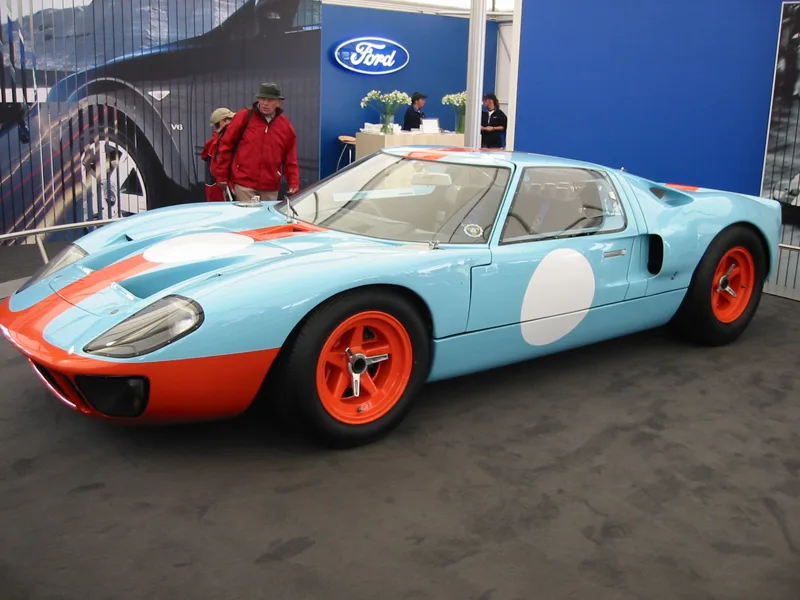
Broadley's Mk6 coupe, powered by a Ford V8, drew the interest of Ford, which paid him to shelve his company for two years while his ideas were merged with the work of Roy Lunn. The result was the Ford GT40. Broadley later extricated himself from the contract and went back to his own designs at the Slough factory.
The T70 and its successors, the T16x and T22x, were campaigned worldwide, in events ranging from the World Championship for Makes to Can-Am, up to 1973. During the 1970s Lola's output covered Group 5 and 6 machinery: the T210, the T212 and a run of T28x, T29x, T38x and T39x cars. They competed against rivals from Chevron and March.
When the Can-Am series was revived in the late 1970s, Lola dominated it using rebodied Formula 5000 cars, and it went on to win five consecutive championships. Many fans do not regard those cars as true sports cars, but they were a commercial success for the company.
Formula 5000 was the bigger picture behind that success. The SCCA's Formula A had evolved into Formula 5000, a series that used tuned stock-block V8s in cheap, high-powered single-seaters. Lola moved in after early struggles against McLaren, Team Surtees and Chevron, and by the later years it produced most of the series' cars across Europe, the United States and Australasia.
What were Lola's endurance cars in the 1980s and 1990s?
In the early 1980s the T600 and T610 range was built for IMSA GTP racing with a variety of engines, including Cosworth, Mazda and Chevrolet units. Their derivatives stayed competitive in IMSA and Group C. Later Group C and GTP cars were often built for manufacturer programmes, such as Nissan's Group C cars and the Chevrolet Corvette GTP programme.
Lola also created a 3.5-litre Group C car, the T92/10, but that championship collapsed before the car could be fully developed. Its sports car output in the late 1990s and 2000s opened with the B98/10, a car that did well in Europe but less so in America. The B2K/10, with its central headlight, is remembered more for its looks than for results.
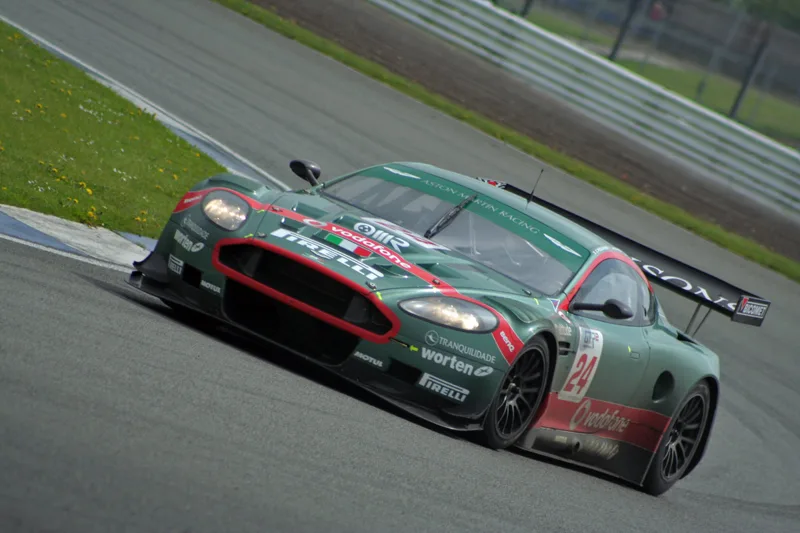
Lola's strongest sports car niche was the second class, which was LMP675 at first and later LMP2. Its B05/40 took class honours at Le Mans in 2005 and 2006 with Ray Mallock Limited, and it won several American Le Mans Series rounds with Intersport Racing. A second overall place at the 2006 12 Hours of Sebring showed how far the car could go.
Why did Lola struggle in Formula One?
Lola avoided a factory Formula One entry and was content to build cars for other teams. Its first real foray came in 1962, when Mk4 chassis were supplied to Reg Parnell's Bowmaker-Yeoman team, with John Surtees and Roy Salvadori at the wheel. Bob Anderson later gave the Mk4 its last win, at the non-championship Rome Grand Prix in 1963.
The most notable success came in 1967, when Lola helped Honda with the design of its RA300. Honda's own chassis was dropped, and a 1966 Indianapolis monocoque from Lola, the T90, was reworked to take a Honda engine. The resulting RA300, called the T130 by Lola and the Hondola by the press, won the 1967 Italian Grand Prix.
Later attempts went less well. Embassy Hill, Graham Hill's own team, turned to Lola for the T370 after a poor 1973 with a customer Shadow. Hill died in an air crash in 1975, and his GH2 never raced. The Haas Lola programme of 1985 and 1986 promised works Ford power, but the car was barely a Lola, and the outfit closed its doors once 1986 ended.
Lola returned to Formula One in several guises. Larrousse and Calmels built up a reputation from 1987 with Lola-based machinery, and Scuderia Italia used the T93/30 in 1993, when the team's results were poor. Lola's own MasterCard programme started in 1997 after sponsor pressure brought the debut forward a year, and the cars were never tested in a wind tunnel before arriving in Australia. The sponsors left after one race, and the team did not turn a wheel at the second.
A later attempt came in April 2009, when Lola announced a full technical, operational and financial review aimed at a Formula One car. The company had filed an entry for 2010, but in June it abandoned the plan once it became clear that it would not make the initial entry list. Years later, Lawrence Stroll, a Canadian billionaire who had bought Force India in 2018, tried to take the Lola name for a 2019 team. That attempt also failed.
What did Lola build in single-seaters?
Lola built the Formula 2 cars that BMW used in the 1970s, and its final F2 design was derived from a Ralt, which Toleman had licensed as its TG280. With Formula 3000 displacing Formula 2 in 1985, Lola first tried a car built on its larger IndyCar chassis, then returned in 1986 with a purpose-built F3000 design.
Other single-seater contracts followed. Lola took over the Formula Nippon chassis in 2003, built the spec Indy Lights car from 1993 to 2001, and in 2005 won the largest single-seater contract of the time. That deal was for the A1 Grand Prix series, for which Lola built 50 identical Zytek V8 cars that were leased to the national franchisees. The cars were broadly at Formula 3000 technology level.
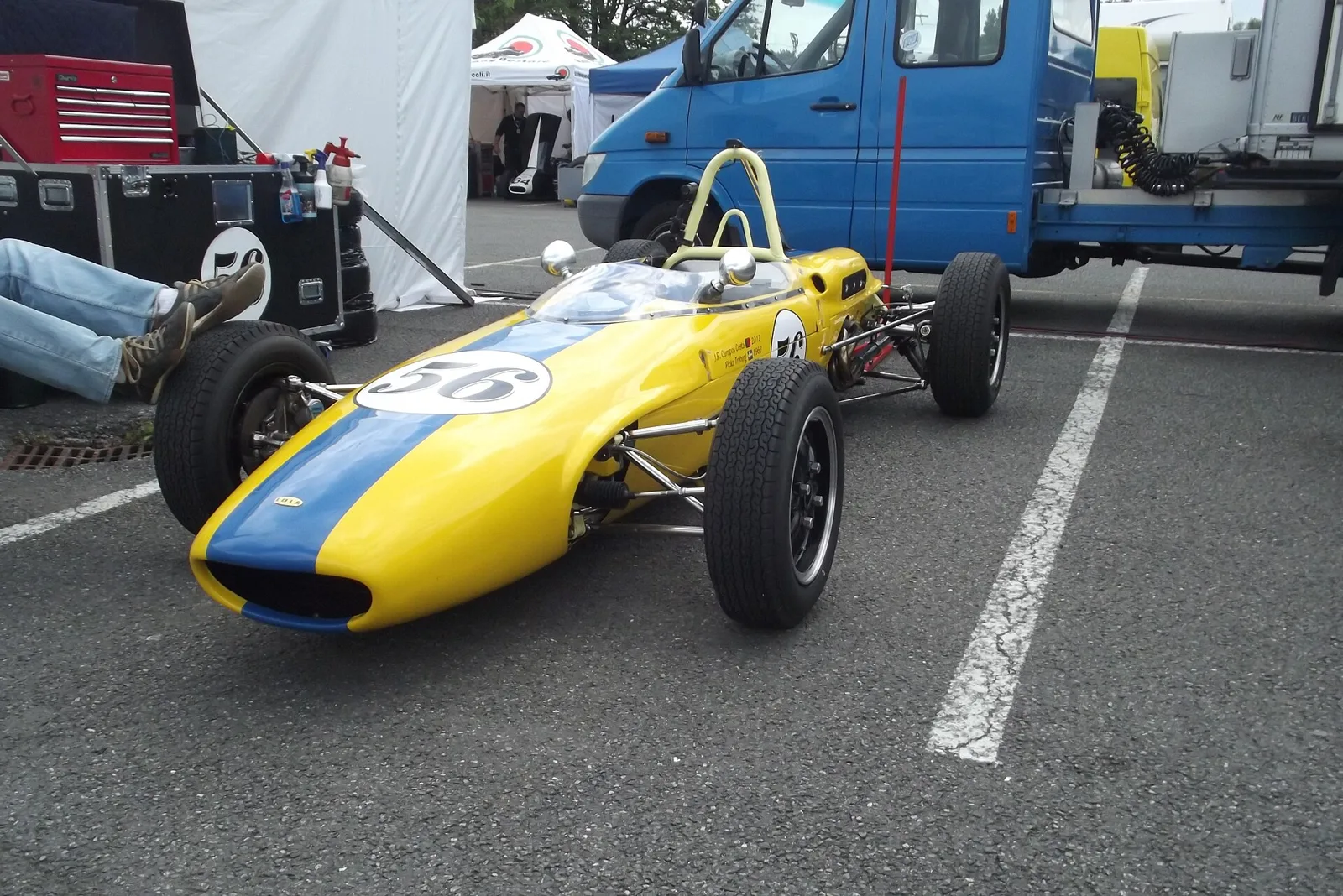
Lola also built a broad range of minor-category cars, including Formula Atlantic machines derived from Formula 2 and Formula 3 designs and cars for Formula Ford and Sports 2000. Patrick Head, later of Williams, designed his first cars for Broadley. The minor formulae earned little profit, but they kept staff busy during the summer and gave young designers a place to learn.
How did Lola fare in American open-wheel racing?
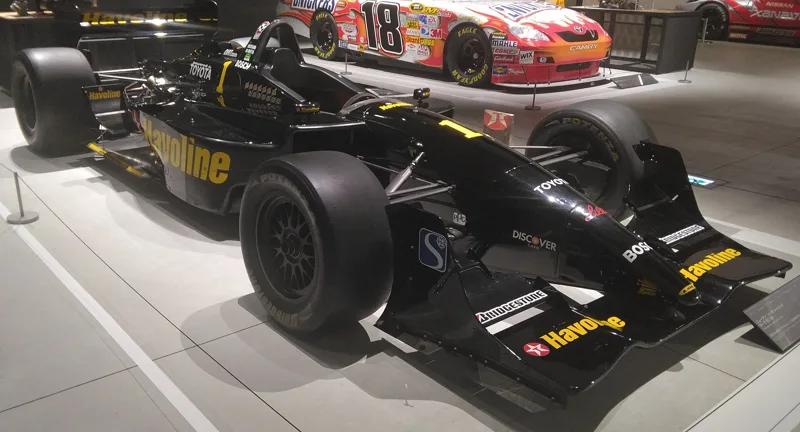
Lola's Indianapolis connection dated from the 1960s. Graham Hill won the 1966 race in a Lola, and Al Unser won the 1978 race in a modified chassis. The company's full push into American open-wheel racing began in 1983, when Mario Andretti drove a Lola for Newman/Haas. Its car won the 1990 Indianapolis 500 for Arie Luyendyk.
Reynard entered CART in 1994 and displaced Lola from much of the market, but Lola staged a comeback when several Reynard teams switched to new chassis. By 2003 it was the only company still building new chassis for Champ Car. Lola's proposal for the IndyCar ICONIC project was tested in a wind tunnel, but IndyCar chose a Dallara design, and Lola's car never went into production.
Champ Car's changes also reshaped Lola's position. For the 2007 season the series switched to a spec Panoz chassis, the DP01, which every competitor then used. Earlier, Penske, Newman/Haas and Chip Ganassi had all run Lolas at various points, and by 2001 the field was split almost evenly between Lola and Reynard.
What does Lola's Formula E return look like?
Lola returned to single-seaters in the 2024-25 Formula E season as a powertrain supplier, in partnership with Yamaha. Abt became its first customer, and the team raced as Lola Yamaha Abt with Lucas di Grassi and Zane Maloney. The team scored its first podium at Miami, where di Grassi finished second.
The 2025-26 season was harder. Di Grassi won the second race at Shanghai, which was the first win for the team and the first of his Gen3 career. However, the team finished tenth out of ten teams, scoring 35 points in total. Di Grassi announced his retirement from professional racing at the end of 2026.
The wider 2025-26 schedule was modest in scoring terms. Maloney picked up a point in the opening race in Sao Paulo, but the team then went without scoring until the Monaco rounds, where di Grassi finished eighth and ninth. Maloney also took tenth in the second Monaco race, and di Grassi later added a tenth at Sanya before the team's fortunes dipped again.
Key milestones at a glance
| Year | Milestone |
|---|---|
| 1958 | Company founded in Bromley by Eric Broadley |
| 1967 | Honda RA300 (Lola T130) wins the Italian Grand Prix |
| 1978 | Al Unser wins the Indianapolis 500 in a modified Lola |
| 1997 | Martin Birrane acquires the company |
| 2012 | Lola Cars ceases trading on 5 October |
| 2022 | Till Bechtolsheimer buys the brand |
| 2024 | Formula E return as a Yamaha powertrain supplier |