Founded in 1998 by Jon Field, Intersport won American Le Mans and Grand-Am classes, drove Le Mans with prototypes and returned to IMSA in 2026.
Intersport Racing is an American team founded by Jon Field in 1998. It won the ALMS LMP2 teams title in 2005, raced at Le Mans in the 2000s and planned a 2026 return to IMSA with HMD Motorsports after roughly fourteen years away.
Intersport Racing is an American team that Jon Field founded in 1998, beginning in Dublin, Ohio. It collected American Le Mans Series titles and Grand-Am wins, raced at Le Mans, and then went roughly fourteen years without competing before a planned return to IMSA in 2026.
Who founded Intersport Racing and how did it begin?
Jon Field, an IMSA GT Championship driver, founded the team in 1998. Its first car was a Riley and Scott Mk III, which competed in the WSC class and finished fourth in the standings that year. The team was based in Dublin, Ohio, during that first iteration.
The debut came at the 1998 12 Hours of Sebring, where Field shared car number 28 with Butch Brickell and Rick Sutherland. The car retired after 173 laps.
The American Le Mans Series started in 1999, and the team entered with a new Lola B98/10 chassis carrying Ford power, though it also used a Riley and Scott for some rounds. Ryan Jones and Chris Goodwin joined for the opening round at Sebring, placing 19th overall and eleventh in its class. The team found few podiums after that, but it collected points finishes and ended the year ninth in the teams championship.
A small team that won a title in its ninth ALMS year and came back fourteen years later with a new partner.
How did Intersport perform in 2000 and 2001?
In 2000 the team ran a new Lola B2K/10 in most rounds and entered the Grand-Am series with the same cars. It finished sixth in the ALMS and seventh in the Grand-Am teams standings, and it took second at the Watkins Glen 6 Hours.
Field drove most rounds that season alongside Oliver Gavin and Rick Sutherland. In 2001 the team won two Grand-Am races, at Mid-Ohio and Phoenix, using a Lola B2K/10 with a Judd engine in the top SRP class.
Clint Field, Jon's son, shared ALMS driving duties that year, and Jon rotated between Clint and Rick Sutherland. The Grand-Am season ended with a fourth-place teams finish and a fourth-place drivers finish for Field.
| Season | Series and class | Notable result |
|---|---|---|
| 1998 | WSC | Fourth in the standings |
| 1999 | ALMS LMP | Ninth in the teams championship |
| 2001 | Grand-Am SRP | Wins at Mid-Ohio and Phoenix |
| 2002 | ALMS LMP675 | Second in the teams championship |
| 2005 | ALMS LMP2 | Teams championship, 133 points |
| 2011 | ALMS LMPC | Third in the teams championship |
What did the 2002 season bring?
For 2002 Intersport left Grand-Am and concentrated on the ALMS. It switched to LMP675, the bottom rung of the Le Mans prototype ranks, with an MG-Lola EX257. At Sebring the car finished seventh overall and was the strongest LMP675 entry by a wide margin, while the nearest rival in the class ended 25th, 62 laps back.
Two further victories arrived in Washington and at Petit Le Mans. The car suited the longer endurance events better than the three-hour sprints. The team finished second in the teams standings, one point behind KnightHawk Racing, which ran an almost identical MG-Lola.
Field took the drivers title, finishing 15 points clear of Ben Devlin of Archangel Motorsports.
How did the 2003 and 2004 campaigns go?
In 2003 Intersport kept the MG-Lola for most rounds and tried an LMP900 entry, first a Judd-powered Lola B2K/10 and later a Riley and Scott with an Elan engine. Its LMP675 car won at Road Atlanta and at the Grand Prix de Trois-Rivieres.
At Petit Le Mans that year the team took a class win in an all-new Lola B01/60, powered by a 3.4 litre Judd V8 that was naturally aspirated rather than turbocharged. The team's first Le Mans came the same season, when the MG-Lola qualified second fastest in its class but retired after 107 laps with engine problems.
In 2004 the LMP2 car won six of nine events. The team failed to finish the races it did not win, and that cost it the teams title, which went to Miracle Motorsports. At Le Mans that year the LMP2 car won its class, but it finished second-last among the classified cars.
Was 2005 the team's strongest year?
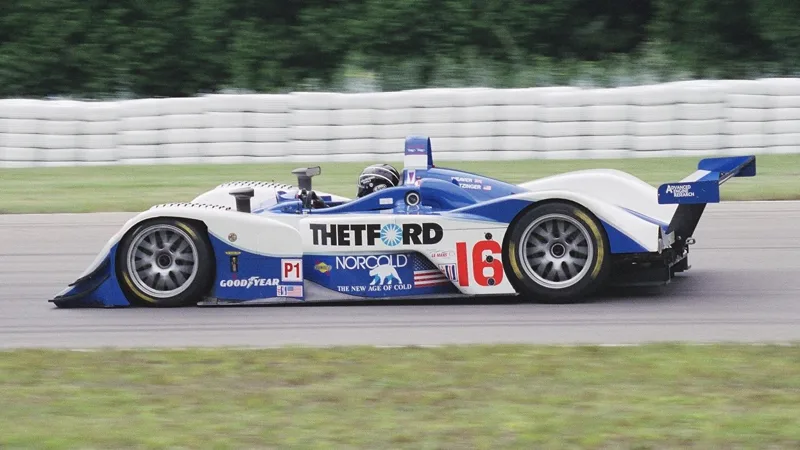
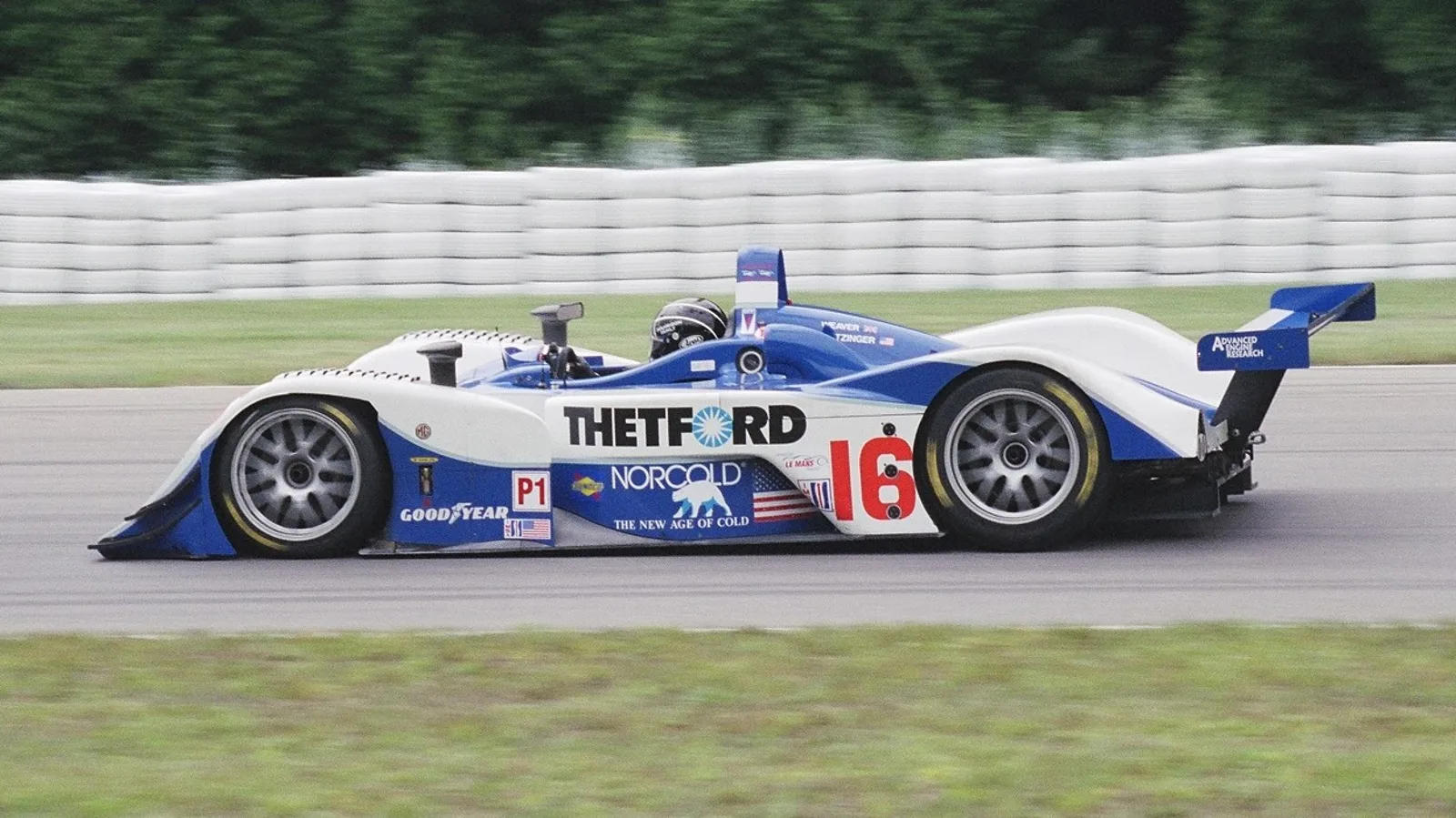
Many observers regard 2005 as the peak of the team's record in the series.Telesis Intersport Racing ran a Lola B05/40 with an AER engine for the full season and took the LMP2 teams title with 133 points, 16 more than Miracle Motorsports.
Clint Field raced every round and won the LMP2 drivers championship, while Jon finished fifth. Earlier that year two cars had retired at Sebring, but Jon and Clint then won at Road Atlanta, and the pair went on to win four more rounds.
What were the Porsche-era seasons like?
In 2006 the Penske Porsche RS Spyder made life hard for everyone. Intersport's Lola-AER still won its class at Sebring and finished second overall, and the team ended the season second in the LMP2 teams standings, 34 points behind Penske.
At Le Mans in 2006 the team finished 19th overall and fourth in LMP2. In 2007 it returned to LMP1 with a Creation CA06/H powered by a five-litre Judd V10, but Audi Sport North America won every LMP1 race. Intersport's last points of that season came in the seventh round.
A Detroit win in 2008 came when the leading Audi failed post-race inspection for being under the class minimum weight. The team finished that season second in the LMP1 teams standings.
In 2009 Acura took over as the dominant LMP1 force, and Intersport finished third in the teams standings. The LMP classes merged for 2010, and at that year's Petit Le Mans the team finished fifth overall.
Who drove for Intersport over the years?
Jon Field and his son Clint formed the core of the team's driving line-up through the 2000s. Oliver Gavin and Rick Sutherland were regular co-drivers early on, and Kyle Marcelli was the leading driver in the team's final ALMS year.
Duncan Dayton and Larry Connor were part of the 2003 Petit Le Mans class win, and Liz Halliday and Gregor Fisken also drove for the team in the mid-2000s. Clint and Liz Halliday were the full-season pairing in 2006, with Jon and Dayton appearing as part-time drivers.
How did the team finish its ALMS years?
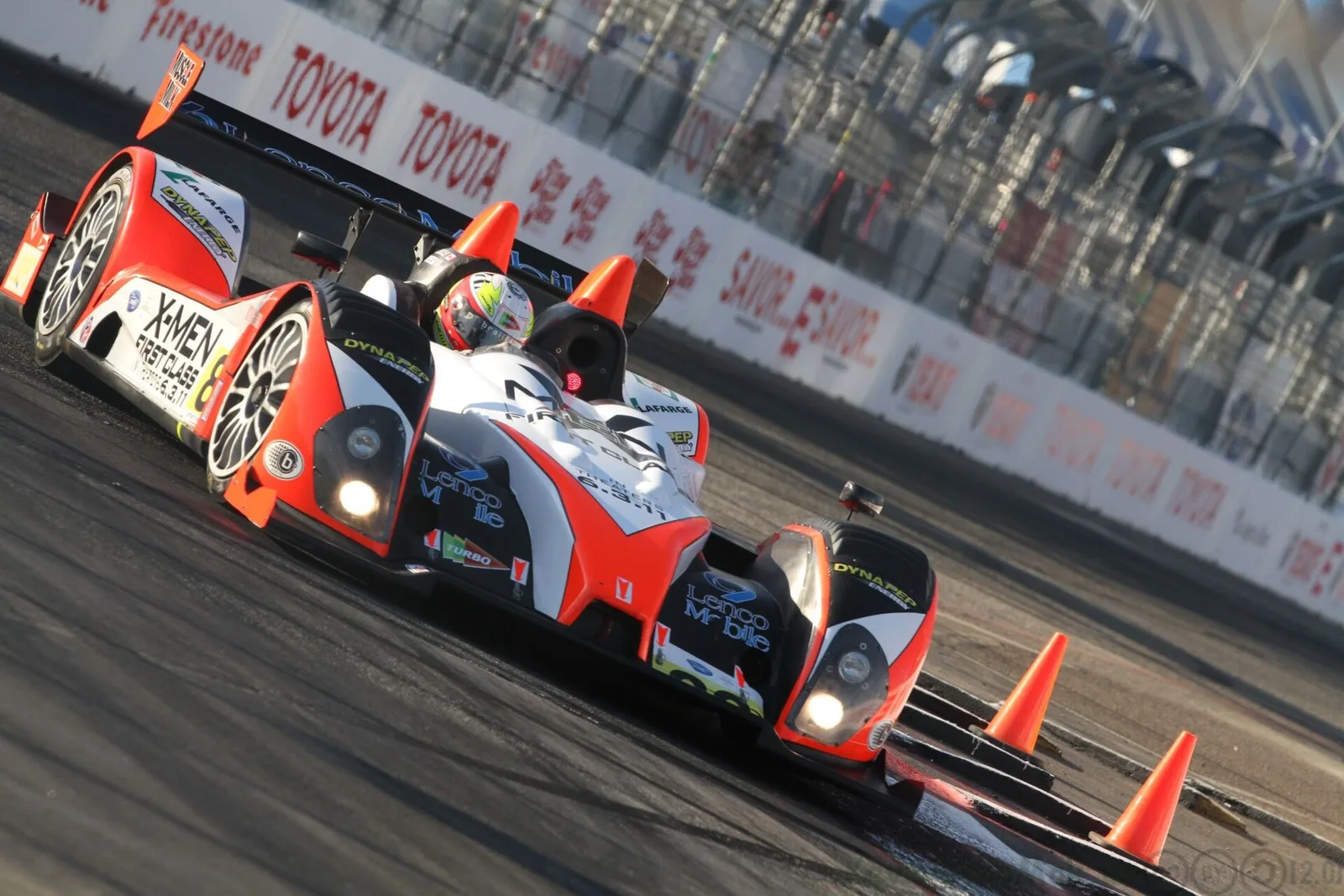
For 2010 the team bought an Oreca FLM09 for the new LMPC class and finished fourth in that championship. In 2011 it ran two of those cars and finished third in the teams standings. That season was the last one the team raced in the ALMS.
Kyle Marcelli and Tomy Drissi won at Mid-Ohio in the No. 37 car, and the same pair took a second win at the Baltimore Grand Prix in the No. 89. Marcelli was the highest-placed of the team's drivers, finishing third in the drivers standings.
How did Intersport return to racing in 2026?
Intersport announced a return to the IMSA SportsCar Championship in 2026, after an absence of about 14 years. The move ends a long break from competition that began after the team's 2011 ALMS season. HMD Motorsports will partner the team, and the entry will be an Oreca 07 in LMP2.
Its base will be HMD's site in Brownsburg, Indiana. Jon Field will be at the wheel, and three further signings were confirmed: Job van Uitert, Seth Lucas and Oliver Jarvis.