From a 1971 Rugby workshop to Formula One, IndyCar and Le Mans, the Judd brand built V8s and V10s that gave smaller teams a competitive, affordable option.
Judd is a racing engine brand from Engine Developments Ltd. in Rugby, which Jack Brabham and John Judd set up in 1971. Its V8s and V10s powered IndyCar, Formula One, sports car and touring car teams, mostly as a privateer supplier.
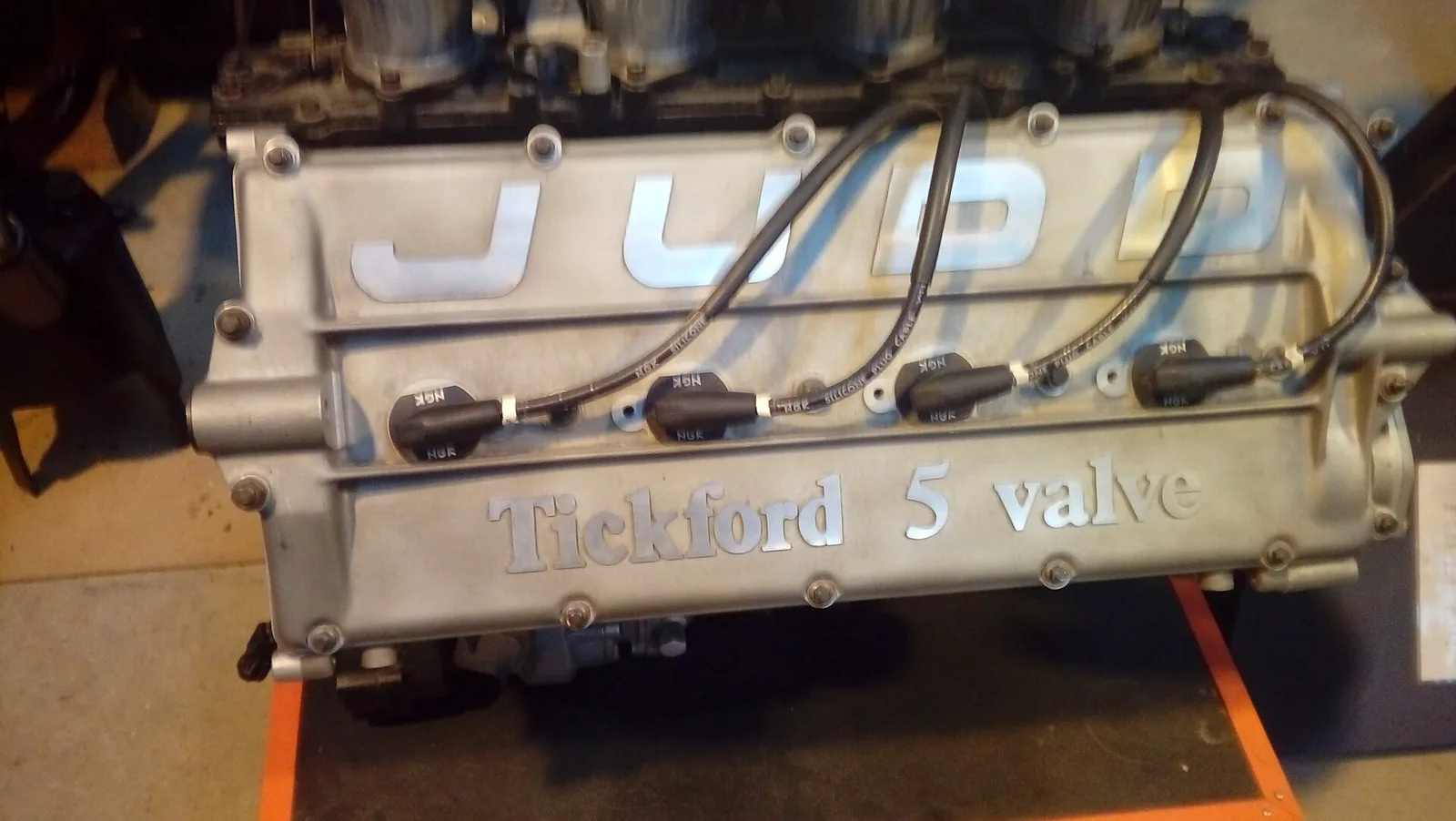
Judd is a brand of racing engines built by Engine Developments Ltd. of Rugby, Warwickshire. The company was founded in 1971 by John Judd and Jack Brabham, and it has supplied engines to Formula One, IndyCar, sports car and touring car racing. Its engines were usually sold to privateer teams rather than run by factory outfits.
Where did Judd engines come from?
The company was created to build engines for Brabham's racing efforts. It became one of the first firms authorised by Cosworth to maintain and rebuild the DFV engines, and that work gave the company its early engineering base.
Judd's first major job came through Brabham's long relationship with Honda. When Honda returned to Formula Two in association with Ron Tauranac's Ralt team, Judd was hired to develop the engine, and the work led to the company's bigger projects in American open-wheel racing.
A privateer engine maker from Rugby whose V8s and V10s put smaller teams on the grid in Formula One, IndyCar and Le Mans.
How did Judd enter IndyCar racing?
The first major product for CART was the Judd AV, a turbocharged V8 built for Honda's campaign in the United States. It made its debut in mid-1986 with Galles Racing and Geoff Brabham, and it was initially badged as a Brabham-Honda.
The engine was known for its reliability and fuel economy, particularly in the 500-mile races, but it was at a clear power disadvantage to the Ilmor-Chevrolet. Its first Indianapolis 500 came in 1987, when Jeff MacPherson finished eighth.
In 1988 Truesports, with driver Bobby Rahal, took over as the primary team and dropped the Honda name. Rahal finished fifth at Indianapolis and second at the Michigan 500, and he won the Pocono 500 that year, the only IndyCar victory for a Judd engine.
A year later Raul Boesel drove a Judd to third place in the 1989 Indianapolis 500, the engine's best result in the race. All five Judds that qualified were still running at the finish, and two of them were in the top ten.
Judd's BV V8 came between the AV and the Formula One engines. Based on the architecture of the AV, it was a naturally aspirated variant developed when Honda moved into the new Formula 3000 series. The BV later formed the basis for the CV, and Judd kept upgrading the AV into the early 1990s after Honda stopped badging it.
Judd also built the KV, a 3-litre V8 developed for Formula 3000 in 1995. Judd built the engines that every Formula 3000 team used, although Zytek maintained them, and the series ended in 2004.
How did Judd's Formula One engines perform?
Judd entered Formula One in 1988 with March Engineering, using the BV V8 as the starting point for its new 3.5-litre naturally aspirated engine, the CV. The engine saved development cost and gave smaller teams a competitive alternative to the Ford-Cosworth V8s.
Williams turned to Judd after losing their Honda engines for 1988. Judd-powered cars scored four podiums in their debut season. Nigel Mansell took the first, a second place at the wet British Grand Prix, and Ivan Capelli finished third in Belgium after two Benetton cars were disqualified.
The CV's power rose during the season from around 570 bhp (425 kW; 578 PS) to around 590 bhp (440 kW; 598 PS). The Ford DFR made about 610 bhp, while Honda's turbo V6 reached roughly 670 bhp. Despite the gap, the Judd was often the fastest of the naturally aspirated engines.
The March 881s of Capelli and Mauricio Gugelmin regularly recorded high speed-trap figures. Gugelmin reached 312 km/h (194 mph) during qualifying at Hockenheim, the fastest naturally aspirated speed trap of the season. At the 1988 Japanese Grand Prix Capelli briefly led a lap, the first naturally aspirated lead since 1983.
| Engine | Years used | Layout | Notable result |
|---|---|---|---|
| AV | 1986 to 1988 | Turbocharged V8 for IndyCar | Rahal won the 1988 Pocono 500 |
| CV | 1988 to 1990 | 3.5-litre naturally aspirated V8 | Four podiums in the debut season |
| EV | 1989 to 1990 | 76-degree V8 | Leyton House second at the 1990 French Grand Prix |
| GV | 1991 to 1992 | 72-degree V10 | Podium at the 1991 San Marino Grand Prix |
| OX10 and OX11 | 1993 to 1997 | Yamaha V10, based on the GV for the OX10 | Hill second at the 1997 Hungarian Grand Prix in an OX11D |
March upgraded its 1988 CV to the EV in 1989, while Brabham was also supplied with the new engines. Both teams continued with the EV in 1990, when March had been renamed Leyton House Racing. Team Lotus was the only team still using the older EV for 1991.
The EV was introduced for 1989 with a narrower vee angle, a 76-degree layout that replaced the 90-degree arrangement of the earlier V8s. Judd could only work in even-degree increments on its equipment, so the planned 75 degrees became 76.
The CV continued as a cheaper option for smaller teams, with its power raised for 1989. Team Lotus and EuroBrun were its only customers that year, and Lotus finished sixth in the Constructors' Championship. Life later bought CV units to replace its failed in-house W12 engine.
Judd left Formula One after 1992, when Brabham and Andrea Moda scored no points with the GV. The GV V10 had been developed for BMS Scuderia Italia, which earned a podium at the 1991 San Marino Grand Prix with it.
Did Judd continue in Formula One after 1992?
Judd did not return directly, but John Judd turned to Yamaha to keep the engine line alive. Yamaha developed a new cylinder head for the GV and branded the result the OX10 for Tyrrell in 1993, a team that scored no points that year.
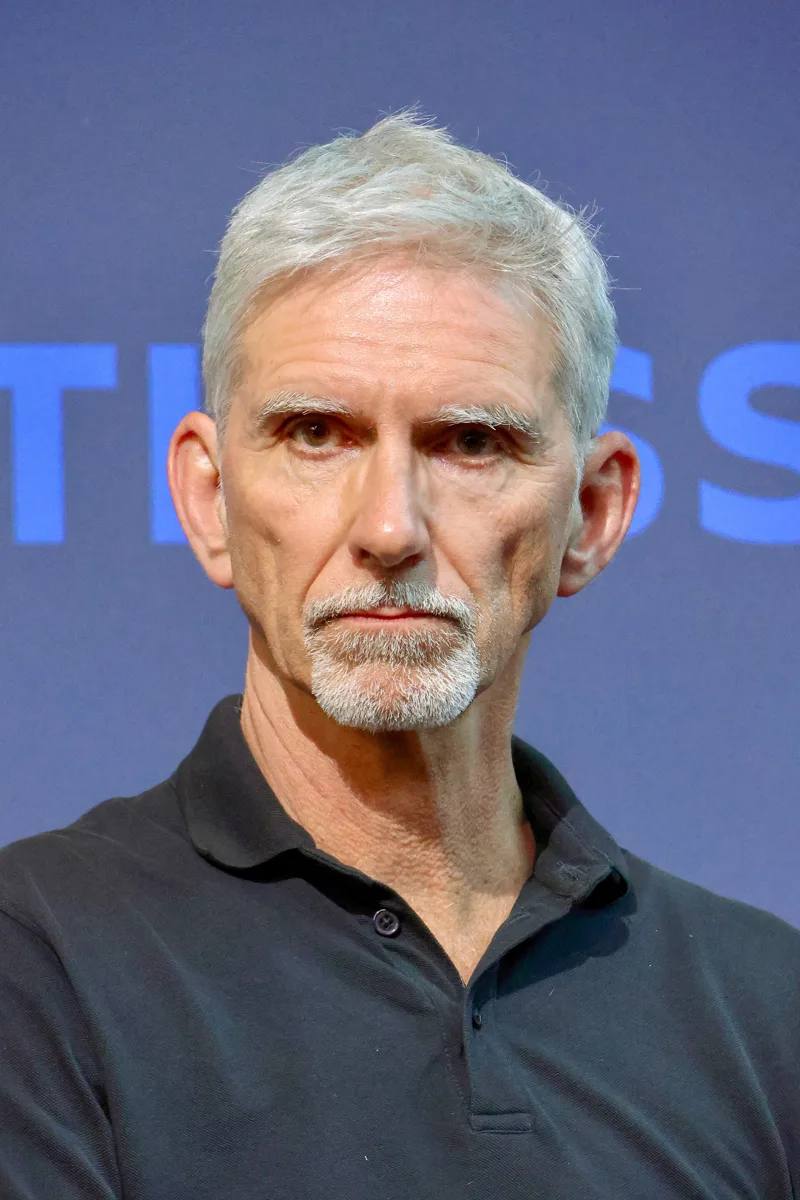
An improved OX10B helped Tyrrell take a podium in 1994 and sixth in the Constructors' Championship. The OX11 of 1996 was an all-new design, and the OX11C that Arrows ran in 1997 was lighter but less powerful and unreliable. The OX11D added 20 hp (15 kW) and carried Damon Hill to second at the Hungaroring, before Yamaha ended the project.
What did Judd build for sports car racing?
In 1991 the World Sportscar Championship adopted an engine formula similar to Formula One, which let sports car teams buy Formula One-style engines. Judd offered the GV V10 for endurance racing after modifications, and Mazda used rebadged versions as the MV10 to replace its banned rotary engines.
The series was cancelled in 1993, but Judd returned with the GV4, a four-litre engine that became a favourite for teams not running the dominant Ferrari 333 SP. It helped Racing for Holland win the championship in 2002 and 2003, and GV4s finished fifth and sixth at Le Mans in 2002.
The GV4's reliability at Le Mans was patchy, and teams sometimes had to reduce its revs to finish the race. In 2000 a Doran Ferrari 333 SP-Judd hybrid appeared, because the Judd unit was judged superior to the older Italian engine that Ferrari no longer supported. Doran Lista then won the Rolex 24 at Daytona in 2002 with a GV4.
The KV675 followed in 2001 as a 3.4-litre V8 for the LMP675 category, which the Automobile Club de l'Ouest introduced for smaller prototypes. It won its class at Le Mans in 2004 for Intersport Racing, and it also took the LMP2 class championship in the American Le Mans Series in 2005.
Judd then produced the GV5 in 2004, enlarging the GV4 to five litres to reduce revs and raise torque. Doran Pescarolo finished second at Le Mans in 2005 with a GV5, and the engine was upgraded to 5.5 litres in 2007.
The GV5 received a 2006 upgrade that used lighter materials and cut 20 kg (44 lb) from the unit. The GV5 S2 took Pescarolo to second place at Le Mans behind an Audi R10 TDI, and it helped win every event of the Le Mans Series season.
The XV675 was developed from the KV675 and kept its 3.4-litre layout, but it borrowed technology from the GV series to raise revs and cut weight. It debuted in 2004 with mixed results. Ray Mallock Ltd. won the LMP2 class at the 2005 Le Mans with it, before the team switched to a turbocharged rival. Judd announced the DB on 12 September 2007 as an all-new 3.4-litre unit for LMP2 cars.
A 4.2-litre GV V10 debuted in April 2013 at Hockenheim with a double victory, and it was installed in a Benetton chassis. The HK engine of 2011 was a different design, based on the BMW S65 V8 that powered the E90 M3 and named after Hiro Kaneda, who had died in 2010.
How did the rules shape Judd's later engines?
The later Judd engines reflected changing rules. For LMP2 cars in 2011 the Automobile Club de l'Ouest required engines based on production units to lower costs, and Judd answered with the HK, built on the BMW S65 V8 used in the E90 M3.
Engines of that kind were fitted to cars such as the Ligier JS P2, Lola B11/40 and Oreca 03, which raced across several series in North America, Europe and Asia. The HK showed that a small firm could keep supplying competitive engines as the regulations moved toward production parts.
Where did Judd engines appear in touring cars?
Engine Developments was chosen by Nissan in 1997 to lead engine development on the Primera for the British Touring Car Championship. Nissan won the constructors' championship in 1998 and 1999, and Laurent Aiello took the drivers' title in 1999.
Judd also worked with MG on its return to the championship in 2004, producing the K2000 engine for the MG ZS. Anthony Reid finished fourth in the drivers' championship in MG's debut year. When MG withdrew, the engine became available to customers, and Des Wheatley fitted one to an MG Metro to win the British Rallycross Championship.
What is Judd's legacy?
Judd's engines were rarely the most powerful on the grid, but they were often the most accessible. The company's privateer model gave teams such as March, Brabham, Tyrrell and Team Lotus a competitive option when factory engines were out of reach.
The brand also shows how a small British firm could build engines for many different series, from IndyCar and Formula One to Le Mans and touring cars, across more than four decades.