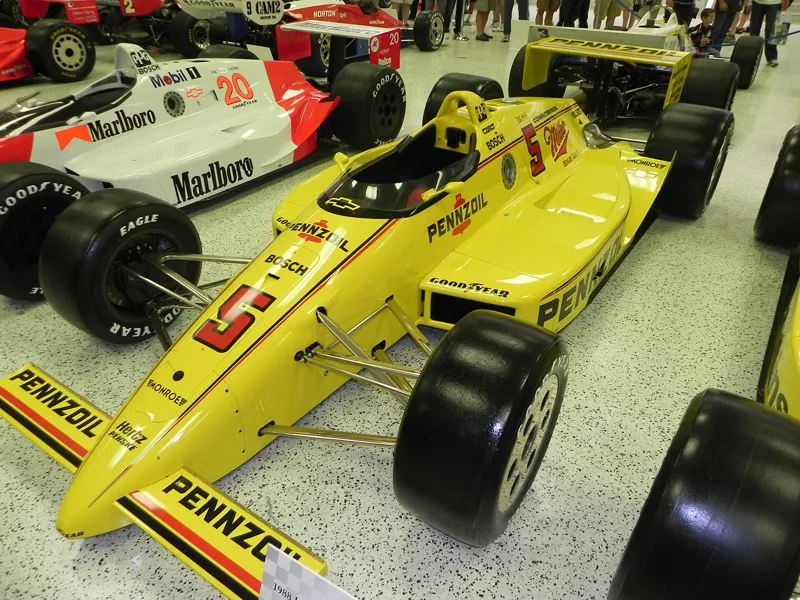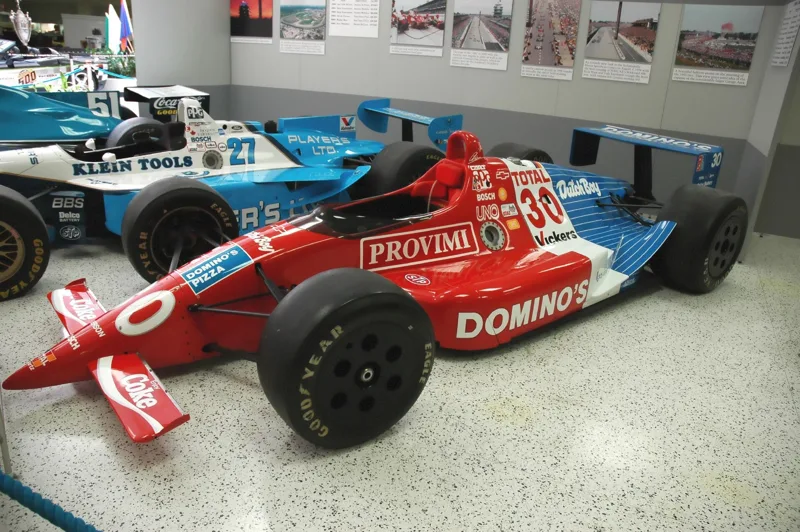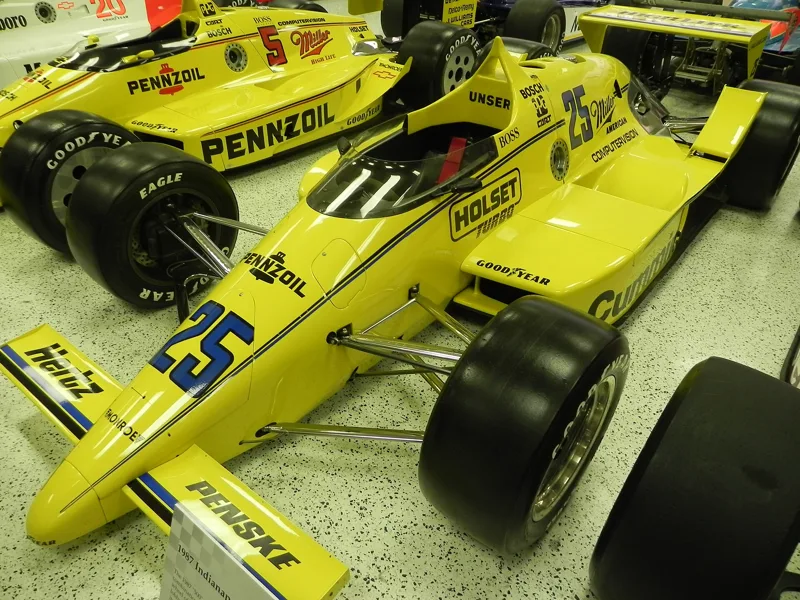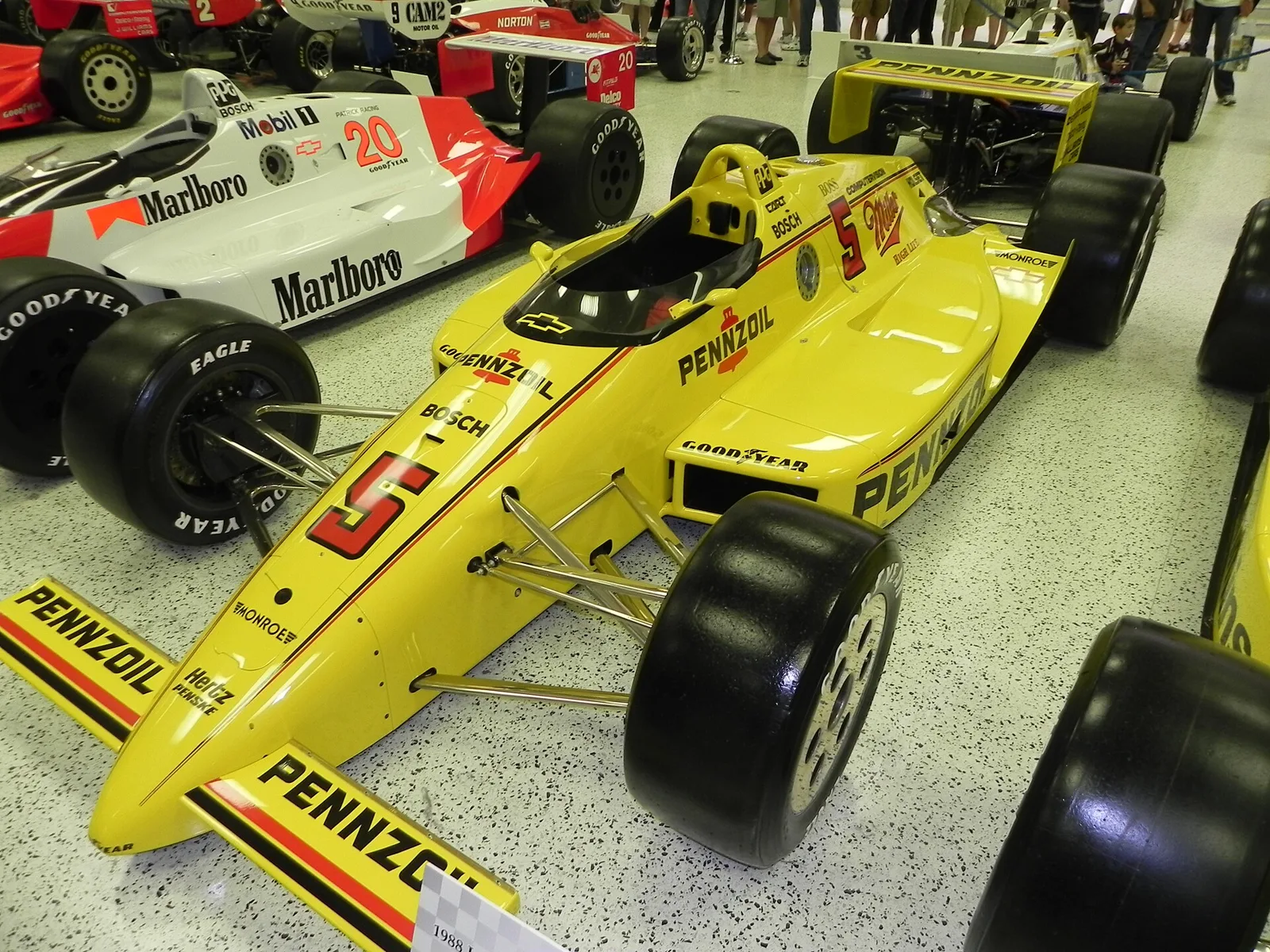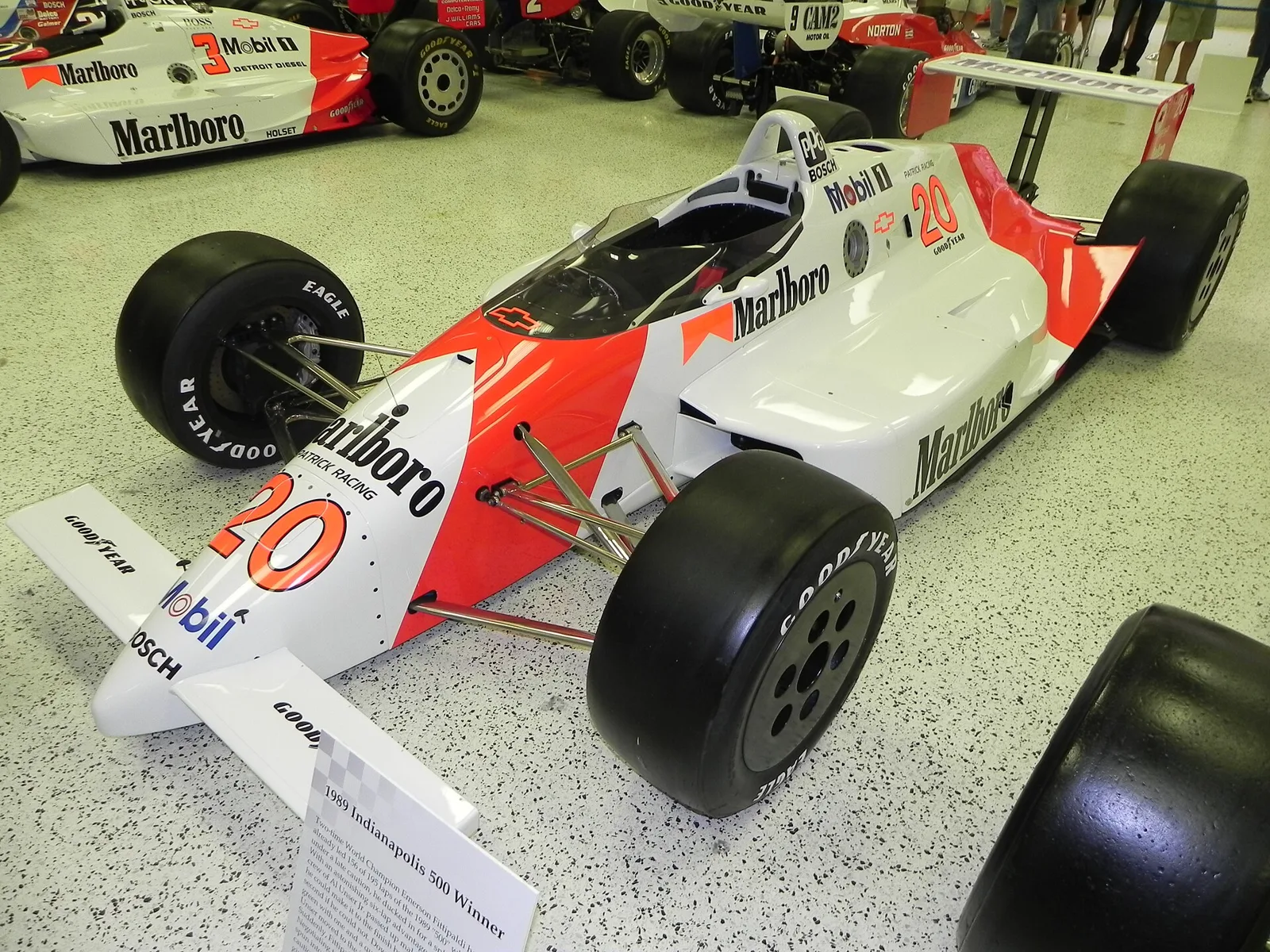
Penske failed to finish a car, Al Unser Jr. crashed while leading on the penultimate lap and Emerson Fittipaldi took the win and a first million-dollar prize.
Emerson Fittipaldi won the 1989 Indianapolis 500 on May 28, 1989, becoming the first winner from Brazil. The win came after Al Unser Jr., leading on the penultimate lap, crashed in turn three, and the race finished under caution with Fittipaldi at the front.
The 1989 Indianapolis 500 was the 73rd running of the race, held on Sunday, May 28, 1989. Emerson Fittipaldi, a two-time Formula One world champion, won it, but the race was decided in its last two laps, when Al Unser Jr. crashed while leading in turn three.
Why did Penske fail to finish a car?
Penske had dominated the previous year's race, but all three of its cars failed to finish in 1989. Rick Mears won the pole with a record fifth Indianapolis pole, and Al Unser Sr. qualified second, yet mechanical failures sidelined all three cars on race day.
Sullivan's practice crash broke an arm, and a backup car was needed for the second weekend, which dropped him to 26th on the grid. It was the only year of the 1980s in which the Penske team failed to score a top five finish, and the first time that had happened since 1976.
The winning car was a Penske PC-18, obtained by Patrick Racing through a long and tangled trade with Penske.
A Penske team with no finishers, a turn three crash on lap 199 and the first Brazilian winner at Indianapolis.
What changed at the track before 1989?
Speedway management resurfaced the entire track with asphalt in the summer of 1988, which led to higher overall speeds. It was the first repaving since 1976, and the apron at the bottom of the track was repaved as well.
The smooth new apron tempted drivers to dip below the white line, and drivers were beginning to treat it as an extension of the track. USAC announced penalties for running with four wheels below the line excessively, other than to make routine passes in heavy traffic.
The pit lane's rough concrete gave way to asphalt, and a guardrail went up to shield crew in the sign board area. The smoother surface made entry and exit easier but also raised speeds in the pit lane, which put crew members at risk.
The pneumatic jacks built into the cars sank into the soft asphalt of the pit lane. Crews had to affix steel plates to the pit lane to accommodate them, a practice that was later judged unsafe.
How did the tyre rules work in 1989?
Goodyear, the exclusive tyre supplier, arrived with both a hard and a soft compound, having spent the off-season developing tyres suited to the newly repaved track. Teams could run either compound at any time, but they had to start the race on the tyres they had used in time trials.
All teams had qualified on the soft compound, so all were required to start the race on soft tyres. Teams that wanted to switch to hard compounds for the race could do so at their first pit stop.
What team changes shaped the 1989 field?
Bobby Rahal left Truesports for the Kraco Racing team, while rookie Scott Pruett, the IMSA GTO and SCCA Trans-Am champion, took over the vacated seat at Truesports. Jim Crawford returned to King Racing after a sixth-place finish in 1988.
Chip Ganassi joined Pat Patrick as co-owner at Patrick Racing for Fittipaldi's Marlboro entry. Patrick Racing and Penske had agreed a trade over about two years, under which Penske supplied two PC-18 chassis for Fittipaldi.
Newman Haas Racing expanded to two cars, with Mario Andretti joined by his son Michael. Alfa Romeo joined the CART series with Alex Morales Motorsports, but it was not ready to compete at Indianapolis, so Roberto Guerrero missed the 500 for the first time since his rookie year of 1984.
Dick Simon had been at Indianapolis since 1970 and retired at the end of the 1988 season, though he was still entered as the owner of his team.
How did practice build up to pole day?
Rick Mears set an all-time unofficial track record of 225.733 mph on May 8, the first practice lap over 225 mph at the Speedway. He returned on May 12 with a lap of 226.231 mph, the fastest practice lap ever run at the track.
Opening day was cold, with snow flurries, and only eleven cars took to the track. Practice was washed out on May 9, and Danny Sullivan crashed on May 11 at 4:11 p.m. after his engine cover came off, suffering a fractured right arm and a mild concussion.
How did pole day unfold?
Pole day was held on Sunday, May 14, after rain washed out Saturday. Al Unser Sr. drew first in line, set a track record on all four laps and took the provisional pole at 223.471 mph.
Rick Mears then set a one-lap track record of 224.254 mph and a four-lap average of 223.885 mph to secure the pole. Michael Andretti's run was disallowed after his car was found 4.5 pounds underweight at post-qualifying inspection.
Michael Andretti later requalified at 218.774 mph, the eighth-fastest car in the field, but he was forced to start 22nd as a second-day qualifier. He complained about a possibly malfunctioning pop-off valve, but USAC took no action.
Emerson Fittipaldi was the final car eligible for the pole round, and his run of 222.329 mph put him on the outside of the front row. He bumped Jim Crawford back to the inside of row two.
Who made the 33-car field on bump day?
On Bump Day, May 21, much of the attention focused on three-time winner Johnny Rutherford, the biggest name who had not yet qualified. Billy Vukovich III put his car into the field at 216.698 mph, and Rutherford completed his run at 213.097 mph to fill the field to 33 cars.
That left Davy Jones on the bubble until John Paul Jr. bumped him at 12:45 p.m. Paul was making a return after a four-year absence, having been sentenced in 1986 over a drug-trafficking case and released in October 1988 after serving thirty months.
Jones returned at 3 p.m. and bumped his way back in, which put Phil Krueger on the bubble. Pancho Carter bumped Krueger at 4:45 p.m., and Rutherford slipped onto the bubble himself.
Rutherford survived three attempts and had lined up a deal to step into a Foyt backup car if necessary. With fifteen minutes left, Rich Vogler bumped him at 213.239 mph, and he scrambled to get back in line in time.
At 5:58 p.m. Rutherford made one final attempt. He had a warm-up lap of over 217 mph, but his engine blew in turn one just after the green flag, and the 6 o'clock gun went off. It was only the second time in his career that he had failed to make the field, and rookie Bernard Jourdain held the final bubble spot.
How did the Pit Stop Contest go?
The 13th annual Miller Pit Stop Contest was held on May 25. Mario Andretti had been disqualified in an earlier round for running through the lights, but he took the spot vacated by King Racing and reached the final.
In the first semifinal Al Unser Jr. beat his father, Al Unser Sr. The Penske crew was penalised 10 seconds for running over a hose and a further five seconds for a loose wheel, and Andretti was penalised five seconds for a loose wheel in the final.
Unser Jr. defeated Andretti in the final by over six seconds, and he took the victory for Galles Racing with chief mechanic Owen Snider.
How did the race start?
Gary Bettenhausen broke a valve on a parade lap and coasted to a stop on the mainstretch. He was wheeled back to the garage without completing a single lap, and he finished 33rd.
At the start Emerson Fittipaldi jumped into the lead from the outside of the front row and pulled out to a sizeable lead over the first few laps. On the third lap, Kevin Cogan crashed at the pit entrance section of the front straight.
Cogan's car made slight contact with the outside wall, spun to the inside and struck the inside pit wall. It broke in two and slid through the pits, but Cogan climbed out unhurt.
Why did Fittipaldi lead for so long?
Fittipaldi dominated the first 400 miles, while several contenders retired with mechanical failures. All three Penske machines were out, and Bobby Rahal, Jim Crawford and Arie Luyendyk also dropped out of the race.
Michael Andretti, who had started from the seventh row, chased Fittipaldi for most of the race. He passed Fittipaldi for the lead on lap 154, but his engine expired a few laps later.
Mario Andretti suffered electrical problems that cost him significant ground. Al Unser Jr. stayed on the lead lap in third place, despite having been lapped earlier, and when Michael Andretti's engine failed he moved up to second behind Fittipaldi.
What did the caution on lap 181 decide?
Palmroth losing a wheel in turn four on lap 181 brought out the yellow. Fittipaldi pitted for much-needed fuel, but he nearly stalled his engine and lost several seconds, and he was briefly blocked by a safety truck as he left the pits.
Unser stayed out under the yellow and did not pit for fuel. The team had been setting him up to potentially finish with one less pit stop than Fittipaldi, and Team owner Rick Galles made the call not to pit.
The logic was that a fuel-out on the last lap still left Unser no lower than second, since Boesel trailed by six laps. Unser emerged just one car behind Fittipaldi.
How did the final laps unfold?
When the race restarted on lap 186, Fittipaldi quickly built a three-second lead, while Unser had to get past the lapped car of Raul Boesel, who was running third. Boesel's car was spewing fluid and appeared ready to blow.
By lap 193 Unser was directly behind Fittipaldi, and on lap 196 he passed him for the lead in turn three. Carrying little fuel made Unser quicker on the straights, though there were real worries about running dry before the line.
With two laps to go, both leaders worked through a line of slower cars. Going three-wide into turn three, Fittipaldi slid a little up the track as they came out of the turn, and their wheels made contact.
Unser went into a spin and hit the turn three wall hard, while Fittipaldi kept going. The yellow flag came out for the last lap with Fittipaldi leading.
Did Fittipaldi crash Unser on purpose?
Al Unser Jr. rejected theories that Fittipaldi had intentionally crashed him in response to their previous year's tangle at the Meadowlands. He was checked out at the track hospital, released, and congratulated his rival on the win.
Unser said he had gestured angrily at Fittipaldi as he drove past the crash site, but that at the last second he reconsidered and gave a sporting thumbs-up instead. Some viewers, however, took the gesture as a mocking one.
The field followed the pace car around the final corner, and the race finished under caution for the second year running. Fittipaldi took the checkered flag for his first of two Indianapolis 500 victories.
How did Raul Boesel finish third?
Raul Boesel nursed his failing engine to the flag in third place. It was his best Indianapolis finish, and the best result to date for Shierson Racing.
Despite the crash, Unser was still credited with second, having completed four more laps than Boesel. The official order put Fittipaldi first, Unser second and Boesel third.
What happened in victory lane?
Fittipaldi's win was well received across the Indy car community. In victory lane he spoke in his native Portuguese to greet the people of Brazil, to the thunderous roars of the crowd.
What records did Fittipaldi set?
Fittipaldi was the first Indianapolis 500 winner from Brazil, the first driver born abroad to win since Mario Andretti in 1969, and the first winner from outside the United States since Graham Hill won in 1966. He also received $1,001,600 in prize money, the first time a winner collected over one million dollars.
At season's end Fittipaldi became the fourth driver since 1979 to win the Indianapolis 500 and the CART championship in the same season. He also won the 1988-89 USAC Championship, because the Indianapolis 500 served as the Gold Crown race.
The win was Patrick Racing's third and final Indianapolis victory, after 1973 and 1982. Chip Ganassi, co-owner there since 1988, collected his first of seven Indianapolis victories as a car owner or co-owner, as of 2025.
How was the 1989 race broadcast?
ABC Sports carried the race live, and the 1989 race celebrated the 25th year of the Indy 500 on the network. Paul Page hosted, with Bobby Unser and Sam Posey alongside him, and Unser drove the pace car at the start.
On radio Lou Palmer served as chief announcer for the second and final time, in his 32nd and final 500 on the crew. Johnny Rutherford, who had failed to qualify, joined as driver expert, which began a long run in that role.
What were the key figures for the 1989 race?
| Item | Detail |
|---|---|
| Date | Sunday, May 28, 1989 |
| Venue | Indianapolis Motor Speedway |
| Winner | Emerson Fittipaldi, Penske PC-18 chassis |
| Second | Al Unser Jr., credited after the turn three crash |
| Third | Raul Boesel |
| Pole | Rick Mears, 224.254 mph one-lap record |
| Prize money | $1,001,600 to the winner |
| Penske finishes | None; all three cars retired |