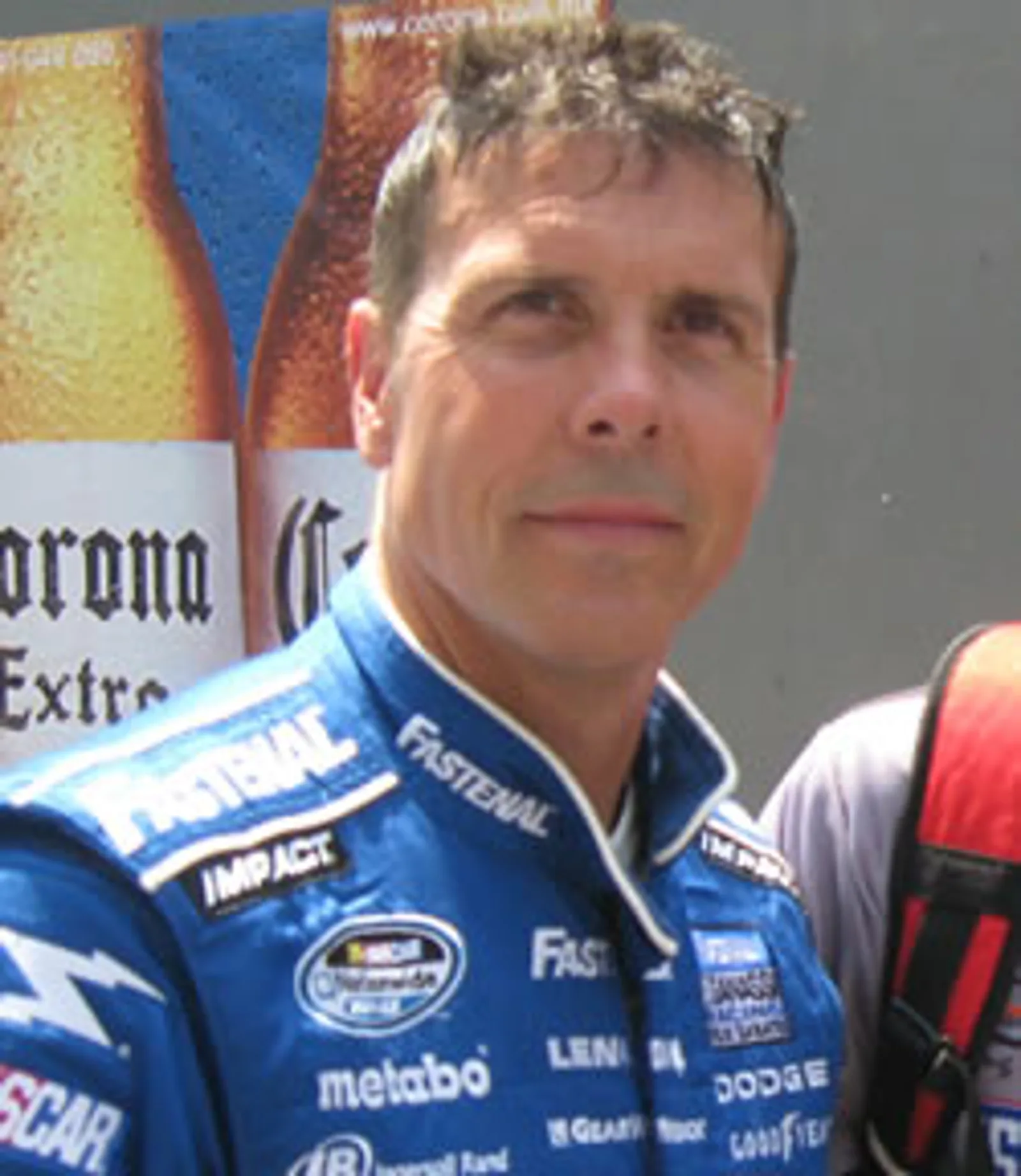
An American driver who won in sports cars, Trans-Am, CART, NASCAR road courses and Grand-Am, and who retired in 2018 after fifty years in racing.
Scott Pruett won two IMSA GTO titles, three Trans-Am championships and five Grand-Am championships during an American career that also took in CART and NASCAR road-course starts. He retired in January 2018 after fifty years in racing.
Scott Pruett is an American former racing driver who competed in many disciplines. He is best known for sports car success, but he also raced in Indy Cars, NASCAR and Trans-Am, and he was born on 24 March 1960. He announced his retirement in January 2018, after fifty years in racing.
What did Pruett achieve in the 1980s?
Karting came first for Pruett, who started at eight and went on to win ten karting titles. He moved into sedan racing in 1984, and his earliest major success came in 1986 with the IMSA GTO title, which he took again in 1988. The SCCA Trans-Am crown followed in 1987.
At the Indianapolis 500 in 1989 he was named co-rookie of the year. Across four starts his best result was tenth, driving for Truesports.
Sports car titles, a Rolex 24 hat-trick and a NASCAR runner-up finish at Watkins Glen mark a career that ran for fifty years.
How did a 1990 crash affect his career?
A crash on 16 March 1990, during pre-season running for that year, left Pruett with leg and back injuries. It happened while he was driving for Truesports at the temporary track at West Palm Beach Fairgrounds, and he spent most of 1990 getting back to fitness.
During that period he sometimes worked as a colour commentator on ESPN's IndyCar coverage, with Paul Page handling the play-by-play.
What were his results in the early 1990s?
The 1991 IROC season opened at Daytona, and Pruett won that first round. In 1994 he took a test role with Patrick Racing, evaluating Firestone tyres, and that same season he added the IMSA 24 Hours at Daytona and a second Trans-Am title.
For four more years he raced Indy Cars for Patrick, regularly finishing in the top ten of the points table. He was among the contenders for the 1995 Indianapolis 500 before a late crash with eighteen laps left ended his chances. That year also produced his first CART victory, at Michigan, where he edged Al Unser Jr. home by .56 seconds.
Why was 1998 his best CART season?
Patrick's best season for him was 1998, when he ended sixth in the championship. That year he also collected three podiums and a pole. The team's season reflected steady rather than spectacular results.
In 1999 he moved to Arciero-Wells and took part in Toyota's engine programme development. He earned Toyota's first oval pole at California Speedway and set the team's best road-course qualifying of the time, third at the Australian Grand Prix.
How did Pruett move into NASCAR?
In 2000 he drove a Tide-sponsored No. 32 Ford fielded by Cal Wells in the Winston Cup Series. Ricky Craven replaced him once the season was over, and for a time he stepped back from NASCAR. He returned in 2001 and took the LMGTS class at Le Mans in a works Chevrolet Corvette C5-R.
In 2001 he made several starts as a road-course ringer in both the Winston Cup and Busch series, including a run for Andy Petree at Sonoma and one for Chip Ganassi at Watkins Glen. In the Busch race he qualified on pole and dominated early before finishing eighth.
What was his best NASCAR result?
His best NASCAR result came at Watkins Glen in 2003, when he finished second in a Ganassi car. He had used cautions to climb through the field and led nine laps, but Robby Gordon swept the road-course events that year and Pruett never mounted a serious challenge for the win.
Earlier at Watkins Glen, in 2002, he had replaced Jimmy Spencer for a one-race deal, started 19th and finished sixth after a chance to challenge winner Tony Stewart. In 2005 he came from 43rd on the grid to finish fourth at the Glen, driving the No. 40 Coors car after Sterling Marlin left to attend his father's funeral.
How did Pruett fare in the mid-2000s NASCAR programme?
In 2004 Pruett planned three starts: the No. 39 Dodge run by Chip Ganassi Racing, and the No. 09 car for James Finch. At Sonoma he stayed in the top ten, led a lap and ended third behind teammate Jamie McMurray. An engine failure at Indianapolis ended that race early, and rain at Watkins Glen meant he missed qualifying.
In 2006 he returned to the Busch Series with James Finch, starting second and finishing tenth at Watkins Glen in the Zippo 200. He also drove the No. 40 car for Cup road-course races, and at the AMD event at the Glen he charged from twelfth to sixth on the final lap.
What were the 2007 and 2008 highlights?
The 2007 Rolex 24 at Daytona gave Pruett the overall win and the Daytona Prototype class, sharing the No. 01 Lexus Riley with Juan Pablo Montoya and Salvador Duran for Chip Ganassi Racing. Later that season at Mexico City he almost took his first Nationwide victory, until Montoya spun him out in the closing laps.
At Montreal that season he ran out of fuel on the final lap after leading nine laps, finishing fourteenth. In 2008 he drove a Fastenal Dodge Charger for Ganassi in the Nationwide series, sharing with Dario Franchitti, and he finished third at Mexico City, his best Nationwide result. His last Xfinity start came at the 2008 NAPA 200 in Montreal, where he claimed pole.
In 2008 he won the outright race and the Daytona Prototype category at the Porsche 250 at Barber Motorsports Park, and he also claimed the Rolex Sports Car Series Daytona Prototype title. At the Brumos Porsche 250 at Daytona he edged Alex Gurney by 0.081 seconds after 145 minutes, the closest finish Grand-Am had recorded.
What did the 2010s bring in Grand-Am and IMSA?
In 2010 Pruett raced for Chip Ganassi in Grand-Am. With Memo Rojas he won nine of twelve races and took another Rolex Championship, a series record for victories. That summer Hendrick Motorsports had named him a standby driver for Watkins Glen, but Jeff Gordon drove the race.
The 2011 24 Hours of Daytona went to Pruett, his fourth overall win in the race.
The year 2013 began with a win in the 51st Rolex 24 at Daytona, shared with Rojas, Montoya and Charlie Kimball. That was his fifth win in the race, which tied Hurley Haywood for the most. The title fight went to the final round, when Ganassi took the team title and Wayne Taylor Racing took the driver title.
In 2014 he raced a full Tudor United SportsCar Championship season with Rojas in the Prototype class. The following year Joey Hand came in as co-driver in the No. 01, and although the older Riley chassis struggled against the Corvette Daytona Prototype, the team stayed in the championship fight into Petit Le Mans, where only eight points separated the top four teams.
What happened in his final seasons?
In 2016 Pruett moved on from Ganassi and linked up with Paul Gentilozzi, whose team ran two Lexus RC F GT3 entries in the WeatherTech SportsCar Championship. He drove for Gentilozzi's 3GT outfit for a full season, and he later agreed to a part-time spell with Action Express Racing that year.
He called time on a fifty-year career on 5 January 2018, a decision announced after the 2018 Rolex 24 at Daytona. He had received induction into the Motorsports Hall of Fame of America in 2017, before that announcement.
How has Pruett been involved since retiring?
After retiring from driving, Pruett returned to Chip Ganassi Racing in 2021 as the strategist for IndyCar rookie Jimmie Johnson, a seven-time NASCAR Cup champion. In 2025 he was inducted into the inaugural class of the Trans-Am Series Hall of Fame.
Off track, he and his wife operate a winery in Northern California. Back in 2012, their Lucky Lauren Red was rated 93 points by Wine Spectator.
What were his key results?
| Year | Series or event | Result |
|---|---|---|
| 1986 | IMSA GTO Championship | First victory and title; repeated in 1988 |
| 1987 | SCCA Trans-Am Championship | Champion |
| 1989 | Indianapolis 500 | Co-rookie of the year; best finish tenth |
| 1994 | IMSA 24 Hours at Daytona | Winner; second Trans-Am title that year |
| 1995 | CART, Michigan 500 | First CART race win |
| 1998 | CART championship with Patrick Racing | Sixth in points |
| 2001 | 24 Hours of Le Mans, LMGTS class | Class winner in a factory Chevrolet Corvette C5-R |
| 2003 | NASCAR, Watkins Glen | Second, career-best NASCAR finish |
| 2007 | Rolex 24 at Daytona | Overall winner |
| 2008 | Brumos Porsche 250, Daytona | Won by 0.081 seconds over Alex Gurney |
| 2010 | Grand-Am Rolex Championship with Memo Rojas | Nine race wins out of twelve |
| 2011 | 24 Hours of Daytona | Overall winner, fourth overall win there |
| 2013 | 51st Rolex 24 at Daytona | Winner, fifth win in the race |
| 2018 | Retirement | Announced 5 January after fifty years in racing |
What is Pruett's legacy?
Pruett is remembered for the breadth of his career, which spanned sports cars, touring cars, open-wheel racing and NASCAR road courses. His Rolex 24 record and his Grand-Am titles make him one of the most successful endurance drivers of his era.
He is also known for his television and trackside work, and for the strategy role he took on at Chip Ganassi Racing after retiring from driving.