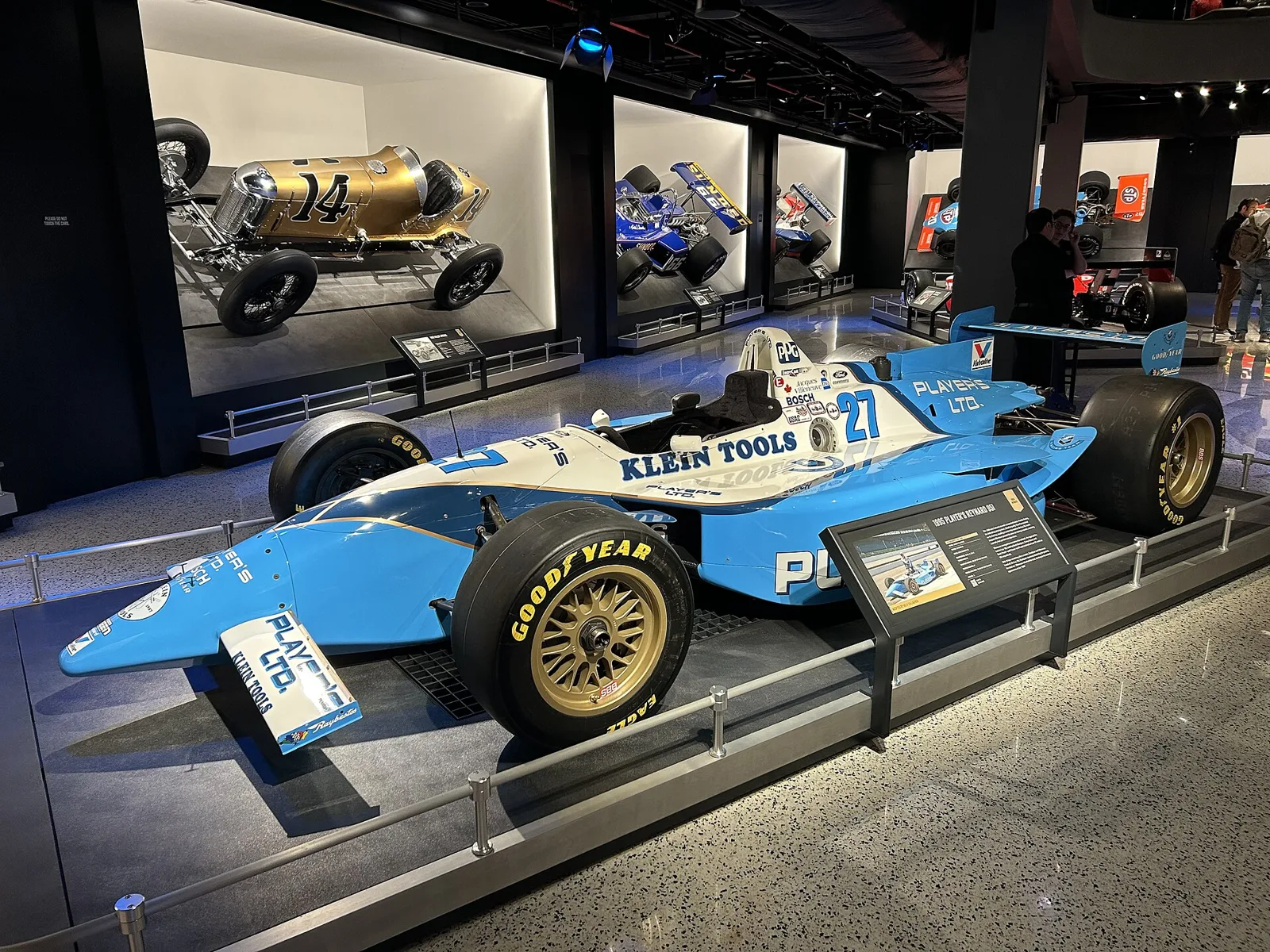
Jacques Villeneuve won in his second start after Scott Goodyear was scored out for refusing a penalty, in the last Indy 500 with a CART-based field.
Jacques Villeneuve inherited the 1995 Indianapolis 500 lead when race leader Scott Goodyear was scored out for ignoring a penalty for passing the pace car. The win gave Ford Cosworth its first Indy victory in four attempts.
Jacques Villeneuve won the 79th Indianapolis 500 on Sunday, May 28, 1995, in only his second start at the Speedway. He became the first Canadian to win the race, but the finish was dominated by a dispute over a pace car penalty involving race leader Scott Goodyear. The race was also the last Indy 500 with a field of CART-based drivers and teams.
Who won the 1995 Indianapolis 500?
Jacques Villeneuve won the 1995 race in his second Indy start, and he took the lead on lap 196 after Scott Goodyear was no longer scored. Christian Fittipaldi finished second and Bobby Rahal third. Villeneuve had earlier been hit with a two-lap penalty, and his climb back through the field earned him the nickname Indy 505.
Villeneuve went on to win the 1995 CART championship. His race win also gave him the 1994-95 USAC title, and the following year he left for Formula One with Williams.
A two-lap penalty and a disputed pace car pass decided the 1995 Indy 500, and Villeneuve took the flag.
How did Penske fail to qualify?
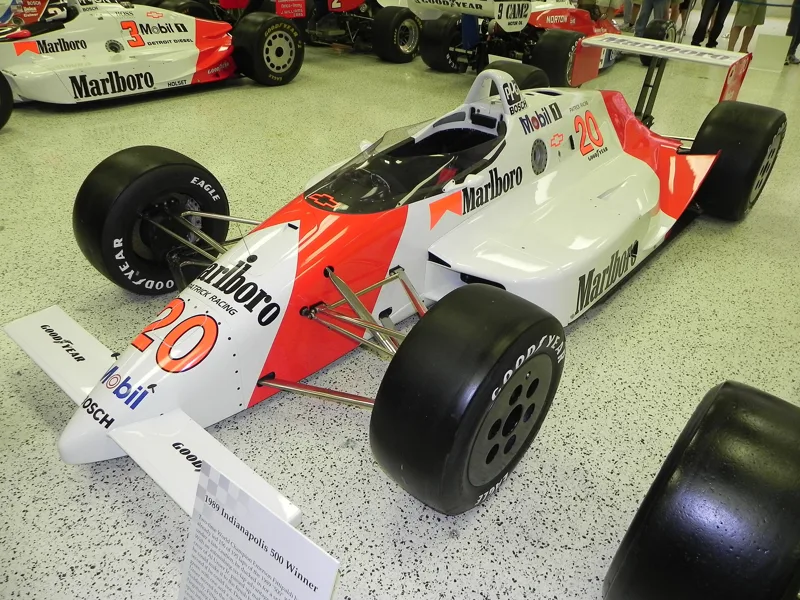
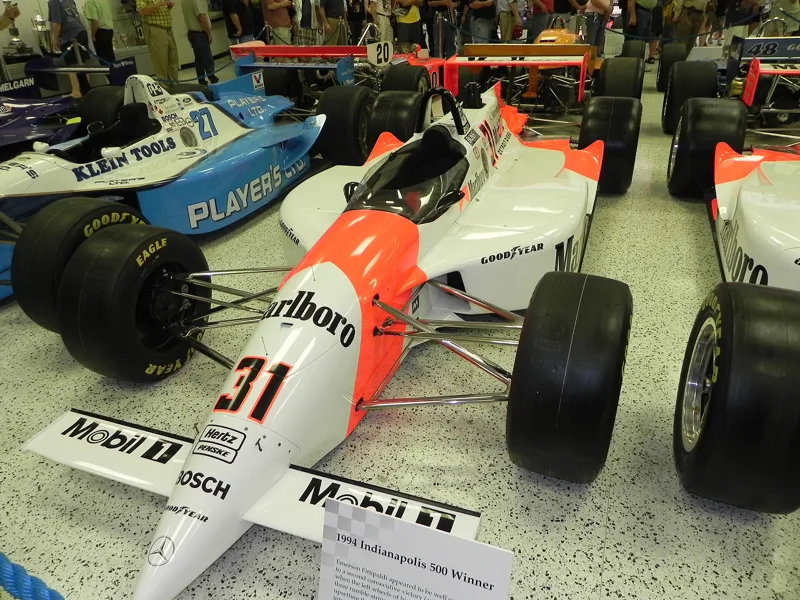
Marlboro Team Penske, which had dominated the 1994 race, failed to qualify a single car for the first time since 1968. Al Unser Jr., a two-time winner, was too slow to make the field, and Emerson Fittipaldi, another two-time winner, was bumped on bump day.
The team had lost the Mercedes-Benz 500I after USAC cut the boost for the pushrod engines. A private test had produced poor handling results, and a mid-April test reached speeds of 228 mph (367 km/h). That was enough to make the race, but not to start on the front row.
Practice did not improve matters. Penske borrowed a Reynard chassis from Roberto Guerrero's team for Unser, and Rahal-Hogan Racing later supplied back-up Lola chassis. Fittipaldi was quickly up to 223.775 mph in a Lola, but Unser was stuck at 218.510 mph in the Penske chassis.
On bump day, Stefan Johansson's run at 225.547 mph bumped Fittipaldi with 12 minutes left. Unser's last attempt came too late, and both drivers were out of time at the six o'clock gun.
What was the Goodyear controversy?
Goodyear led the race with eleven laps to go, but he was given a stop-and-go penalty for passing the pace car on a restart and stayed out. USAC stopped scoring him after lap 195, which handed the lead to Villeneuve, and video later showed that the yellow light had still been on.
On lap 190 the field was preparing to restart behind the pace car. Goodyear and Villeneuve both accelerated through turn three, and Villeneuve backed off to avoid passing the pace car. Goodyear did not lift, and he went past the pace car in the middle of turn four while it had not yet entered the pits.
USAC race control announced the penalty, but Goodyear insisted that the green light was on. He did not come in, and he kept racing even though he had been shown the black flag. His team owner told him to keep going and that a protest could be made after the race. Under the black flag rules he had five laps to serve the penalty before being disqualified.
When USAC stopped scoring Goodyear, Villeneuve was scored in the lead as he completed lap 196, with Christian Fittipaldi second and Rahal third. On the final lap Arie Luyendyk passed Villeneuve at the line to unlap himself, and he finished seventh on the lead lap. Goodyear finished 15th, five laps down.
Timing data showed the pace car at 77 mph on the back straight while Goodyear was at 68 mph. Goodyear reached about 193 mph by the exit of turn four, as the pace car sped up from about 98 mph to over 117 mph while entering the pits. After this evidence came out, Tasman Motorsports decided not to file a protest.
What happened on the opening lap?
On the start Stan Fox hit the rumble strips, spun, and slammed into the outside wall in turn one before being caught by the catch fence. The wreck also involved Eddie Cheever, Lyn St. James and Carlos Guerrero, and Fox suffered a serious closed head injury caused by the g-forces.
The car was badly damaged, and a long caution was needed for the cleanup. Gil de Ferran ran over debris during the same incident and retired after his front suspension broke. Fox recovered after several months but never raced again.
The race restarted on lap 10, and Arie Luyendyk took the lead on the green flag.
What was Villeneuve's penalty?
Villeneuve was assessed a two-lap penalty on lap 38 for passing the pace car twice while it tried to pick up the field. The penalty dropped him from third to 24th, and he later clawed his way back.
Luyendyk, trying to pass Scott Sharp on lap 37, made a gesture when he felt blocked, and a helmet headrest cushion flew out of his car onto the track. That brought out a yellow for debris during a sequence of green-flag pit stops, and the field was shuffling in and out of the pits.
By rule the pits closed on the yellow, and Villeneuve was scored as the leader on lap 38 without knowing it. The pace car came out to pick up the field, and Villeneuve drove past it twice while trying to avoid it. When he finally pitted, his stop was slow, and he stalled as he pulled away.
Michael Andretti had led 45 laps by the end of the first half, but he was out on lap 77. He caught Mauricio Gugelmin in turn four, and while going round him on the outside he brushed the wall and bent the rear wishbone suspension. Gugelmin led the most laps of the race, with 59.
How did the second half unfold?
Gugelmin did not lead again after lap 138, and Jimmy Vasser, Scott Pruett and Scott Goodyear then took turns at the front. Villeneuve, who had worked back onto the lead lap, reached sixth by the late stages of the race.
Villeneuve regained his second lap on lap 124, when Andre Ribeiro stalled and Paul Tracy slowed on the backstretch with electrical problems. When Vasser pitted from the front on lap 157, Villeneuve moved back to the front, his first time in charge since the penalty.
On lap 162 Davy Jones crashed in turn two as Villeneuve was preparing to pit. Vasser hit the outside wall in the north chute on lap 169, and Pruett passed him for the lead. Goodyear passed Pruett on the restart on lap 176.
Winds were gusting over 30 mph by lap 184. Goodyear was still ahead by almost a second when Pruett went high in turn two and bounced off the outside wall. His car spun across the backstretch, got airborne and backed into the catch fence.
What were the main race results?
Villeneuve won, Christian Fittipaldi was second and Bobby Rahal third. Rahal's charge from 21st on the grid was the second year in a row he had greatly improved his starting position.
| Finish | Driver | Note |
|---|---|---|
| 1st | Jacques Villeneuve | Second start; first Canadian winner; two-lap penalty on lap 38 |
| 2nd | Christian Fittipaldi | Finished second behind the winner |
| 3rd | Bobby Rahal | Started 21st; his last Indy 500 as a driver |
| 7th | Arie Luyendyk | Unlapped himself on the final lap |
| 15th | Scott Goodyear | Scored out after lap 195; five laps down |
| 17th | Scott Brayton | Pole-sitter; ten laps down with a turbo boost problem |
Luyendyk's seventh place was the third-highest finish ever for the Buick and Menard V6, behind Al Unser Sr.'s third place in 1992 and Jim Crawford's sixth in 1988. Only one other driver had completed the full 500 miles in a Buick or Menard powered car.
Brayton, who had taken pole, finished ten laps down in 17th place. Later it was revealed that Brayton and Luyendyk had been penalised by USAC for over-boosting their turbochargers and tampering with the pop-off valves during practice and qualifying.
What was special about Rahal's result?
Bobby Rahal finished third after a charge from 21st, the first time he had finished the race in an odd-numbered year. It was also his last Indy 500 as a driver, and he returned to the Speedway as a team owner in 2002.
From 1982 to 1994, Rahal had a pattern at Indy of good results in even years and poor ones in odd years. He was penalised for speeding in the pit lane during the race and disputed it, saying that his on-board speedometer showed 91 mph, safely under the 100 mph limit.
Why was the 1995 race a turning point?
The 1995 race was the final Indy 500 with CART-based competitors on the grid, and it was run under a growing cloud of uncertainty. Tony George had already announced the Indy Racing League for 1996, with the Indianapolis 500 as its centrepiece.
Since the early 1980s the two bodies had worked in relative harmony, with CART sanctioning the national championship and USAC sanctioning the Indy 500 on its own. That balance was breaking down, and competitors, fans and media were uneasy about the sport's future. Several drivers ran their final Indy 500 that year, including Bobby Rahal, Danny Sullivan, Teo Fabi and Scott Pruett.
The engine rules had already been reshaped before the race. USAC allowed 52 inHG of boost for the pushrod engines in 1995, down from 55, and later scaled that back to 48 inches and outlawed the engine outright for 1996. Those decisions set back the Penske team going into the season.
Al Unser Jr., who had failed to qualify, did not return to the 500 for several years. He came back to the Speedway in August 1998 and finished a close second to Mark Martin in the inaugural IROC race at Indianapolis. He switched to the IRL full-time in 2000, and he finally had the chance to avenge his 1995 failure.