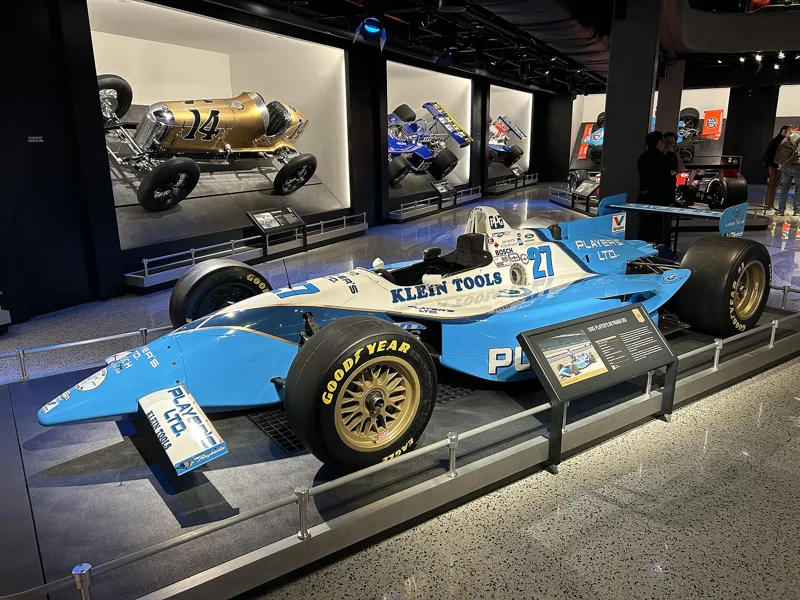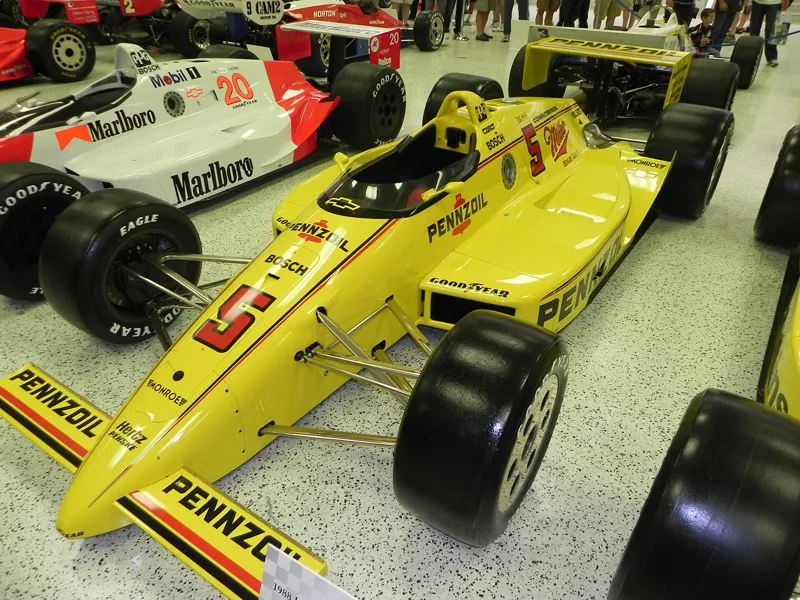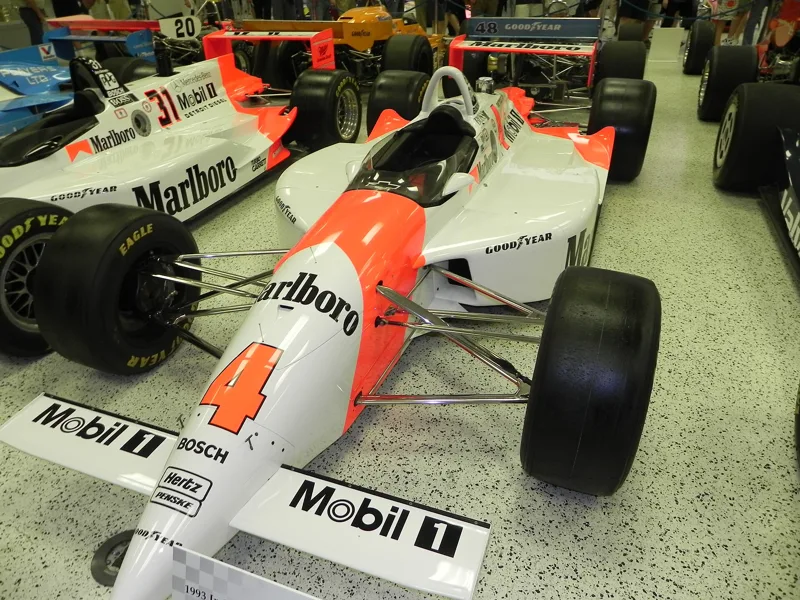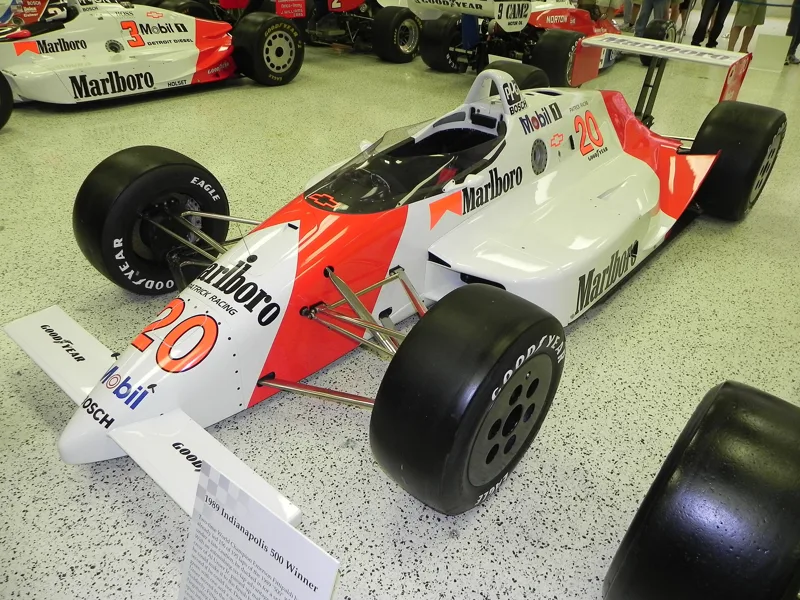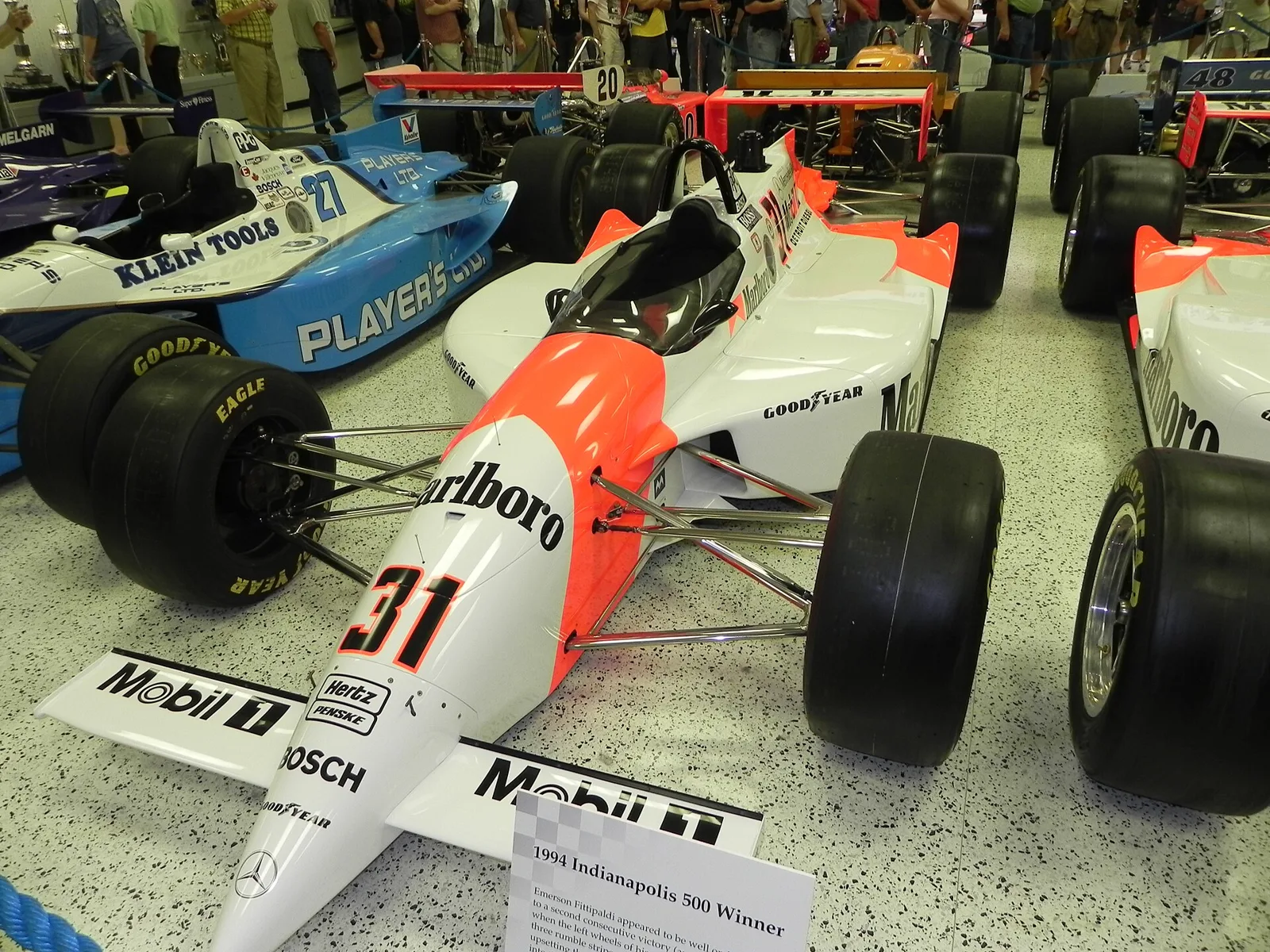
Al Unser Jr. won from pole in the Mercedes-Benz 500I, a secret pushrod engine that raced only once, after Emerson Fittipaldi crashed while leading 145 laps.
Al Unser Jr. won from pole in the 1994 Indianapolis 500, his second win at the Speedway. The victory came in the first and only race of Penske's secret pushrod engine, and the engine was banned for 1996 soon after.
Al Unser Jr. won the 78th Indianapolis 500 from pole position, giving Marlboro Team Penske a victory with an engine the team had kept under wraps. The race was run on Sunday, May 29, 1994, as race four of the 16-race PPG IndyCar World Series. The winning car used the Mercedes-Benz 500I, a pushrod engine that won in its first and only start.
Who won the 1994 Indianapolis 500?
Al Unser Jr. won the 1994 race from pole, his second Indianapolis 500 victory after 1992. Emerson Fittipaldi led 145 of the 200 laps before crashing, which handed Unser the lead with 15 laps to go. Jacques Villeneuve, a rookie, finished second and took the rookie of the year award.
Unser joined his father Al Sr. and his uncle Bobby as a multiple Indianapolis 500 winner. The victory fell on his father's 55th birthday, and it came exactly twenty-three years after Al Sr.'s second Indy 500 win.
Michael Andretti finished third on the track, but officials later ruled that he had passed cars illegally under caution. USAC gave him a one-lap penalty, which dropped him to sixth and moved Bobby Rahal up to third.
A secret pushrod engine won in its only race, and the rules were rewritten before the year ended.
Why was the Mercedes-Benz 500I so controversial?
The Mercedes-Benz 500I was a purpose-built pushrod V8 developed by Penske and Ilmor in complete secrecy. It displaced 209 cubic inches (3.42 L), and Mercedes-Benz badged the engine after it joined the project. The design exploited a rules gap that USAC had left open at Indianapolis since 1991, while CART ran its own, different rules.
USAC had allowed traditional stock block pushrod engines at the Speedway to appeal to mainstream manufacturers and smaller builders. Those engines were given a turbo boost of 55 inHG instead of 45, which made the Buick V-6 attractive to teams that could not afford the overhead cam V-8s. CART permitted stock blocks but not the extra boost, so the Buick was rarely competitive in CART races.
In 1991 USAC quietly dropped the requirement that stock blocks use production-based parts. Purpose-built pushrod engines could then be designed from the ground up, with 209.3 cubic inches (3.430 L) in place of 161.7 cubic inches (2.650 L) and the same 55 inHG boost. Privateer Greenfield Racing built one early example, but it never got up to speed and never made a qualifying attempt.
Penske and Ilmor tested the engine in secret through the fall of 1993 and into the spring of 1994. The team cleared several feet of snow from Nazareth Speedway, then owned by Roger Penske, for a private test in frigid conditions. Emerson Fittipaldi nicknamed the engine the Beast, a name that stuck.
The 500I made its public debut in April, only days ahead of opening day. Rumours suggested it could produce more than 1,000 hp (750 kW), which would be a 150-200 hp advantage over its rivals.
How did the 1994 race unfold?
Unser led the field away after a start that Penske dominated, and the Mercedes-powered cars soon established a clear advantage. Fittipaldi took the lead when Unser stalled leaving the pits, and by lap 85 he had stretched his margin to 24.6 seconds. Two cautions and a multi-car pile-up on lap 92 shaped the first half.
Race day dawned with a clear sky and temperatures in the mid-70s, and the engines were fired at 10:52 a.m. EST. As the field came round for the start, Unser and Fittipaldi took off from turn four and weaved down the frontstretch single file, blocking the cars behind. Officials let the start stand, and Unser led the field into turn one.
Dennis Vitolo spun on lap 6 without making contact, bringing out the first caution. Roberto Guerrero crashed on lap 20 for the second. On lap 23 the leaders made their first scheduled pit stops, and Unser stalled leaving the pit box, a concern for the Mercedes. Fittipaldi took the lead for the first time. Mario Andretti had already dropped out of his final 500 with ignition problems.
The lap 92 incident was the most dramatic moment of the early race. Hideshi Matsuda crashed in turn two, and John Paul Jr. spun in turn three under the yellow. Vitolo, trying to catch the field behind the pace car, misjudged the closing speed, ran into the back of John Andretti's car and climbed sideways into Nigel Mansell's car. Hot coolant and oil leaked into Mansell's cockpit, and corner workers tackled him to the ground to guard against fire. Mansell angrily refused treatment, and Vitolo admitted blame.
At the halfway point Unser had led 23 laps and Fittipaldi 75, a total of 98 of the first 100. Paul Tracy, the third Penske driver, began smoking during the lap 92 yellow and retired with a turbocharger failure. Raul Boesel and Scott Brayton also dropped out in the second half, with overheating and a spark plug problem.
Fittipaldi kept pulling away and set the fastest lap of the race on lap 121 at 40.783 seconds, equal to 220.68 mph (355.15 km/h). Villeneuve led laps 125 to 129 during a round of pit stops, and on lap 133 Fittipaldi had to pit to remove a plastic bag from his radiator inlet. By lap 157 only Fittipaldi and Unser were on the lead lap.
What happened in the final laps?
Fittipaldi led Unser by almost 40 seconds with less than 25 laps to go, but he still needed one more splash-and-go fuel stop. On lap 185 he clipped the turn four wall, and Unser was suddenly in front, stretching his fuel to the flag.
With 20 laps to go Fittipaldi had put Unser a lap down and was a lap clear of the rest of the field. His crew planned a timed fuel-only stop for lap 194, but Unser un-lapped himself on lap 183, and two laps later he was just ahead as they approached turn four.
Fittipaldi admitted a driver error. He ran over the inside rumble strips, the rear tyres lost grip, and the right rear wheel touched the outside wall as he exited turn four. His car slid to a stop down the main straight after he had led 145 laps. Villeneuve moved into second, though he was at the back of the lead lap.
During the caution for Fittipaldi's crash, Luyendyk's engine failed. Unser lost use of his two-way radio, and the team grew worried about his fuel. The field went back to green with ten laps left, and Unser held a comfortable lead over Villeneuve, who was caught in traffic.
On lap 196 Stan Fox crashed in turn one and the caution came out for the clean-up, which removed any remaining doubt about Unser's fuel. Unser won the race under yellow. The Penske-Mercedes 500I won in its first and only race.
What were the main race results?
Unser finished first, Villeneuve second and Rahal third after Michael Andretti's penalty. Fittipaldi crashed out after leading 145 laps, and John Andretti finished 10th before flying to Charlotte for the Coca-Cola 600 that afternoon.
| Finish | Driver | Note |
|---|---|---|
| 1st | Al Unser Jr. | Pole-sitter at 228.011 mph; won in the Penske Mercedes-Benz 500I |
| 2nd | Jacques Villeneuve | Rookie; rookie of the year; led laps 125 to 129 |
| 3rd | Bobby Rahal | Started 28th; promoted after Michael Andretti's penalty |
| 6th | Michael Andretti | Penalised one lap for passing under caution |
| 10th | John Andretti | Then raced the Coca-Cola 600 on the same day |
| Out | Emerson Fittipaldi | Led 145 of 200 laps before crashing in turn four |
Rahal had charged from the 28th starting position to finish third in a borrowed 1993 Penske-Ilmor machine. The result was a reward for a team that had nearly missed the race again. Villeneuve's second place also earned him the rookie award.
How did qualifying play out?
Al Unser Jr. took pole at 228.011 mph, and Fittipaldi qualified third at 227.303 mph. Lyn St. James started on the outside of row two, the highest grid position for a female driver at the time. Bump day was hot, at 89 degrees, and Bryan Herta survived as the 33rd-fastest qualifier.
Pole day on Saturday May 14 was disrupted by sun and showers, and the start of qualifying was delayed until 12:15 p.m. Rookie Hideshi Matsuda posted the first run at 222.545 mph, and Raul Boesel took provisional pole at 227.618 mph at 12:50 p.m. Jacques Villeneuve was the fastest rookie at 226.259 mph.
Unser made his attempt at 1:18 p.m. His first lap of 225.722 mph was slow, but his speed climbed over the last three laps, and his final four-lap average of 228.011 mph took the pole. Bobby Rahal and Mike Groff, in Honda-powered cars, were the slowest two cars of the day.
A second shower closed the track for part of the afternoon, and the 6 o'clock gun sounded with several cars still in line. Pole qualifying was extended into Sunday, when Fittipaldi took his run and qualified third. Rahal and Groff were bumped on bump day, then re-qualified in borrowed Penske-Ilmor machines.
Bump day was particularly tense for the Foyt team. Herta sat on the bubble while the cars stayed off the track in the heat, and the team decided not to withdraw his primary car early. Herta held on, and the Foyt team had not been that close to missing the race since 1973.
What happened to the engine after the race?
USAC first said the pushrod engines could be allowed in 1995, but it worried about rising costs. Two weeks after the race it cut the boost for the purpose-built engines to 52 inHG, and on August 11, 1994 it cut the boost again to 48 inches and banned the engine outright for 1996. The Mercedes-Benz 500I never raced again.
Roger Penske called the move politically motivated, and it set back the Penske team going into 1995. Observers compared the change unfavourably with the way USAC had handled the Granatelli Turbine in the late 1960s. Ilmor had taken 30 customer orders for the 500I for 1995, so many teams faced a costly choice.
Penske went back to the Ilmor D engine for the rest of the 1994 CART season and kept winning. The three Penske drivers won 12 of the 16 races, including five 1-2-3 finishes. Penske swept the top three in the championship, with Unser first, Fittipaldi second and Tracy third.
The 1994 Indy 500 was the last victory for a Penske-built chassis at the Speedway. The following year the PC-24 proved uncompetitive in time trials, and the team failed to qualify it or the borrowed Lola and Reynard chassis. Only 69 days after the 1994 race, the Speedway opened the inaugural Brickyard 400.