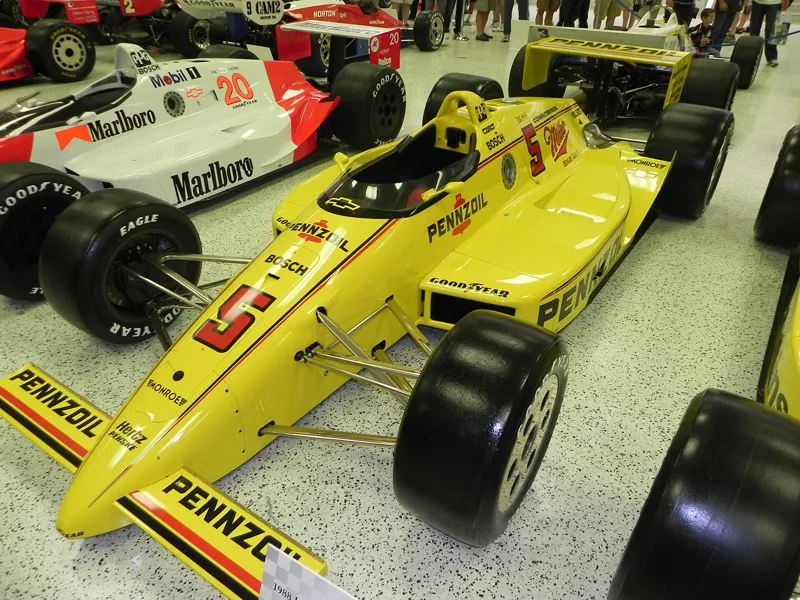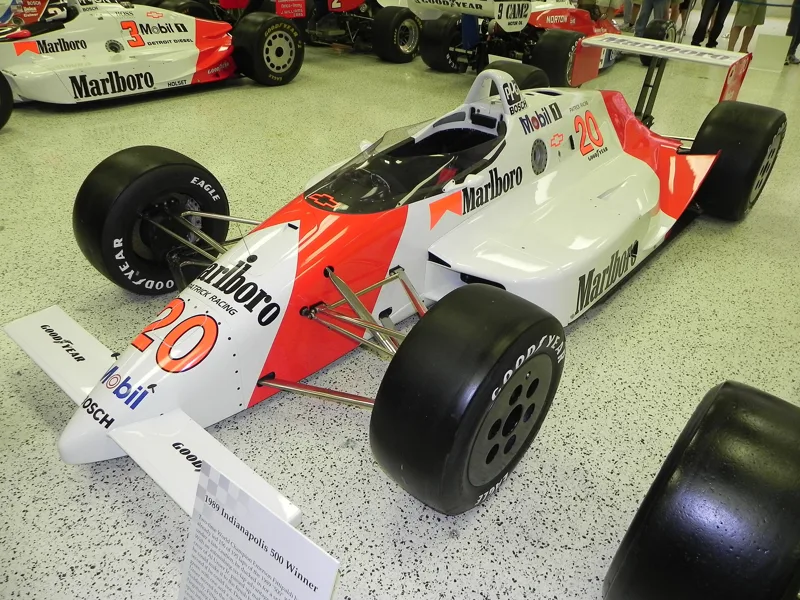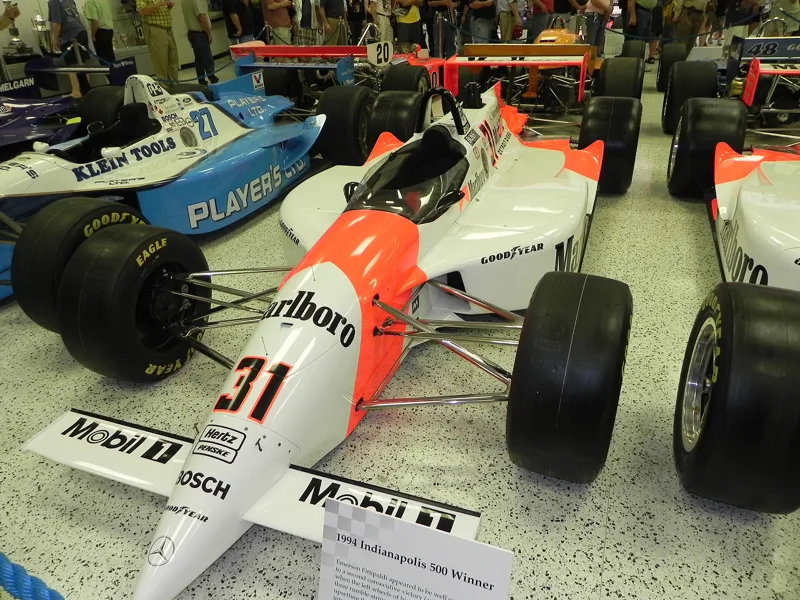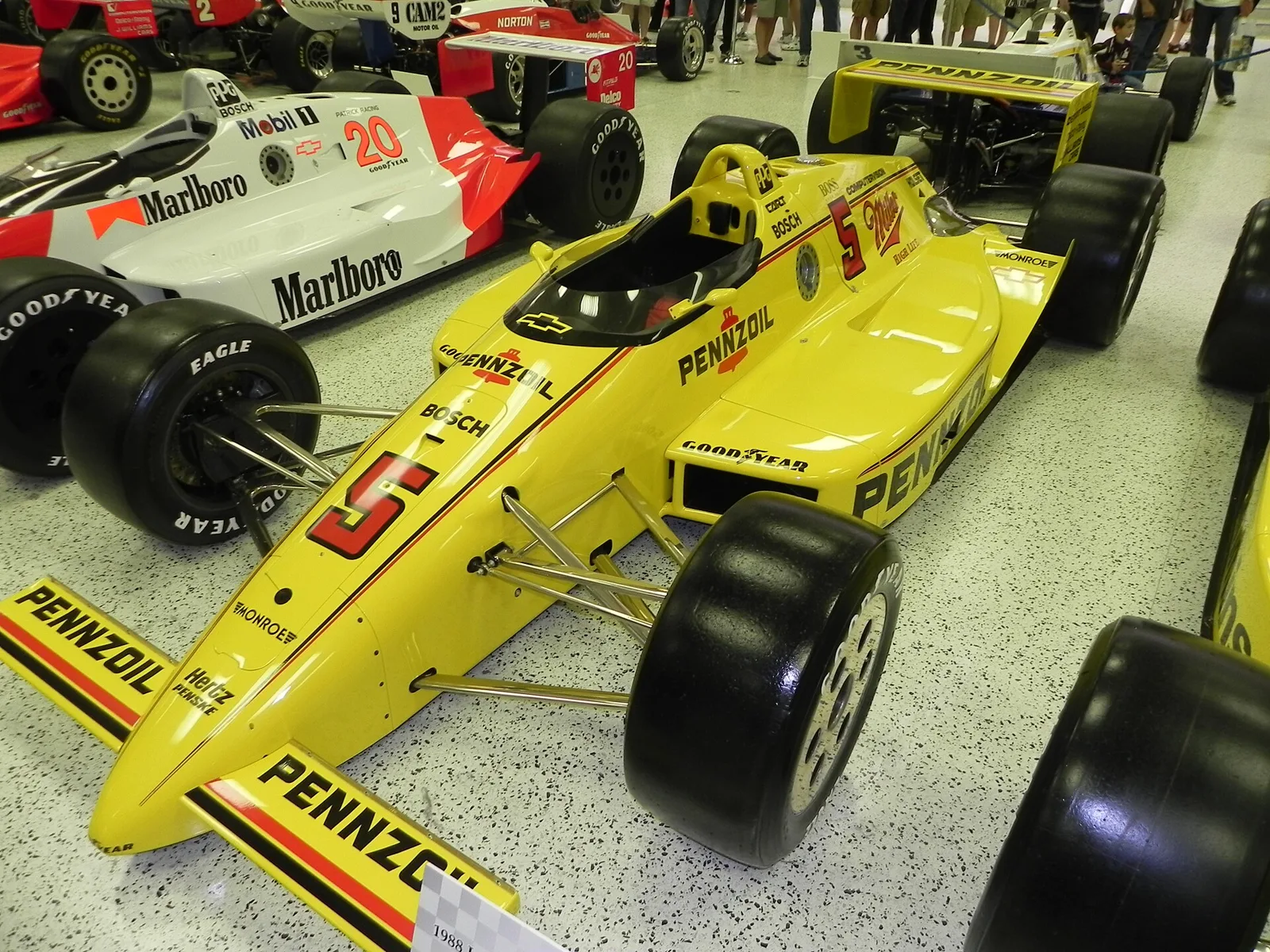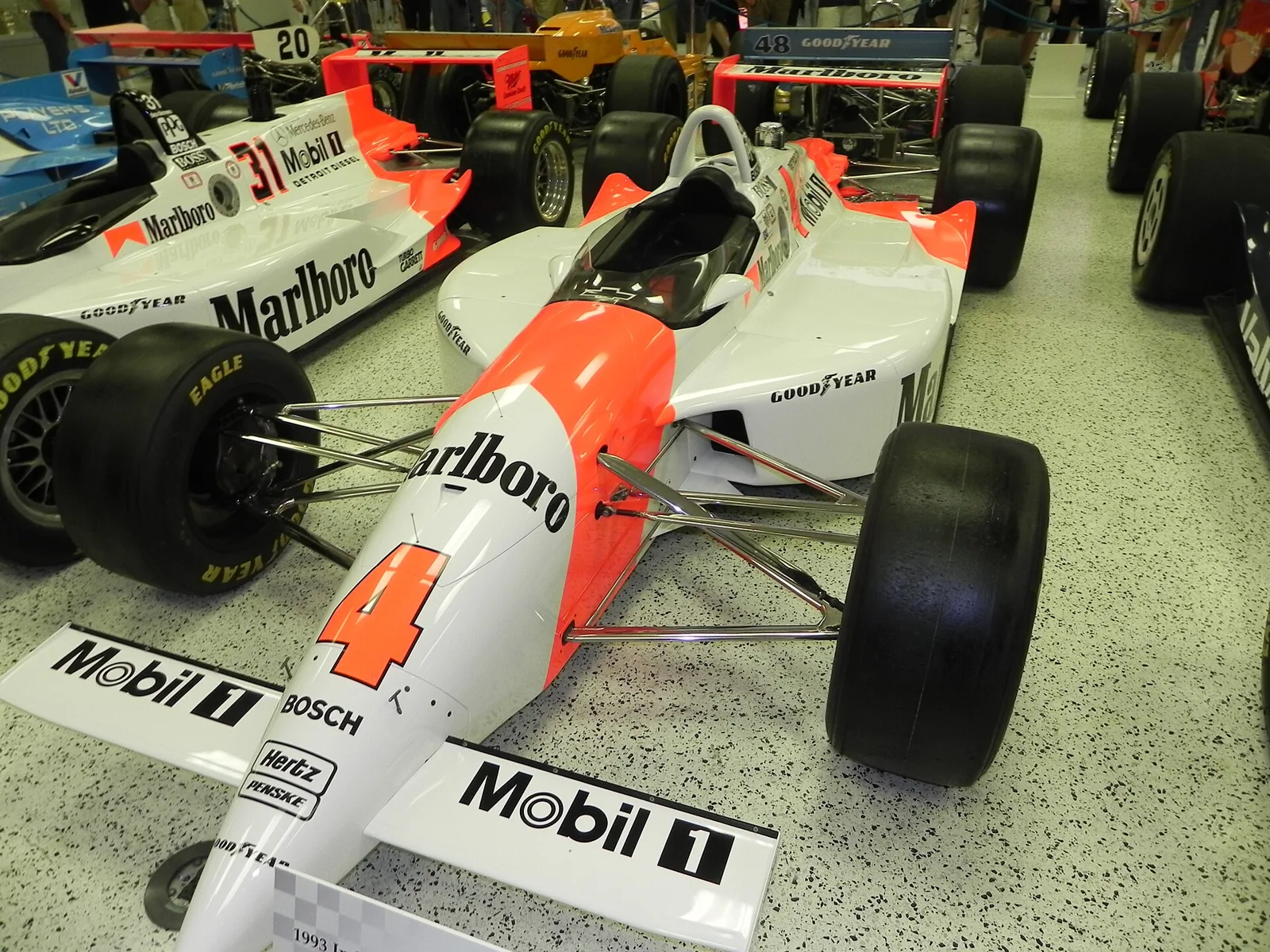
Emerson Fittipaldi won by 2.8 seconds after Nigel Mansell, the reigning Formula One champion, lost the lead on a restart in his first oval race.
Nigel Mansell's restart error in his first oval race opened the way for Emerson Fittipaldi, who finished 2.8 seconds clear of Arie Luyendyk. Mansell took third and was named rookie of the year, and the race was run on May 30, 1993.
Emerson Fittipaldi won the 1993 Indianapolis 500 by 2.8 seconds over Arie Luyendyk. The 77th running took place on Sunday, May 30, 1993, and it was one of the most competitive races in recent years. The podium was a Brazilian, a Dutchman and an Englishman, with Nigel Mansell, the reigning Formula One World Champion, third.
Who won the 1993 Indianapolis 500?
Emerson Fittipaldi won the 1993 Indianapolis 500, his second victory in the race, after taking the lead with 16 laps to go. Arie Luyendyk finished second and Nigel Mansell third. The race was sanctioned by USAC and formed part of the PPG Indy Car World Series that year.
Mansell had been the leader on lap 184 as the field was coming to a restart. He misjudged the speed of that restart and was passed down the main straight by Fittipaldi, which proved to be the winning move. Luyendyk followed past Mansell on the outside, and Fittipaldi pulled away on the final restart with five laps to go.
The top three were from countries other than the United States, the first time since 1915 that this had happened. Raul Boesel of Brazil took fourth, and Mario Andretti, the Italian-born American driver, finished fifth.
Fittipaldi pulled away on the last restart after the reigning Formula One champion lost the lead in his first oval race.
How did the 1993 race unfold?
The race started with a drag race between polesitter Arie Luyendyk and Raul Boesel, and Boesel took the lead into turn one. A caution, a disputed penalty and several crashes reshaped the order. Mario Andretti and Luyendyk traded second place, and Nigel Mansell moved to the front late in the race after a series of pit stops.
Boesel began lapping the backmarkers on lap 8, while Andretti moved past Luyendyk into second. On lap 16, Jim Crawford spun exiting turn two, flat-spotting his tyres, but he made no contact and drove back to the pits to rejoin.
Under the first caution most of the leaders pitted, and Kevin Cogan stayed out to inherit the lead. Cogan was the slowest qualifier in the field, and his spell in front was a rare feat. On lap 21, Boesel was handed a stop-and-go penalty for passing under the yellow in the warm-up lane. He had not been told that Andretti had crossed the blend line first, and the penalty dropped him to the rear and cost him a lap.
Al Unser Sr. led on lap 31 before Danny Sullivan lost the rear of his car in turn three and hit the outside wall. A piece of suspension pierced the side of the tub and narrowly missed his leg. Nelson Piquet, still recovering from a serious practice injury, retired with engine failure.
On lap 36 the field went back to green behind Andretti, with Luyendyk second and Fittipaldi third. On lap 47, Luyendyk passed Andretti for the lead. Mansell passed Fittipaldi for third and then closed on Andretti, getting by in turn one three laps later after a hot pursuit. On lap 56, Mansell took the lead for the first time, but he ducked into the pits on that same lap and so was not credited with leading it.
A yellow for debris on lap 89 brought a round of pit stops, and Andretti was back in front afterwards. Mansell overshot his pit stall and had to be wheeled back for service. He dropped to sixth after a 40-second pit stop, and his race looked to be slipping away.
On lap 128, Jeff Andretti and Roberto Guerrero came together in turn three, the only multi-car crash of the day. Mario Andretti, leading at the time, entered the pit lane when it was closed and was given a black flag and a stop-and-go penalty. Al Unser Jr. took over the lead, with Mario Andretti second.
Why was Nigel Mansell's first oval race so closely watched?
Mansell arrived as the reigning Formula One World Champion and took the seat that Michael Andretti vacated when he left for McLaren. He was paired with Mario Andretti at Newman/Haas Racing, and a large international media contingent followed his every move. Indianapolis was his first oval start, because he had missed the Phoenix race after a back injury.
Mansell had won the CART season-opener at Surfers Paradise. He was then hurt in a crash during practice for the Valvoline 200 at Phoenix, and he sat out that event. Back surgery on April 28 meant he missed Rookie Orientation and the opening weekend of practice at Indianapolis. Officials arranged a special session so that he could complete his mandatory rookie test.
His inexperience on ovals showed at the restarts. Late in the race he was too hesitant bringing the field back to green, and within a few corners Fittipaldi and Luyendyk were on his bumper. Mansell tried to block on the inside, but Fittipaldi went around him on the outside. On lap 192 Mansell lost his line exiting turn two and clipped the outside wall, though he carried on with minor suspension damage.
Mansell finished third, led a total of 34 laps and was named rookie of the year. Afterwards he said that other drivers cheated on restarts and that he had tried to follow the rules by waiting for the green flag. He did not protest the result. Later that year he won the Michigan 500 and went on to win the 1993 CART IndyCar championship.
What changed for the 1993 race?
The 1993 race followed rule changes made after the many crashes of 1992, which were intended to slow the cars and protect drivers. Smaller rear wings were fitted and wheel disc inserts were banned. The front noses were redesigned to protect drivers' feet, and the pit lane speed limit of 100 mph was enforced at all times.
The pit lane limit had previously applied only during caution periods. Cockpits were also to be redesigned so that drivers could pull their feet back before impact.
The apron at the bottom of the track was removed and replaced with a separate warm-up lane, similar to the one at Nazareth Speedway. A grass strip separated the racing surface from that lane, and rumble strips were laid below the white line. Some critics said the improvements made the track too narrow and passing harder. The entire outer retaining wall and catch fence was replaced, largely in anticipation of the Brickyard 400.
The Brickyard 400 was announced on April 14 by Tony George and Bill France Jr., and it gave the Speedway two major events a year from 1994. The Speedway also built new grandstands at the north end, observation mounds in the infield and the Brickyard Crossing golf course, designed by Pete Dye.
Driver changes were significant too. Rick Mears retired during the offseason, and Paul Tracy moved into a full-time Penske ride. At Chip Ganassi Racing, Eddie Cheever departed and Arie Luyendyk returned for a full season.
What happened in qualifying?
Qualifying ran over two weekends and was dominated by late drama. Arie Luyendyk took pole at 223.967 mph, the field was not filled until bump day on May 23, and Bobby Rahal, the 1986 winner, failed to qualify. Eddie Cheever's sixth qualifying attempt of the month set an Indy 500 record at the time.
Pole day began with a crash. At 8:11 a.m., Robby Gordon hit the wall in the #41 Foyt car. About two hours later A. J. Foyt took a farewell lap and announced his retirement, ending a 35-year career. Foyt had hinted at retirement in 1991 before retracting those plans in 1992, and this time he concluded that he could not both drive and run his team properly.
Mario Andretti posted 223.414 mph to take the provisional pole, and several drivers waved off their runs. Luyendyk then bumped him to the middle of the front row at 223.967 mph. Raul Boesel held the outside of the front row, and Nigel Mansell's four-lap average of 220.255 mph put him eighth. The day ended with 15 cars in the field.
On the second day, Stephan Gregoire's run of 220.851 mph made him the fastest rookie and the quickest qualifier of the day. Mark Smith was the slowest car in the field at 214.356 mph, and the field stood at 26 cars.
Bump day on Sunday May 23 started with wind gusts up to 30 mph. Bobby Rahal began as the slowest car on the bubble, and Team Menard offered him a spare car, which he declined. Eddie Cheever bumped Rahal at 217.599 mph with 15 minutes left. Didier Theys then bumped Mark Smith, and Rahal, back in line with his backup car, was unable to get round in time. His third lap of 214.782 mph was not fast enough.
Did Emerson Fittipaldi drink the milk?
No. Fittipaldi declined the traditional milk in victory lane and drank orange juice he had supplied himself, to promote the Brazilian citrus industry. He later drank some milk after the cameras were switched off, at the direction of team owner Roger Penske, and he apologised a few days afterwards.
The milk tradition dates back to 1936. Fittipaldi, who owned a citrus farm that produced orange juice, refused even to hold the milk bottle during a live ABC interview with Jack Arute, pushing it away at least three times. Fans reacted negatively.
Fittipaldi was booed the following week at Milwaukee during driver introductions. He issued an apology, and he donated the $5,000 prize from the American Dairy Association of Indiana to charity.
What were the main race results?
Fittipaldi finished first ahead of Luyendyk, Mansell, Boesel and Mario Andretti, who had led the most laps early on. Al Unser Sr., another four-time winner, finished 12th after leading laps himself. Ten cars finished on the lead lap, which made it the most in Indy history up to that point.
| Finish | Driver | Note |
|---|---|---|
| 1st | Emerson Fittipaldi | Won by 2.8 seconds; second Indy 500 win |
| 2nd | Arie Luyendyk | Started from pole at 223.967 mph |
| 3rd | Nigel Mansell | Rookie of the year; led a total of 34 laps |
| 4th | Raul Boesel | Led 18 laps for owner Dick Simon despite two pit penalties |
| 5th | Mario Andretti | Led the most laps early in the race |
| 12th | Al Unser Sr. | Four-time winner who led laps during the race |
Boesel's result was a remarkable recovery. Two pit stop penalties dropped him to the back of the pack, but he worked his way back to fourth, and he complained afterwards that the race had been taken from him. Cogan, the slowest qualifier, led three laps.
What records did the 1993 race set?
The race had 23 lead changes among a race record 12 different leaders. Kevin Cogan led three laps, the first time since 1923 that the slowest driver in the field had led a lap at Indianapolis. The field also completed a race-record 5,733 of a possible 6,600 laps, or 86.9%.
The ten lead-lap finishers beat the CART-era record of four, set in 1980, 1986 and 1992. Sixteen cars had completed the full 500 miles in 1959, which remains the record for finishers overall. The race-record lap total stood until 2013.