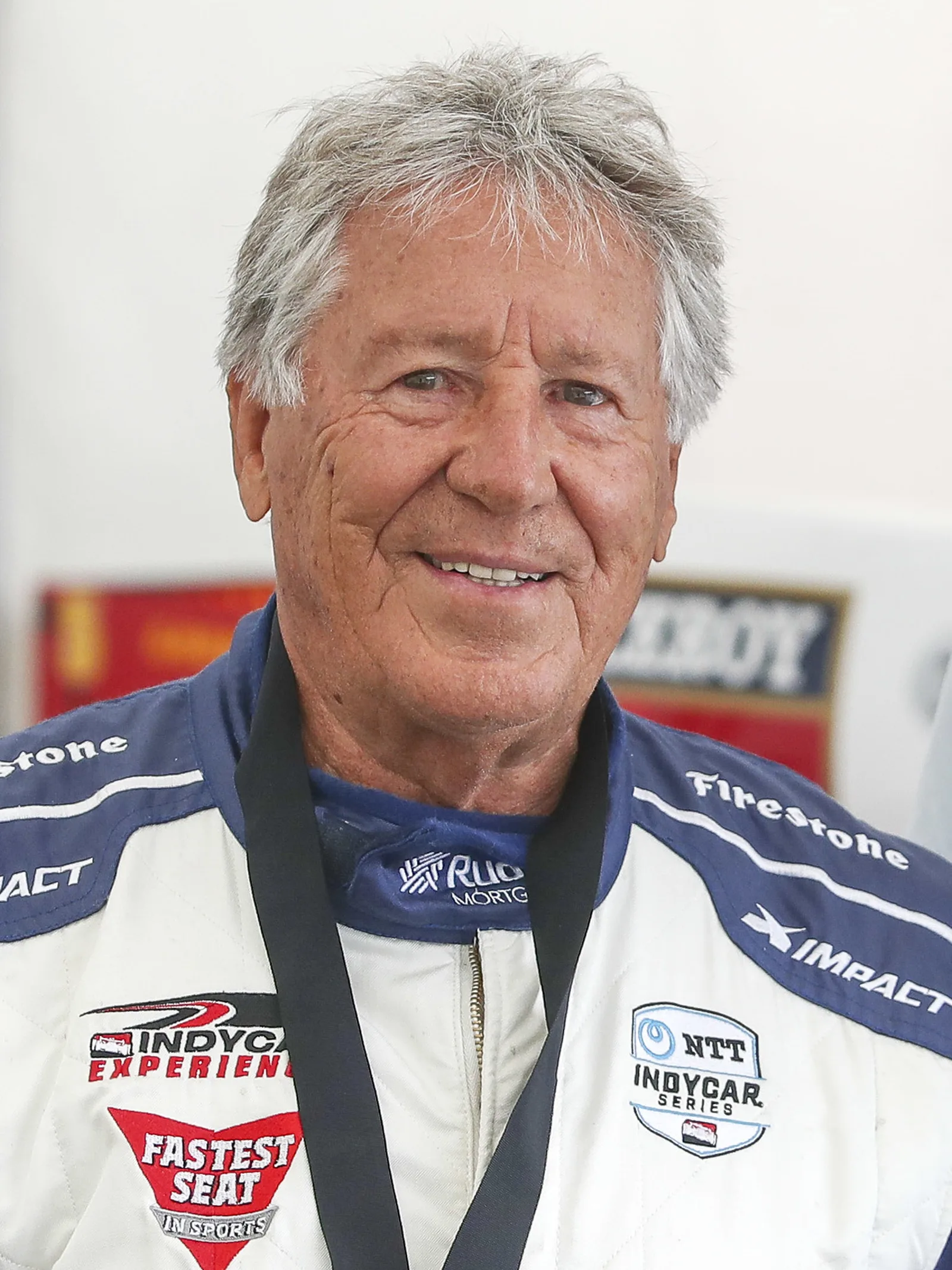
From Istrian exile to the 1978 Formula One title, the career of a driver who won on dirt, oval, road and sportscar circuits.
Mario Andretti drove Grand Prix cars from 1968 until 1982 and IndyCar machinery until 1994, taking the 1978 world title with Lotus. Across dirt, oval, road and sportscar racing, his trophies include the Indy 500 victory of 1969 and a Daytona win in 1967.
Mario Andretti, born in Italy and raised in the United States, drove in Formula One from 1968 until 1982 and in IndyCar from 1964 until 1994. He won the world championship in 1978 with Lotus and is the only driver to have won the Indianapolis 500, the Daytona 500 and the Formula One title. His record stands alone, or close to it, across several branches of motorsport.
His career took in dirt tracks, midget and sprint cars, USAC and CART open-wheel racing, NASCAR stock cars, endurance sportscars and Grand Prix racing. He won 12 Grands Prix and 52 IndyCar races. The sections below trace that career from Istria to the legacy he left in American racing.
Where did Mario Andretti grow up?
Mario Andretti was born on 28 February 1940 in Montona, Istria, then part of the Kingdom of Italy. The 1947 Treaty of Paris transferred the territory to Yugoslavia, and in 1948 the household left Istria as part of the Istrian-Dalmatian exodus, later emigrating to the United States in 1955.
Aldo, his twin, arrived six hours later. The household held a farm of 2,100 acres (850 ha) at Montona, and when the territory changed hands it lost that land. The family then lived for seven years in a refugee camp at Lucca.
The twins were drawn to motor racing early. In 1954 they watched the Mille Miglia, which Alberto Ascari won.
The family arrived in New York Harbor on 16 June with $125 in cash and settled in Nazareth, Pennsylvania. Their father did not watch Mario race until 1964, the year he first entered IndyCar.
A driver who won on dirt, oval, road and sportscar circuits, and carried a world title alongside his Daytona and Indianapolis wins.
How did Andretti begin racing?
Andretti started on dirt tracks in Pennsylvania with his twin brother Aldo, refurbishing a 1948 Hudson to race at Nazareth Speedway. Between 1960 and 1961 he won 21 of 46 modified stock car races, then moved to midget cars in the ARDC series.
The Hudson was the brothers' first serious project. They paid for the work with money they had earned from their garage jobs.
His goal was always single-seater racing, and the midget cars of the American Racing Drivers Club gave him the step he needed. He raced in that series from 1961 to 1963, and by 1963 he had finished third in the ARDC season standings.
Rufus Gray, a USAC team owner, gave Andretti a full-time sprint car drive for 1964, and that season he won one sprint car race at Salem. The move from midgets to sprint cars was the step that led him toward the open-wheel championships that followed.
What did Andretti achieve in USAC?
Andretti joined the Dean Van Lines team as a rookie in 1964 and was named IndyCar Rookie of the Year. He went on to win the USAC championship in 1965, 1966 and 1969, and between 1966 and 1969 he won 29 of 85 championship races.
Chief mechanic Clint Brawner was central to that success. Brawner had mentored A. J. Foyt as a young driver, and he and Andretti built a team that dominated the USAC scene for several seasons.
In 1965 he finished third at the Indianapolis 500 and took the race's Rookie of the Year award. The 1966 season was the peak of his statistical dominance: he claimed eight victories from fifteen starts and led 1,142 laps, more than any rival that season.
The 1967 and 1968 seasons brought painful losses. He lost the 1967 title to A. J. Foyt by 80 points, and in 1968 he lost it to Bobby Unser by 11 points, the tightest USAC title race on record. Those two defeats frame one of the most frustrating spells in his career.
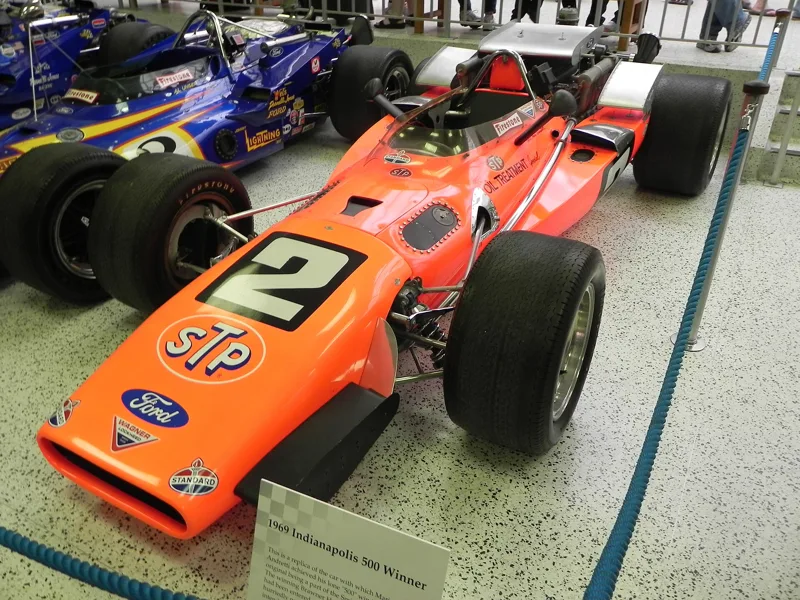
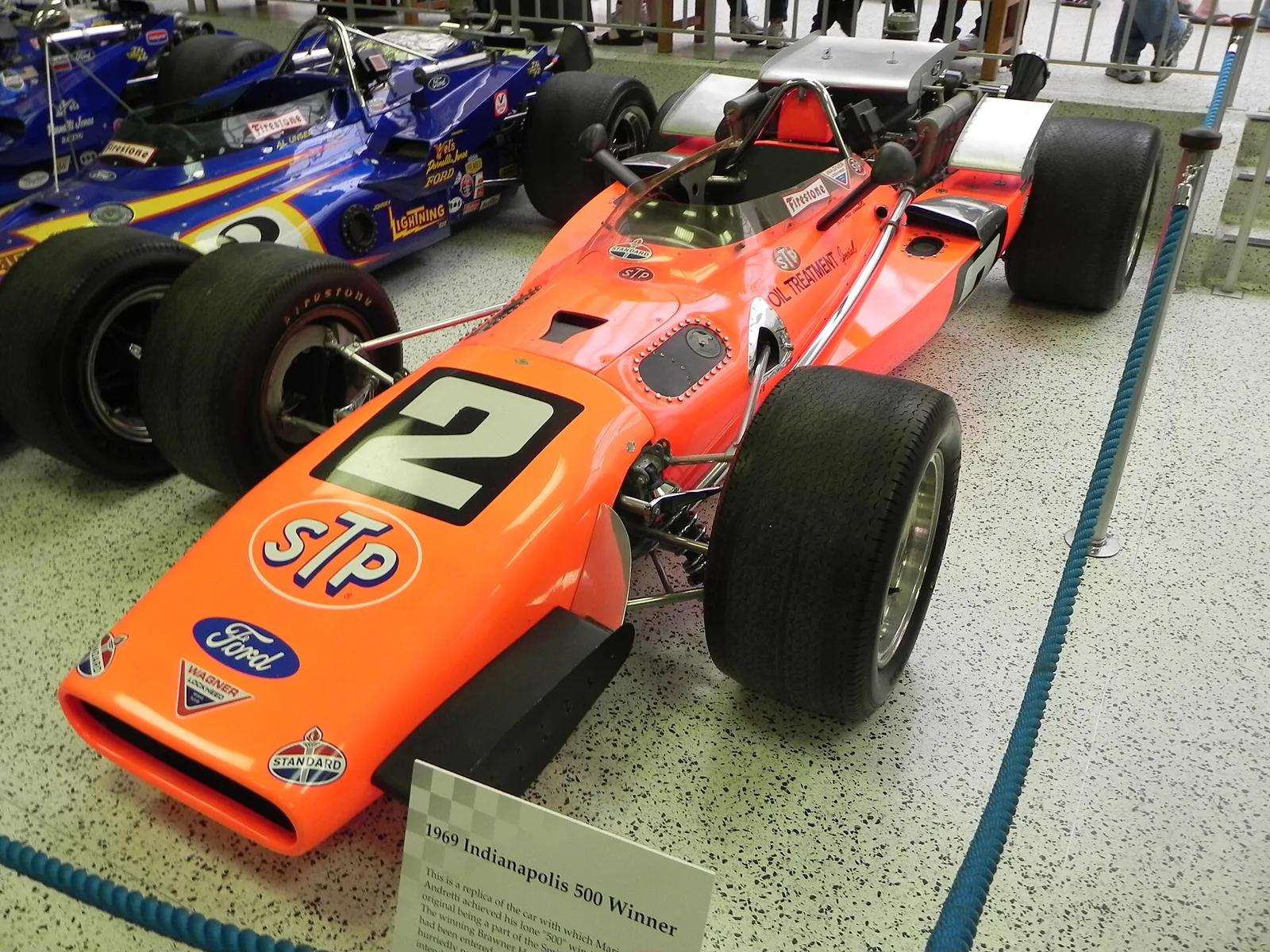
When the estate of team owner Al Dean sold the assets, Andretti took over as owner-driver, trading as Andretti Racing Enterprises. He later sold the team to STP before the 1969 season. That year he won nine races, including the Indianapolis 500, and scored a USAC record 5,025 points.
How did Andretti perform in stock cars?
Andretti made thirty top-level stock car appearances from 1965 to 1969, and in 1967 he won the Daytona 500 with Holman-Moody. He stopped racing in NASCAR after 1969, and he is one of two non-full-time drivers, with A. J. Foyt, to win the Daytona 500.
The Holman-Moody drive came through his connections at Ford. He worked at stock cars and open-wheel racing during the same years.
He won the Daytona 500 in 1967 and the Indianapolis 500 in 1969, two victories only two years apart.
How did Andretti perform in Formula One?
Andretti made his Formula One debut at the 1968 United States Grand Prix, where he took pole position for Lotus. His first podium came at the 1970 Spanish Grand Prix, and he won his first Grand Prix on debut for Ferrari at the 1971 South African Grand Prix.
The first years in Formula One were not a steady run of results. He drove for Lotus and STP March in part-time roles, and the cars were often uncompetitive.
In 1976 he won the Japanese Grand Prix for Lotus. In 1977 he won four Grands Prix, more than any other driver that season, and he finished third in the championship with 47 points. He later described the Lotus 78 as his favourite Formula One car.
Andretti left Lotus after 1980 and joined Alfa Romeo in 1981, where he finished 17th in the standings with 3 points. He stood in for Williams and Ferrari in 1982, and that season marked the end of his full-time Formula One career. His totals stand at 12 wins, 18 poles, 10 fastest laps and 19 podiums.
Did Andretti win the Formula One world title?
Yes. Andretti won the 1978 World Drivers' Championship with Lotus, clinching the title at the Italian Grand Prix. He won six races that season and became the second American to win the Formula One title.
The title came at a sad moment. Teammate Ronnie Peterson died after the Italian Grand Prix, the race at which Andretti clinched the championship. Andretti said later that he never truly celebrated the result, and he described the moment as a jolt he never fully recovered from.
The 1978 season was built around the Lotus team's ground effect cars. Andretti had encouraged the team to enlarge the sidepods, which helped the car generate downforce and carry speed through corners, and that work fed directly into the championship campaign.
How good was Andretti at Indianapolis?
Andretti won the Indianapolis 500 once, in 1969, from 29 attempts. He took three pole positions and completed all 500 miles only five times, so his record at the Brickyard is more about near misses than frequent success.
The 1969 win came with a backup car. He completed the race in the team's older Brawner Hawk on a single set of tyres, and his race engineer later said the gearbox was on the way out and would not have survived much longer. The win was one of the lucky moments in a long and often frustrating relationship with the event.
He was the first driver to exceed 200 mph (320 km/h) in practice, which he achieved in 1977. The years that followed brought setback after setback. In 1987 he had led 170 of the first 177 laps before he eased off to protect his engine, and the engine failed anyway.
Critics have pointed to an Andretti Curse at Indianapolis. In 1993 his last serious chance at a win ended when the team incorrectly changed the tyre stagger during a late pit stop, despite his leading the most laps in that race.
How did Andretti's sportscar career develop?
Andretti won the 12 Hours of Sebring three times, in 1967, 1970 and 1972, and he won a six-hour race at Daytona in 1972. He also raced at Le Mans across four decades.
His 1967 Le Mans ended in a crash during a 3:30 am pit stop, when a front brake pad was fitted backwards and his brakes locked at the Dunlop Bridge. He broke several ribs in that accident, and Roger McCluskey pulled him clear of oncoming traffic.
He returned to Le Mans with Courage Competition between 1995 and 1997. In the 1995 race the team climbed from 25th to finish second overall, and it also took the LMP1 class. At the 2000 race, aged 60, he finished 15th in a Panoz LMP-1 Roadster-S.
What is Mario Andretti's legacy?
Andretti is remembered as one of the most versatile drivers ever to race, with victories at Indianapolis, at Daytona and in Grand Prix racing. He was named AP Driver of the Century in 1999 and he earned a place in the International Motorsports Hall of Fame during 2000.
He won the U.S. Driver of the Year award in 1967, 1978 and 1984, and no other driver has collected it across three different decades. His name became a byword for speed in American popular culture.
Andretti was honoured in Italy as well, when the government made him a Commendatore of the Italian Order of Merit in 2006. He has been an ambassador for the Circuit of the Americas and the United States Grand Prix since 2012, and he serves on the board of Cadillac in Formula One from 2026.
His family kept the racing tradition going. Michael won the 1991 CART title, and Jeff also raced in CART. By his own count Andretti has 111 official victories on major circuits, although that total depends on how a major circuit is defined.
Career summary
| Category | Result |
|---|---|
| Formula One | 1968 to 1982; 12 wins, 18 poles, 19 podiums, 1978 world title |
| IndyCar | 1964 to 1994; 52 wins, 67 poles, 141 podiums |
| USAC champion | 1965, 1966 and 1969 |
| Indianapolis 500 | One win (1969), three poles, from 29 starts |
| Daytona 500 | One win (1967) with Holman-Moody |
| 12 Hours of Sebring | Three wins (1967, 1970, 1972) |
| IndyCar laps led | 7,595, an all-time record |