A wet May, a turbine team that failed in sight of the flag twice and a piston-powered Offenhauser that inherited the lead made the 52nd Indianapolis 500 one of the strangest finishes in the race's history.
Bobby Unser won the 52nd International 500 Mile Sweepstakes on Thursday 30 May 1968 in a piston-powered Offenhauser, after the turbine cars that led the race failed in sight of the flag. The race was also the last to feature front-engined cars in the field.
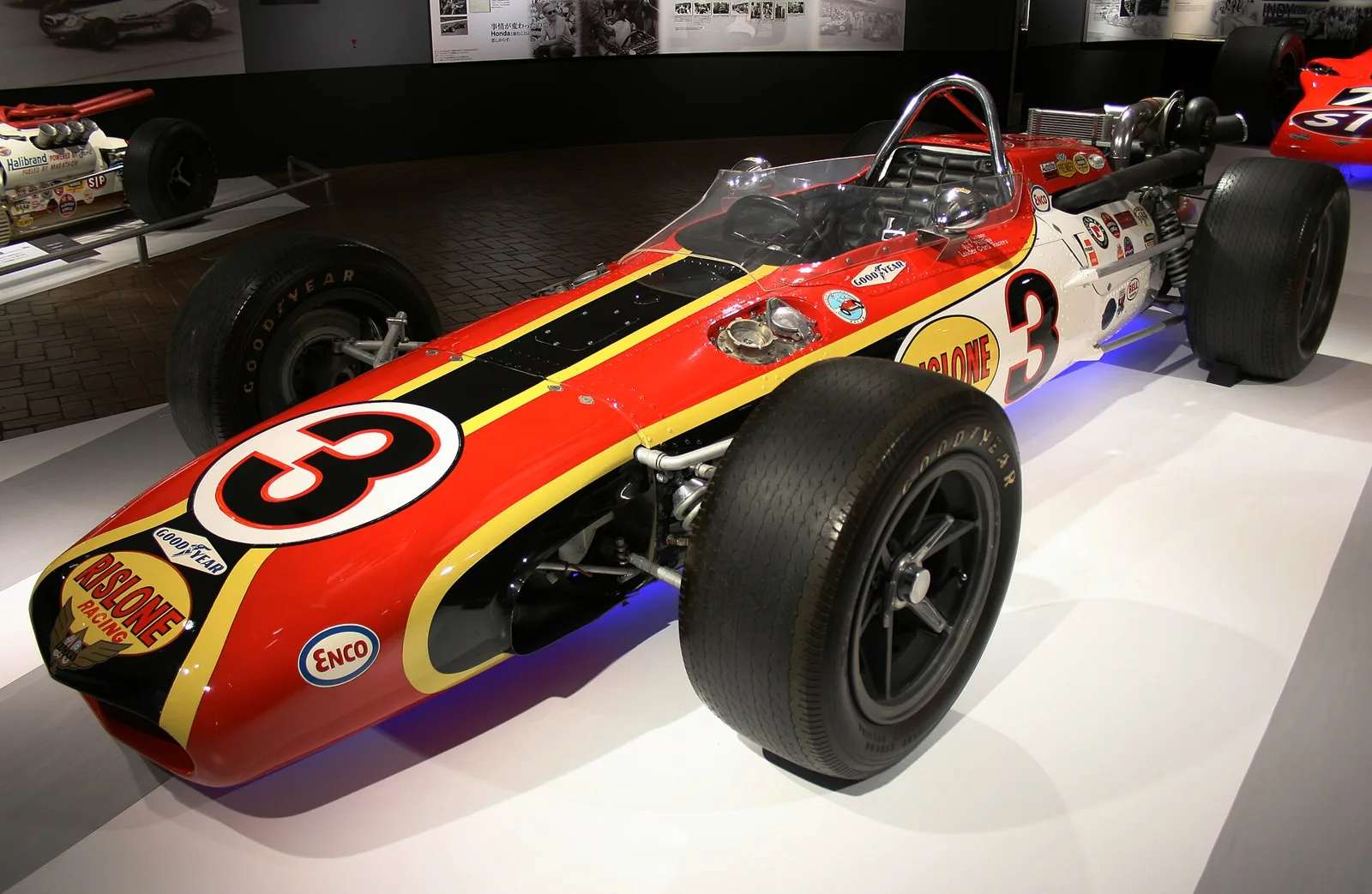
The 1968 Indianapolis 500 was the 52nd International 500 Mile Sweepstakes, held on Thursday 30 May 1968 at the Indianapolis Motor Speedway. It was the last race in which a front-engined car started, and it was the first to be won by a turbocharged engine.
Why was 1968 the last front-engined year?
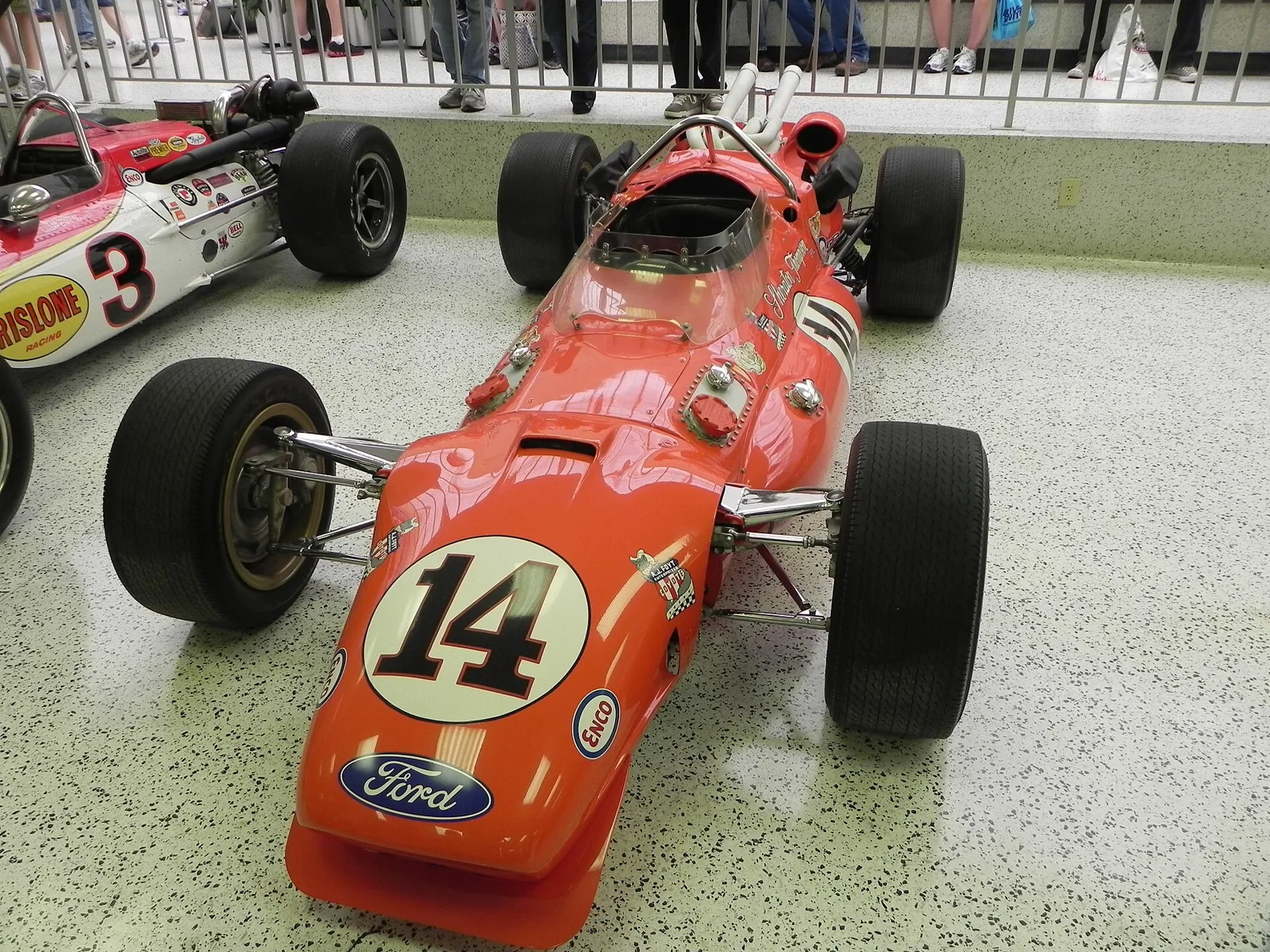
The 1968 race marked the end of front-engined cars at Indianapolis. Of the 33 starters, 32 were rear-engined, and three of those were turbines. Jim Hurtubise's front-engined Mallard qualified 30th, and it was the last front-engined car to qualify for the 500 itself.
Hurtubise's Mallard dropped out with a burned piston after only nine laps. That retirement made it the last front-engined car to race in the 500.
The race also broke new ground for engines: Unser's piston car was the first winner with turbocharging, even though the turbine cars had been expected to dominate.
The turbines were meant to win, and they failed in sight of the flag while a piston car inherited the lead.
How did the turbine cars compete in 1968?
The 1968 race was the second and final year for the STP Granatelli turbine machines, which had been controversial since their debut. For 1968 a Pratt & Whitney turbine was installed in the Lotus 56 chassis, a combination often called the Wedge Turbine and sometimes the Doorstop.
USAC tried to rein in the turbines' power by cutting the permitted annulus inlet to 15.999 in2 from 23.999 in2. Another rule required three mandatory pit stops, up from two in 1965 to 1967, which affected the strategy of every car in the field.
What happened to Mike Spence?
Mike Spence was killed by injuries sustained in a turn-one crash on 7 May. A tyre detached from his Lotus and struck him in the head, and he died in hospital a few hours later, after treatment for his injuries.
Jim Clark had been killed at Hockenheim about a month earlier. Clark had been pencilled in to race one of the Lotus Wedge machines at Indianapolis, and he had tested one only shortly before his death.
Who took pole position in 1968?
Pole Day was Saturday 18 May. Graham Hill, the 1966 winner, was first to qualify in the number 70 STP Turbine and set a new qualifying record. His teammate Joe Leonard took the pole at 171.559 mph (276.1 km/h), a four-lap average.
Expectations favoured the turbines, yet Unser's turbocharged Offenhauser lined up on the front row, clocking 169.507 mph. That result showed that the piston car still had a place at the front.
How did qualifying fill the field?
Qualifying spilled into a fifth day for the first time since 1952, after rain and darkness disrupted the schedule. Rindt was the only driver to make the cut on Sunday 19 May, while Kenyon's 165.191 mph (265.8 km/h) on 25 May was the day's best.
| Date (1968) | Session | Outcome |
|---|---|---|
| Saturday 18 May | Pole Day | Leonard on pole, 171.559 mph (276.1 km/h) |
| Sunday 19 May | Second day | Rindt the lone qualifier, 164.144 mph (264.2 km/h) |
| Saturday 25 May | Third day | Kenyon fastest, 165.191 mph (265.8 km/h); field of 26 |
| Sunday 26 May | Bump Day | Three attempts; the remainder postponed |
| Monday 27 May | Final session | Field completed with 33 cars |
Rain kept cars off the track for most of Sunday 19 May, and only two cars made an attempt. The track finally opened for qualifying at 5:45 p.m., and Denny Hulme, meanwhile, abandoned his run as the six o'clock deadline arrived. The first weekend closed with 16 cars in the field.
On Saturday 25 May, 16 cars made 24 attempts between them, and the high winds pushed speeds down from the previous weekend. Ronnie Bucknum was ruled out after his car was found to be twenty pounds (9 kg) light, but the weighing scale was later found to be faulty, and he was reinstated.
What was Bump Day like?
Bump Day, Sunday 26 May, was almost washed out. Track crews worked through the evening, and practice opened at 6:55 p.m. before time trials began at 7:31 p.m. Darkness and wet conditions meant that only three cars made attempts before officials postponed the rest.
Following the compulsory 30-minute practice, Puterbaugh and Cheesbourg got their runs in, and Bobby Johns spun during his second warm-up lap. The traditional 6 o'clock closing time had already passed, and the track was still wet.
Monday 27 May brought the first fifth day of time trials since 1952. Officials locked in the 25 cars already in the field at 6 p.m. on Sunday, and cars in line at 7:54 p.m. were allowed one attempt each.
A frantic session followed, with two crashes involving Bob Hurt and Rick Muther. Eighteen cars went out to fill the seven open spots. The pair were then bumped, and Mike Mosley set the day's fastest time.
Hurtubise's front-engined Mallard made the field in 30th place, which made it the final front-engined qualifier at Indianapolis.
How did the first half of the race unfold?
Leonard was in front at the green, with Unser second and Roger McCluskey third by the end of the first lap. Unser moved ahead on lap 8 and was in control for much of the first half, with no caution flag in the opening 100 miles.
Hurtubise's Mallard burned a piston after nine laps. Mario Andretti also retired with a bad piston, and he then switched to a team car driven by Larry Dickson. That machine also broke a piston, after 24 laps.
The first caution of the race came out on lap 41. Al Unser Sr. had a fire in his turbocharger during a routine pit stop, and one circuit later a wheel came off and he struck the turn-one wall. Arnie Knepper and Gary Bettenhausen were drawn into the incident too.
A. J. Foyt, the defending champion, retired with a blown engine after 200 miles (320 km).
Why did the turbine challenge fade in the second half?
Graham Hill's car lost a wheel at lap 110 and crashed into the turn-two barrier, which brought out the second caution. He was the first of the Granatelli turbines to retire. On the restart Unser took the lead from Joe Leonard, showing that a piston engine could still match the turbines.
On lap 127 Mel Kenyon and Billy Vukovich II tangled in turn four. Johnny Rutherford, slowing down, was rear-ended by Jim McElreath, and Mike Mosley spun into the grass. Rutherford retired, while McElreath drove back to his pit, where the crew repaired his nosecone.
Unser's last pit stop on lap 166 broke his gearshift linkage, leaving the car stuck in high gear. Leonard and Ruby passed him as he struggled back up to speed, and Leonard then led in the turbine. On lap 178 Ruby pitted with a faulty ignition coil, and a six-minute stop dropped him out of contention.
With 19 laps to go Leonard was in front and Unser had climbed back to second. Carl Williams went into the wall on the backstretch, setting off a fire and bringing out the yellow. Art Pollard, Leonard's teammate, was running a couple of laps down and was slow under caution, holding Unser up behind him.
How was the finish decided?
The green flag came out at the start of lap 192. Leonard and Pollard both hesitated and slowed, because their fuel pump drive shafts had snapped, and Unser swept into the lead with Dan Gurney second. Unser then cruised the final nine laps to win.
Cars using Goodyear tyres took the top four positions, and Goodyear won its second 500 in a row. USAC let the top five finish the full 500 miles before the remaining cars were flagged off. The final race to award membership of the Champion Spark Plug 100 mph Club came in 1968.
Unser was out front for the most laps in the Offenhauser, while Leonard spent most of the day close behind him in the top three. Graham Hill was in the top five for a time, complaining of a lack of speed on the long straights before he crashed while fourth. Pollard stayed in the top ten until his car quit.
Was May 1968 the wettest on record?
Yes, for the race. Indianapolis received 9.25 inches (23.5 cm) of rain in May, which made it the wettest month on record for the 500. Rain hampered practice and qualifying, but it did not affect race day itself, which was held on a Thursday.
This was the last 500 run on a Thursday. A holiday law from 1971 turned Memorial Day into a three-day weekend, and from 1974 the race was run on Sunday.
How was the race broadcast?
Coverage ran live on the IMS Radio Network, where Sid Collins was chief announcer and Len Sutton was the driver expert for a third season. ABC's Wide World of Sports carried the race on television a week late, and MCA closed-circuit television showed it live in approximately 175 theatres.
Radio pre-race coverage ran for 30 minutes. Over 900 affiliates carried the broadcast, including 761 in the United States, along with the Armed Forces Network and the CBC. New Zealand and Australia received it for the first time, and it was estimated to have 100 million listeners worldwide.
Visitors to the booth included former drivers and officials, among them Sam Hanks, J. C. Agajanian and Chuck Stevenson. Indiana's Senator Vance Hartke brought a group to the booth, including Transportation Secretary Alan Boyd and FCC chairman Rosel H. Hyde.
Senator Birch Bayh came with his teenage son Evan, who was at his first race and, on air, correctly predicted that Bobby Unser would win.
On television, the telecast was due on Saturday 8 June but moved a week to 15 June, the day of Senator Robert F. Kennedy's funeral. Jim McKay anchored the coverage, Rodger Ward joined as analyst, and Chris Economaki worked the pits. Charlie Brockman served as anchor for the closed-circuit broadcast.
What did Unser's win mean for his career?
It was the first of his three Indianapolis 500 wins, which came in 1968, 1975 and 1981. It was also the fourth consecutive race win of his 1968 season, and he went on to claim the national championship that year.
The race also has a sombre footnote. Sixth-place finisher Ronnie Duman was killed ten days later at Milwaukee. Spence became the third member of his surname to die at the Speedway, although none were related.