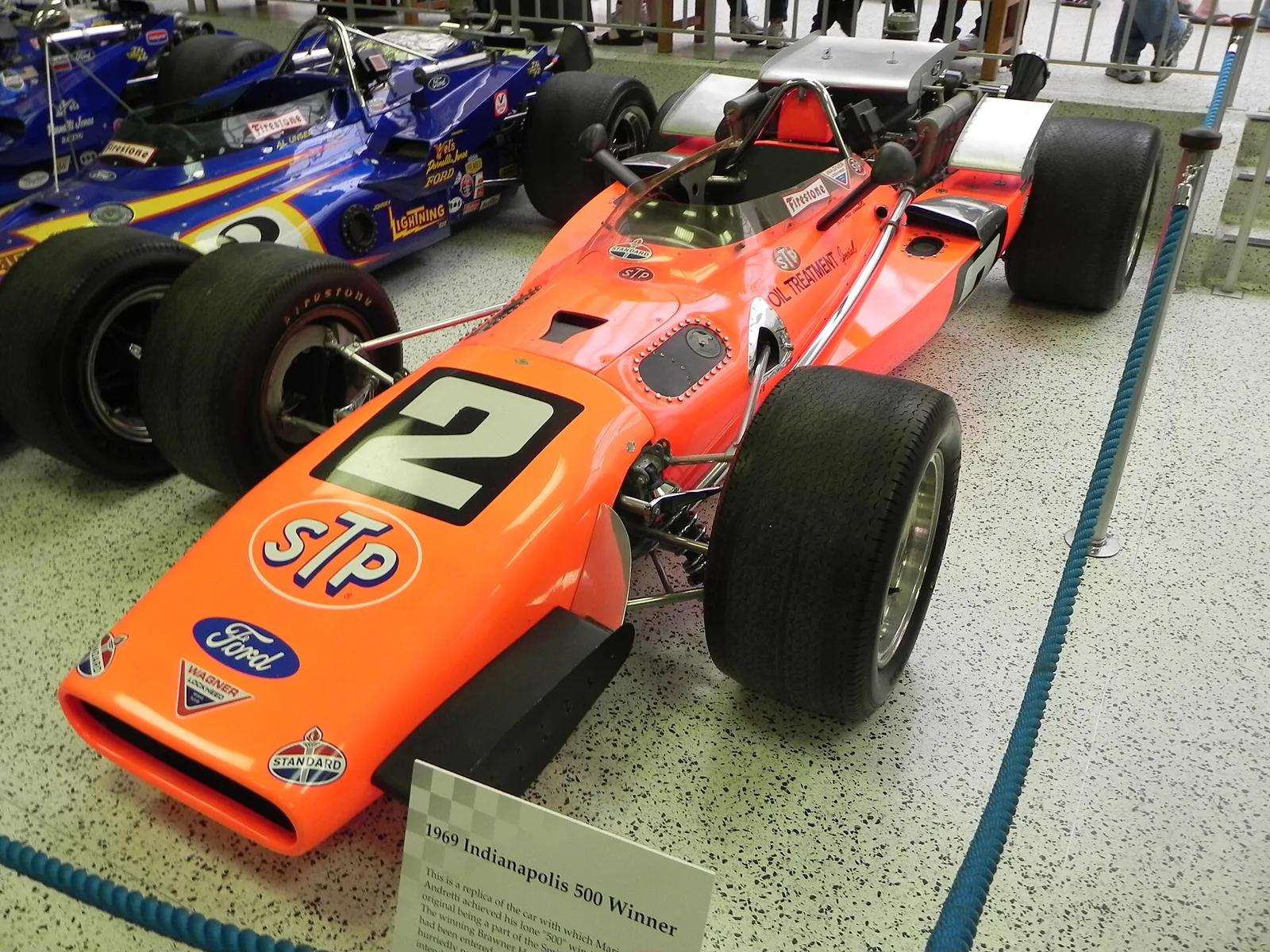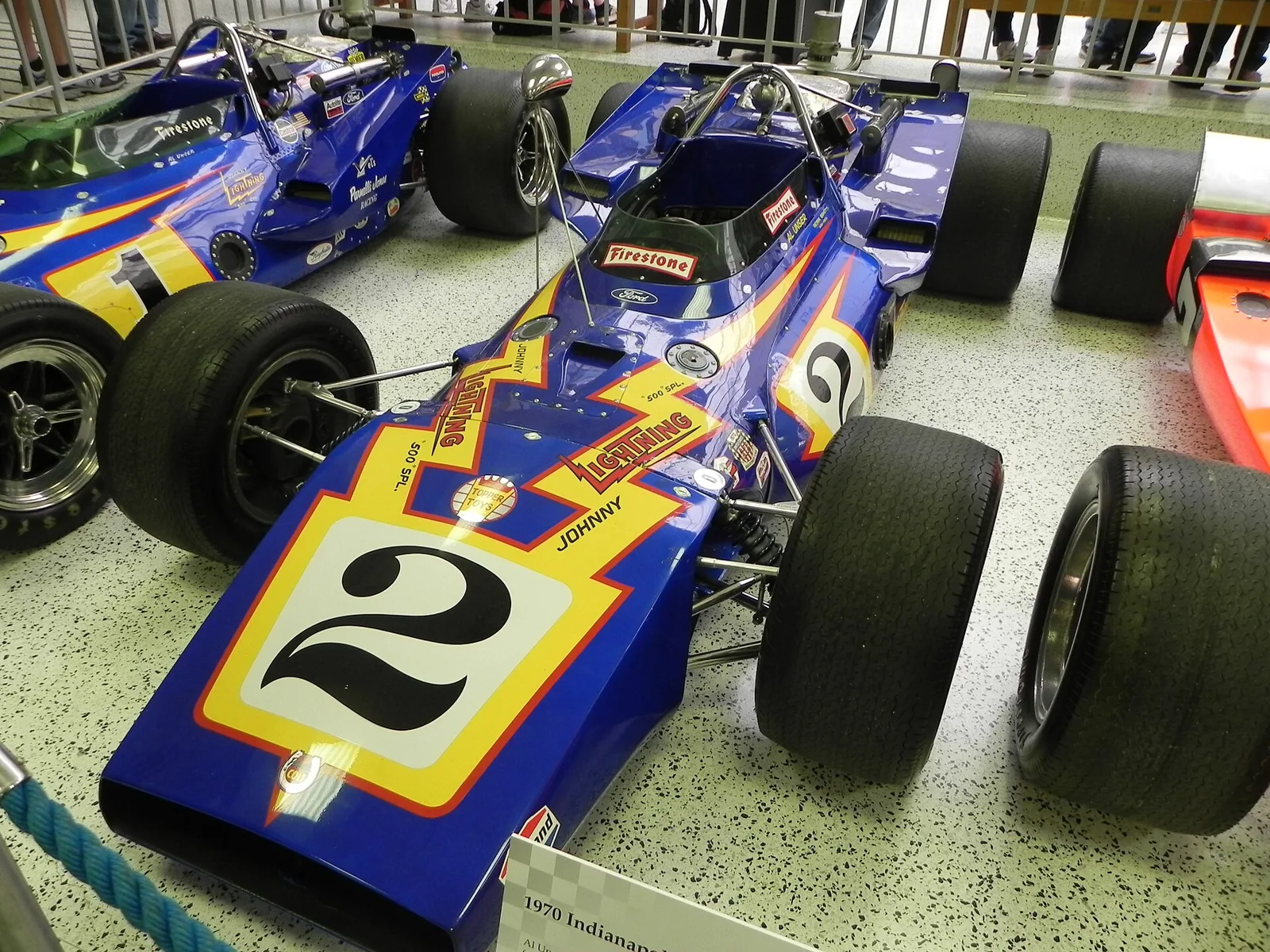
A pole sitter who led 190 of the 200 laps, a record prize fund that topped a million dollars and a final-lap wreck that held the field under yellow for 14 minutes.
Al Unser Sr. started from pole, led 190 of the 200 laps and won the 54th running on Saturday 30 May 1970 by 32.19 seconds. It was his first of four Indianapolis victories, and it was the first race won by a pair of brothers.
The 1970 Indianapolis 500 was the 54th 500 Mile International Sweepstakes, held on Saturday 30 May 1970 at the Indianapolis Motor Speedway. Al Unser Sr. took pole, led 190 of the 200 laps and won, which made him and his brother Bobby the first pair of brothers to win the race. It was the first of his four Indianapolis victories.
Why did Al Unser's 1970 win matter?
Unser's victory was historic on more than one count. He had turned 31 the day before the race and took home $271,697 from a record purse of $1,000,002, the first time the total prize fund had topped a million dollars.
Car owner Parnelli Jones also became the second person, after Pete DePaolo, to win the race as both a driver and an owner. The field was entirely turbocharged for the first time. It was also the final race with the winner's celebration in the old lane near the pits' southern end, because the lane moved toward the finish for 1971.
The first brothers to win the race did it with a pole, a record purse and a car that led nearly every lap.
How did the schedule and weather shape the race?
The start was set for 12:00 noon local time. Because the race was set for Saturday 30 May, management named Sunday 31 May as a rain date, the first time the race could run on a Sunday. Race-morning showers held the start back about half an hour, yet the full distance was completed on Saturday.
This was the last year the race was tied to the fixed date of 30 May. From 1911 the race had been set for 30 May unless that day fell on a Sunday. The Uniform Monday Holiday Act took effect in 1971, and from 1974 the race was run on the Sunday of Memorial Day weekend. Carburetion Day practice and pit stop practice on Wednesday 27 May were closed to the public.
Who was fastest in practice?
Al Unser Sr. set the fastest practice speed with a lap of 171.233 mph. He topped the speed chart on five practice days and was the sole driver over 170 mph in the first fortnight. A. J. Foyt, at 169.173 mph, and Art Pollard, at 169.1 mph, were close behind.
The practice period had its share of crashes. John Cannon wrecked on Sunday 10 May and did not qualify. Defending winner Mario Andretti spun and hit the inside wall twice in turn four on 11 May, badly damaging his car, though he was unhurt. The following day Dennis Hulme's machine burst into flames in turn three, and he got out of the moving car with burns to his hands and feet.
How did pole day go?
Al Unser Sr. won pole over Johnny Rutherford by just 0.01 seconds, the closest margin for the pole at that time. Foyt completed a front row that was all above 170 mph. Unser's pole speed of 170.221 mph was not a record, and his fastest single lap of 170.358 mph was also short of the mark.
| Day | Result | Notable run |
|---|---|---|
| Saturday 16 May | Pole day stopped at 3:42 p.m., field of 17 | Unser pole, 170.221 mph |
| Sunday 17 May | Second day; Ruby waved off, then burned a piston | Peter Revson, 167.942 mph |
| Saturday 23 May | 14 attempts; field filled to 33 cars | Lloyd Ruby, 168.895 mph |
| Sunday 24 May | Bump day; Jim McElreath made the field | Fourth Foyt entry bumped Bartlett |
Rain stopped pole day at 3:42 p.m., and 17 cars were in the field. Ruby, Bettenhausen and Revson had not yet run when the rain arrived, and officials ruled them out of the pole round. The rules were later changed so that every car in the draw had at least one chance at the pole round, even if it stretched into another day.
Rookie Tony Adamowicz had bad luck. A yellow light came on by mistake during his first lap, and he slowed, recording 160.829 mph. He had two laps over 166 mph, but that first lap dragged his average down to 164.820 mph, the second-slowest car of the day.
What happened on the later qualifying days?
Three drivers who missed the pole round qualified on Sunday 17 May. Peter Revson ran 167.942 mph and was the ninth-fastest car, but he lined up 18th as a second-day qualifier. Lloyd Ruby's first try was waved off. After talking his way into a re-run, he posted 169.428 mph before a piston let go on the fourth lap.
Ruby's team felt the officials had cost them a chance to be the fastest of the day. He returned later with a new engine, but he was waved off again after a single slow lap.
Ruby then recovered on Saturday 23 May, with a run of 168.895 mph, after a disappointing first weekend for his team. Fourteen attempts were made that day, the field was filled to 33 cars, and Bentley Warren and Tony Adamowicz were bumped.
On bump day Jim McElreath put the fourth Foyt entry into the field, bumping Bartlett. No other car showed enough speed to get in. Jigger Sirois, who had missed the 1969 race, fell well short in Jack Adams's turbine car.
How did the race start?
On the last pace lap Jim Malloy, running wide in the third row, had a rear suspension failure and hit the outside wall in turn four. The field was held under the red flag on the main straight, and crews were allowed to refill, having burned three laps of methanol.
Thirty-two cars were released after the stoppage. Rutherford darted ahead at the first turn, Unser followed and grabbed the lead before turn three, and he held it through the first circuit. Lloyd Ruby, starting 25th, went by ten cars on that lap and was inside the top ten by the third.
What happened in the first half?
Ruby's charge carried him to fifth by about lap 28. It was the story of the early laps. Pollard's engine failure brought a caution. Under the yellow, Mario Andretti made an unscheduled stop to repair loose bodywork, and he lost many positions when he rejoined.
At the 100-mile mark Unser was in front, with Rutherford second and Foyt and Ruby fighting for third. Unser had been in front for the opening 48 laps. He gave up the lead on a pit stop on lap 49, and Foyt pitted the following lap, which handed the lead to Ruby.
Ruby was then black-flagged for smoke caused by broken drive gears, and his race ended after 54 laps. Rutherford stalled as he left the pits and lost a good deal of track position. Unser retook the lead on lap 54 and held it to the halfway point.
Andretti had to make another unscheduled stop, this time to change a right rear tyre. He had been struggling with handling from the right rear suspension for much of the race.
How did the second half unfold?
Unser returned to the front on lap 106 and did not give it up again. Rutherford, who had been a factor earlier, dropped out after 135 laps with a broken header. Roger McCluskey, who had retired on lap 62 with suspension damage, took over Mel Kenyon's car on lap 112.
On lap 172 McCluskey lost it entering turn three and hit the outside wall hard, collecting Ronnie Bucknum along the way. Sammy Sessions locked his brakes but slipped through the wreckage and carried on. Spilled fuel caught fire, and several cars that drove through the fluid spun. Dallenbach and Brabham also spun but kept going, and Andretti nearly spun but got through unscathed.
The fire was put out quickly, but the final yellow of the race stayed out for more than 14 minutes, from lap 172 through lap 181, while the track was cleared.
How was the finish decided?
With about 25 laps to go, Unser had lapped the entire field. His pit board showed "E-Z", and Mark Donohue and Foyt both got their lap back. The battle for second then became the focus, with Donohue and Foyt the main contenders.
Foyt faded with a handful of laps left, easing onto the apron in turn one while trying to nurse the car home. Unser led a total of 190 laps on his way to the win. He won by 32.19 seconds from Donohue, and he finished more than three minutes ahead of third-placed Dan Gurney, in what proved to be Gurney's final 500 as a driver. Foyt dropped to 10th.
How was the race broadcast?
The IMS Radio Network carried the race live. Sid Collins was in his 23rd consecutive year as chief announcer, and Len Sutton was in his fifth year as driver expert. Because of the rain, the broadcast began at 11:30 a.m. local time, and the pre-race show, which had been scheduled at thirty minutes, ran to almost an hour.
Jack Morrow became producer following Bill Dean's death. The broadcast was carried by more than 1,000 affiliates in all fifty states, along with AFN and the CBC, and it reached places such as Vietnam. Four foreign-language translations were made, and the broadcast was estimated to reach 120 million listeners worldwide.
Sid Collins's booth guests included Edie Adams, Denny Hulme, Billy Shaw, Chris Economaki of ABC Sports, Sam Hanks, Pete DePaolo, Senator Vance Hartke, Tony Hulman and J. C. Agajanian. Astronaut Pete Conrad was interviewed before the start, having ridden alongside Tony Hulman in the pace car again.
On television, ABC's Wide World of Sports aired the race on Saturday 6 June. Jim McKay anchored; Rodger Ward and Chris Economaki provided analysis. Ward had handled the pace car duties at the start. It was the last year that the race was not shown on over-the-air television on the day itself. The closed-circuit broadcast on MCA theatres was shown for the final time, with Charlie Brockman as anchor, and ESPN Classic later re-aired the ABC coverage starting in May 2011.