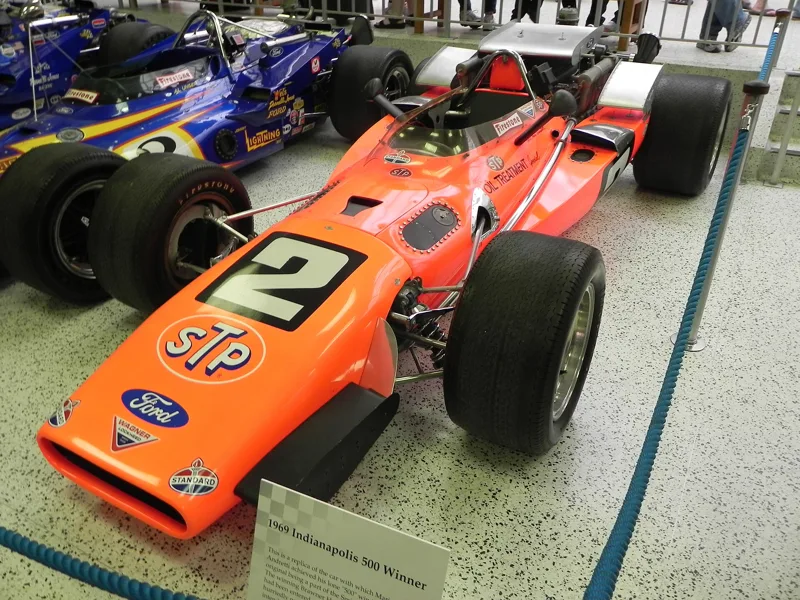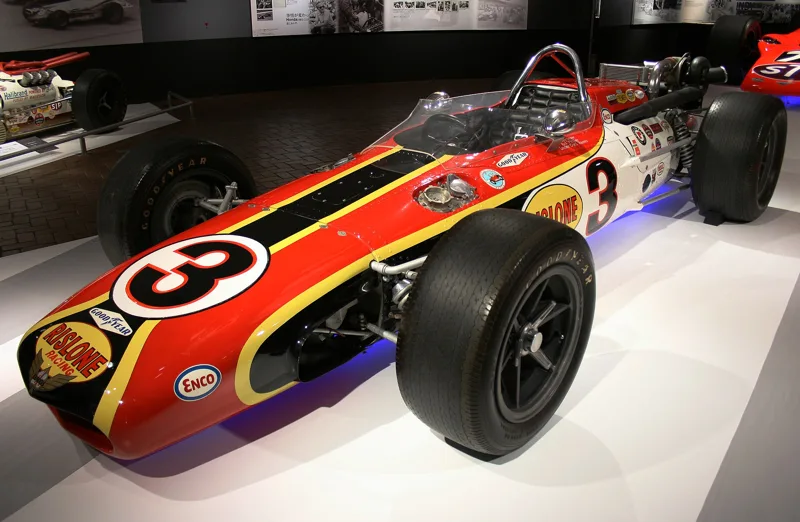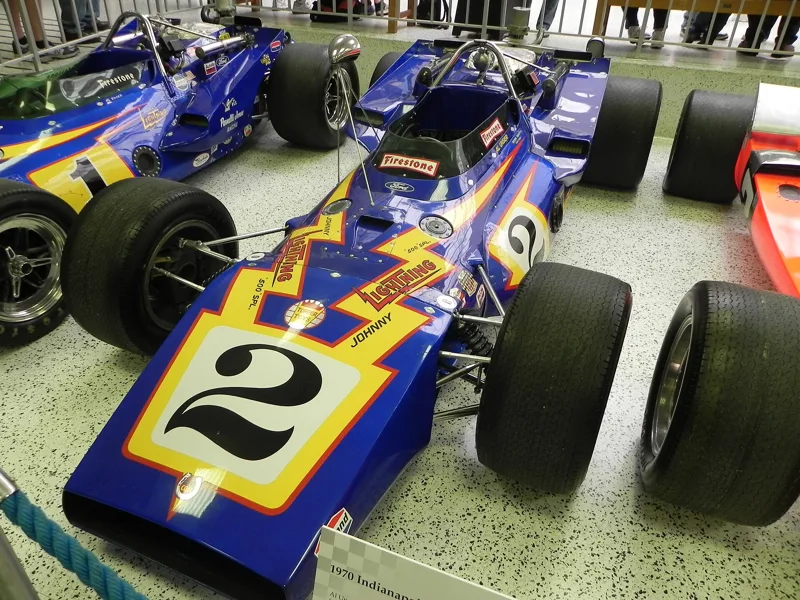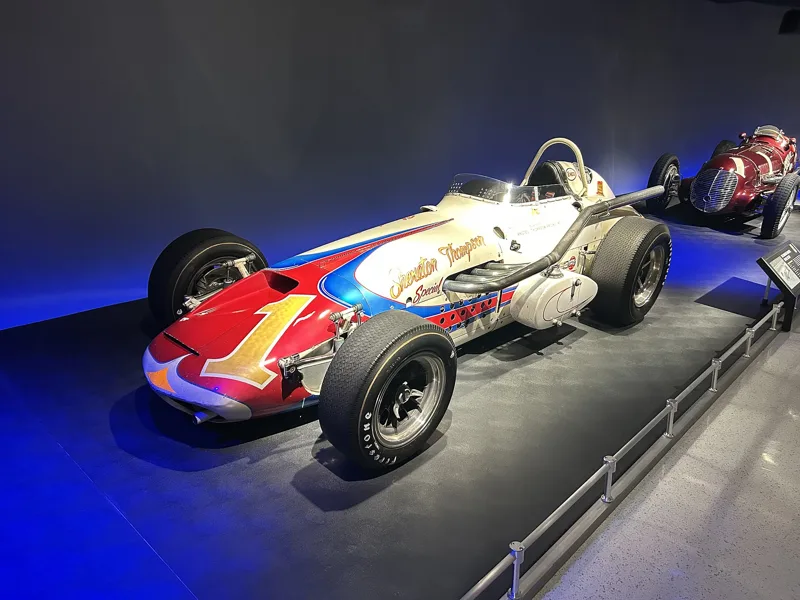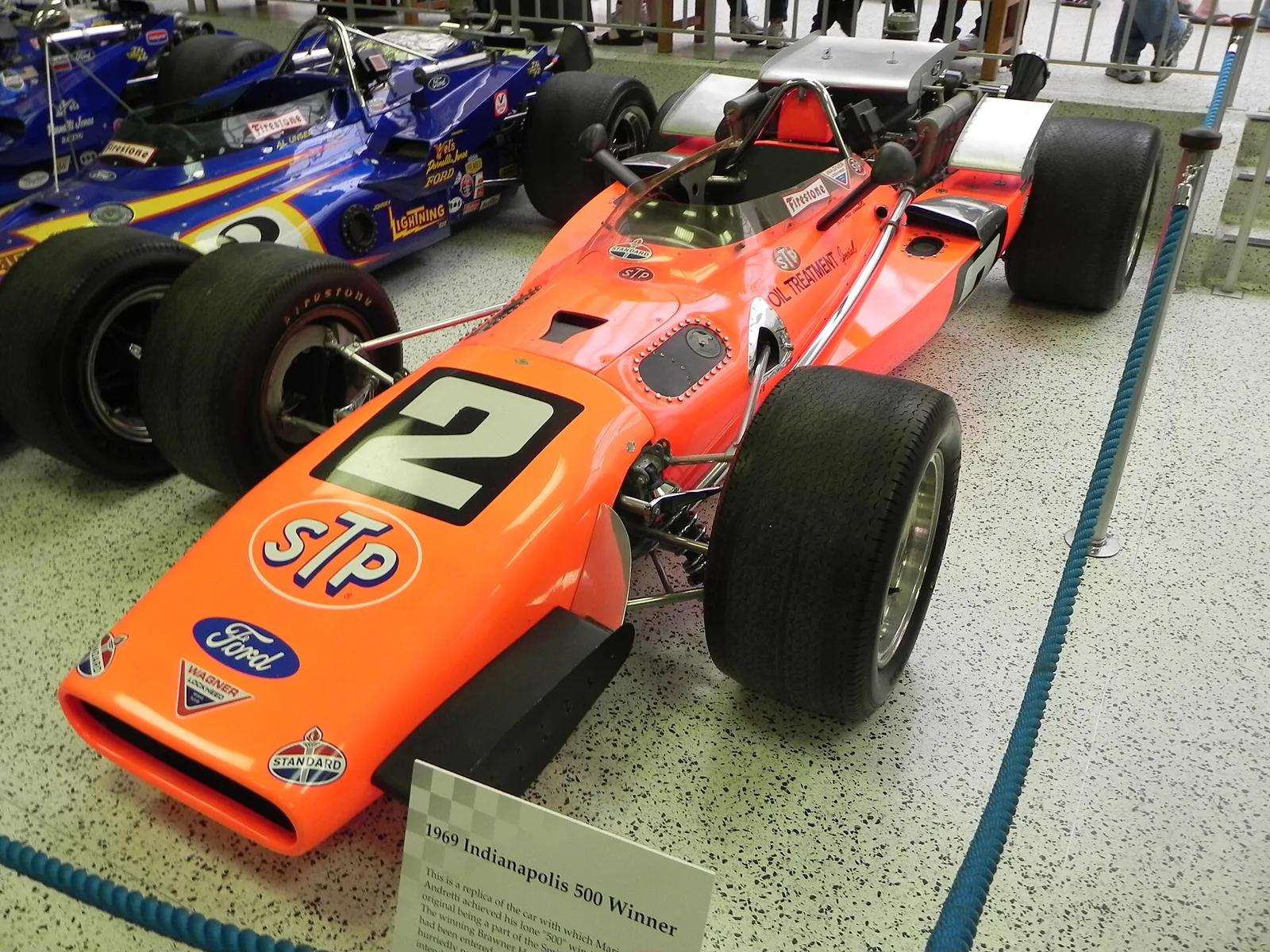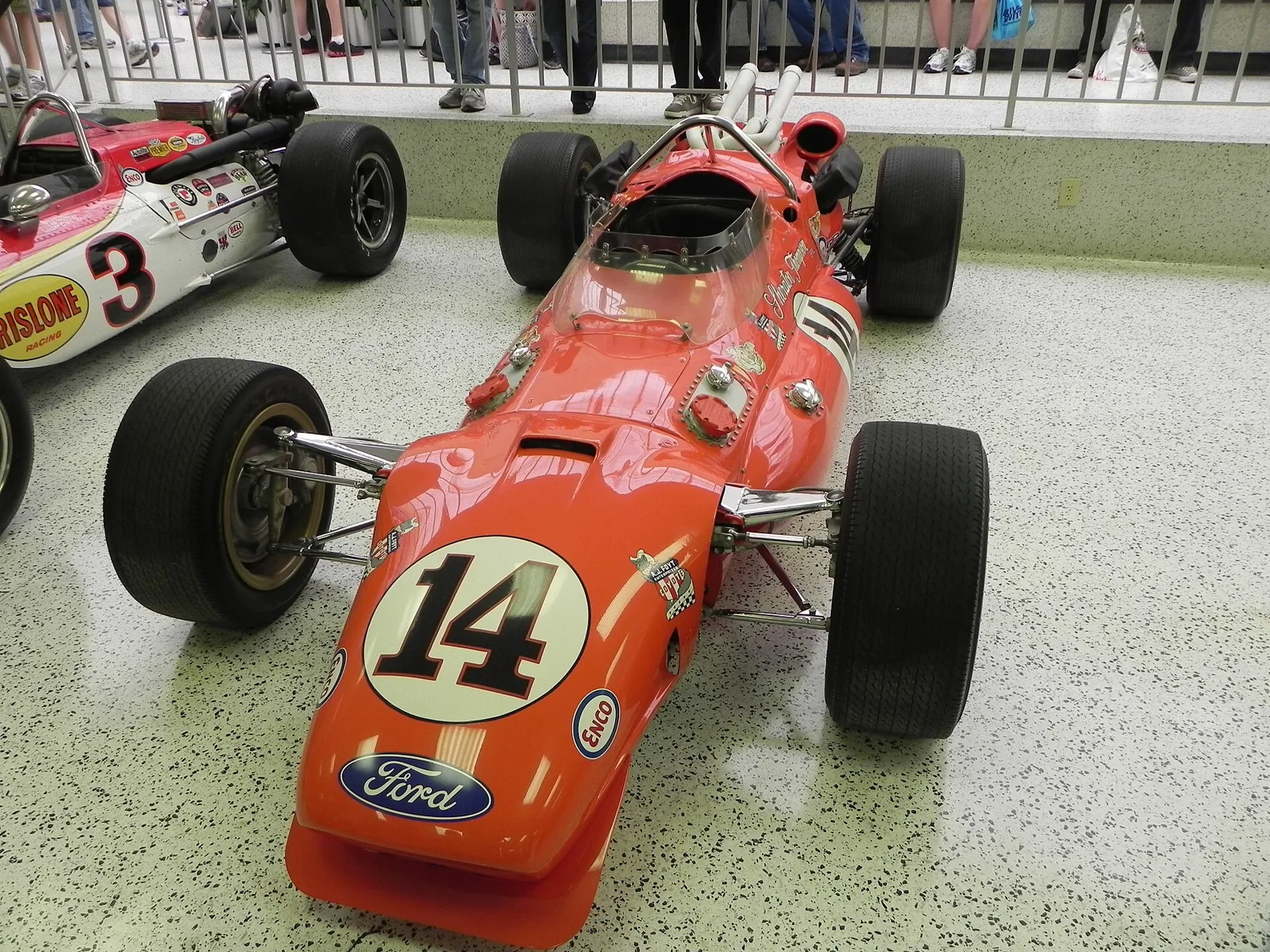
A $6 transmission bearing ended a turbine's lead with a few laps to go, a rain delay split the race over two days and A. J. Foyt weaved through a crash on the final lap.
A. J. Foyt won the 51st International 500 Mile Sweepstakes after Parnelli Jones's turbine car stopped with a failed transmission bearing in the closing stages. Foyt weaved through a four-car crash on the final lap for his third Indianapolis victory, and the race was split over Tuesday and Wednesday by rain.
The 1967 Indianapolis 500 was the 51st International 500 Mile Sweepstakes, and it stretched across two days at the Indianapolis Motor Speedway. Parnelli Jones led in the STP-Paxton turbine car until its gearbox let go in the closing stages, and A. J. Foyt inherited the win for his third Indianapolis victory.
Why did the 1967 race last two days?
Rain ended Tuesday's running after 18 laps, and the race was red-flagged on the 19th. Officials put the finish off until Wednesday, when the cars came back out in cool, bright weather. The annual victory banquet still went ahead that evening, only hours after the flag. Wednesday's cool air and bright sky made for good running conditions.
The Tuesday start was set for 11:00 a.m. Eastern time. The red flag came out at about 11:16 a.m., and by roughly 4:15 p.m. the conclusion had been pushed to the next day. Scoring was rolled back to the end of the 18th lap, so every car except one was still eligible when the race restarted.
A $6 transmission bearing ended a turbine lead, and A. J. Foyt weaved through the final-lap wreckage to win.
How did Mario Andretti win the pole?
Mario Andretti started as the favourite. On the final practice day he had set the fastest practice lap in the track's history, at more than 168 mph. Roger McCluskey, Foyt and Gordon Johncock were also tipped for the front row.
Ronnie Duman was the first car out on pole day, Saturday 13 May. Joe Leonard briefly held the pole at a new record of 166.098 mph, and Dan Gurney then posted 167.224 mph. Andretti went out next, set new one-lap and four-lap records and claimed pole for the second year in succession.
| Day | Result | Notable run |
|---|---|---|
| Saturday 13 May | Pole day; field filled to 25 cars | Andretti pole, 168.982 mph four-lap average |
| Sunday 14 May | Second day rained out | No attempts completed |
| Saturday 20 May | Field filled to 33 after 23 attempts | McCluskey fastest, 165.563 mph |
| Sunday 21 May | Bump day | Graham Hill and Jackie Stewart made the field |
Gordon Johncock squeezed onto the front row in third at 166.559 mph. Foyt had mechanical trouble on his first run, but he returned later to qualify fourth. Parnelli Jones, in the Granatelli turbine, took sixth.
Before qualifying, Jones had been among the top ten in practice without ever topping the times, and some in the garage suspected the STP team of sandbagging.
Why did the turbine's set-up matter?
Many teams noticed that Jones had qualified on a race-day set-up. The piston cars were running qualifying set-ups, with light fuel loads, lightened transmission parts, higher-revving gears and a share of nitromethane in the fuel. The STP crew ran the turbine on ordinary aircraft-grade kerosene.
The field reached 33 on Saturday 20 May after 23 attempts, and six cars were bumped, Jackie Stewart among them. McCluskey, who had missed out on pole day, was the fastest of that afternoon at 165.563 mph. On bump day Hill and Stewart forced their way back in, while Jim Hurtubise was too slow in a front-engined car.
How did the race begin on Tuesday?
Andretti briefly led into turn one. Jones, starting sixth, went round the outside, passed four cars in the first turn and dived beneath Andretti as they came out of turn two. He took the lead down the backstretch and posted a first lap of 154 mph, pulling away quickly.
LeeRoy Yarbrough spun in turn four on lap 3, which brought out a brief yellow, but his car was undamaged. Andretti pulled into the pits with mechanical trouble shortly afterwards. Then, on lap 18, rain arrived, and the yellow came out with Jones still at the head of the field.
What happened when the race resumed?
George Snider fell ill overnight, so Lloyd Ruby, who had retired the day before, drove Snider's car in relief. Two laps behind the pace car served as warm-up before 32 cars went green, single file. Jones simply resumed where he had left off.
On lap 52 Yarbrough spun in turn four for a second time in two days, and this time he tangled with Jones. Jones went low to lap him, was squeezed onto the apron, and their wheels made contact. Both spun into the grass without damage. Gurney briefly took the lead afterwards, but he gave it up after two laps when he pitted.
Why did so many cars crash in the first half?
Jones dominated the first half in the turbine, with Gurney, Foyt and Al Unser Sr. chasing him at the front of the field. On lap sixty-five Andretti lost a wheel on the exit of turn one, coasted into turn two and retired after 59 laps.
On lap 80 Jones's first stop nearly turned into a disaster when the fuel hose jerked before it was disconnected. The hose spilled fuel, but there was no fire, and Foyt took the lead before giving it back four laps later.
Around the midway point a cluster of incidents followed. Art Pollard spun in turn three but carried on. Carl Williams spun across Bob Veith's path in turn three amid traffic, and Veith's nose was badly damaged, though both continued. Wally Dallenbach then hit the inside wall of the main straight under the same yellow, and Cale Yarborough spun in the north chute.
Ruby, driving Snider's car, spun out with LeeRoy Yarbrough as the field came by, and both slid onto the infield grass in turn four. Ruby struck the inside fence and was finished for the day. Yarbrough, who had spun three times in all, was also finished. Cale Yarborough climbed back in and carried on, while Johnny Rutherford crashed alone in turn two about three laps later.
Why did Jones's lead vanish?
Jones kept control until laps 131 to 149, when Foyt led while he was in front. Gurney, a contender for much of the early race, retired on lap 160. Arnie Knepper, Jackie Stewart, Cale Yarborough and Mel Kenyon also retired, and Jochen Rindt was out with a broken valve.
With about seven laps left, Gordon Johncock spun and brought out a short yellow. Jones looked to have the race sewn up, with nearly a full lap in hand over Foyt and Al Unser more than two laps adrift. Then a $6 transmission bearing gave out, and the turbine rolled to a halt beside the pit entry. The Granatelli crew sprinted to the car in disbelief.
How did Foyt take the win on the last lap?
On the final lap he was approaching turn four when a four-car pile-up erupted at the north end of the main straight. Foyt sensed danger, and he later said he had noticed the crowd looking down the straight instead of at him. He backed off, then weaved through the wreckage and took the chequered flag.
The average he held over the distance, 151.207 mph (243.344 km/h), set a fresh race record. The red and chequered flags came out straight afterwards. Al Unser took second place, the first of three second-place finishes he would record in his career.
The result also mattered to Goodyear, whose tyres had won the race for the first time since 1919. The company had come back to the sport in 1964 after leaving it in 1922, and in 1967 it broke Firestone's run of 43 consecutive wins.
How was the race broadcast?
The IMS Radio Network carried the race live, with Sid Collins as chief announcer for the 16th year. Collins had been with the crew for 20 years in all, Len Sutton was driver expert for a second season, and Lou Palmer reported from victory lane. The broadcast reached over 900 affiliates, including the Armed Forces Network and the CBC.
It was estimated to reach 100 million listeners worldwide, which made it one of the most widely heard broadcasts of the race to date.
On Tuesday the programme began at 10:30 a.m., with a 30-minute pre-race segment, and it had been scheduled to run four and a half hours. The network went off air at 11:45 a.m. once the rain halted the racing, and it returned with short weather updates through the afternoon. Guests during the delay included J. C. Agajanian and Rory Calhoun, along with Lorne Greene and Michael Landon from the television series Bonanza.
Wednesday's coverage returned to air at 9:45 a.m. Pete DePaolo, Jim Murray, Tom Harmon and the festival queen, Janice Cruze Bretz, all dropped by the booth that day. After the race Collins was presented with a resolution from the California State Legislature, honouring his twentieth year on the network. Rindt, who had retired on lap 108, gave pit reporter Luke Walton a dismissive answer and said he would not be returning, although he did come back once more, in 1968.
The flagship station had moved that year from WIBC to WTHI in Terre Haute. On television, ABC's Wide World of Sports aired the race on Saturday 10 June, with Jim McKay anchoring for the first time, Rodger Ward as analyst and Chris Economaki in the pits. ESPN Classic later re-aired the broadcast, starting in May 2011. Charlie Brockman anchored the closed-circuit broadcast, which played in around 150 to 175 theatres and venues across the country. The feed went to Europe over the Early Bird satellite and to Japan over Lani Bird. Viewers at US venues watched the second day with rain checks.
Which famous drivers were in the field?
Six entrants had won, or would go on to win, Formula One titles: Graham Hill, Jim Clark, Denny Hulme, Jochen Rindt, Jackie Stewart and Mario Andretti. Their careers at the top of the sport made them a strong group for the race.
The race also clashed with NASCAR, and the two events were only days apart. The World 600 ran on Sunday 28 May, and the Indianapolis 500 was set for Tuesday 30 May. LeeRoy Yarbrough skipped Charlotte to race at Indianapolis, finishing 27th. Cale Yarborough became the first driver to run both events in one year, finishing 41st at Charlotte and 17th at Indianapolis.