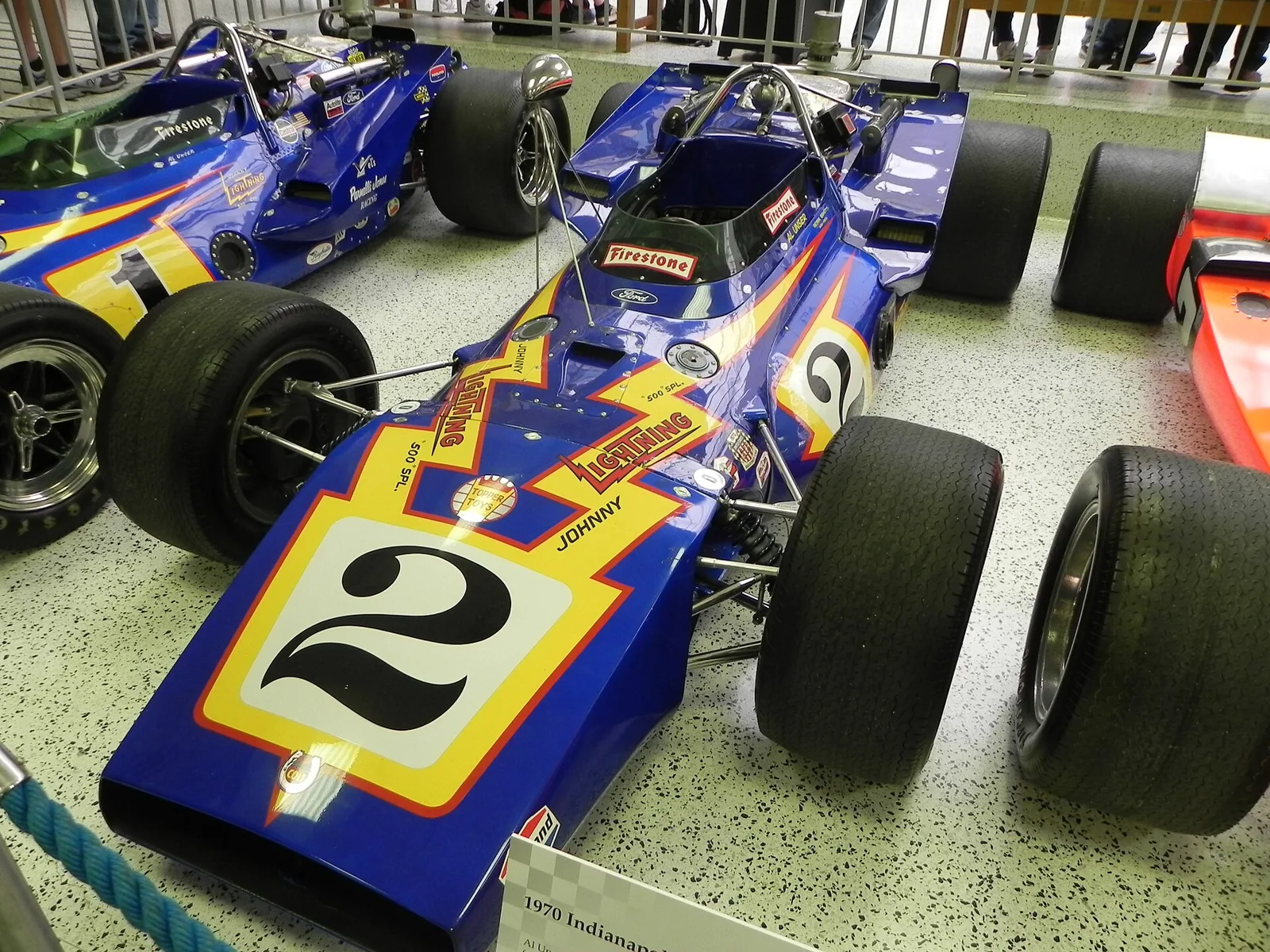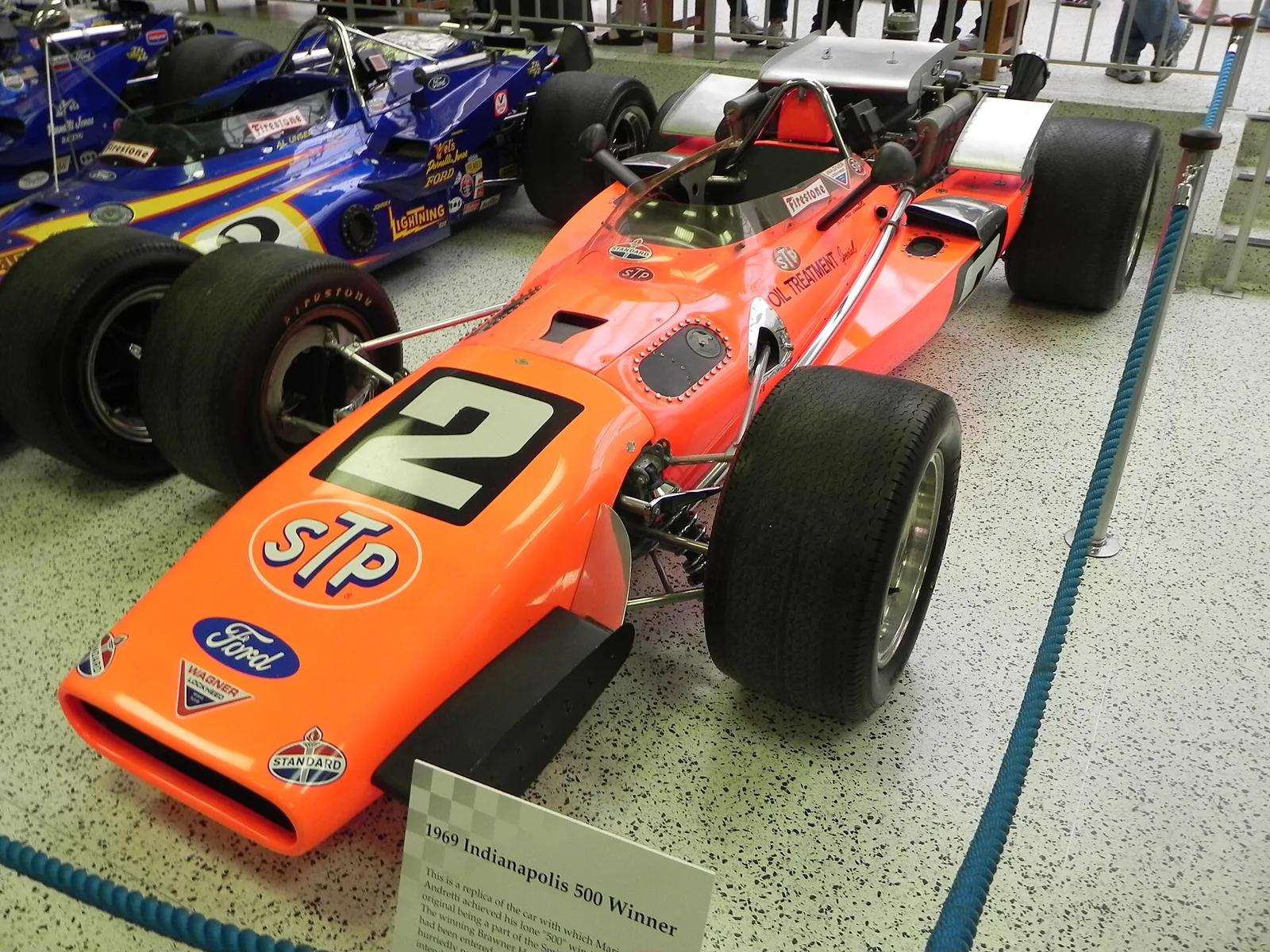
A burned driver who had lost his primary car in practice, a fuel hose that ended a leader's race and a Friday race that Granatelli finally won made the 53rd Indianapolis 500 memorable.
Mario Andretti won the 53rd International 500 Mile Sweepstakes on Friday 30 May 1969 for car owner Andy Granatelli, leading 116 laps. The win followed a difficult May for Andretti, who had been burned in a practice crash and then qualified a substitute car from the middle of row one.
The 1969 Indianapolis 500 was the 53rd International 500 Mile Sweepstakes, held on Friday 30 May 1969 at the Indianapolis Motor Speedway. Mario Andretti won it for car owner Andy Granatelli, leading 116 laps and finishing about two laps clear of Dan Gurney. A. J. Foyt had started from the pole, but a broken manifold cost him a chance at a fourth win.
Why did the 1969 race stand out?
The win gave Granatelli his first Indianapolis victory, after years of disappointment with Novis and then with turbines. It was also the most recent race to be held on a Friday. It followed a difficult month for Andretti, who had crashed his primary car in practice and still finished in front.
Lloyd Ruby, long known for bad luck at the Speedway, led just after the midpoint before his race ended on lap 105. Once he was out, Andretti was left alone at the front.
The schedule has changed since. Only one later year, 1973, would be a weekday race; the event ran on Saturdays from 1970 to 1972 and on Sundays from 1974. A holiday law from 1971 made Memorial Day a three-day weekend.
A broken manifold stopped Foyt's bid for a fourth win, and a fuel hose ended Ruby's race, leaving Andretti in front alone.
What happened to Lloyd Ruby's race?
Ruby had led for ten laps before he came in on lap 105. The crew were topping up the car when he pulled away too soon, hose still connected. The tank was torn open, the fuel ran out onto the pavement, and his race was over.
The stop was the defining moment of the second half. With Ruby gone, Andretti had the field to himself at the head of the race.
How did Andretti hold on to win?
Andretti controlled the second half and won comfortably over Gurney, finishing about two laps clear. He came close to the turn-two wall at one point, and he still held more than a full lap late in the race. He ran the whole distance without changing tyres.
During a stop near the end he knocked over chief mechanic Clint Brawner while being pushed away. Fluid in the transmission was running low, the clutch was apparently slipping, and the engine ran hot despite an extra radiator fitted after qualifying.
The clock showed 3:11:14.71, the quickest the race had recorded to that point.
What did Andretti's May look like?
Andretti entered the month as a favourite, but in practice he crashed his main car, a four-wheel drive Lotus of radical design, and suffered burns to his face. He then qualified the Brawner-Hawk in the middle of row one. Because of the burns, his twin brother Aldo appeared in his place at the traditional front-row photo session.
The win was the only Indianapolis victory for the Andretti family. Other drivers also had a difficult month, and the race is remembered for its mix of accidents and near-misses.
Sammy Sessions was the other driver hurt in practice, with a fractured kneecap. Al Unser was hurt most seriously that month, coming off his own motorcycle in the infield. He broke a leg the night before time trials were due to begin and missed the race, and Bud Tingelstad replaced him in the Vel's Parnelli Jones entry.
What was Jigger Sirois's pole-day mistake?
Pole day, Saturday 17 May, had been set to run from 11 a.m. until 6 p.m. Rookie Leon Duray "Jigger" Sirois drew the number one spot in the qualifying order. With the surface dry at 4:12 p.m., qualifying finally began.
The rules were unclear about rain delays, and only cars that had made an attempt before the rain came were eligible for the pole. Sirois completed his first three laps at 161.783, 162.279 and 160.542 mph. On his fourth lap his own crew showed the yellow and called off the run. Once a car had taken the chequered flag on an attempt, no further runs were allowed, so Sirois was finished. Arnie Knepper, next in line, never saw the green flag before the rain returned.
Afterwards many observers pointed out that, without the wave-off, Sirois alone would have qualified that weekend and held the provisional pole for at least a week. His first attempt would have been fast enough to make the field, ranked 31st, and possibly to win the pole. The episode became one of the best-known gaffes in the race's history.
How did practice speeds build up?
The track opened on 1 May to light activity. By Tuesday 6 May the top drivers were running in the 165 mph range, and on Wednesday 7 May Foyt clocked 169.237 mph. Andretti then took over the speed chart during the second week of practice.
| Date (1969) | Driver | Speed |
|---|---|---|
| Wednesday 7 May | A. J. Foyt | 169.237 mph |
| Monday 12 May | Mario Andretti | 170.197 mph |
| Wednesday 14 May | Mario Andretti | 171.657 mph |
| Thursday 15 May | A. J. Foyt | 170.875 mph |
| Friday 16 May | Roger McCluskey | 170.283 mph |
Two weeks of practice passed without anyone beating the 171.959 mph mark that Joe Leonard set in 1968. On Thursday 15 May Foyt joined the 170 mph club, and by the end of that week three drivers were over 170 mph. Al Unser had been close behind Andretti with a lap of 169.141 mph earlier in the month.
Why were there no front-engined cars in 1969?
For 1969 not one front-engined car qualified, and none has done so since. The entire field of 33 used piston engines in rear-engined bodies. USAC had responded to the turbine near-misses of 1967 and 1968 by lowering the turbine inlet limit to 11.999 in2 from an earlier 15.999 in2, and the Granatelli team gave up its turbine project.
USAC did not go as far as a full ban on turbines. The rules on wings had also begun to relax. Bolt-on wings were still barred, but airfoils and spoilers were allowed if they were part of the bodywork, and several cars arrived with an assortment of aerodynamic devices. Goodyear brought a new low-profile, wider tyre, which was a visible change for the teams that season.
How did the race start?
Yarbrough's car would not start on the grid, so the field pulled away from him. He got it running on the pace lap and charged back to mid-pack by the green flag. Andretti moved ahead from the centre of the front row into turn one, with Foyt second.
Bruce Walkup, meanwhile, did not get far, stopping on the opening lap when his transmission gave up. Andretti's early lead was short-lived, as a wave of trouble soon hit the leaders.
What happened in the first half?
Andretti led the first five laps before Foyt took the lead into turn one. The early stages were hard on the machinery. Andretti's turbocharged Ford had a known weakness for overheating, so he eased off and let Foyt go. Foyt led 66 laps in the first half.
Jim McElreath, whose car caught fire on its way into turn one, was among the early casualties before lap 30, alongside Rutherford, Bucknum and Pollard. McElreath stopped and climbed out unhurt, and that brought out the first of only two yellow periods. Gordon Johncock, Bobby Unser and Jack Brabham also retired early.
A second yellow followed on lap 87, after Arnie Knepper's suspension failed and sent him into the wall in turn four. Wally Dallenbach spun under the caution and dropped out with a bad clutch.
On lap 99 Foyt pulled into the pits with a split manifold and spent more than twenty minutes being repaired. He rejoined, but he had lost a lot of ground. During that stop the team failed to signal George Snider to come in, and Snider ran out of fuel on track. He was pushed back to the pits, rejoined, and lost many laps in the process.
How did Foyt and Leonard finish?
Joe Leonard was black-flagged on lap 150 for leaking fluid. He made a long stop to replace a punctured radiator, then rejoined, and his stop cost him time, although he still finished sixth. Foyt, quick again after his repairs, charged through the field and finished eighth.
Gurney finished second, and he had been Andretti's nearest challenger in the closing stages. No yellow flags flew in the second half, and the last 110 laps went under green.
How was the race broadcast?
The IMS Radio Network carried the race live, with Sid Collins as chief announcer and Len Sutton as driver expert. Lou Palmer reported from victory lane, and the broadcast opened with a 30-minute pre-race segment. It was carried by more than 950 affiliates, including the Armed Forces Network and the CBC, and it reached an estimated 100 million listeners.
The broadcast was translated into French, Italian, Spanish and Portuguese, and XEVIB in Mexico City also carried the feed. Visitors to the booth included O. J. Simpson, Oscar Robertson, Earl McCullouch, Wally Parks and Sam Hanks.
Senator Birch Bayh visited the booth for a second straight year, bringing his teenage son Evan, who again called the winner correctly. Later in the race Senator Vance Hartke arrived with Transportation Secretary John A. Volpe.
ABC's Wide World of Sports aired the race on Saturday 7 June, with Jim McKay anchoring, Rodger Ward as analyst and Chris Economaki reporting from the pits. The telecast included a summary of time trials and pre-race interviews. ESPN Classic later re-aired it, starting in May 2011. Closed-circuit theatres showed the race live for the fifth year, with Charlie Brockman calling the action.
What happened in victory lane?
Andretti was overwhelmed. He said he had wanted the victory badly, and he expected to keep pinching himself for the rest of the night. He was happy for Andy and STP, and he called it his biggest win. The moment was emotional for the whole team.
Granatelli, who had stepped back from the turbines after the 1967 and 1968 disappointments, kissed Andretti on the cheek in front of the cameras. It gave Granatelli the victory he had chased through the Novi and turbine years.