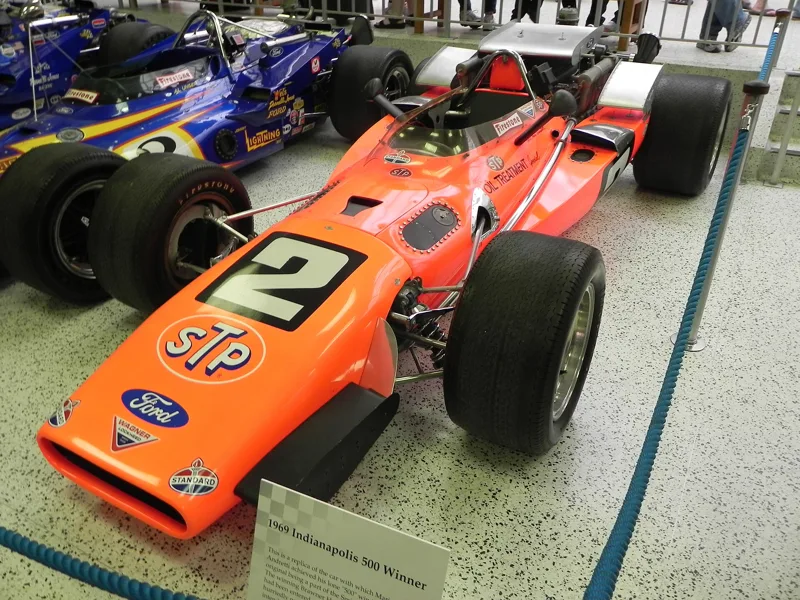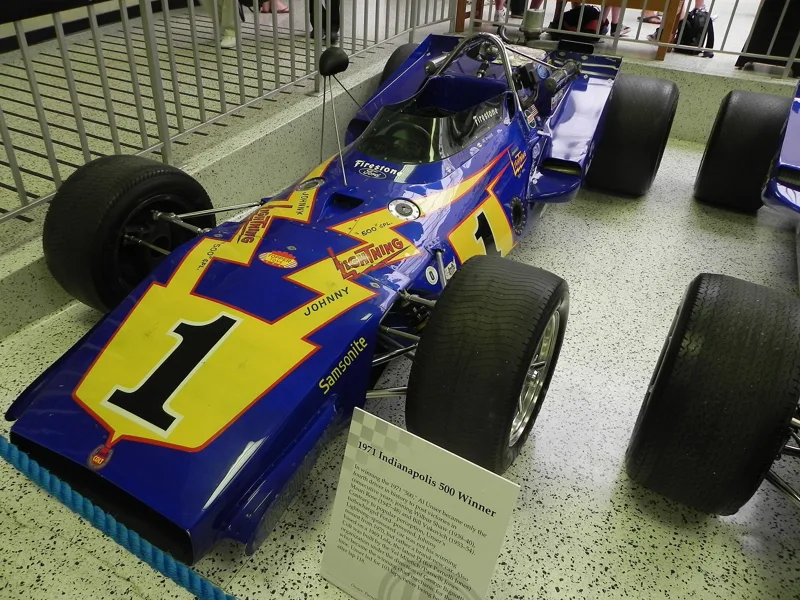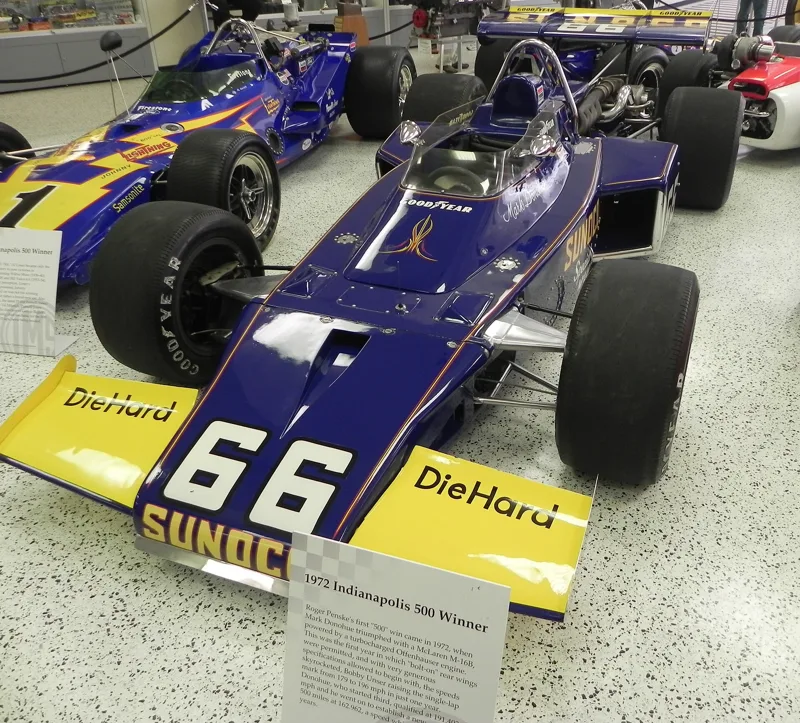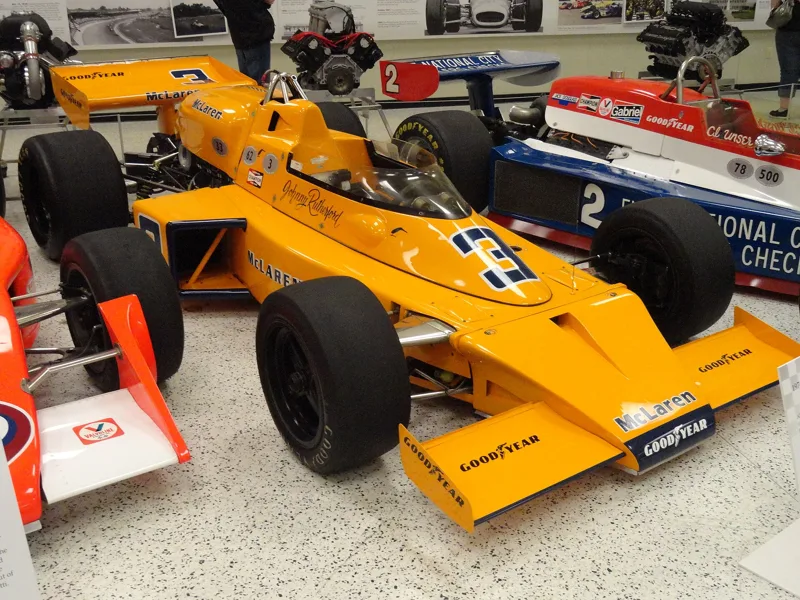
Gordon Johncock won a race stopped by rain after three days of delay, a month in which three people died and the rules were rewritten.
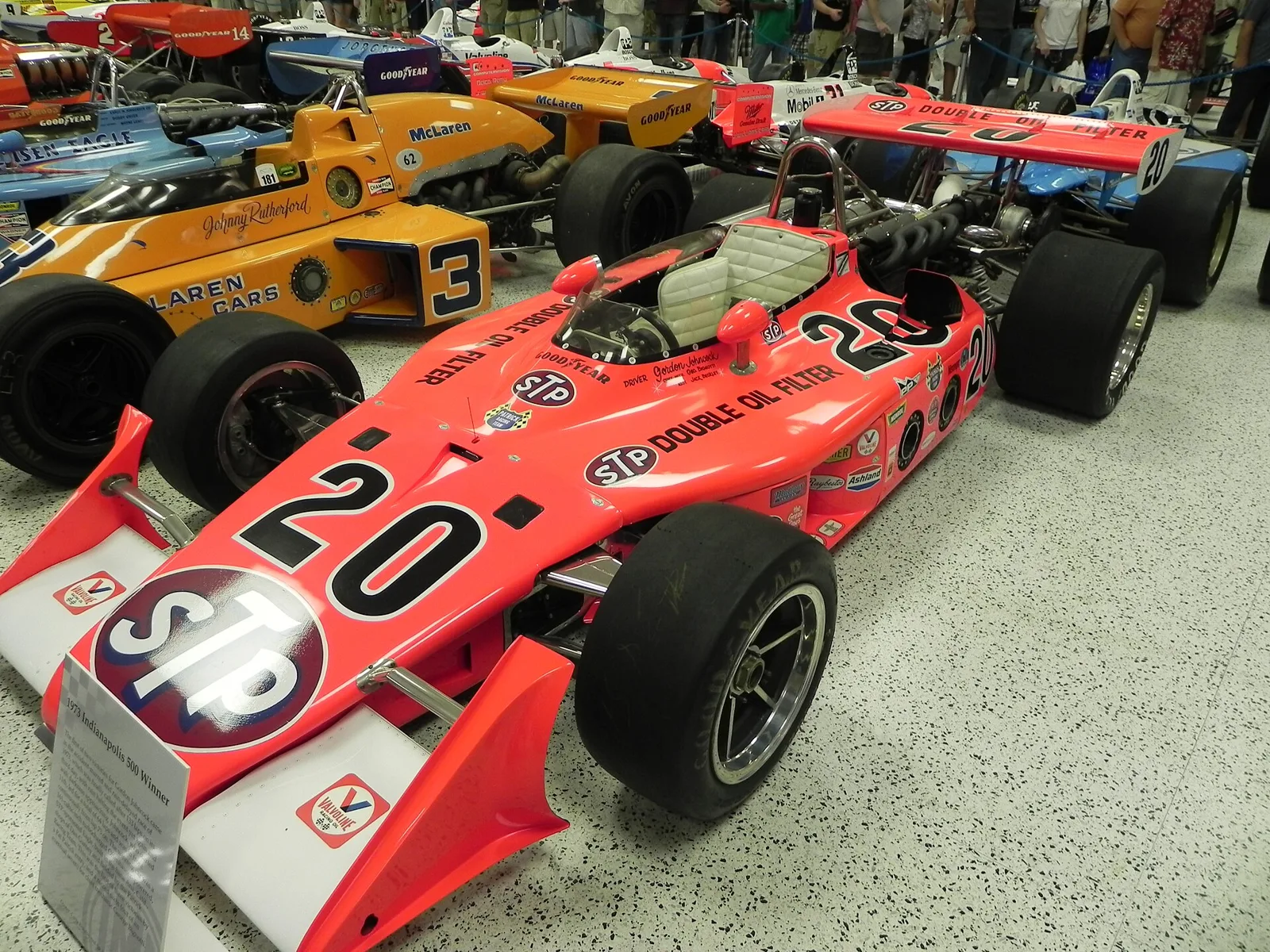
Gordon Johncock won the 1973 Indianapolis 500, a race stopped by rain on Wednesday 30 May 1973 after 133 of 200 laps. The month was marked by three deaths, and the rule changes that followed reshaped how the race was run.
The 1973 Indianapolis 500 was the 57th running of the race, run across three days, delayed by rain and two serious accidents. Gordon Johncock was declared the winner on Wednesday 30 May 1973, after the race was stopped by rain with only 133 of its 200 laps completed. Three people died during the month, and it is widely regarded as the worst May in the race's history.
Who won the 1973 Indianapolis 500?
Gordon Johncock won the race in a Patrick Racing car owned in part by Andy Granatelli. He led the most laps, 64 in total, and the race was called when the track became too wet to continue. The race covered 332.5 miles (535.1 km), the shortest 500 on record at that time apart from the 1916 race.
Johncock's victory was the first of his two Indianapolis wins, and the second came in 1982.
The victory lane celebration was brief and muted. Granatelli gave the winner's interview in a subdued mood, and the traditional victory banquet had already been cancelled earlier that day.
A race stopped by rain after three days of delay, with three deaths in the month, and rules rewritten within weeks.
What happened to Art Pollard?
Art Pollard died on the morning of pole day, Saturday 12 May, in the practice session. At 9:37 a.m. he hit the outside wall in turn one, spun to the inside, flipped over and came to rest in turn two in flames.
Pollard suffered pulmonary damage from smoke inhalation, severe burns to his hands, face and neck, and a fractured arm and leg along with a serious spinal injury. He was pronounced dead 1 hour and 3 minutes after the crash.
Going into the month the mood had been bright, with drivers hopeful that the cars would finally break 200 mph in time trials. Pollard's death cast a shadow over the garage area from the first hour of pole day.
Pole day speeds
Pole day drew an estimated 250,000 spectators, who expected the first 200 mph lap. Peter Revson qualified first at 192.606 mph, and Gary Bettenhausen raised the mark to 195.599 mph, just short of the track record. At 1:37 p.m.
Swede Savage took to the track at 12:29 p.m. and set a one-lap record of 197.152 mph, and his four-lap figure of 196.582 mph briefly put him on pole.
Johnny Rutherford went out and electrified the crowd. His third lap of 199.071 mph was just 0.21 seconds short of 200 mph, and his four-lap average of 198.413 mph took the pole. Mark Donohue, the defending winner, squeezed onto the front row at 197.413 mph.
Bobby Unser was the last driver with a real chance of pole in the final hour, and his average of 198.183 mph was good enough only for second place on the grid. A. J. Foyt, at 188.927 mph, and Sam Posey, at 187.921 mph, were the two slowest cars in the field of 24.
How did the rest of qualifying go?
On Sunday 13 May John Martin was the fastest of a busy day, at 194.384 mph, and six cars joined the field. Posey and Foyt remained the two slowest cars. Rain kept most cars off the track on Saturday 19 May.
Tom Bigelow spun on his warm-up lap, and Sammy Sessions waved off his attempt, so the day ended with nothing of note.
Bump Day on Sunday 20 May was more eventful. Sessions completed his run first, and after a quiet middle of the day the field filled to 33 cars at 5:37 p.m. Jim McElreath bumped Tom Bigelow with 15 minutes left, and Posey was then on the bubble.
Jim Hurtubise was 4 mph too slow to bump Posey. In the last minute before the gun, George Snider climbed into a Foyt backup car and bumped Posey at 190.355 mph.
Posey was later disqualified and lost his first alternate status. USAC's technical director caught his team disguising the #34 entry as another car to make a second attempt and avoid being bumped.
Why was the race delayed?
The race was scheduled for Monday 28 May, and a crowd estimated at 350,000 waited while morning rain delayed the start by four hours and four minutes. Bob Harkey's engine had failed that morning, but his crew kept the problem quiet and gridded the car anyway.
The start came at 3:05 p.m., and an 11-car crash unfolded on the front straight within seconds. Steve Krisiloff's car lost ignition on the front straight, and Salt Walther, who had been running near the sixth row, tangled wheels with Jerry Grant and went over the fence.
Walther's car cut a 70 foot section of the catch fence and spilled 75 gallons of burning methanol in a fireball that was felt more than 100 yards away. Eleven spectators were injured, and nine of them needed hospital treatment.
Walther was taken to hospital with severe burns to his hands and remained there for months. The red flag came out, and rain washed out the rest of Monday, as well as Tuesday, when the start was postponed again.
How did the Wednesday race unfold?
Wednesday's start was at about 2:10 p.m., after the surface dried in the middle of the day. The crowd was much smaller than on Monday, and schools closed in the area around the track because of the traffic. David Hobbs' car smoked on the pace lap and pitted before rejoining.
Bobby Unser took the lead at the start and led the first 39 laps, while Bob Harkey's engine seized on lap 17 and brought out the first caution.
Joe Leonard spun on lap 45 and brought out a short yellow. Al Unser then made a slingshot pass around Swede Savage for the lead on lap 54, before Johnny Rutherford was black-flagged on lap 55 for leaking fluid.
On the same lap Mark Donohue pitted with a bad piston and later retired, which ended what was his final 500 as a driver.
What happened in the Swede Savage crash?
On lap 59 Swede Savage, running second, lost control of his car as he left turn four. The car slid across to the inside and hit the angled inside wall nearly head-on, with a full load of fuel in both tanks.
The impact caused the car to explode. The engine and gearbox tumbled to the pit lane entrance, and Savage, still strapped into his seat, was thrown across the track and came to rest against the outer wall in a pool of burning methanol.
Track crews went to him at once. A fire truck driven by Jerry Flake was sent down the pit lane against the flow of traffic, and it struck pit board man Armando Teran, who was 22 years old, as he crossed the lane.
Teran was thrown about 50 feet and suffered crushed ribs and a broken skull. He died at Methodist Hospital shortly afterwards, while Savage was taken to hospital with third degree burns and flame inhalation.
After the red flag, the race resumed at 4:16 p.m. Al Unser's engine failed on lap 75, and Gordon Johncock inherited the lead. Savage died on 2 July, 33 days after the crash.
Why is the cause of Savage's death disputed?
It was widely reported that Savage died of kidney failure, while others said lung failure from smoke inhalation was the cause. Dr Steve Olvey, the attending physician, later argued in a book that contaminated plasma led to hepatitis B and liver failure.
Savage's father argued that the oxygen levels in the days before his death meant he could not have survived, even without the hepatitis. Savage's daughter gave lung failure as the cause in a 2015 interview.
What rules were changed after 1973?
USAC met on the evening of 2 June, the weekend after the race, and revised the rules at once. Rear wings were cut from 64 inches to 55 inches, and on-board fuel capacity fell from 75 to 40 gallons, with a single tank required on the left side.
The total fuel allowed for a 500-mile race dropped from 375 to 340 gallons. A rule was also introduced to stop a pit sign carrier leaving his post, as Teran had done, and the new rules took effect for the Pocono 500 on 1 July.
USAC also pushed the Rex Mays 150 at Milwaukee back a week, since the Indianapolis race had dragged on so long.
What changed at the track for 1974?
The pit lane was lengthened to the north, and the sloping inside wall in the northwest corner was taken out. The retaining walls were heightened and the catch fences improved, and the flag stand for officials was built above the outside wall over the start and finish line.
Some spectator areas were moved back from the track, and every row of Track Box seating on the front straight was taken out. The Speedway had no further on-track death until Gordon Smiley was killed in qualifying in 1982.
How was the 1973 race covered?
On radio, the IMS Radio Network had Sid Collins as chief announcer and Fred Agabashian as driver expert, with Lou Palmer reporting from victory lane. The network covered all three days live. On ABC, Monday's planned broadcast showed a brief clip of Walther's crash and then a film, because rain stopped the race.
Wednesday's race was broadcast in prime time, with Chris Economaki standing in for Jackie Stewart, who was in Monaco for the Grand Prix that he went on to win.
Chris Schenkel rode in the pace car, and the broadcast re-aired on ESPN Classic from August 2011 with a brief scene of the Teran accident omitted.
Why is 1973 remembered as the worst May?
National media criticised the safety measures in the aftermath, and team owners and crews were highly critical. The race was called jinxed by several figures, and the statistics showed it was the deadliest May at the track since 1937. The race and its safety concerns led to immediate changes at USAC and at the Speedway.
Several documentary films were later made about the month, and the events of 1973 remain one of the most discussed periods in the history of the race.
| Measure | Detail |
|---|---|
| Date | Wednesday 30 May 1973, after three days of delay |
| Winner | Gordon Johncock, first of two Indy 500 wins |
| Pole | Johnny Rutherford, 198.413 mph four-lap average |
| Distance | 133 of 200 laps, 332.5 miles (535.1 km) |
| Johncock laps led | 64 |
| Deaths | Art Pollard, Swede Savage (later), Armando Teran |