From Formula Junior and Indianapolis to two Formula One wins with McLaren, and the Kyalami test crash that ended his career in 1974.
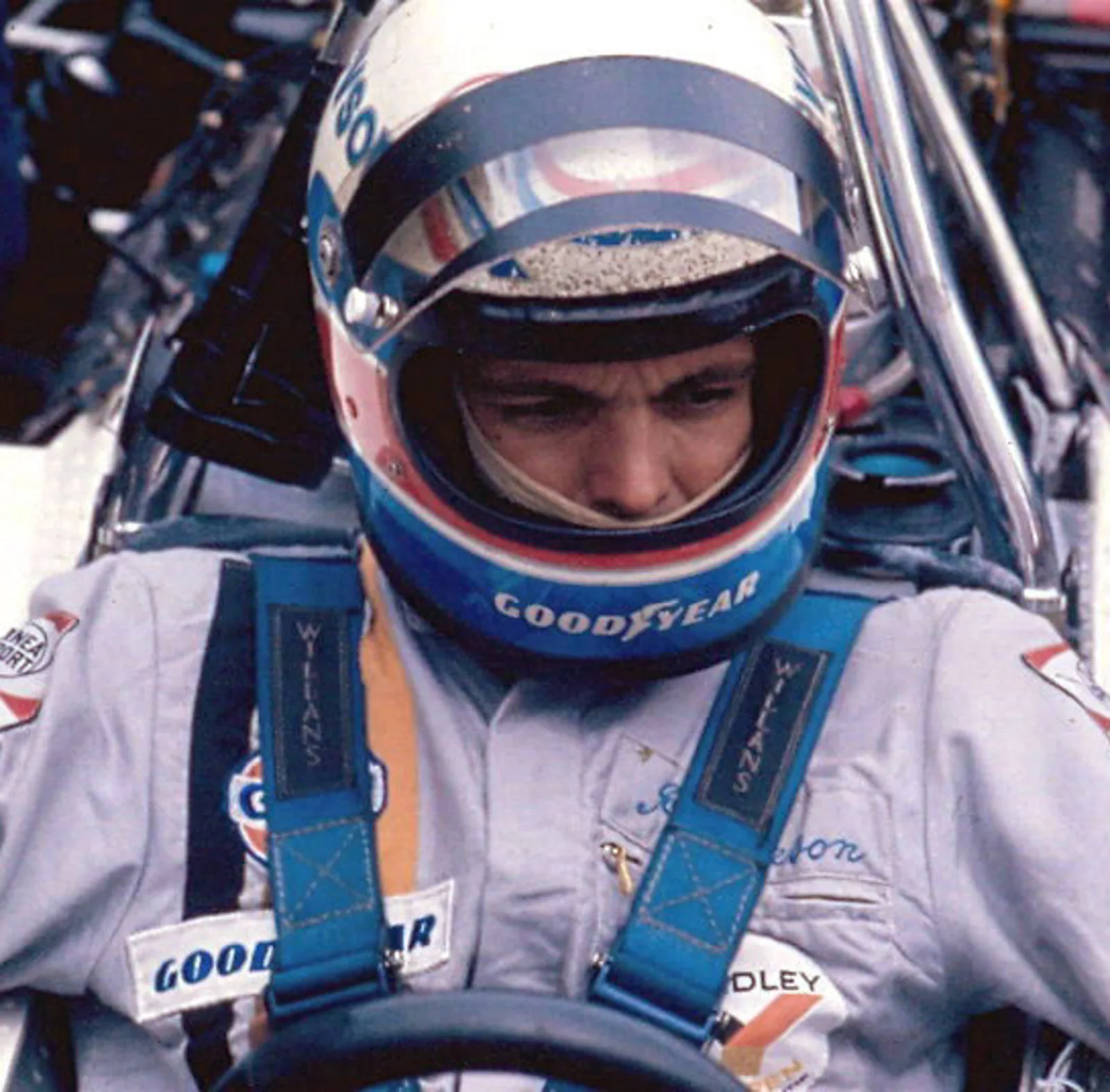
Peter Revson (1939-1974) was an American driver with two Formula One Grand Prix wins, both in 1973 for McLaren. He raced in the Formula One World Championship from 1964 to 1974, and he also competed at Indianapolis and in Can-Am. He was killed during testing at Kyalami in March 1974.
Peter Revson was an American driver whose Formula One career ran from 1964 to 1974, with two Grand Prix wins. Alongside that work he competed at Indianapolis and in Can-Am, and his 1971 season, with an Indianapolis pole and the Can-Am title, was the high point of his career. He was killed in a test session at Kyalami on 22 March 1974.
Where did Peter Revson grow up and start racing?
Revson was born in New York City in 1939 and raised in White Plains after attending prep schools. He was a nephew of Charles Revson, and his father, Martin, had helped found the Revlon cosmetics company before leaving it in 1958.
He attended Columbia, Cornell and the University of Hawaii without finishing a degree. In 1960 he bought a Morgan and entered sports car racing, and his brother Douglas was later lost racing in Denmark in 1967.
In 1962 he competed in Formula Junior under the Rev-Em Racing banner, managed by Teddy Mayer. He teamed with Cornell classmate Timmy Mayer and a friend, Bill Smith, in that programme.
In 1963 he moved to the United Kingdom with roughly US$12,000, the equivalent of $126,200 in 2025 money. He bought a Formula Junior Cooper T56 and raced across mainland Europe against Denny Hulme and Jochen Rindt.
Charles Revson's nephew who won two Grands Prix before dying in a Kyalami test in 1974.
How did Revson start in Formula One?
His first Formula One outing came at a 1963 exhibition race at Oulton Park, where he finished ninth. Reg Parnell, from whom he rented workshop space, then offered him a place in the team's planned 1964 season. The offer followed Parnell noticing his form.
The 1964 team struggled. Parnell died suddenly, financial troubles followed, and the Lotus 24 car performed poorly for the operation.
Over the 1964 season he entered four of the ten F1 World Championship rounds and finished two. His best finish was 13th at the Italian Grand Prix, and in five non-championship races his best was fourth at the Solitude Grand Prix in West Germany.
He also raced that year under his own Revson Racing banner.
What did Revson achieve in American racing before 1971?
In 1965 he took up an invitation to race in the United States. He focused mainly on sports cars, including the Can-Am and Trans-Am series, and built a reputation as a capable driver. He also competed in American open-wheel racing, including the top-level USAC Championship Car series.
In 1969 he qualified 33rd and final for the Indianapolis 500. He finished fifth in a Brabham BT25 despite completing 197 of the 200 laps, an underpowered car finishing well above its start position.
Later that year, in heat one of the Indianapolis 200, he placed third, then won his first Champ Car race in the second heat at Indianapolis Raceway Park. That success earned him an invitation to race for McLaren in 1970.
At the 1970 Indianapolis 500 he qualified 16th for McLaren and retired after 87 laps for mechanical reasons. Later that year he co-drove a Porsche 908/02 with Steve McQueen at the 12 Hours of Sebring, finishing second overall and first in the 3-liter class.
Revson finished eighth in the 1970 Can-Am season in a Lola T220 entered by Carl Haas Racing.
Why was 1971 a breakthrough year?
The 1971 season was the turning point of Revson's career. He took pole for the Indianapolis 500 in a McLaren M16 and finished second, runner-up to Al Unser. He also won the 1971 Can-Am championship with McLaren. Both results came in the same season.
In the Can-Am series he drove a McLaren M8F that won five races and took three other podiums across the ten-round season. That form won him the championship with McLaren.
He also took the Canadian-American Challenge Cup in 1971.
That year brought one Formula One start as well. He started 19th at the United States Grand Prix, which closed the season, and retired after one lap with mechanical issues in his Tyrrell.
The results earned him an offer from McLaren's F1 team for 1972, led by his long-time friend Teddy Mayer.
How did Revson fare at McLaren in 1972 and 1973?
In 1972 Revson finished fifth in the Drivers' World Championship, and McLaren finished third in the Constructors' Championship. He ran nine of the 12 races and finished on the podium four times. His best result was second at the Canadian Grand Prix.
His best result came at the Canadian Grand Prix, where he finished second. McLaren's contract also required him to run an Indy team entry in the Triple Crown of 500-mile races, and at the Indianapolis 500 he started tenth and retired after 23 laps.
The 1973 season brought his two Grand Prix wins, at the British and Canadian rounds, both in the McLaren M23. He won those races as a McLaren driver, but team boss Teddy Mayer was not satisfied with the overall results.
At the 1973 Indianapolis 500 he qualified second and retired after brushing the wall. He took pole for both the Pocono 500 and the California 500 that year, finishing 21st and 23rd respectively.
McLaren signed Emerson Fittipaldi, the 1972 champion and 1973 runner-up, to replace Revson for 1974.
What happened with Shadow in 1974?
For 1974 Revson joined Shadow Racing Cars, a team only a year old, and drove its new DN3. He retired from the first race after an accident on lap two, and from the second after ten laps with overheating in his Ford Cosworth DFV engine.
He did not race again after that second retirement, because he died during testing before the next Grand Prix.
How did Revson die?
Revson died on 22 March 1974 during testing before the South African Grand Prix at Kyalami. The DN3's front suspension failed, and the car struck the Armco barrier hard at Barbecue Bend. The crash happened during the test session itself, not in a race.
The car ended up on its nose against the barrier and burst into flames. Safety workers and other drivers got him out, but he had already died.
Tony Southgate, the DN3's designer, later said the team had used a lot of titanium, and that a ball joint with coarse machining had failed. He said he felt personally responsible and swapped all of the titanium parts for steel before the next race.
Tom Pryce took over the seat and was killed three years later at that same race.
What is Revson's legacy?
Revson won two Formula One Grands Prix, both in 1973, and alongside Dan Gurney, he was one of only two drivers to have won in Formula One, IndyCar, Can-Am and Trans-Am. The Motorsports Hall of Fame of America honoured him in 1996 for his sports car work.
His nickname, Champagne Peter, came from the champagne he sprayed in victory lane. As a young man, newspaper articles often called him Peter Revlon Revson, while his full name was Peter Jeffrey Revlon Revson.
He lies in a crypt with his brother Douglas at Ferncliff Cemetery in Hartsdale, New York. His autobiography, Speed with Style, co-written with Leon Mandel, appeared in 1974.
What were Revson's key results?
| Year | Event | Result |
|---|---|---|
| 1963 | Oulton Park exhibition race | Ninth |
| 1964 | Italian Grand Prix | 13th, his best Formula One finish that year |
| 1969 | Indianapolis 500 | Fifth from 33rd on the grid |
| 1970 | Indianapolis 500 | Retired after 87 laps from 16th |
| 1971 | Indianapolis 500 | Second, from pole |
| 1971 | Can-Am series | Champion with five wins |
| 1972 | Formula One season | Fifth in the Drivers' Championship |
| 1973 | Formula One season | Two wins, British and Canadian Grands Prix |
| 1974 | Shadow DN3 testing | Killed on 22 March 1974 |