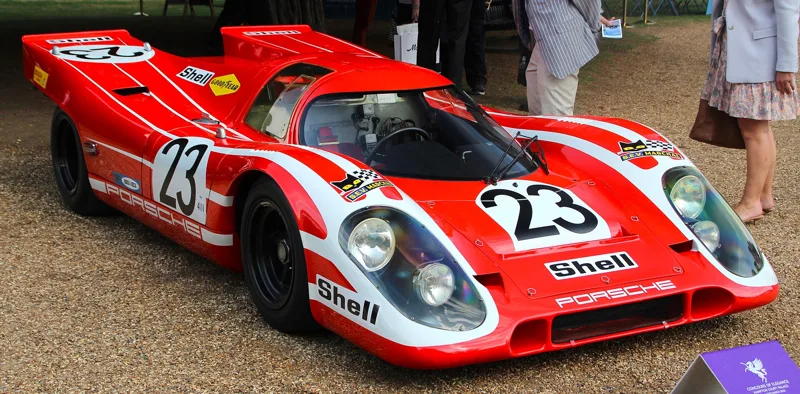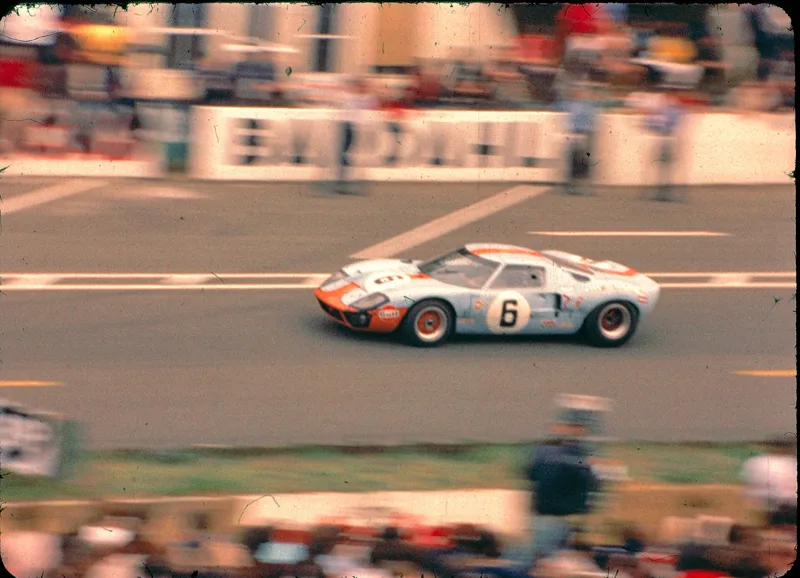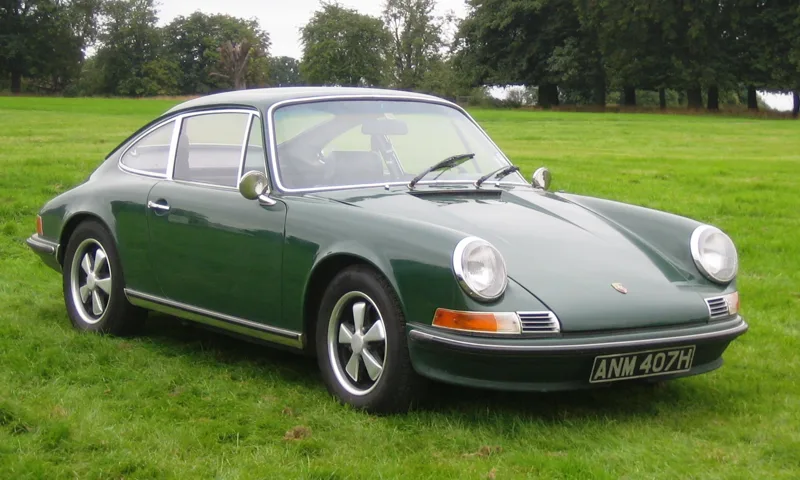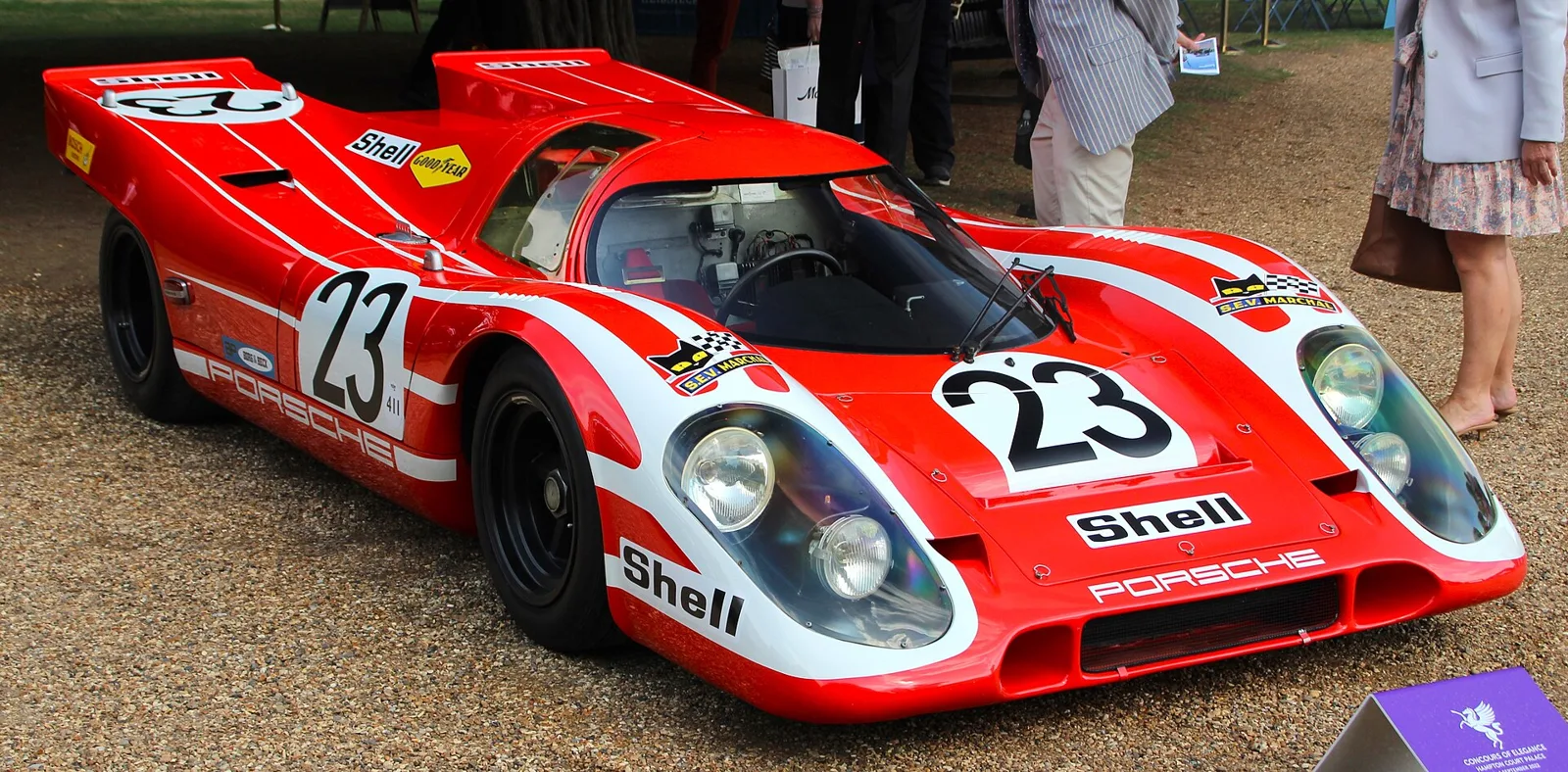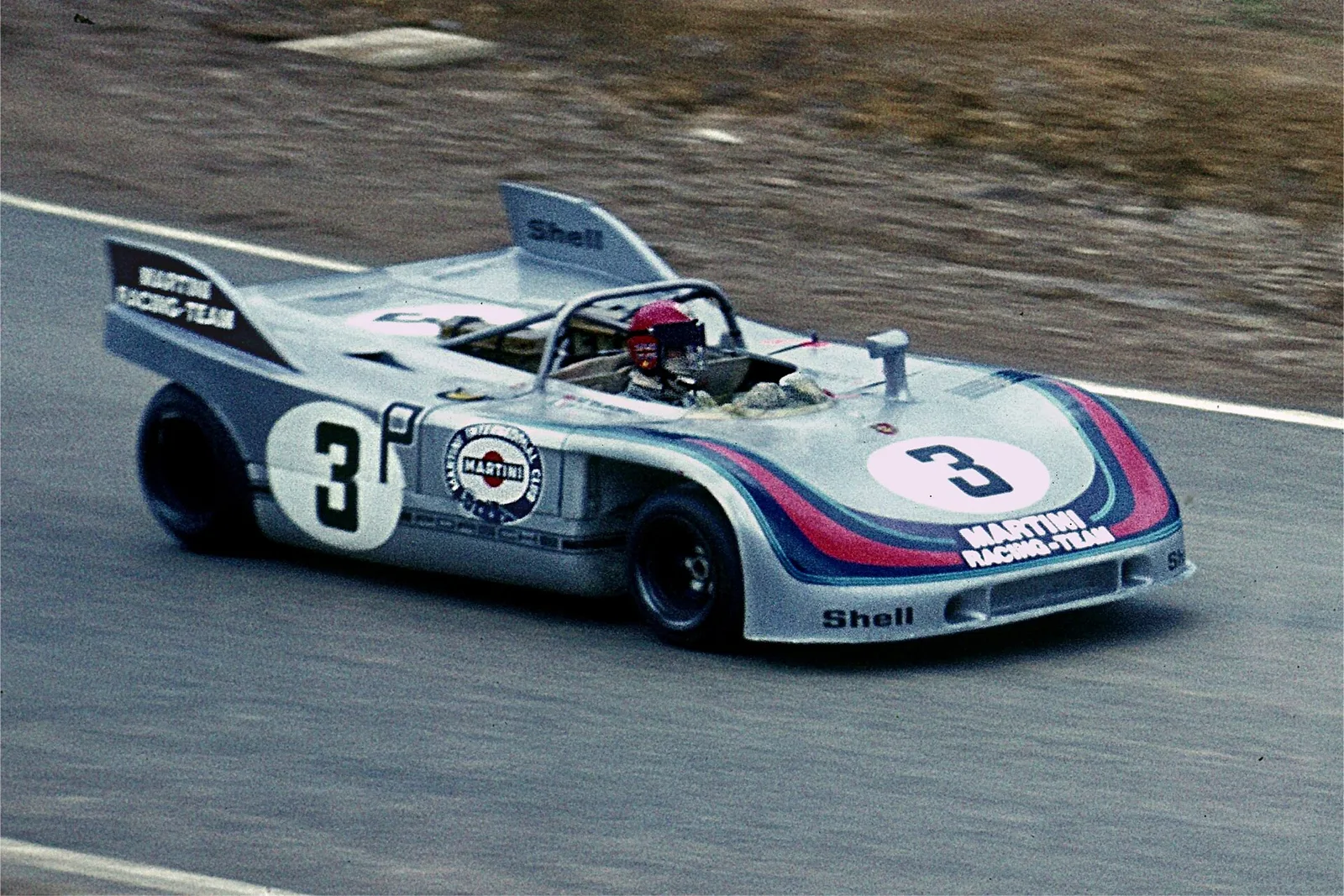
A 3-litre sports prototype that began as a closed coupe in 1968, went open-top as the 908/02 and 908/03, and returned as a turbo racer in the early 1980s.
The Porsche 908 was a 3-litre flat-eight sports prototype introduced in 1968. It was raced as a closed coupe, then as open spyders that helped Porsche win the 1969 to 1971 championships, and later as a turbo car.
The Porsche 908 was a sports prototype that Porsche introduced for the 1968 World Sportscar Championship, with a 3-litre flat-eight engine and a closed coupe body. Spyder versions followed in 1969 and 1970, and they helped Porsche win the championships of those years alongside the 917. The model was raced into the early 1980s, which gave it a career of more than a decade.
What was the Porsche 908?
The Porsche 908 was a racing prototype with a 3-litre flat-eight engine built to the 1968 Group 6 rules. Porsche used it in factory teams for 1968 and then in open-top form for 1969, 1970 and 1971, when it played a key part in winning the World Championship. Customers later raced it as well, and some were fitted with turbocharged engines.
The car followed the 904, 906 and 907, a line of lightweight racers that Porsche built with fibreglass bodywork rather than aluminium. The 908 kept that approach for its coupe bodywork, but its engine and chassis were new, and the car was designed to beat the best prototypes of its day.
A flat-eight prototype that changed from coupe to spyder to suit each circuit and helped Porsche take the 1969 to 1971 titles.
Why did Porsche design the 908?
Porsche designed the 908 because the FIA cut prototype engine sizes after large-engined cars reached very high speeds at Le Mans in 1967. From 1968 Group 6 prototypes were limited to 3,000 cc, the same limit Formula One had used since 1966, and Porsche needed a new car to match the rule.
The chassis was designed by Helmuth Bott and the engine by Hans Mezger, under the leadership of racing chief Ferdinand Piech. It was the first Porsche sports car prototype to have an engine at the maximum size the rules allowed.
The 907 it replaced had a 2,200 cc flat-eight derived from a 1962 1500cc Formula One car, which produced 270 PS (199 kW). The new 3-litre engine gave the 908 a clear step up in output, and Porsche had reason to expect a strong season.
How did the 908 engine work?
The 908 used a 3-litre flat-eight that produced 350 PS (257 kW) at 8,400 rpm, with the power later rising to 370 PS. Porsche still kept its air-cooled design and two valves per cylinder, which ties the engine to the company's earlier competition cars and to its links with Volkswagen.
Those choices put the 908 behind the best modern Formula One engines. Water-cooled, four-valve Formula One units of the time delivered more than 400 hp (300 kW), but those engines were not suited to endurance races of six to 24 hours until the 1970s. The 908 was built for those long races instead.
How did the 908 perform in 1968?
The 908 was not ready for the first rounds of the 1968 season, so Porsche relied on the 907 at the North American events. Porsche won the North American rounds with the 2.2-litre 907, including a 1-2-3 finish at the 24 Hours of Daytona and a 1-2 at the 12 Hours of Sebring.
The 908 made its race debut at the 1968 1000 km Monza, where the two cars had teething problems and finished 11th and 19th. Porsche entered no 908 at the Targa Florio, where a 907 took the win, and the 908 scored its maiden win at the 1968 1000 km Nurburgring. A week later at Spa, Jacky Ickx dominated the race in the rain.
The 908 also raced at the six-hour event at Watkins Glen, but Ford's Wyer-entered cars took two of the podium places. Porsche and Ford each earned four victories in the championship, but the title battle came down to Le Mans.
Did the 908 win Le Mans in 1968?
No. The 908 LH was the fastest car in qualifying and in the early stages of the 1968 Le Mans race, but Porsche had not used its extra development time to improve reliability. Alternator trouble caused delays and even disqualifications, because the team had misread the rules and thought the faulty part had to be repaired rather than replaced.
A V8-powered Wyer-Ford won the race, while a private 907 finished second. Ford also took the 1968 International Championship for Makes. A private 907 finished second, and the lone surviving standard factory 908 came third.
Why was the 908 built as a coupe?
The first 908 was a closed coupe, sometimes called the 908 Langheck or 908LH, because its long tail and closed body gave low drag on the fastest tracks. Its design suited the high-speed circuits that the 3-litre prototypes had to face.
The coupe was also a response to rival entries. Many old Ford GT40s, built to GT rules with larger engines, were still allowed to score points, which created a loophole that Ford exploited. When the FIA lowered the minimum production number to 25 for 1969, Porsche decided to build 25 examples of a new 4.5-litre flat-12 car, the 917, using the 908's flat-eight as its base.
What changed with the 908/02 in 1969?
For 1969 the Group 6 rules favoured open-top cars over coupes, so Porsche removed the roof and the long tail from the 908. The result was the 908/02 spyder, which was lighter by about 100 kg (220 lb). Its aluminium tube frames were checked with air pressure gauges.
The season began badly. All three 908/02 cars failed at Daytona, while the Penske-entered Lola T70 won. At Sebring a Ford GT40 beat a trio of factory 908/02s. The turning point came at Brands Hatch, where the 908/02 took a 1-2-3 finish ahead of a Ferrari 312P.
More wins followed at Monza, the Targa Florio, Spa and Nurburgring, where the cars finished 1-2-3-4-5. The 1969 International Championship for Makes was secured early by the 908/02, while the 917 suffered teething problems mainly with its aerodynamics.
At Le Mans in 1969 a Wyer-Ford won again. Hans Herrmann finished second in a 908 coupe behind Jacky Ickx, but near the end of the race the brake pads wore down, and the team's decision not to change them allowed Ickx to pass him under braking.
How did the 908/03 differ from the 908/02?
In 1970 Porsche built the 908/03 for twisty and slow circuits such as the Nurburgring and the Targa Florio, where the heavy 917K was less suited. It was based on the short, light 909 hillclimb car and was even shorter than the 908/02. It weighed only 500 kg (1,100 lb), compared with about 840 kg (1,850 lb) for the 917K.
The 908/03 was so short that the driver's legs stretched ahead of the front wheels. In May 1970 the same chassis, number 008, won the Nurburgring 1000 km and the Targa Florio. At the Targa, Jo Siffert and Brian Redman drove the Gulf-blue car to victory, with other 908/03s finishing second, fourth and fifth.
Four weeks later at the Ring, chassis 008 was entered by Porsche Salzburg in white. Vic Elford and Kurt Ahrens led a 1-2 finish after two JWA cars crashed out, and four 908/02s came fourth to seventh.
How did the 908/03 fare in 1971?
For 1971 the 908/03 gained vertical fins at the rear, similar to those on the 917K, and larger roll bars. The Targa Florio was a poor result for the team, because Porsche sent only three cars and all of them crashed. Brian Redman was badly injured in a fiery accident on the first lap.
The Targa was won by Nino Vaccarella for Alfa Romeo, which took a 1-2 with its Tipo 33s. Gijs van Lennep had driven the second-place Alfa, then returned to Porsche to win that year's Le Mans in a Martini 917K.
The 1000 km Nurburgring that season brought a better outcome. Two crashed 908/03 cars had to be repaired, and a fourth chassis was needed to give the two works teams two good cars each. The works 908/03s took a 1-2-3 finish in front of two less competitive Alfa Romeos and a private 917K.
Why did Porsche stop racing the 908 in the factory?
Porsche dominated the International Championship for Makes from 1969 to 1971 with the combination of the 917K and the lightweight 908. For 1972, however, large-engined sports cars such as the 917K were banned, and the new rules set a much higher minimum weight for prototypes.
The higher weight limit removed the 908/03's main advantage. Porsche could not reach the new minimum with its underpowered three-litre engine, and rivals with more powerful V12 engines took the advantage. Porsche decided to end its factory sports car racing programme and sold the 908/03 cars to customers.
How did the 908 race after the factory left?
Customers went on racing the 908 for more than a decade. A three-year-old 908LH coupe entered by Reinhold Joest finished third at Le Mans in 1972, and other customers continued to race 908/03s fitted with the extra weight the rules required.
In 1975 some 908s were fitted with turbocharged engines based on the Porsche 934 unit but downsized to 2.1 litres. Even with a turbo factor of 1.4, those engines outpowered normally aspirated three-litre rivals. In 1976 the factory built the Porsche 936 for the new Group 6 class, but it entered only a few races and did not sell it, so several customer 908s were upgraded with 936-style bodywork.
The Porsche 908/80 turbo of Joest and Ickx finished second at Le Mans in 1980, and it later proved to have a real 936 chassis underneath.
What is the 908's legacy?
The 908 won the Nurburgring 1000 km in three different decades. It won four years in a row from 1968 to 1971, and it won again in 1980 with turbocharging. Some 908s are still raced today in the Classic Endurance Racing series.
The car's name also survived into the early 1980s, when it was raced with Porsche 936 bodywork. That continuity across three decades is unusual for a racing prototype and helps explain its place in the company's history.
Porsche 908 specifications
| Specification | Detail |
|---|---|
| Introduced | 1968 World Sportscar Championship |
| Category | Group 6 sports prototype, 3,000 cc limit |
| Engine (1968) | 2,990 cc flat-eight, 350 PS (257 kW) |
| Engine (1970 to 1971) | 2,990 cc flat-eight, 370 PS (272 kW) |
| Cooling and valves | Air-cooled, two valves per cylinder |
| Coupe top speed | 320 km/h (200 mph), 908 LH coupe |
| Spyder top speed | 290 km/h (180 mph), 908/02 and 908/03 |
| 908/03 weight | 500 kg (1,100 lb) |
| Turbo version | 2,140 cc flat-six turbo, over 500 hp, 1975 to 1981 |
| Minimum weight from 1972 | 650 kg (1,430 lb) for 3-litre prototypes |
| Nurburgring 1000 km wins | 1968, 1969, 1970, 1971 and 1980 |
| Le Mans best finish after factory exit | Third in 1972, entered by Reinhold Joest |