The air-cooled, rear-engined sports car that Porsche first showed in 1963 and built until 1989, through a run of series that turned it into a racing legend.
The Porsche 911 was a rear-engined, air-cooled sports car that Porsche built from September 1964 until 1989. It began with a 2.0-litre flat six of 130 PS and grew into the 3.2-litre Carrera, with racing and Turbo versions along the way.
The Porsche 911 is a sports car that Porsche AG of Stuttgart built from 1964 to 1989 in its original form. It was rear-engined and air-cooled, and it went on to become one of the most successful competition cars ever built. The 1963 prototype became the basis of a long run of series, each with its own engines, bodies and racing variants.
What was the original Porsche 911?
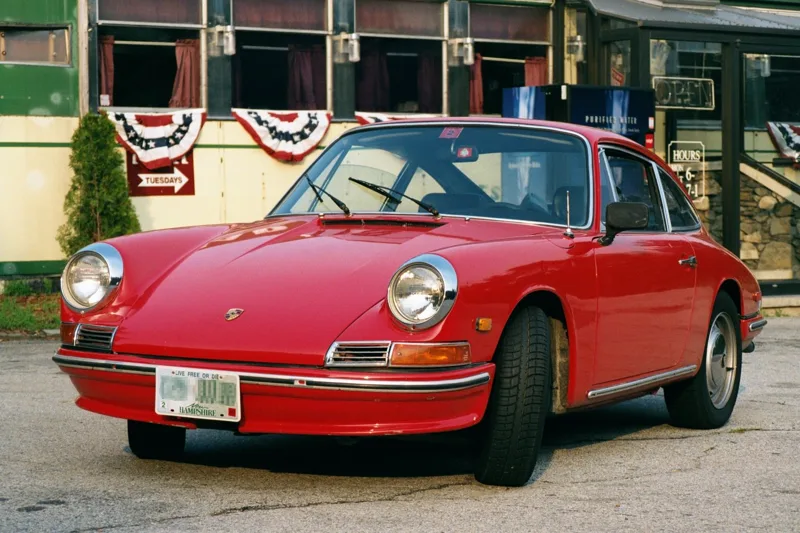
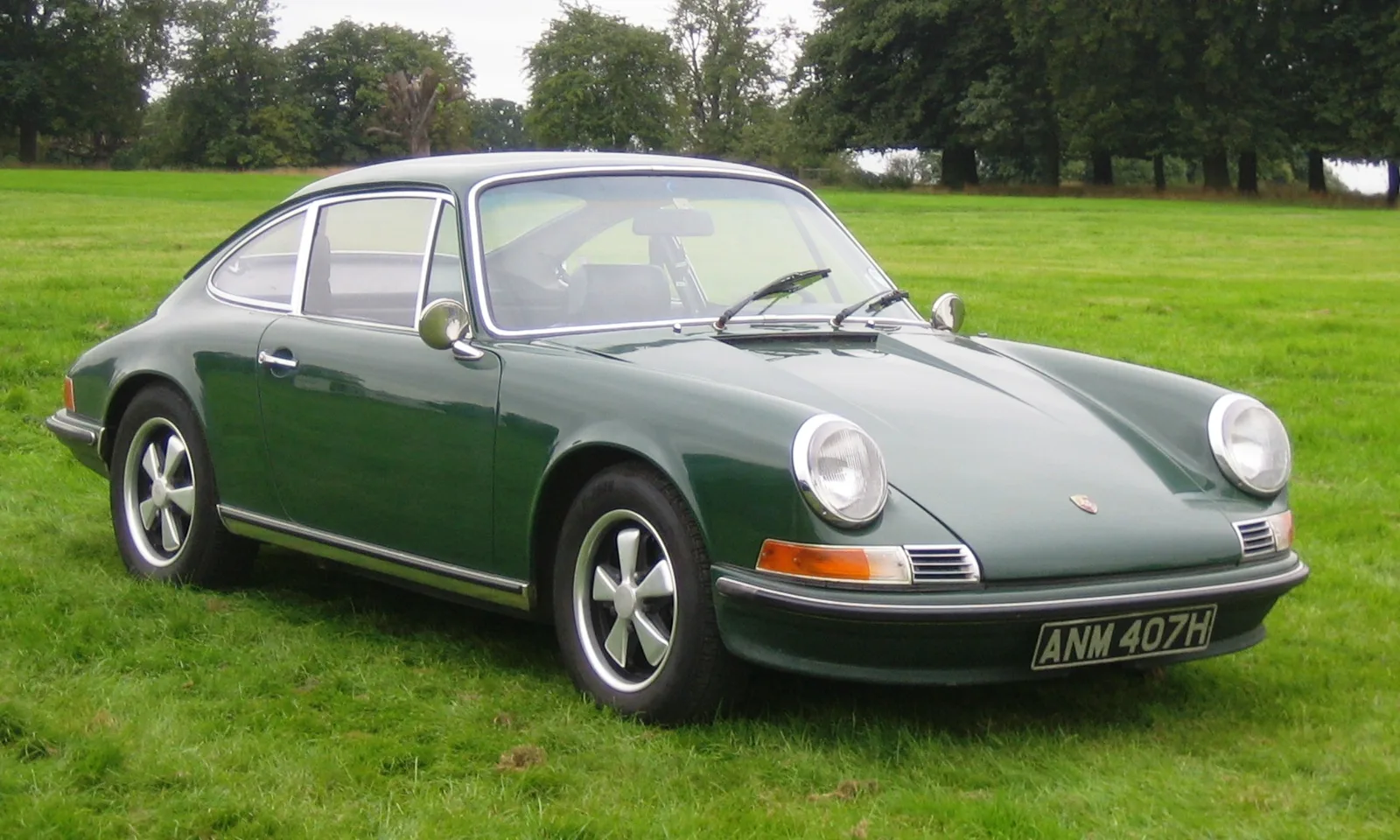
The original 911 was a 2+2 coupe with a rear-mounted air-cooled flat six. Its 2.0-litre engine was a 1,991 cc unit producing 130 PS (96 kW), and it was matched to a five-speed manual gearbox. The car was styled by Ferdinand Butzi Porsche, son of Ferdinand Ferry Porsche, and its chassis and body engineering were led by Erwin Komenda.
The prototype was shown to the public in autumn 1963, and production began in September 1964. Porsche built the car until 1989, when it was succeeded by a modified version called the 964. The model continued to be sold as the 911, and later Porsches carry the same name.
A rear-engined, air-cooled sports car whose racing record grew from one 1963 prototype into a line that outlasted its rivals.
How was the 911 developed?
The 911 grew out of earlier body projects. In 1959 and 1960 Butzi Porsche led a T7 styling project that applied a modified style and a wheelbase 100 mm longer to the 356B Karmann hardtop. A second project, the T6 led by Erwin Komenda, added a larger front trunk and a bigger rear window, and it debuted in 1962 as a 356B facelift without the longer wheelbase.
Engine development was the harder part. Klaus von Rucker and Leopold Jantschke led a team, which included a young Hans Mezger and Ferdinand Piech, to build a two-litre six. Ferry Porsche did not think its dual-camshaft layout gave enough advantage, and the prototype engine was abandoned. The wet-sump Typ 821 that followed was then replaced by a dry-sump design, which Piech had argued would lower the centre of gravity and suit racing.
The result was the Typ 901 dry-sump engine, with a single intermediary shaft driving a camshaft on each bank. The 901 chassis and body were narrower and longer than those of the 356B and C, with a longer wheelbase. Peugeot then objected that it held exclusive rights to three-number names with a zero in the middle, so Porsche renamed the car 911 for all markets. Engine and parts numbers kept the 901 prefix.
What were the first 911s like?
The first cars are often grouped as the O series, built until July 1967, followed by the A series for the 1968 model year and the B series for 1969. They used the Typ 901 engine, a five-speed manual and a monocoque body that suited the rear-engined layout.
Power rose quickly. In mid-1966 the engine moved to two Weber carburettors, and for the 1967 model year Porsche introduced the 911S at 160 PS (118 kW) at 6,600 rpm, with a 9.8:1 compression ratio. Forged five-leaf alloy wheels from Fuchs came with the S, and the 911L offered ventilated brake discs from the S. The 911T arrived in October 1967 with 110 PS (81 kW) and was the only 911 engine without counterweights on its crankshaft.
The B series of 1969 moved the rear wheels 57 mm aft, lengthening the wheelbase from 2,211 mm to 2,268 mm without making the body longer. The move was aimed at the car's oversteer at the limit. The same year brought mechanical fuel injection to the 911S, which made 170 PS (125 kW), and to the new 911E at 140 PS (103 kW).
What was the Targa?
The Targa version arrived for the 1967 model year with a stainless steel-clad roll bar. Porsche had worried that the United States safety regulator might outlaw fully open convertibles, which mattered because the US was the biggest market for its earlier 356. The Targa had a removable roof panel and a removable plastic rear window, and a fixed glass version was offered from 1968.
The name came from the Targa Florio road race in Sicily, where Porsche had scored seven victories since 1956 and four more through 1973. The last of those wins came with a production 911 Carrera RS, beating prototypes from the Italian factories of Ferrari and Alfa Romeo.
Why did Porsche build the 912?
When production of the 356 ended in 1965, Porsche still had a market for a four-cylinder car, particularly in the United States. The 912 was a slightly smaller 901 with a detuned version of the 356SC pushrod four, producing 90 PS (66 kW), and it was introduced soon after the 911 for the 1965 model year.
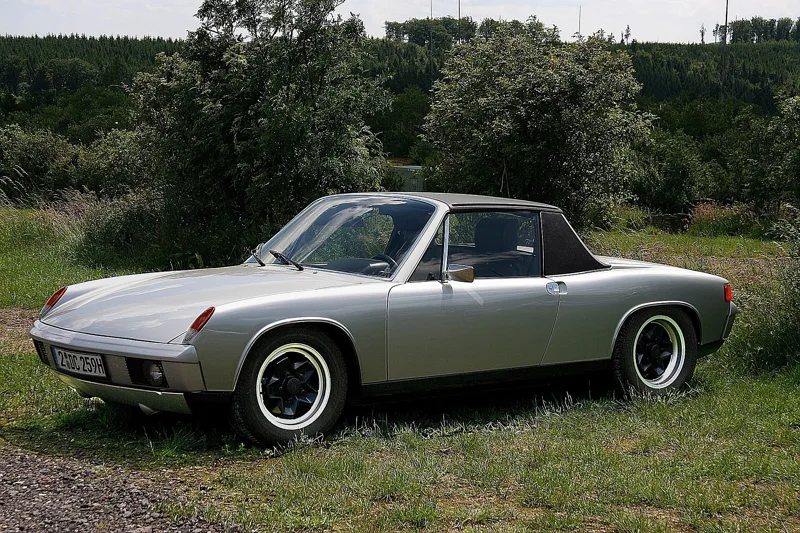
The 912 was popular enough that production in 1965 averaged about 30 912s and 20 911s a day. It was replaced by the 911T in 1968, and the 914 later took over the role of entry-level Porsche.
What racing versions were built?
The 911R was a lightweight racing version with thin aluminium doors, plastic door handles, a spartan interior and a magnesium-alloy crankcase. It produced 210 PS (154 kW), and only about 20 were made in 1967. Because the production volume was too small for the FIA GT production class, it had to compete against purpose-built prototypes.
Porsche also offered a Rally Kit for the 911S and later the 911T, to compete in the Group 3 production class. The 911S/T was a limited-run racing car with flared fenders, a feature that became a staple of later 911s. Those cars used a 2,195 cc engine, a 2,380 cc unit or a 2,494 cc engine, and they weighed 960 kg. They had success at Daytona, Sebring, the Nurburgring 1000 km and the Targa Florio.
Two factory prototypes, the B17 by Pininfarina and the C20 by Erwin Komenda, explored longer bodies. The B17 lengthened the wheelbase by 190 mm, and the C20 added 345 mm over the stock car.
How did the 2.2 and 2.4-litre cars change?
For the 1970 model year all 911 engines grew to 2,195 cc. The T produced 125 PS (92 kW), the E 155 PS (114 kW) and the S 180 PS (132 kW). The new engines used a lighter magnesium-alloy crankcase, larger valves and stronger connecting rods, and CDI ignition and ventilated brake discs became standard on all models.
The D series for 1971 added hot-dip zinc rust-proofing and side impact beams in the doors, and power windows became optional for the first time. For 1972 and 1973 a larger 2,341 cc engine, which Porsche marketed as the 2.4-litre, gave the T 130 PS, the E 165 PS and the S 190 PS. Many enthusiasts regard these cars as the best classic mainstream 911s, with a dry weight of 1,050 kg (2,310 lb) in the E and S.
The 2.4-litre cars received the 915 gearbox, derived from the transmission in the Porsche 908 race car. It dropped the old dog-leg first gear for a traditional H pattern. For the 1973 model year the US T was fitted with the K-Jetronic continuous injection system, and enthusiasts often call those cars 1973.5 models.
Why was the Carrera RS so important?
The Carrera RS, introduced in 1972 and 1973, is often considered the greatest classic 911 by collectors. RS stands for Rennsport, meaning racing sport. The Carrera name came back from the 356 Carrera, and the car was built so Porsche could enter the FIA Group 4 GT class, which required at least 500 units.
The Carrera 2.7 RS had a 2,687 cc flat six with a 90 mm bore, producing 210 PS (154 kW) at 6,300 rpm and 255 N-m (188 lb-ft) of torque at 5,100 rpm. Its bore grew thanks to Nikasil cylinder surfaces from Mahle, which allowed thinner cylinder walls. It had a revised suspension, a ducktail spoiler, larger brakes, wider rear wheels and rear wings, and the lightweight Sport version weighed about 100 kg (220 lb) less than the touring car.
In total 1,580 Carrera RS cars were built, far above the 500 needed for homologation. The racing RSR 2.8, with 2,808 cc and 312 PS (229 kW), was built on the same reasoning. Only 55 of the 1,580 road cars received the M491 conversion that turned them into competition models.
What did the Carrera RS 3.0 and the RSR Turbo add?
In 1974 Porsche built the Carrera RS 3.0, a road car with a 2,993 cc engine producing 230 PS (169 kW). It cost almost twice as much as the 2.7 RS, and its thin body panels and spartan interior brought the shipping weight down to around 900 kg (2,000 lb). The brake system came from the Porsche 917.
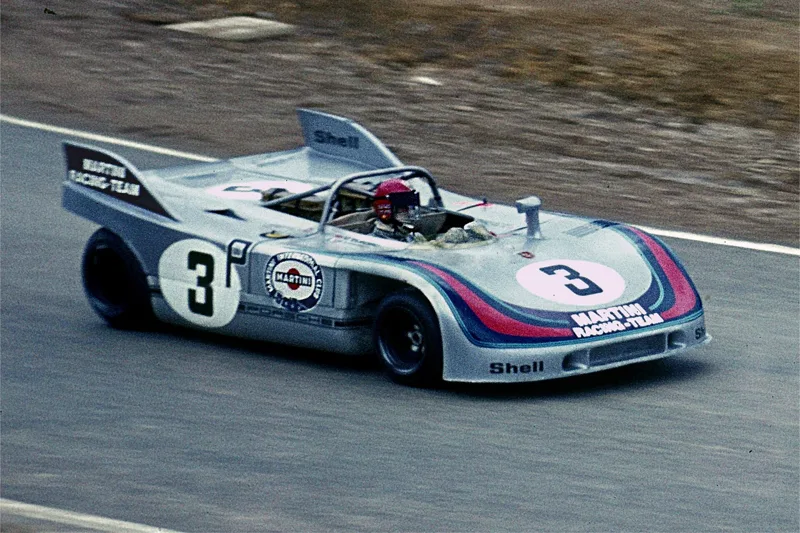
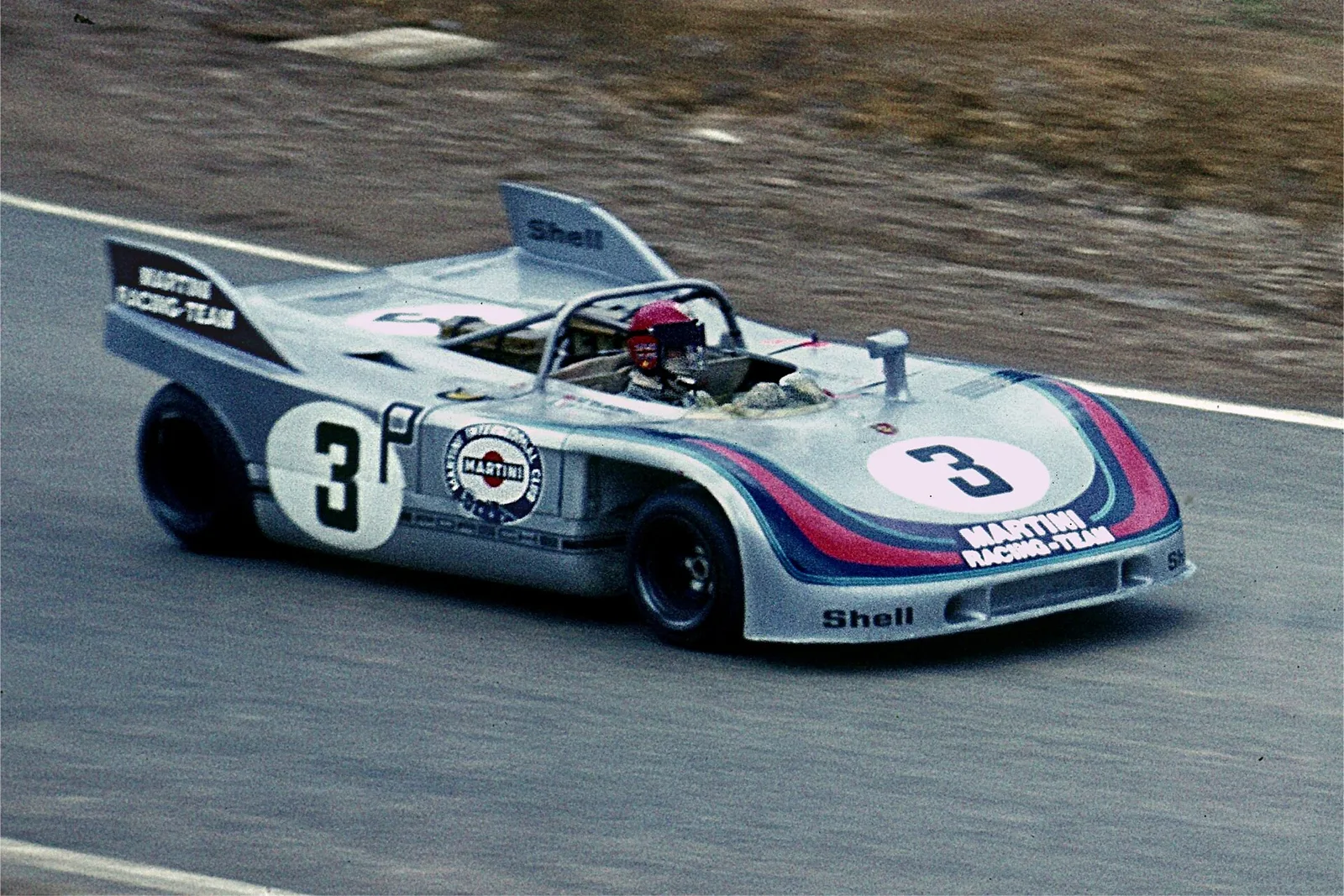
The Carrera RSR 3.0 produced 315 PS (232 kW) for racing. The RSR Turbo, a 2.1-litre car rated at 500 PS (368 kW) under the turbo equivalency formula, came second overall at Le Mans in 1974. Its engine was the basis for many later Porsche racing attempts and marked the start of Porsche's turbocharging programme for the 911.
How did the G series and the 911 Carrera 3.0 develop?
Model year 1974 brought impact bumpers to meet US low-speed protection rules. These bumpers were integrated so well that they remained largely unchanged for 15 years. The engine grew to 2,687 cc, and the 911 and 911S used K-Jetronic injection with detuned RS engines producing 150 and 175 PS (110 and 129 kW).
The Carrera 2.7 used the 210 PS RS engine in 1974 and 1975, and the Carrera 3.0 of 1976 and 1977 used a 3.0-litre with K-Jetronic and an aluminium crankcase from the 930 Turbo. It produced 200 PS (147 kW) and weighed 1,120 kg (2,469 lb). A total of 3,687 Carrera 3.0 cars were built, with 2,564 coupes and 1,123 Targas.
Porsche also built the 912E for the US in 1976, a four-cylinder car with the Volkswagen engine from the 914. It used the I-series chassis and was replaced by the 924 for the 1977 model year. Fewer than 3,000 912E units were built.
How did the 930 Turbo arrive?
In 1974 Porsche introduced the first production turbocharged 911. In Europe it was called the 911 Turbo, but in North America it was marketed as the 930. Its wide wheel arches and large rear spoiler, nicknamed the whale tail, set it apart. It started with a 3.0-litre engine of 260 PS (191 kW) and rose to 3.3 litres and 300 PS (221 kW) for 1978.
The 930 became a basis for racing. Its racing version, the 934, qualified for Group 4 in 1976, and the wilder 935 evolved from the 2.1-litre RSR Turbo and was campaigned by the factory that year. After the works team withdrew, the 935 still won Le Mans outright in 1979 in the hands of the private Kremer Racing team. The 930 was withheld from the US and Japan between 1981 and 1985, and it returned to the United States in 1986.
How did the SC keep the 911 alive?
From the 1978 model year the 3.0-litre 911 SC replaced the basic model. It was a Carrera 3 with a detuned 180 PS (132 kW) engine for US cars, and in non-US markets power later rose to 188 PS (138 kW) and finally 204 PS (150 kW). US cars kept the lower-compression engine, which allowed them to run on lower-octane fuel.
The SC name came back after the 356 SC. The SC sold 58,914 cars. Porsche also offered a Weissach special in 1980 with a turbo-style whale tail and Fuchs wheels, and 408 went to North America. In 1982 a Ferry Porsche Edition followed, with 200 cars sold.
The 911 was almost cut from the range. In 1979 Porsche planned to replace it with the 928, but 911 sales stayed strong, and the company decided to keep the car and renew it. The cabriolet arrived in late 1982 as a 1983 model, the first Porsche convertible since the 356, and sold 4,214 cars in its introductory year.
What did the 3.2 Carrera add?
The 3.2 Carrera replaced the SC for the 1984 model year, reviving the Carrera name for the first time since 1977. Porsche said the new engine was 80 percent new. Its 3,164 cc came from a 95 mm bore and the 74.4 mm stroke of the 1978 Turbo 3.3 crankshaft, and compression rose from 9.8 to 10.3:1, or 9.5:1 for the US.
Power was 207 PS (152 kW) for North American cars and 231 PS (170 kW) for most other markets. Car and Driver measured 0-60 mph in 5.3 seconds for the US car, while the factory quoted 6.3 seconds. Autocar measured a top speed of 150 mph (240 km/h). In 1986 the fuel map was changed, lifting the power to 217 PS (160 kW) for North American cars.
The 3.2 Carrera came as a coupe, Targa and cabriolet. Its US prices in 1984 were $31,950 for the coupe, $33,450 for the Targa and $36,450 for the cabriolet. Special editions included the 1988 Commemorative Edition for 250,000 911s and the 1989 Anniversary edition for the model's 25th year. The M491 Supersport, known as the Turbo-look, gave the car a 930-style body with wide arches and the tea-tray tail.
Porsche built 2,104 Speedsters in 1989, a low-roof cabriolet inspired by the 356 Speedster. The Club Sport of 1987 was a track-inspired road car, with 340 units built and about 50 kg (110 lb) removed by dropping the radio, sunroof, air conditioning and rear seats. Total 3.2 Carrera production was 76,473 cars.
How did the 911 compare with the 928?
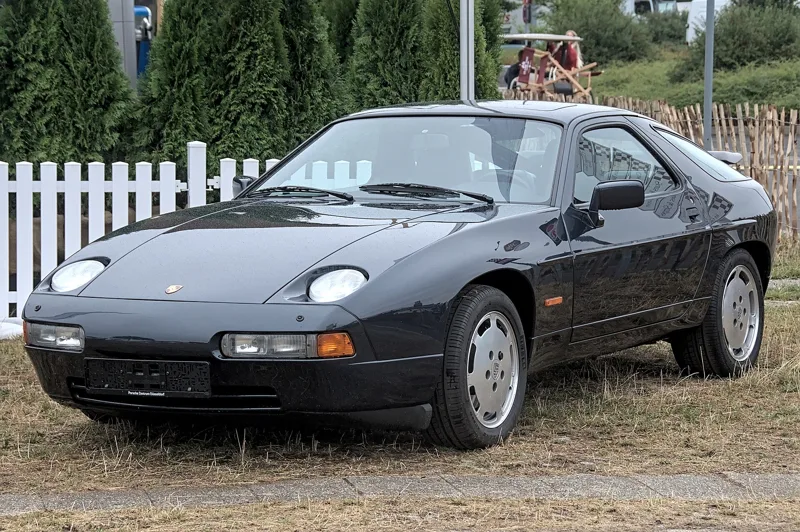
Porsche executives approved work on the 928 in 1971, because 911 sales had begun to decline by the early 1970s. The 928 had a front-mounted water-cooled V8 and was intended as a grand tourer rather than a dedicated sports car. It sold reasonably well from 1977 until 1995, but it never outsold the 911.
The 928 was never raced by the factory and seldom by privateers.
How did the 911 perform in motorsport?
Porsche's first 911-based race car was a lightly modified 1964 Type 901, which finished fifth in the 1965 Monte Carlo Rally. It now sits in the Porsche Museum. In the 1960s 911s dominated the two-litre class of the Trans Am Series, winning the championship from 1967 to 1969, and they won it again in 1973, 1974 and 1980.
A 1967 911 driven by Jack Ryan ran in 13 races of the 1968 NASCAR season. The most famous result came at Le Mans, where the 935 won outright in 1979. The original 911 is often cited as the most successful competition car ever built, especially when its variations are counted.
Porsche 911 specifications
| Specification | Detail |
|---|---|
| Production | September 1964 to 1989; succeeded by the 964 |
| Layout | Rear-engined, air-cooled flat six |
| Original engine | Typ 901, 1,991 cc, 130 PS (96 kW) |
| 1967 911S | 160 PS (118 kW) at 6,600 rpm |
| 1970 2.2-litre engines | 2,195 cc; T 125 PS, E 155 PS, S 180 PS |
| 1972 2.4-litre engines | 2,341 cc; T 130 PS, E 165 PS, S 190 PS |
| Carrera RS 2.7 (1973) | 2,687 cc, 210 PS (154 kW) at 6,300 rpm, 1,580 built |
| RSR 2.8 (racing) | 2,808 cc, 312 PS (229 kW) |
| Carrera 3.0 (1976 to 1977) | 200 PS (147 kW); 3,687 built |
| 930 Turbo | 3.0-litre 260 PS (191 kW), then 3.3-litre 300 PS (221 kW) from 1978 |
| SC (1978 onward) | 2,994 cc, 180 PS (132 kW) US; 204 PS (150 kW) elsewhere |
| 3.2 Carrera (1984 to 1989) | 3,164 cc, 207 PS (152 kW) US; 231 PS (170 kW) elsewhere |
| Top speed, 3.2 Carrera | 150 mph (240 km/h), per Autocar |
| Total 3.2 Carrera output | 76,473 cars |