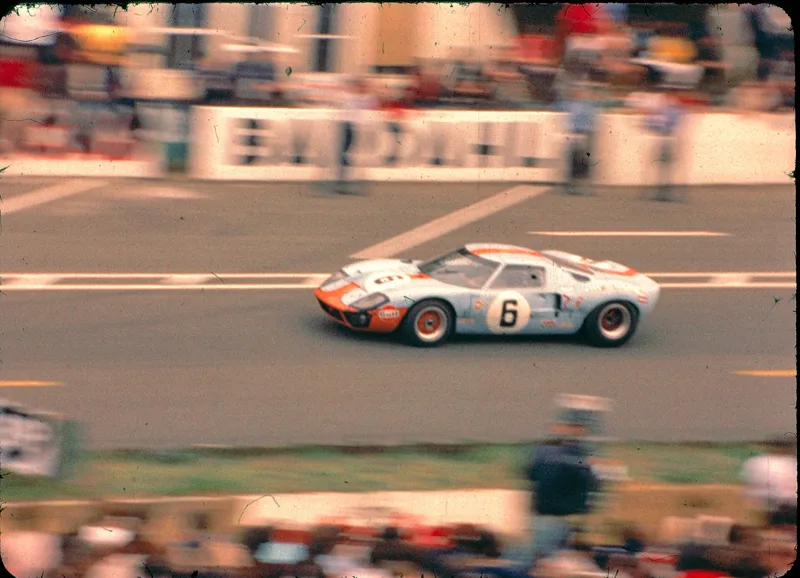
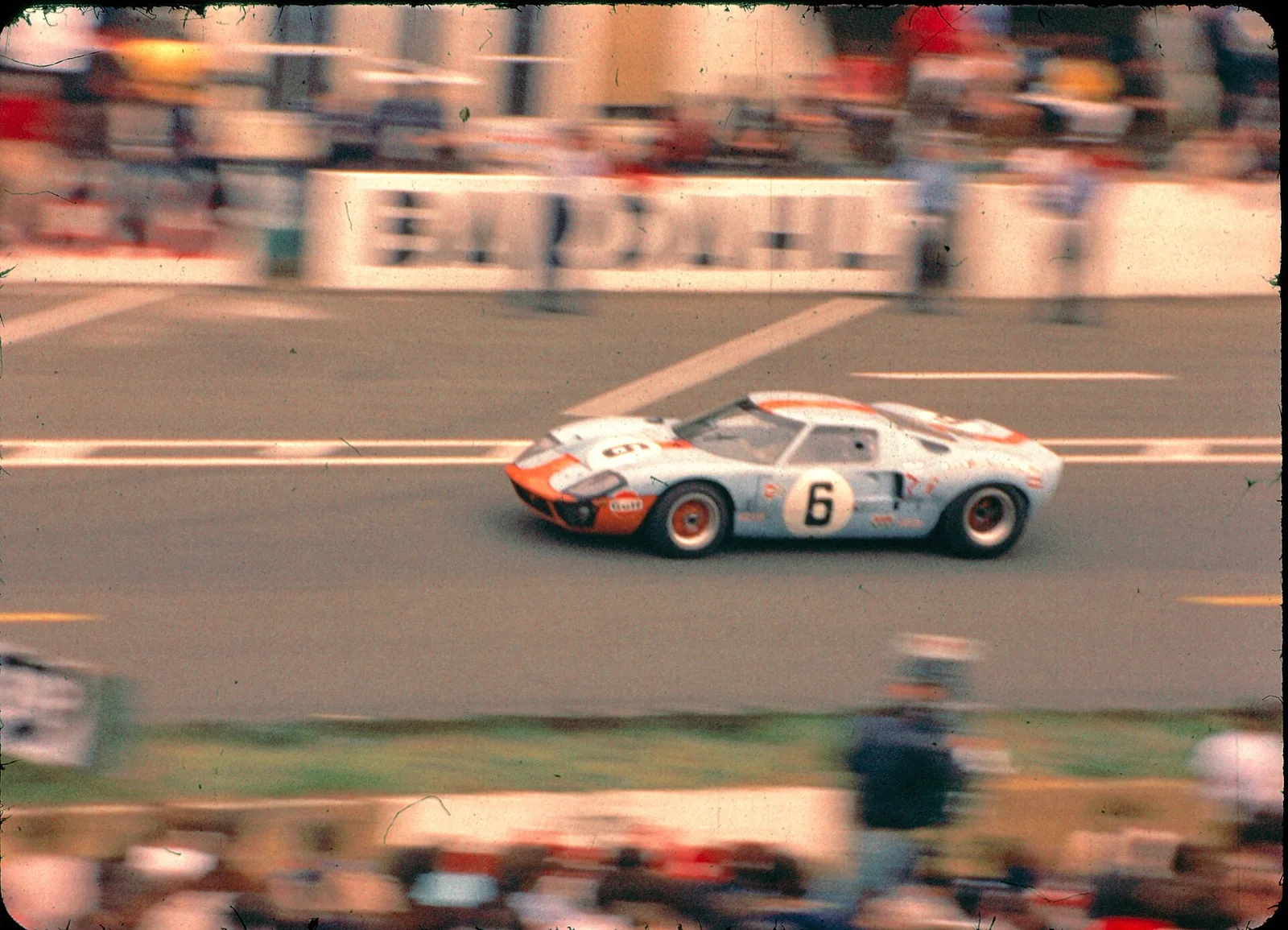
Delayed from June by unrest in France, the race was won by Rodriguez and Bianchi in a Gulf GT40, a result that gave Ford the manufacturers' title.
Pedro Rodriguez and Lucien Bianchi took the 1968 win for the Gulf team, finishing five laps ahead of the rest. The race was run on 28 and 29 September 1968, after a postponement from June.
Pedro Rodriguez and Lucien Bianchi won the 1968 24 Hours of Le Mans in a Gulf-JW Ford GT40, five laps clear of the field. The race had been delayed from June by protests, strikes and civil unrest in France, and its September date added darkness and a chicane that changed the circuit.
Why was the 1968 race held in September?
The race was originally set for 15 and 16 June, but protests, strikes and civil unrest in France during the spring pushed it back to 28 and 29 September. The later date added about three hours of darkness, so the total time in the dark came to 11 hours.
The longer darkness had a practical effect. Because the night was so long, the Automobile Club de l'Ouest allowed one battery change, and the start time was brought forward to 3pm for the spectators' benefit.
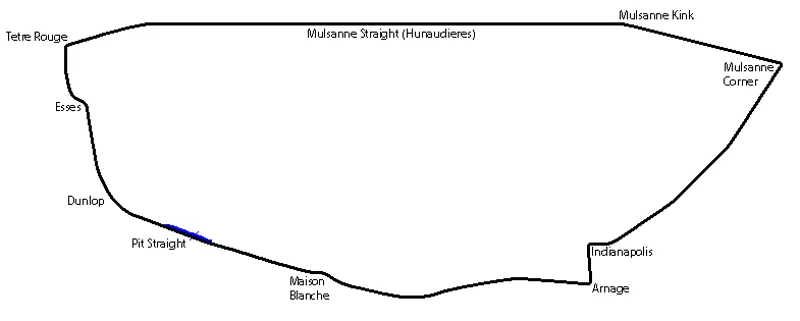
The date change also gave the organisers a chance to rework the circuit. Ford sponsored a road realignment on the main straight, adding a chicane just before the pit lane. It was the first significant change to the layout since 1932.
The chicane added at least 10 seconds a lap and put more wear on tyres and brakes. It also moved the racing away from the pits, which made the pit crews far safer. Commercial advertising was allowed on the cars for the first time.
A Group 4 Ford won under the new 3-litre rules, and the chicane alone added at least 10 seconds a lap.
What new rules followed the 1967 race?
The CSI limited Group 6 prototypes to 3 litres, with a 120-litre fuel tank, and set a 5-litre limit with a 160-litre tank for Group 4 sports cars. The aim was to slow the cars after the speeds of 1967, which the CSI had come to see as dangerous.
The rule was introduced at once, and that upset many manufacturers. Enzo Ferrari cancelled his prototype programme, and he was not the only one who thought a 5-litre sports car would beat a 3-litre prototype.
The CSI cited safety concerns to justify the rapid action. Manufacturers replied that only the big companies could build the minimum 50 big-engined cars needed for Group 4 homologation, which left the top of the grid to a smaller group of teams.
Who was in the field?
Porsche entered 13 cars and Alpine entered 11, the biggest entries in a field chosen from 94 applications for 54 places. Ford's factory team was absent, and J.W. Automotive ran the GT40s on its own under the Gulf banner.
The Gulf GT40s carried a 5-litre V8 producing 415 bhp and used polyester sheet reinforced with carbon fibre for much of the bodywork. Ickx and Redman were out after Formula One accidents, so Pedro Rodriguez and Lucien Bianchi were brought in. Paul Hawkins and David Hobbs had the regular car, and Brian Muir and Jackie Oliver had the new chassis.
Porsche's new 908 had a 3-litre flat-8 producing 330 bhp and could exceed 310 km/h (190 mph). Its top pair were Jo Siffert, who had four wins that year, and Hans Herrmann, who had two. Vic Elford was with Gerhard Mitter, Stommelen and Neerpasch led the third car, and the Americans Buzzetta and Patrick drove the fourth.
Matra had a 3-litre V12 producing 380 bhp, and a single MS630 longtail was prepared for Henri Pescarolo and Johnny Servoz-Gavin. Alpine ran eleven cars with an A220 that had a 3-litre Renault V8 producing 310 bhp, after a rear spoiler was added to correct a dangerous aerodynamic fault.
Ferrari boycotted the race in protest, which left several customer teams stranded. The NART team entered a 275 LM, a 275 GTB and a Dino 206 S, and Scuderia Filipinetti ran a 275 LM and a 275 GTB. The Swiss team also fielded a pair of 7-litre Corvette Stingrays in the GT division.
Leading finishers in 1968
| Position | Car | Drivers | Notes |
|---|---|---|---|
| 1 | Gulf-JW Ford GT40 | Rodriguez and Bianchi | Winners by five laps |
| 2 | Porsche 907, Squadra Tartaruga | Steinemann and Spoerry | Just a lap ahead of the works 908 |
| 3 | Porsche 908, works | Stommelen and Neerpasch | Works car |
| 4 | Alfa Romeo Tipo 33/2 | Giunti and Galli | Repaired after suspension failure |
| 5 | Alfa Romeo Tipo 33/2, Autodelta | Autodelta crew | Formation finish with the team |
| 7 | Ferrari, privateer | David Piper | Only Ferrari to finish |
| 8 | Alpine A220 | de Cortanze and Vinatier | The remaining 3-litre Alpine |
| 15 | Austin-Healey Sprite | Healey crew | Only British car to finish |
What happened in the first hours?
Willy Mairesse did not shut his door properly at the end of the Mulsanne, at more than 150 mph (241 km/h). It flew open, he lost control, and his Ford went into the trees. He suffered broken bones and head injuries and was in a coma for two weeks, which ended his racing career.
Siffert had pole and started on slicks, but Stommelen led the first lap with the Porsches in the top four. Siffert took the lead on the fourth lap, already lapping the tail-enders, while the Fords ran fifth, sixth and seventh.
The track began to dry out, and Hawkins and Rodriguez came in with their wet-weather tyres ruined. The third Ford went into the sand at the Mulsanne corner, and Muir spent three hours digging it out. Siffert's leading Porsche then broke its clutch just before 7pm, stranding him on the circuit.
Which cars led at the halfway mark in 1968?
At 3am, the Ford led on 177 laps with a comfortable four-lap advantage over the next pair. The new Matra and the 2-litre Alfa Romeo of Giunti and Galli were that next pair, scrapping for second place.
Stommelen's delayed Porsche 908 was back on song and closing in fourth on 170 laps. Fifth, on the same lap, was the Swiss 907 of Squadra Tartaruga, with the Alpine of Bianchi and Depailler, which had fallen to 15th to fix its exhaust before recovering.
The two leading Alfas still held the Index of Performance by a narrow margin over the Andruet and Nicolas Alpine and the Swiss Porsche.
How did the lead change through the night?
Rodriguez and Bianchi and Hawkins and Hobbs swapped the lead as darkness came. Hobbs had a clutch fault at 9pm that cost nearly two hours to repair, and his engine expired just after midnight at the end of the Mulsanne.
The Mitter and Elford Porsche was disqualified after its alternator was changed, something the regulations did not allow during the race. Buzzetta and Patrick's car also lost its alternator before 11pm, and Porsche's hopes of outright victory were finished.
Dick Thompson hit oil at the Indianapolis corner near midnight and rolled his Howmet. The second Howmet had already been disqualified for insufficient distance after its long repair, and the leading one had been running at 70 percent power because of faulty fuel control.
The rain returned about 2.30am and grew heavier through the rest of the night. Servoz-Gavin's Matra had its wiper fail again, and Henri Pescarolo jumped in and drove on in the rain with the faulty wiper.
What happened to the Alpines in 1968?
Alpine ran eleven cars, second only to Porsche in number. In the night one of its A220s got airborne over the hump at the end of the Mulsanne straight, and Henri Grandsire was lucky to walk away uninjured.
The Alpine team's best results came in the Index prizes. The Therier and Tramont 1.3-litre A210 and the Andruet and Nicolas 1-litre works car won the two lucrative Index prizes, after the Andruet and Nicolas car had taken over the Index lead during the morning.
What did the Howmet turbines show?
Two Howmet TX turbine cars were entered, following on from the Rover-BRM last run in 1965. The Continental turbine came from a helicopter and was rated as equivalent to 3 litres producing 325 bhp, and it was very light but thirsty on paraffin fuel.
Ray Heppenstall had designed the car on a Group 7 Can-Am chassis, with an aluminium shell from Howmet Castings. After a third place at Watkins Glen the car had shown reliability, and Heppenstall drove one with the veteran Dick Thompson. Bob Tullius and Hugh Dibley drove the other.
The second Howmet had spent three hours in the pits fixing its rear suspension before it was disqualified for insufficient distance.
What happened when Mauro Bianchi crashed?
Mauro Bianchi, running sixth, had only just left the pits when he crashed heavily approaching the Esses, soon after 11am. The full fuel tank exploded in a fireball that set the car and the straw bales beside the track alight. He was lucky to survive, but he suffered severe burns to his face and arms.
Bianchi's crash was the most serious accident of the race, and it came after Willy Mairesse had been injured earlier in the same event. Both men's racing careers ended as a result of injuries from the race.
The Matra that had been battling for the lead also suffered. It got a puncture going through the debris, and the disintegrating tyre damaged its battery, causing an electrical fire that put it out of the race.
How did the race finish?
The GT40 of Rodriguez and Bianchi won by five laps. For Pedro Rodriguez it was only his second finish in 11 attempts, and for Lucien Bianchi it was his 13th Le Mans.
Steinemann and Spoerry were second for the new Squadra Tartaruga team, just a lap ahead of the Stommelen and Neerpasch works car. The repaired Alfa Romeo of Giunti and Galli finished fourth, and the Autodelta cars came home in fourth, fifth and sixth, separated by seventeen laps.
David Piper's green Ferrari was the only Ferrari to finish, seventh, after overheating problems. The Belgian Porsche of Jean-Pierre Gaban led the GT class, and the Austin-Healey Sprite, 15th, was the only British car to finish.
What did the Chevron and Healey entries achieve?
Woolfe had Chevron build a new car, the B12, which was a one-off with a fibreglass body and a modified 3-litre Formula One Repco-Brabham V8 producing 330 bhp.
Austin-Healey entered a 2-litre prototype with a Coventry Climax V8 producing 240 bhp, as well as its regular Le Mans Sprite entry. The prototype was driven by Healey's regular drivers, Clive Baker and Andrew Hedges.
What did the 1968 season leave behind?
Ford won the 1968 Manufacturers' title, even though Porsche took second and third. Porsche came close to its first outright Le Mans win, and its cars finished second and third.
The Matra board was pleased with the car's promise and expanded its racing programme. Rico Steinemann, the second-place driver, later succeeded Huschke von Hanstein as Porsche's racing manager.
The year was a grim one for racing deaths. Ludovico Scarfiotti was killed at the Rossfeld hillclimb, Jo Schlesser died at the French Grand Prix, and Jim Clark was killed at Hockenheim. Brian Redman, Mike Spence and Chris Irwin were also badly hurt or killed, which made circuit safety a growing priority.