A Hong Kong-born airline pilot who flew Boeing 747s and raced Lolas and a Brabham in the 1960s, before building racing cars through Palliser Racing Design.
Hugh Dibley was an airline pilot and flight trainer whose career took in BOAC, British Airways, Air Hong Kong, Air Mauritius and Airbus. In the 1960s he raced Lolas and a Brabham, and he later helped form Palliser Racing Design in South London.
Hugh Dibley was born in Hong Kong and built a long career as an airline pilot, flight trainer and fuel-efficiency specialist. Alongside it he raced Lolas and a Brabham in the 1960s, and he co-founded Palliser Racing Design, which built around 150 racing cars. A backflip at Mont-Tremblant also gave the paddock a new phrase.
Where did Dibley's interest in flying begin?
Dibley grew up around the Royal Navy. At his birth his father was a naval engineer at the Hong Kong dockyard, and the family went back to England in 1939. In 1948 his father bought a smallholding at Lee-on-the-Solent, where the house stood just metres from the end of Runway 36 at RNAS Lee-on-Solent.
The planes taking off and landing there sparked his interest in aviation.
His father, Engineer Rear-Admiral Albert Kingsley Dibley, moved the family often during his naval career. His mother, Penelope Dibley, nee Frend, was a descendant of Admiral Sir Hugh Palliser, and the racing company later took Dibley's second given name, Palliser. He attended Pinewood and then Marlborough College.
At Mont-Tremblant in 1966 his Lola T70 backflipped over a fence, a crash that gave the paddock a new phrase: to do a Dibley.
How did Dibley learn to fly?
Dibley joined the Combined Cadet Force, first in the Royal Navy section, then in the RAF section, to take the RAF pilot aptitude selection with the aim of a private pilot's licence. He logged 30 hours in a Tiger Moth at the Royal Naval Flying Club, Gosport, and was licensed shortly after his seventeenth birthday.
He began as a Naval Airman Second Class I, then became a Midshipman (A) in the Royal Naval Volunteer Reserve after a two-month officer course. That qualified him to train on Piston Provosts at RAF Syerston. Cuts to defence spending in 1957 ended Volunteer Reserve flight training, so he served his two years of National Service aboard HMS Ark Royal instead.
As his service was ending, two men pushed him towards civil aviation. One was the future Admiral Sir Frank Hopkins, his captain aboard Ark Royal. The other was his maternal uncle, Captain Peter Frend RN.
How did Dibley get into BOAC?
He applied to British Overseas Airways Corporation, which recommended a short course at Air Service Training, Hamble, to upgrade his licence to a Commercial Pilot's Licence and add an instrument rating. His CPL was granted in September 1958, and BOAC hired him through its Pilots' Initial Navigation scheme.
His early aircraft were the Douglas DC-7C, then the Bristol Britannia 312 and 102, and the de Havilland Comet 4. When BOAC brought in the Boeing 707, the British Airline Pilots' Association wanted three-pilot crews, so the PIN pilots moved to the 707 as pilot-navigators. Dibley finished his pilot's course after a year and became a First Officer. He flew North Atlantic services first, then moved on to Africa and the Far East.
By 1966 he had moved into the 707 Check Nav Office, and his duties included inspecting every navigator's logs and charts, running annual competence checks and training new pilots to navigate in service.
What was the 747 work at BOAC like?
The airline took delivery of its first 747 in April 1970 but kept it out of service for almost a year. Its new inertial navigation system worried the airline, so Dibley was assigned to the first 747 course as a navigation instructor, in case the INS failed and a third crew member had to navigate. The system proved very reliable.
He then became an assistant instructor on the 747 simulator, completed the UK Civil Aviation Authority Flight Instrument Examiners Course and carried out annual simulator checks on First Officers. He also taught transition courses and recurrent training to captains and First Officers. In 1972 he began work on improving the fuel efficiency of BOAC's 747 fleet, a theme that would run through the rest of his career.
Did Dibley command a 747 for British Airways?
He did. In early 1975, aged 37, he was the first of BA's First Officers to take direct command of a 747. He had already qualified as a Type Rating Examiner, so the Civil Aviation Authority allowed him to become a Training and Check Captain once he had logged two hundred hours of line flying.
As the most junior captain in the company, he was then made a Training Captain on both the 747 aircraft and simulator.
That same year BA put two Lockheed L-1011 TriStars back into service on Gulf and Indian routes. Dibley was among the captains picked for that work as Training Captain, and he trained directly with Lockheed, though it meant leaving the 747 flight. He became Flight Technical Manager in 1977 and held the post until April 1978.
In 1978 he took the chair of a newly formed Fuel Policy and Fuel Conservation Working Group.
What happened when an engine failed on approach to Perth?
On 20 March 1984 Dibley was flying a 747 towards Perth, Australia, when one starboard engine exploded at a height of 49 ft (14.9 m). He alerted the tower, diverted over water to dump excess fuel and landed the aircraft safely.
That same 747 had been involved in the 1982 Jakarta incident. Dibley's test flying continued the same year: on 22 May 1984 he flew alongside the CAA's Chief Test Pilot on a certification flight for the last British Airtours 707 before its sale. Further C/A test flights followed, for for British Caledonian, Transcorp and Air Hong Kong.
How did he rise through BA management?
Dibley returned to the 747 flight in 1983, first as a management pilot, then as Flight Manager Technical in 1987. He also flew Air Mauritius and VIP 707s for Zayed bin Sultan Al Nahyan's private flight in Abu Dhabi. The arrangements came to be called Dibley's Air Force.
In 1989 he became fleet technical manager and was lent to the Sheikh's private flight to get a specially fitted 747 flying. The following year he took the post of acting director of operations and chief pilot, with eight aircraft under him, some of them Airbus models. He retired from BA in 1992.
What were his later airline posts?
April 1992 brought a move to Air Hong Kong as technical adviser, and in 1993 he became its chief pilot. That airline was later acquired by Cathay Pacific. From May 1994, after an Airbus A340 course, he was Director Operations at Air Mauritius, which was then taking delivery of its own A340s. He left in August 1995.
What did Dibley do at Airbus Training?
He joined Airbus Training in Toulouse as a flight instructor and stayed for seven years. He trained new airline crews on various aircraft, helped design flight simulator instructor stations and worked on the flight crew procedures in operating manuals. He retired from Airbus in 2002 but continued as an instructor and consultant for Airbus Training UK and others.
Since the mid-1970s he had presented papers on fuel conservation, operational efficiency, noise reduction, safety training and flight simulation. He was also consulted on the disappearance of Malaysian Airlines Flight 370.
Which honours did Dibley receive?
He was a Fellow of the Royal Aeronautical Society and a Liveryman of GAPAN, and he was elected to the French Academie de l'air et de l'espace. He chaired the RAeS Toulouse Branch and sat on the RAeS Council. He won the 1971/72 Alan Cobham prize for the most meritorious student pilot graduating from a flying college.
For 1979/1980 he received the Guild of Air Pilots Brackley Memorial Trophy, recognising his high-altitude descent work and his efforts to cut noise and fuel use.
How did Dibley's racing career begin?
Dibley started racing in 1959 in an AC Aceca-Bristol coupe at the Nottingham Sports Car Club's Silverstone meeting. In 1961 he began in Formula Junior with Ecurie Light Blue, driving a Lola Mk3. That car, BRJ38, appeared in the 1961 Lewis-Evans Trophy, the first time a Lola had appeared in a Formula 1 race.
In 1962 he stayed with Ecurie Light Blue but switched to the Lola Mk5. In that car he finished second in the 1962 Nassau Speed Week Formula Junior Championship.
Brabham, Lola and the Stirling Moss team
Sports cars came next, in 1964, with a Brabham BT8, chassis SC-2-64, which mostly ran for the Stirling Moss team, SMART. He won five races and set four lap records in it, and was awarded the first Goodwood Ton. From 1965 he raced a Lola T70 through 1969.
His most famous moment in one came at Mont-Tremblant on 11 September 1966, when the first Can-Am race was scheduled. In practice his T70 backflipped over a fence and landed in the spectator area. He escaped without injury, and afterwards anyone whose car repeated the manoeuvre was said to have done a Dibley.
In 1967 he drove Mk3 GT chassis SL73/105 for Michael Grace de'Udy. From 1967 to 1969 he also raced a Chevrolet Camaro Z-28 in the British Saloon Car Championship. The car had been sold new by Gorries Downtown Chevrolet Oldsmobile in Toronto, and Dibley bought it without an engine from Craig Fisher.
What was the Howmet TX, and what happened at Le Mans?
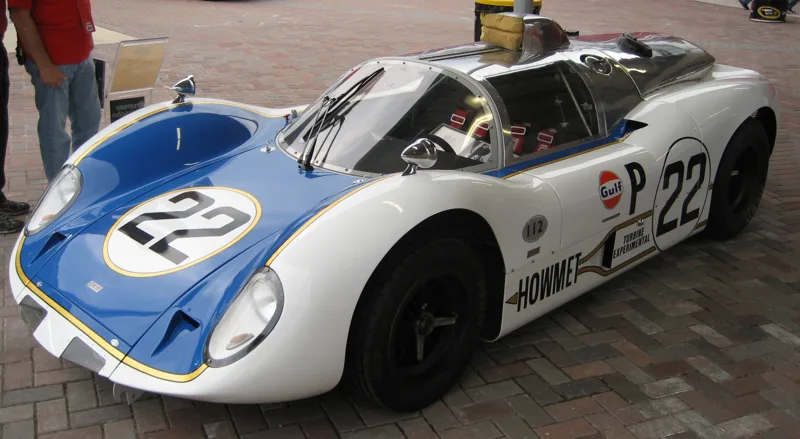
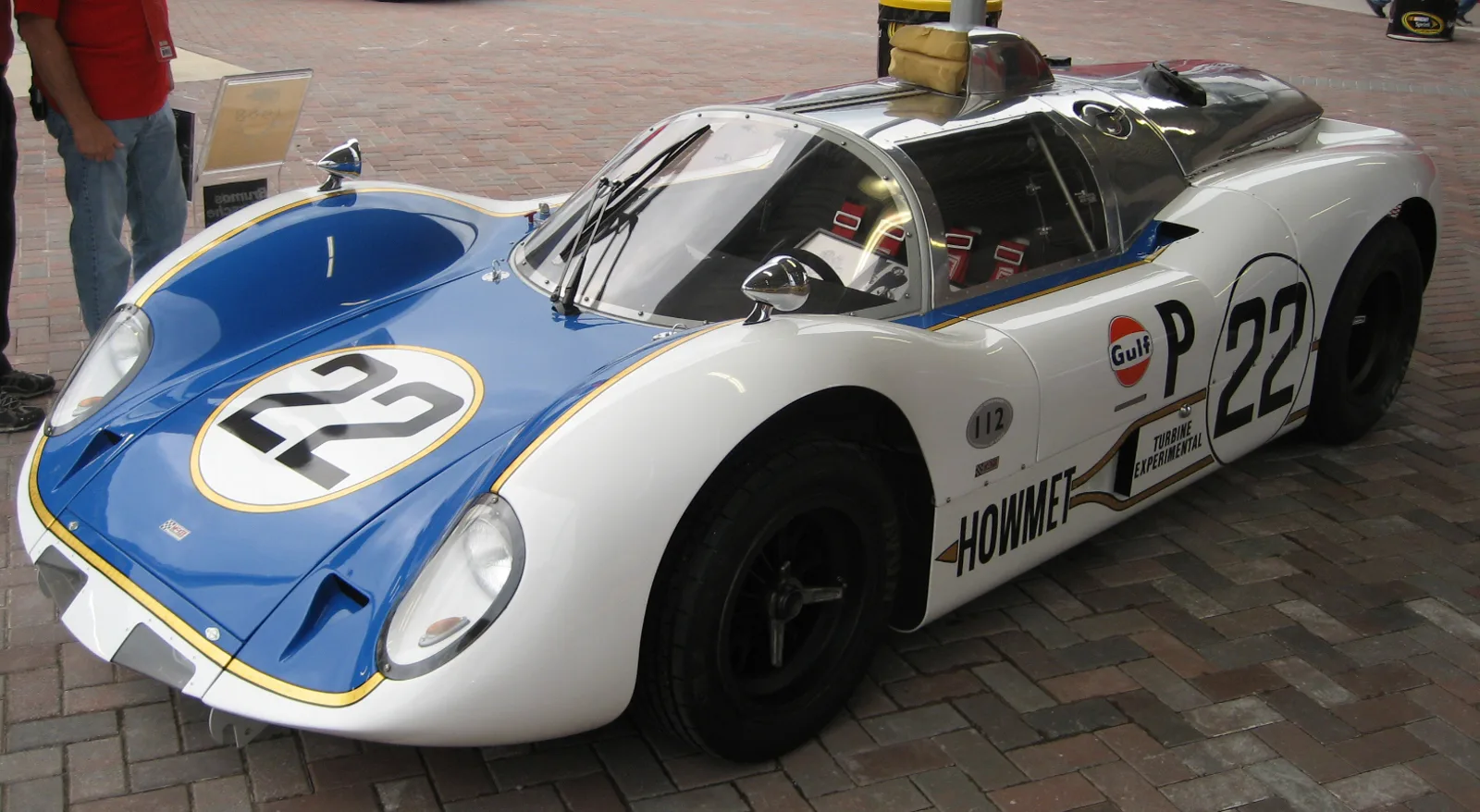
The Howmet TX was a turbine-powered car built by Ray Heppenstall on a McKee chassis. In 1968 Dibley drove it in the BOAC 500 at Brands Hatch with Dick Thompson, and later that year he made his only start at the 24 Hours of Le Mans with Bob Tullius, where a wheel bearing failed.
The car came to Britain on a flight that also carried 36 tons of gold bullion, and Dibley was part of its crew. At Brands Hatch Thompson put the car into the bank and ended their race. It was repaired for Oulton Park the following weekend, where it ran third when Dibley pitted for fuel on lap 60. The engine would not restart, because the starter wiring had burned out.
His last sports car appearances were in 1969, when he drove a Lola T70 for Taylor's Team Elite with Trevor Taylor at Brands Hatch and did not finish, and in 1974. In the 1974 1000 Kilometres of Brands Hatch he finished third in a Mirage GR7.
Was Dibley in a film about Formula One?
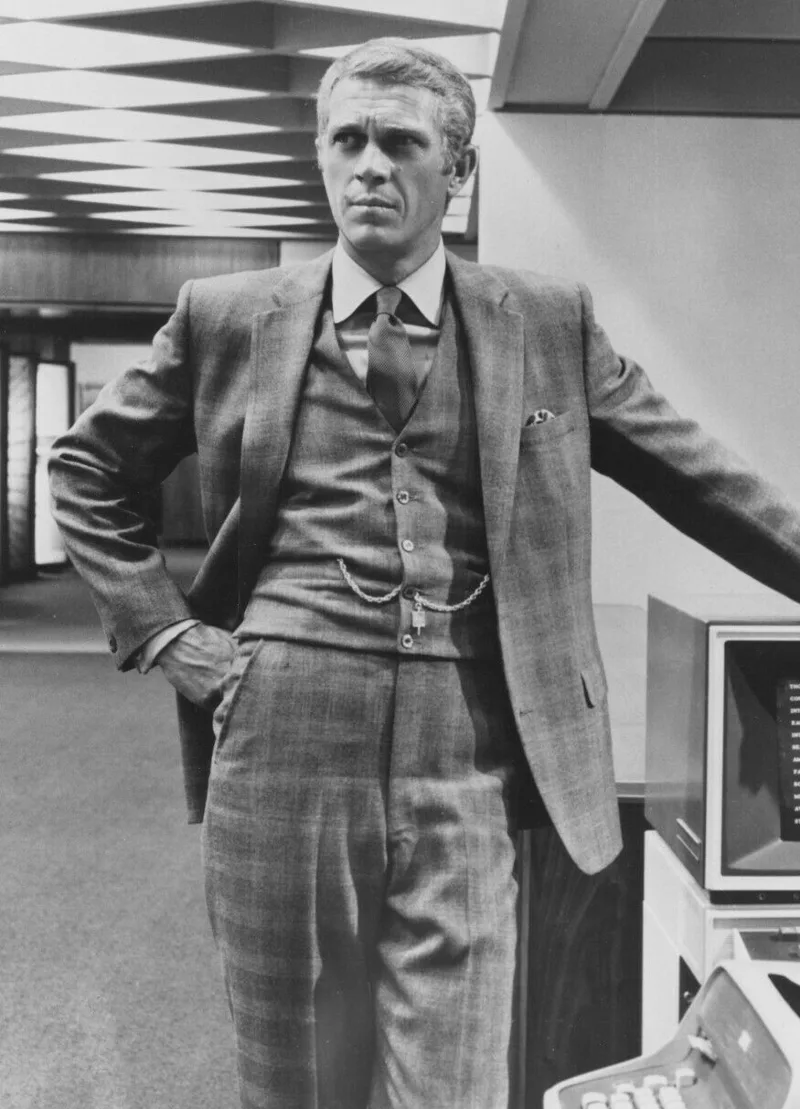
In 1965 Steve McQueen and John Sturges planned a Formula One film called Day of the Champion, based on Robert Daley's book The Cruel Sport. In April 1966, when a Warner Bros. crew filmed at Oulton Park, Dibley stood in for McQueen, driving his SMART Lola T70 with the character's name, Pearce, on the rear of the car.
Studio head Jack L. Warner cancelled the work, expecting the MGM rival film to reach cinemas first, and probably with the sale of his company in mind. MGM's Grand Prix, starring James Garner, was released in 1966.
How did Palliser Racing Design begin?
Palliser grew from a partnership between Dibley and Len Wimhurst, a toolmaker who had worked for Lola and Brabham. Wimhurst designed the car, and he built the first chassis in his backyard in Catford, South London, completing it by December 1966. Dibley supplied the engine, gearbox and the driving.
The car debuted in October 1967 at Castle Combe and retired with a blocked fuel line. For its first races it was entered at Mallory Park as TBN, meaning To Be Notified. Bob Winkelmann, a former Royal Navy member and BOAC traffic officer who had moved to the United States and owned Robert Winkelmann Racing, saw Dibley's photos and persuaded him there was a market in America. Dibley and Winkelmann had both raced in the United States Road Racing Championship in 1963 and 1964.
Winkelmann ordered three Formula B cars, built in Wimhurst's garage and delivered in 1968. They were sold in the United States as Winkelmanns. In October 1968 the company was incorporated as Palliser Racing Design Limited, using Dibley's second forename, and it had three directors: Dibley, Wimhurst and Winkelmann. Dibley became managing director as principal financier, and production moved to North Street in Clapham, South London.
The first car was named WDB1, using the builders' initials and the class: a W for Wimhurst, a D for Dibley, a B for Formula B, and a 1 marking the first series. The same pattern produced a WDF Formula Ford, a WDA Formula A car, a WDV Super Vee and a WD3 Formula 3 car.
Production grew quickly. In 1969 Palliser built just under fifty cars, more than forty of them WDF1 Formula Fords, and in 1970 about fifty more Formula Fords came off the line, along with three Formula Bs and prototypes of a Super Vee and a Formula Atlantic.
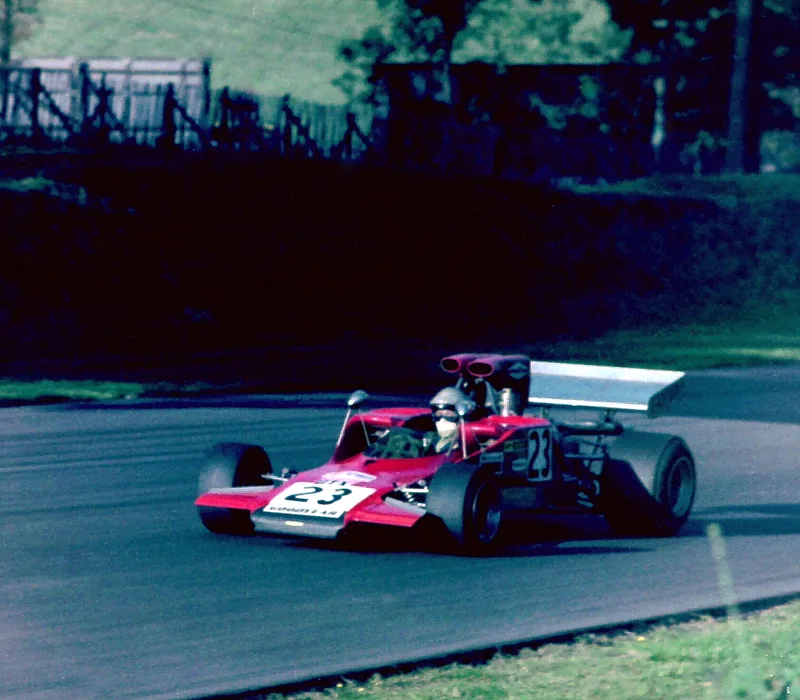
In mid-1970 Palliser acquired a Formula 5000 project started by Frank Gardner and designer Len Bailey, originally named the Franklen, and renamed it the Palliser WDA1. Australian driver Vern Schuppan joined as both driver and general assistant. Space frames were contracted to Arch Motors in Huntingdon, and Palliser also sold cast wheels, magnesium uprights and steering racks to other builders. Its oil pumps were favoured by British Racing Motors.
As sales in the US slowed, Palliser expanded its workshop to 5,000 sq ft (465 m2) in 1971. It built four Daren-Palliser Mk3 sports cars for John Green's Daren company and two hillclimb cars, WDH1 and WDH2. The first used a WDB4 Formula Two chassis and a 3.0 L Repco-Brabham T740 engine later enlarged to 4.2 L.
Palliser Racing Design was offered for sale in mid-February 1972. Most of its stock was bought by Cambridge Sports Cars, run by Ian Mawby, and a liquidator was appointed on 2 March 1972. In total the company built approximately 150 cars. It won four championships, including the first Formula Atlantic Championship in England, with Schuppan driving.
Wimhurst later built cars under his own name and revived the Palliser name for the Formula Ford 2000 series. In 2019 Cameron Jackson won the Historic Formula Ford championship in a Winkelmann.
Dibley's career at a glance
| Year | Career milestone |
|---|---|
| 1958 | Commercial Pilot's Licence granted in September, then hired by BOAC |
| 1959 | First race in an AC Aceca-Bristol coupe at Silverstone |
| 1961 | Formula Junior with a Lola Mk3; Lewis-Evans Trophy appearance |
| 1962 | Second in the Nassau Speed Week Formula Junior Championship |
| 1964 | Brabham BT8 sports car: five wins and four lap records |
| 1966 | Lola T70 backflip at Mont-Tremblant; joins the 707 Check Nav Office |
| 1968 | Howmet TX at Brands Hatch, and his only Le Mans start |
| 1969 | Last Lola T70 outing for Team Elite, did not finish |
| 1974 | Third in a Mirage GR7 at the 1000 Kilometres of Brands Hatch |
| 1975 | First BA First Officer given direct command of a 747 |
| 1984 | Engine failure on approach to Perth on 20 March |
| 1992 | Joins Air Hong Kong as technical adviser |
| 1995 | Leaves Air Mauritius and joins Airbus Training in Toulouse |
| 2002 | Retires from Airbus after seven years as an instructor |