From Formula One camera cars in 1966 to a Porsche 917 that later drew a $25 million bid, the four racing films that still have a following.
Grand Prix (1966), Le Mans (1971), Days of Thunder (1990) and Senna (2010) are four racing films with lasting followings. Grand Prix used camera cars and mocked-up Formula Three machines, Le Mans filmed during the real 1970 race, Days of Thunder raced real stock cars, and Senna used only archive footage.
In January 2025 Jerry Seinfeld took a Porsche 917 to Mecum Auctions, turned down a bid of $25 million, and then sold the car privately to another buyer straight afterwards. It was no ordinary 917. It was chassis 022, the car Steve McQueen's team used extensively while making Le Mans in 1970. A film that cost its star his creative control, and that one critic found unsatisfying, left behind a machine that can draw bids like that. Racing films have a habit of outliving their first reviews.
Four of them keep pulling viewers back: Grand Prix in 1966, Le Mans in 1971, Days of Thunder in 1990 and the documentary Senna in 2010. Each tackled the same problem, how to put an audience inside a car doing something frightening, and each solved it differently.
Grand Prix, the 1966 film that mounted cameras on the cars
John Frankenheimer's Grand Prix follows four fictional Formula One drivers through a made-up 1966 season. James Garner plays the American Pete Aron, Yves Montand the twice-champion Jean-Pierre Sarti, Brian Bedford the British driver Scott Stoddard, and Antonio Sabato the young Ferrari rookie Nino Barlini. The story finishes at Monza, where one of them dies and another takes the flag.
The plot is soap opera. The filming was not. Photographed in Super Panavision 70 by Lionel Lindon and shown in 70mm Cinerama at its premiere engagements, the film won three Academy Awards for its technical achievements and earned $20.8 million in the United States and Canada, enough to rank among the ten highest-grossing films of 1966.
Getting the footage meant persuading a wary paddock. Ferrari was lukewarm, worried the film would sensationalise its work, so Frankenheimer shot about thirty minutes in Monte Carlo, stopped production, and sent the reel to the company's management. The response was warm enough to get him inside Ferrari's production floor beside the real racing cars. Many drivers of the day then turned up as themselves, among them Phil Hill, Graham Hill, Juan Manuel Fangio, Jim Clark, Jochen Rindt and Jack Brabham.
Most of the cars you see on screen are Formula Three machines dressed up to look like contemporary Formula One cars, with genuine race footage cut in. Yamura Motors, the fictional team Aron joins, borrowed Bruce McLaren's new McLaren M2B, which was painted in a scheme designed to resemble the Honda RA272. On the occasions the McLaren could not attend, another car wore the same colours: Bob Bondurant's BRM at Spa and Mike Spence's Lotus 25 BRM at Zandvoort.
The camera work is what people remember. Phil Hill, the 1961 world champion, drove camera cars during the real Monaco and Belgian Grands Prix, first a Lotus 25 Climax and then a McLaren M2B Ford. Staged races used a modified Ford GT40 and an AC Cobra as camera platforms, and an Alouette III helicopter flew so low that the cameraman's shoes picked up leaves from the treetops. These were some of the earliest in-car, first-person shots in Formula One filmmaking. Saul Bass layered multiple split screens on top.
Not everyone could drive. Bedford could not drive at all and appeared in the cars only for close-ups, so his character was given the helmet design of BRM's Jackie Stewart, which let the crew film Stewart at speed with a balaclava hiding his face. Montand and Sabato struggled even with the basics. Garner, by contrast, trained with Bob Bondurant, did his own stunt in the scene where his car catches fire, and later sponsored a racing team of his own, which was filmed in the 1969 documentary The Racing Scene.
The critics split along a line that has followed racing films ever since. Bosley Crowther of the New York Times called it a thundering compilation of superbly shot racing, then complained that the drivers and their love lives were stereotypes. Variety said the film drew its strength from the visual, while the Monthly Film Bulletin observed that the cars stole all the thunder.
For those men who drive these autos, it is life; anything before or after is just waiting.
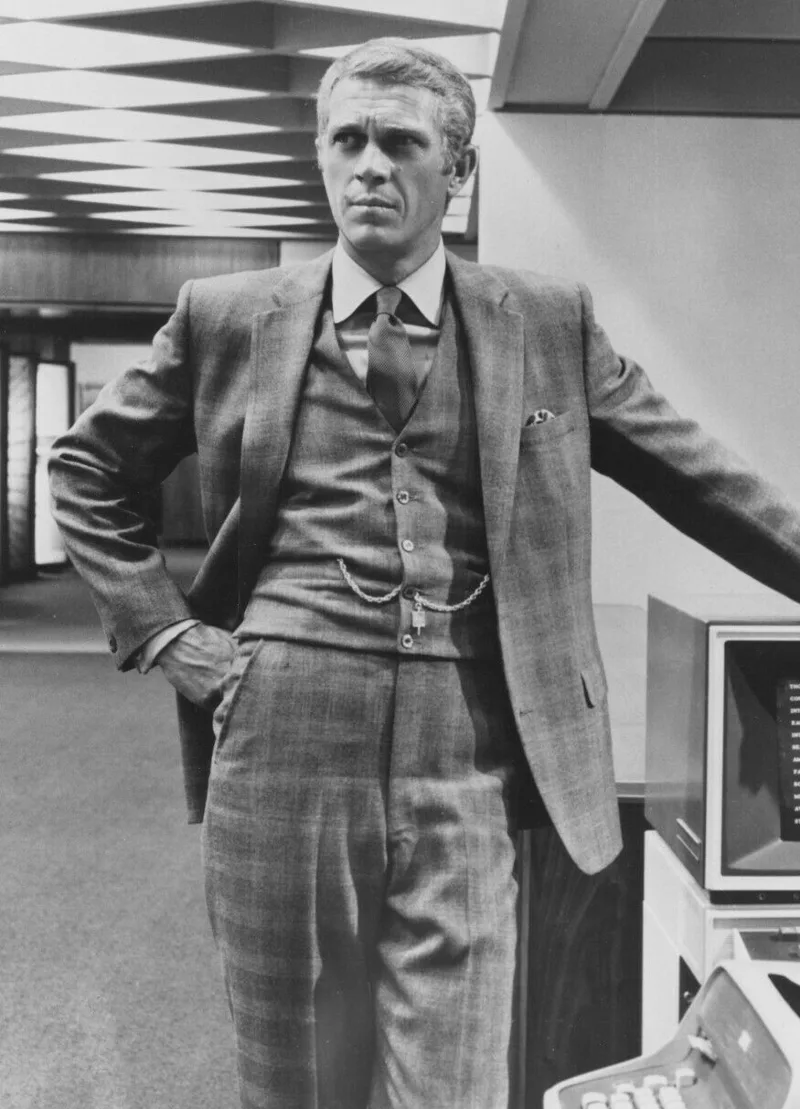
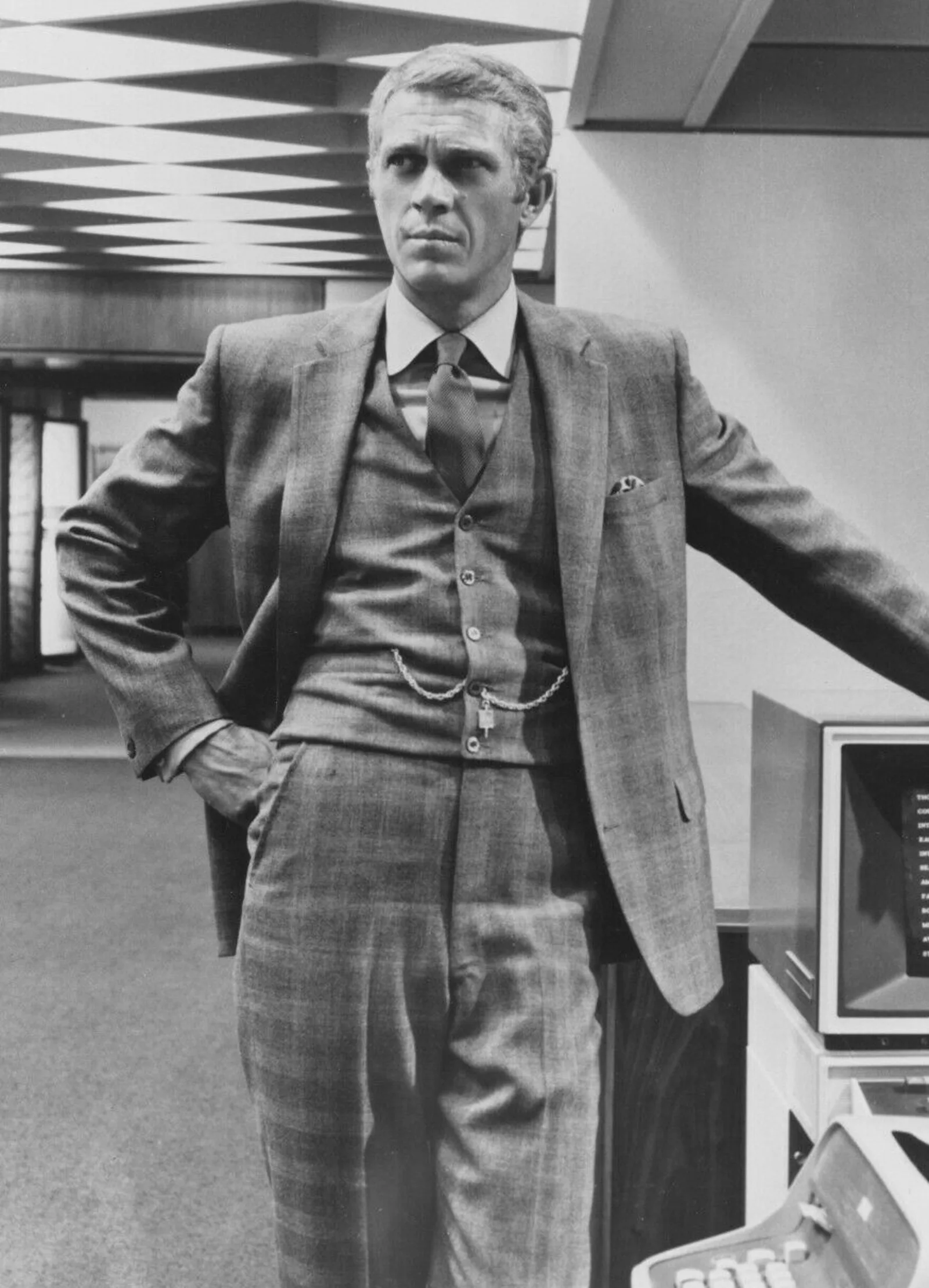
The Le Mans film starring Steve McQueen
McQueen was meant to beat Grand Prix to the screen. He and the director John Sturges had planned their own racing picture, titled Day of the Champion, and held an exclusivity deal with the Nurburgring. Frankenheimer had to hand over 27 reels he had shot there. Yet McQueen's project hit financial and other problems, and the delay stretched to five years, ending in the retitled Le Mans in 1971.
Le Mans tells the story of a fictional 24 Hours of Le Mans using real footage from the 1970 race. McQueen plays Michael Delaney, a driver haunted by the crash that killed his rival Piero Belgetti the year before, and by Belgetti's widow, Lisa. The film was shot on location between June and November 1970, including during the real race in mid-June.
McQueen had hoped to race a Porsche 917 with Jackie Stewart, but the entry was not accepted. On screen he starts the race in the blue number 20 Gulf-Porsche 917K, actually driven by Jo Siffert and Brian Redman. The white number 25 917 Long tail, which led the real race, was in the hands of Vic Elford and Kurt Ahrens Jr.
The strangest car on the grid was the camera car. McQueen's company, Solar Productions, entered a Porsche 908/2, the same model he had co-driven to second place with Peter Revson at the 12 Hours of Sebring, and bolted heavy movie cameras to it. Herbert Linge and Jonathan Williams drove it for 282 laps, or 3,798 km (2,360 miles). It ran ninth but was not classified, because stops to change film reels left it short of the minimum distance, although it did finish second in the P3.0 class.
Behind the scenes, the picture came apart. Enzo Ferrari balked at supplying cars when he learned the script ended with a Porsche victory, so the 512s were borrowed from the Belgian distributor Jacques Swaters. For the crashes, the crew fitted replica Porsche and Ferrari bodywork to obsolete Lola T70 chassis. David Piper, driving a camera-car 917K, lost part of a leg in a crash during filming. Sturges left after Cinema Center Films grew unhappy with progress, and the studio even wanted Robert Redford in McQueen's place. Sturges is quoted as saying he was too old and too rich for the trouble. The writer Alan Trustman was fired after falling out with McQueen, Lee H. Katzin, known for television, finished the job, and McQueen lost creative control.
Reviews were cooler than the film's later standing. James Powers of The Hollywood Reporter admired its class but felt that viewers learned almost nothing about the people. The picture holds 71% on Rotten Tomatoes from 14 reviews and has built a strong cult reputation. Its best-known line has McQueen explaining that for the men who drive these cars, racing is life and anything before or after is just waiting. A 2015 documentary, Steve McQueen: The Man & Le Mans, tells the story of its making.
Days of Thunder, the stock car film that grew a cult following
Where Le Mans was austere, Days of Thunder was loud. Tony Scott directed, Don Simpson and Jerry Bruckheimer produced, and Robert Towne wrote the screenplay from a story he developed with Tom Cruise. The idea took shape on 3 January 1987, when Cruise and Paul Newman tested a NASCAR Busch Grand National car for Hendrick Motorsports at Daytona. Over dinner that night Cruise listened to stories swapped between Rick Hendrick and others, and began pitching the concept.
Cruise plays Cole Trickle, a World of Outlaws Sprint Car champion hired by a car dealer to race in the NASCAR Winston Cup. He struggles at Phoenix with the heavier stock cars and with talking to his crew, fails to finish three early races, then wins at Darlington with a slingshot from the outside line. A huge crash at Daytona leaves him and his rival Rowdy Burns in hospital. The finale is the Daytona 500, where Cole fools the young rival Russ Wheeler by going underneath instead of using the slingshot he is known for.
Nearly every character wears a real face. Cole was patterned after Tim Richmond, and his surname nods to the veteran Dick Trickle. Robert Duvall's crew chief Harry Hogge echoes Harry Hyde, Randy Quaid's car owner echoes Rick Hendrick, Michael Rooker's Rowdy Burns echoes Dale Earnhardt, and Cary Elwes's Russ Wheeler echoes Rusty Wallace. Richard Petty, Rusty Wallace, Neil Bonnett and Harry Gant appear as themselves.
The cars were real as well. Hendrick Motorsports supplied 1989 Chevrolet Lumina stock cars, the model Earnhardt drove in his final races, with Greg Sacks, Tommy Ellis, Bobby Hamilton and Hut Stricklin as stand-in drivers. To collect authentic footage, the crew raced them on three occasions. At Phoenix in late 1989 Hamilton qualified fifth and led a lap before his engine blew. In 1990 the cars returned at Daytona, where Sacks drove in the Busch Clash and Hamilton and Ellis ran unscored in the Daytona 500, and at Darlington, where Sacks broke a crankshaft and both cars retired early.
The shoot was chaotic. Arguments among Simpson, Bruckheimer, Scott and sometimes Towne held up each set-up, crew members sat idle long enough to bank months of overtime, and filming ended in early May, three months late. The original $35 million budget nearly doubled, and Cruise took $9 million plus a share of the gross. Reportedly the team only realised after the shoot that nobody had filmed Cole's car crossing the line at Daytona. With the release date untouched, post-production took five weeks instead of the usual five months.
Paramount released the film on 27 June 1990 on 2,307 screens in the United States and Canada, and it took $21,502,162 in its first five days. The worldwide total reached $157,920,733. Reviews were mixed: 38% on Rotten Tomatoes from 68 reviews and 60 out of 100 on Metacritic from 16, though audiences polled by CinemaScore gave it an A. Critics compared it unfavourably with Top Gun, made four years before.
NASCAR people gave a more interesting verdict. Rusty Wallace and Alan Kulwicki questioned the aggressive driving, Bobby Allison disliked the image of drivers as brawlers, and Benny Parsons said that on technical grounds it could be hard to watch but was fine as entertainment. Wallace later reversed himself in a piece for the Associated Press, calling it the best racing movie he had ever seen. Hans Zimmer's score, with Jeff Beck on guitar, and Maria McKee's song "Show Me Heaven", which reached number one in the UK, Belgium, the Netherlands and Norway, helped the film live on.
The Senna film, a racing documentary with no talking heads
Asif Kapadia's Senna, released in 2010, does something most documentaries avoid. It has no formal commentary and no retrospective interviews. The story of Ayrton Senna, from his debut at the 1984 Brazilian Grand Prix to his death at the 1994 San Marino Grand Prix, is told through archive race footage, news material, voiceover and home video supplied by the Senna family.
Kapadia could do that because Formula One in the 1980s and 1990s was drowning in cameras. By his reckoning, Senna had around 40 on him wherever he went, which let the editors cut the footage like a drama, with a mid shot, a reverse, a two-shot and a helicopter angle all available. He picked the events with the best pictures, even if that meant dropping famous moments. Producer Eric Fellner said the aim was to make it feel as if Senna were telling the story himself.
The narrative runs through Senna's rise at McLaren, three titles in four years, the collisions with his team-mate Alain Prost that settled the 1989 and 1990 championships, and his fights with the sport's regulator, Jean-Marie Balestre. It then follows him to Williams in 1994, in a season when rule changes removed electronic driver aids and Benetton's Michael Schumacher won the first two races. The film closes with the 1994 San Marino weekend, when Rubens Barrichello was injured, Roland Ratzenberger was killed, and Senna died in a crash after a mechanical failure. The Instituto Ayrton Senna continues his charity work.
The film won two BAFTAs, for Best Documentary and Best Editing, at the 65th British Academy Film Awards, and was also nominated for Outstanding British Film. On Rotten Tomatoes it holds 93% from 122 reviews, and both Empire and the Guardian gave it four stars out of five. Stephen Holden, writing for the same newspaper as Crowther, praised its editing as a considerable feat, though he warned that newcomers might lose the thread over the dispute about Williams and its electronic aids.
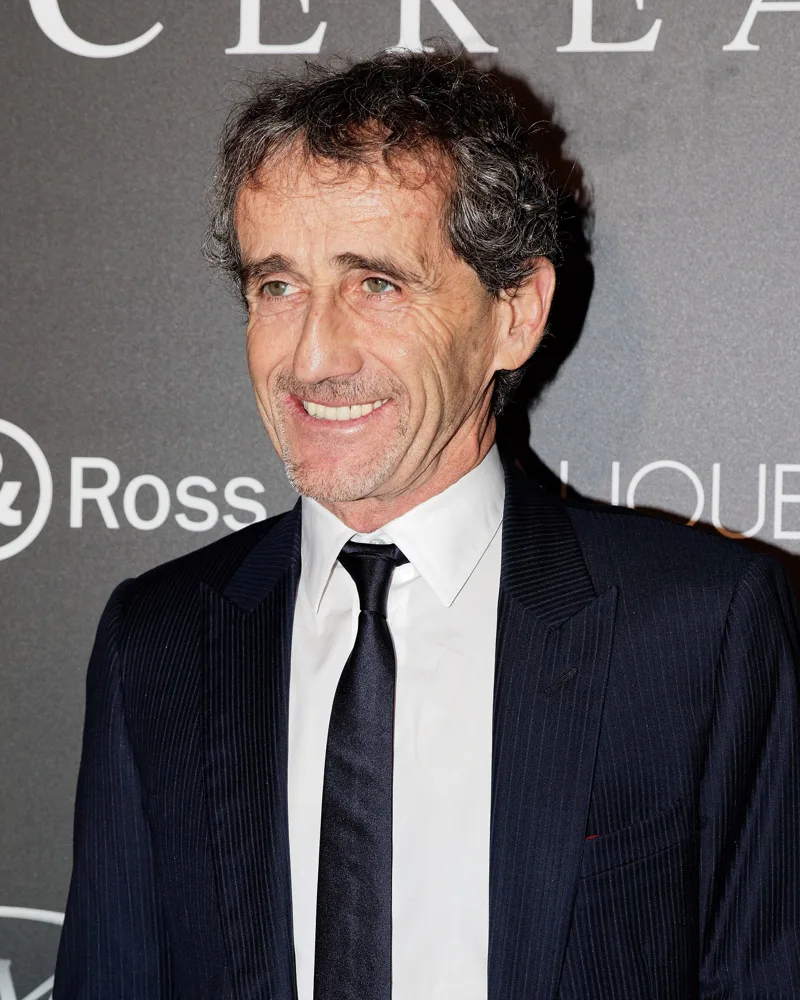
Formula One insiders were harder on it. Prost criticised the portrayal, saying it ignored how he and Senna became friends after he retired. Autosport's Graham Keilloh felt the film squeezed the rivalry into a Hollywood-style hero and villain. Julian Jakobi, who managed both men, said the story understated the role of McLaren's engine supplier Honda: Prost was a McLaren man and Senna a Honda man.
There are two cuts. The main version runs 106 minutes, while a 162-minute edition appears on Blu-ray in certain territories, including Italy, and adds traditional interviews with Prost, the Guardian's Richard Williams and ESPN's John Bisignano. One reviewer found it painted a more nuanced picture of Prost, though another felt the extra material disturbed the music and continuity of the original cut.
Racing movies side by side
| Film | Year | Director | Racing | How the cars were filmed |
|---|---|---|---|---|
| Grand Prix | 1966 | John Frankenheimer | Formula One, fictional season | Mocked-up Formula Three cars, real race footage, camera cars including a Ford GT40 |
| Le Mans | 1971 | Lee H. Katzin | 24 Hours of Le Mans, fictional race | Footage from the 1970 race, a Porsche 908/2 camera car, Lola T70 chassis for crashes |
| Days of Thunder | 1990 | Tony Scott | NASCAR Winston Cup, fictional season | 1989 Chevrolet Lumina stock cars raced at Phoenix, Daytona and Darlington |
| Senna | 2010 | Asif Kapadia | Formula One, real career of Ayrton Senna | Archive race footage, news material and home video only |
What sequel and home releases exist for Days of Thunder and Senna?
A sequel to Days of Thunder is scheduled for release on 2 June 2028. The original has already been remastered once: it arrived on Blu-ray and 4K Ultra HD in May 2020, with a new isolated score and a six-minute featurette with Jerry Bruckheimer. Senna reached home media in Japan and Brazil in March 2011, in the UK that October and in the United States on 6 March 2012, after a first showing at the Japanese Grand Prix at Suzuka on 7 October 2010.