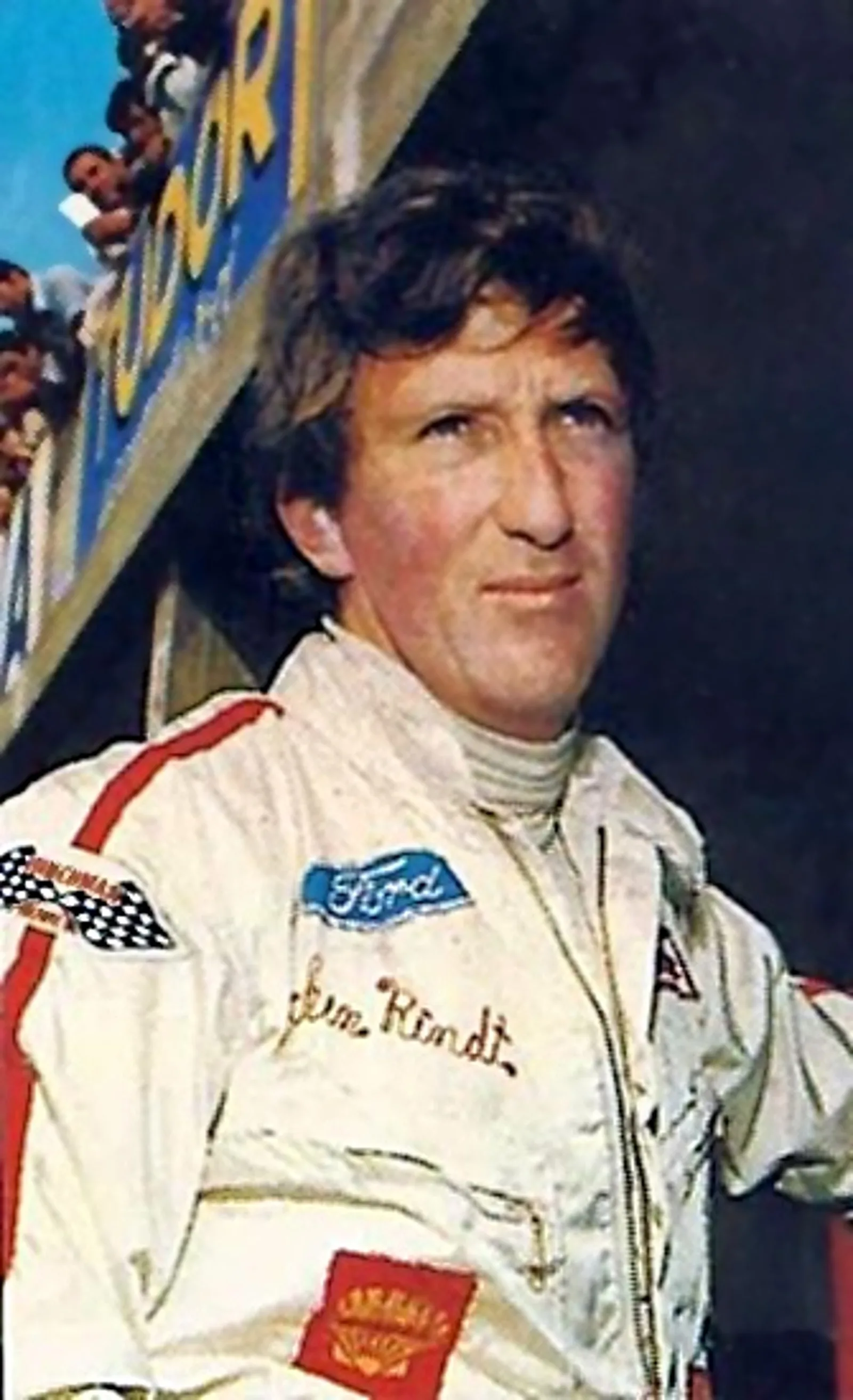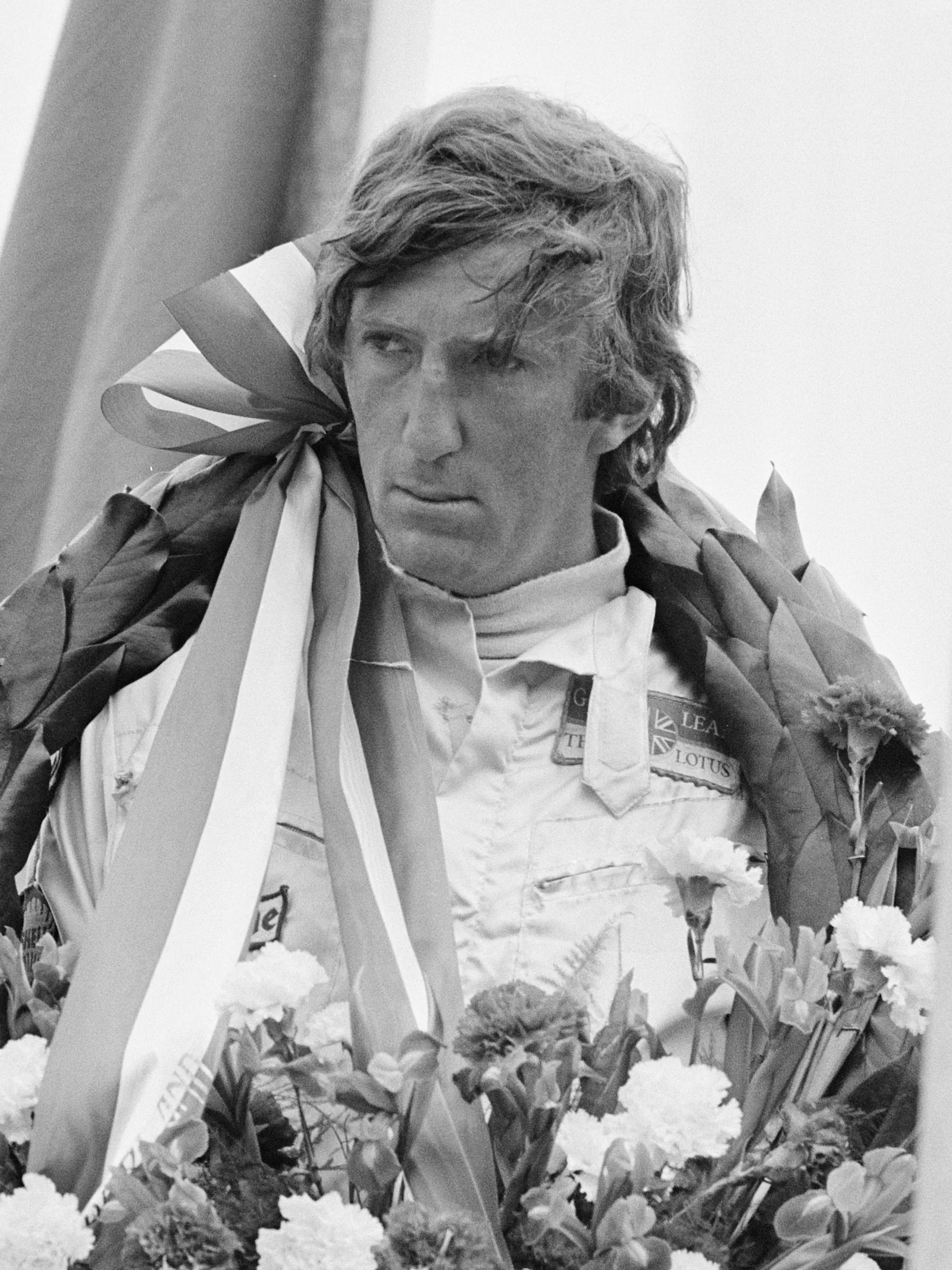
A Mainz-born driver who raced for Austria, won at Le Mans and Monaco and took the 1970 world title after his death at Monza.
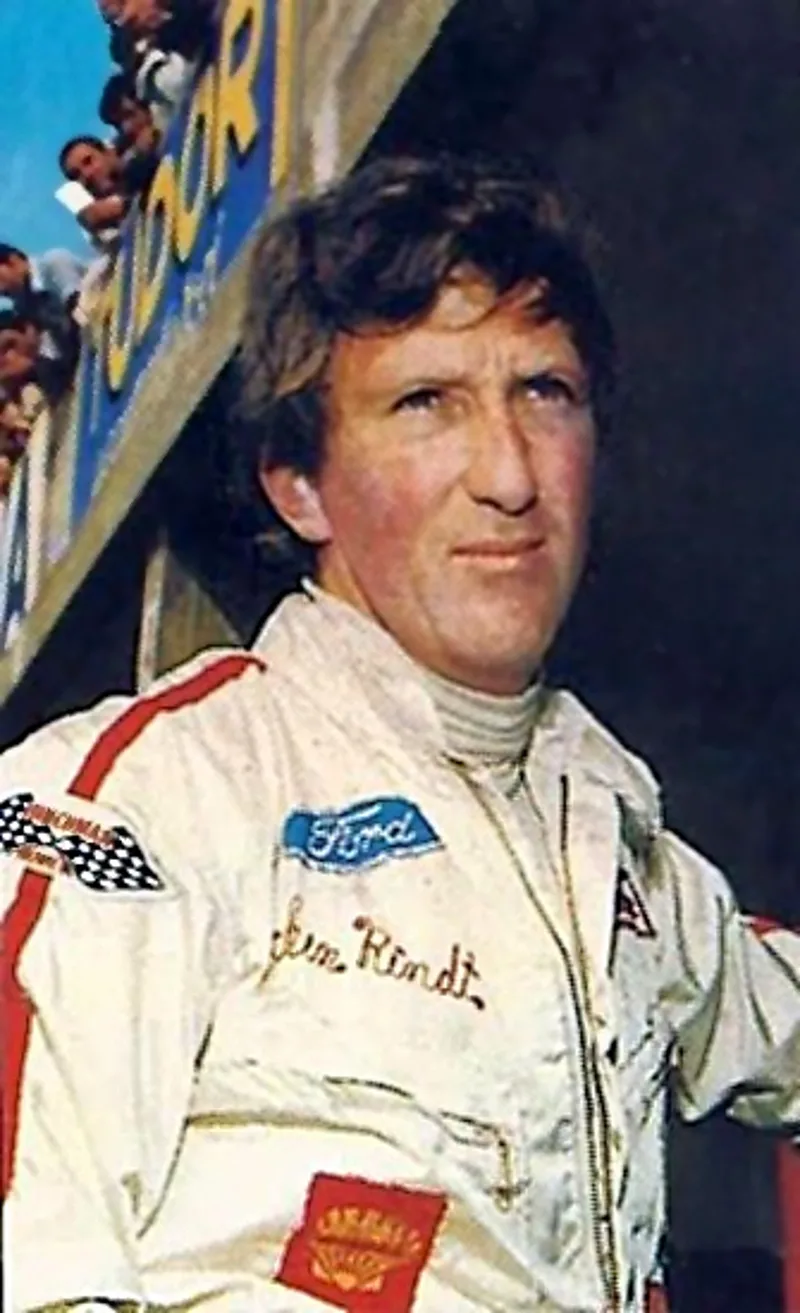
Jochen Rindt was an Austrian Formula One driver born in Mainz in 1942. He won six Grands Prix for Lotus and Brabham and took Le Mans in 1965. He died at Monza in 1970 and became the sport's only posthumous world champion.
Jochen Rindt was an Austrian racing driver who competed in Formula One from 1964 to 1970. He won the 1970 World Drivers' Championship with Lotus, and he remains the only driver to have won the title after his death. He was killed in practice at Monza, having already won five of the year's first nine races.
How did Jochen Rindt get into racing?
Rindt began racing in 1961 in a car borrowed from his grandmother, and he switched to single-seaters two years later. His success in Formula Junior and Formula Two led to a Formula One debut at his home race in 1964, where he retired from his only start of the year.
He was born in Mainz, Germany, on 18 April 1942, with an Austrian mother and a German father. Rindt lost his parents in a bombing raid on Hamburg when he was 15 months old. His maternal grandparents then raised him in Graz. His grandfather kept his German citizenship, but Rindt raced for his entire career under an Austrian licence, and he called his heritage a terrible mixture.
His childhood was not easy. A skiing accident broke his femoral neck and left one leg four centimetres (1.6 inches) shorter than the other, so he limped for the rest of his life. He was expelled from several schools, and he drove without a licence for 18 months before he was caught the day before he could collect one.
He first took an interest in motorsport after visiting the 1961 German Grand Prix at the Nurburgring with school friends, one of whom was the future Formula One driver Helmut Marko. That year he entered the Flugplatzrennen in his grandmother's Simca, was black-flagged for dangerous driving and was disqualified. A race-prepared Alfa Romeo GT 1300, supplied at cost price, gave him eight victories in the years that followed.
Five wins from the first nine races of 1970, then a title awarded after his death at Monza.
What did Rindt achieve in Formula Two and sports cars?
Rindt won 29 Formula Two races, and in 1967 he took nine of them in a Brabham BT23. The racing press called him the king of Formula 2, although as an experienced Formula One driver he was graded and could not score championship points there.
In 1963 he moved to single-seaters with the help of Kurt Bardi Barry, a wealthy travel agency owner and one of Austria's leading drivers. Barry gave him a one-year-old Cooper T67, and the two raced together. Rindt won his second Formula Junior race at Cesenatico by taking the lead between the straw barriers and a parked ambulance during an early accident.
His first international attention came on 18 May 1964, when he won the London Trophy race at Crystal Palace in a Brabham BT10, ahead of Graham Hill. He kept racing Formula Two alongside his Formula One commitments, and his last appearance in the category came at the Salzburg Festspielpreis in August 1970.
In sports cars his greatest result was the 1965 24 Hours of Le Mans. Sharing a Ferrari 250LM for the North American Racing Team with the American Masten Gregory, he won after a race of engine failures and repairs. He also won the 500 kilometre race at Zeltweg later that year, using a special lever that let him operate the brake lights and force Mike Parkes to brake early. He started Le Mans four times in total.
How did Rindt's Formula One career begin at Cooper and Brabham?
Rindt joined Cooper as a permanent driver for 1965 and then moved to Brabham in 1968. His early results were modest, with a first podium at the 1966 Belgian Grand Prix and only a handful of points in the years before he reached Lotus.
He made his debut at the 1964 Austrian Grand Prix in a Brabham BT11 loaned by the Rob Walker Racing Team, and he retired on lap fifty-eight with a broken steering column. For 1965 he signed with Cooper, partnered by Bruce McLaren. The car struggled, and his best result that year was fourth at the German Grand Prix, which gave him four points and 13th place in the championship.
Cooper's 1966 car used nine-year-old Maserati V12 engines, which were powerful but heavy. At the Belgian Grand Prix Rindt qualified second behind John Surtees, then overtook him for the lead on lap four in heavy rain. Surtees repassed him on lap 21 and won, but Rindt had his first Formula One podium in third. He finished 1966 with three podiums and third in the championship.
The 1967 season was less successful. Rindt finished only two races, both fourth, and ended the year 13th. Before 1968 he had received offers from every team except Lotus and Honda, and he chose Brabham, which had won the previous two championships. Its Repco V8 was not competitive against the Cosworth DFV, and he finished only two races, both third.
His 1968 podium at the German Grand Prix came in heavy rain and fog, in a race won by Jackie Stewart. Rindt closed on Graham Hill in the final stages after Hill spun, and he finished four seconds behind. He ended the season 12th in the championship on eight points, and he also raced the Indianapolis 500 in 1967 and 1968, finishing 24th and 32nd.
Why did the Lotus years matter?
Rindt joined Lotus for 1969 after a long period of uncertainty. The team had been involved in 31 accidents in a twenty-month period, and Rindt did not sign his contract until shortly before the Spanish Grand Prix. His friend and adviser Bernie Ecclestone had negotiated the deal, arguing that the speed of the Lotus gave Rindt a real chance at the title.
The Spanish Grand Prix at Montjuic proved the risks. Suspension-mounted wings broke on both his car and that of Graham Hill, and the two crashed at the same spot. Rindt suffered a broken nose, and a marshal lost an eye. He blamed Colin Chapman, the Lotus team owner, and he missed the Monaco Grand Prix as a result.
Jackie Stewart later said 1969 was the year Rindt came of age. Rindt fought Stewart for the lead at Silverstone, and at Monza he, Stewart, Bruce McLaren and Jean-Pierre Beltoise ran close together on the final lap. Stewart won by eight hundredths of a second, and fourth-placed McLaren was within two tenths. It was the closest 1-2-3-4 finish in the sport's history.
Rindt took his maiden Grand Prix win at the Watkins Glen penultimate race, and it earned him 50,000 dollars, the largest monetary prize in Formula One history at the time. The win was overshadowed by a crash involving his teammate Graham Hill, who suffered serious leg injuries after a high-speed puncture.
How did the 1970 season unfold?
Rindt won five of the first nine races in 1970, a run that gave him a clear lead in the championship. The Lotus 72, with its radiators on either side of the cockpit and inboard brakes, was the centre of that success after a difficult start.
At the first race in South Africa he qualified fourth but retired with an engine failure. At the Spanish Grand Prix Lotus introduced the 72, with two radiators on either side of the cockpit, torsion bar suspension and all four brakes mounted inboard. A broken semi-axle sent him into a spin in practice, and the car retired after nine laps in the race.
For Monaco Rindt used the older Lotus 49 and, starting eighth, worked his way through a track known for few overtaking chances. Jack Brabham ran wide on the final corner and Rindt took the win. He used the 49 once more at Belgium, where he criticised the organisers over guardrails with wide gaps, and he used the 72 from the Dutch Grand Prix onward.
At Zandvoort, the Dutch Grand Prix, Rindt took his first victory in the 72 after setting pole in final practice. The race was marred by the death of his close friend Piers Courage in a fiery crash. At the French Grand Prix he won again, though a stone cut his cheek and a steering failure caused a furious row with Colin Chapman.
At Brands Hatch Jack Brabham ran out of fuel on the last lap, handing Rindt his third straight win. Rindt had been provisionally disqualified over the height of his rear wing, but he was reinstated after three hours of deliberation. Hockenheim gave him a fourth win in a row, and at Austria he took pole before an engine failure ended his race. By then he led the championship with a substantial advantage.
What happened at Monza in 1970?
Rindt died in practice for the Italian Grand Prix at Monza on 5 September 1970. Lotus had removed the rear wings to reduce drag, and he fitted higher gears to exploit the faster straights. On his fifth practice lap he crashed heavily at the Parabolica.
Denny Hulme, who was following him, saw the car go left into the guardrail after Rindt braked late for the corner. Investigators later found that a failure of the right front inboard brake shaft started the accident, but that the crash barrier, poorly installed, had let the car through. Rindt was pronounced dead on the way to hospital in Milan.
Lotus withdrew its cars from the race, and Clay Regazzoni won the Grand Prix in celebrations that were muted. A long Italian investigation followed, and Colin Chapman was cleared of charges in 1976. The destroyed Lotus 72 went to a scrapyard near Monza before a real estate agent bought the wreckage in 1985.
Rindt was buried in the central cemetery in Graz on 11 September 1970. At the funeral Joakim Bonnier spoke of him as a champion who had died doing what he loved, and at the time of his death he had won five of the ten Grands Prix that year.
What was Rindt's legacy?
Rindt is the only driver to win the World Drivers' Championship posthumously. Jacky Ickx had moved within 17 points after Canada, but he finished fourth at the United States Grand Prix, which was won by Emerson Fittipaldi. Jackie Stewart handed the trophy to Rindt's widow, Nina, in Paris on 18 November 1970.
Rindt also changed motorsport in Austria. His 1965 exhibition of racing cars in Vienna drew 30,000 visitors over its first weekend, and it later moved to Essen, where it became the Essen Motor Show. He hosted the monthly television programme Motorama and worked as a consultant on the Osterreichring, now the Red Bull Ring, where the penultimate corner bears his name.
Motorsport recognised him in other ways too. The early season BARC 200 Formula Two race was renamed the Jochen Rindt Memorial Trophy, and in 2000, on the 30th anniversary of his death, Graz unveiled a bronze plaque in his memory. Rindt is also remembered as a leading figure in the drivers' campaign for safety alongside Stewart.
Career summary
| Season | Team | Result |
|---|---|---|
| 1964 | Rob Walker Racing (one start) | Retired on lap fifty-eight |
| 1965 | Cooper | Four points, 13th overall |
| 1966 | Cooper | Three podiums, third overall |
| 1967 | Cooper | Two fourth places, 13th overall |
| 1968 | Brabham | Two third places, 12th overall |
| 1969 | Lotus | Maiden win at Watkins Glen, fourth overall |
| 1970 | Lotus | Five wins, posthumous world champion |