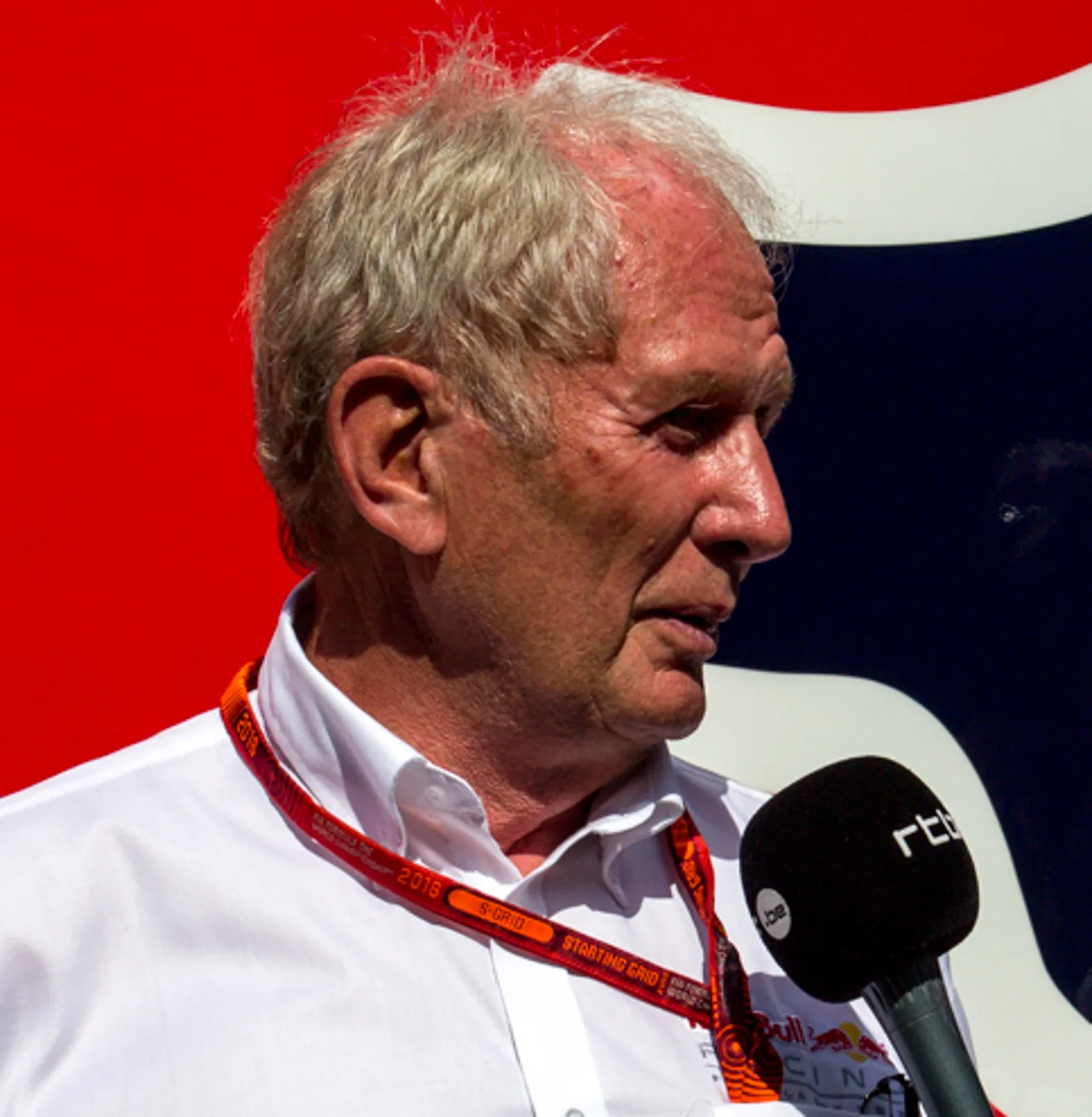
From a 1971 Le Mans win and a career cut short in 1972 to decades of building Red Bull's driver development programme.
Born in 1943, Helmut Marko is an Austrian former driver and motorsport executive. He won the 1971 24 Hours of Le Mans, raced in ten Formula One Grands Prix and founded RSM Marko in 1984, the team that later became the Red Bull Junior Team.
Helmut Marko is an Austrian former racing driver who went on to become one of the best-known figures in Formula One team management. In 1971 he won Le Mans outright, and he raced ten Grands Prix before a 1972 accident ended his driving career. As an adviser to Red Bull he helped build a driver development programme that produced several world champions.
Who is Helmut Marko?
Marko came into the world in Graz on 27 April 1943, during the Nazi occupation of Austria. He earned a law doctorate from Graz University in 1967, and he had once planned a legal career before motor racing took over. He then built his reputation in sportscar racing, first as a privateer and later with major works-backed teams.
Endurance racing was the foundation of his early career. It gave him experience of works-backed teams before he reached Formula One, and it shaped the Le Mans success that followed.
As a boy he went to school with Jochen Rindt and remained his childhood friend. Rindt later won the 1970 Formula One World Drivers' Championship posthumously, which gave their shared school years a notable place in the story.
A Le Mans winner whose driving career ended in 1972, who then shaped one of Formula One's most successful driver development programmes.
How did Marko's sportscar career start?
Marko made his sportscar debut as a privateer in 1966, racing a Triumph Spitfire at Aspern. He moved up through the ranks with Martini, took a class win at Le Mans in 1970, and claimed the overall win the following year.
His biggest result came at Le Mans in 1971, when he shared a Martini-Porsche 917K, alongside Gijs van Lennep. The pair also set a distance record that stood unbeaten until 2010, covering 5,335.313 km, or 222.304 km/h on average. Later that year he took the European 2-Litre Sports Car Championship in a Lola.
In 1972 he raced an Alfa Romeo 33 at the Targa Florio, a 72 km Sicilian mountain circuit. He set the fastest laps of the race, catching the leader within two laps, and finished second, only 17 seconds behind the winner. His quickest lap, 33 min 41 sec, averaged 128.253 km/h.
What was Marko's Formula One record?
Marko competed in ten Formula One Grands Prix across 1971 and 1972, first with Jo Bonnier's privateer team and then with BRM. He scored no championship points, and his best finish was eighth at Monaco in 1972. Each of those ten races was run in a Bonnier or BRM car.
His Formula One debut came at the 1971 German Grand Prix in a McLaren M7C run by Bonnier. He failed to post a qualifying time, so he did not take the start. The rest of his 1971 programme was with BRM.
Louis Stanley invited him to join BRM from the Austrian Grand Prix that season, where he replaced the late Pedro Rodriguez alongside Jo Siffert, Howden Ganley and Peter Gethin. On debut he qualified seventeenth and finished eleventh, two laps down on the winner Siffert. He finished thirteenth at the United States Grand Prix, which was his last outing of the year.
His teammates all ran the newer P160 car, while Marko had an older P153 left over from the previous year, and he qualified only a tenth of a second behind Gethin.
In Canada he beat George Eaton's P160 by six-tenths in qualifying and climbed from nineteenth to twelfth in the race, ahead of Gethin. Five appearances for Bonnier and BRM yielded nothing, and the championship did not classify him.
What happened to Marko at the 1972 French Grand Prix?
Marko was badly injured at the 1972 French Grand Prix at Clermont-Ferrand, when a rock thrown up by Ronnie Peterson's March pierced his visor. The injury left him permanently blind in his left eye and brought his driving career to an end at 29.
The race came only a few weeks after the Targa Florio. Marko had chosen the new P160B with its raised cockpit, and he qualified a career-best sixth. He later said that the cockpit decision contributed to the injury, and that choice remains part of the story of his retirement from the cockpit.
Before that race his 1972 season had been steady. He finished tenth in Argentina, fourteenth in South Africa and eighth at Monaco, where he climbed through the field in an iterated P153B. Alex Soler-Roig took his place for the Spanish Grand Prix, and he was back in the car for Monaco.
How did Marko move into management?
Before founding his own team, Marko looked after two Austrian drivers, Gerhard Berger and Karl Wendlinger. In 1984 he founded RSM Marko, a team that raced in German touring cars as well as in Formula Three and Formula 3000. Its activities spanned three separate championships.
From 1999 the operation ran under the name Red Bull Junior Team, backed by the Austrian energy drink group. In 2001 it became Red Bull's European driver development programme, led by Marko, which laid the foundations for everything that followed.
In 2005 he joined Red Bull Racing as an adviser when the team made its Formula One debut. He also advised sister team Toro Rosso from 2006, a team that later became AlphaTauri and then Racing Bulls before the end of his role.
Which drivers came through Marko's programme?
Sixteen drivers came through the programme to reach the grid, among them Vettel, Ricciardo, Verstappen, Carlos Sainz Jr and Pierre Gasly. Between them they won eight world drivers' titles and 138 Grands Prix. That record is the main measure of the programme's success.
Christian Klien had already reached the grid with Jaguar in 2004. Across the following five years Vitantonio Liuzzi, Scott Speed, Vettel, Sebastien Buemi and Jaime Alguersuari also came through. Vettel scored his first win for Toro Rosso at the 2008 Italian Grand Prix and then moved to the senior team, finishing second to Jenson Button in 2009.
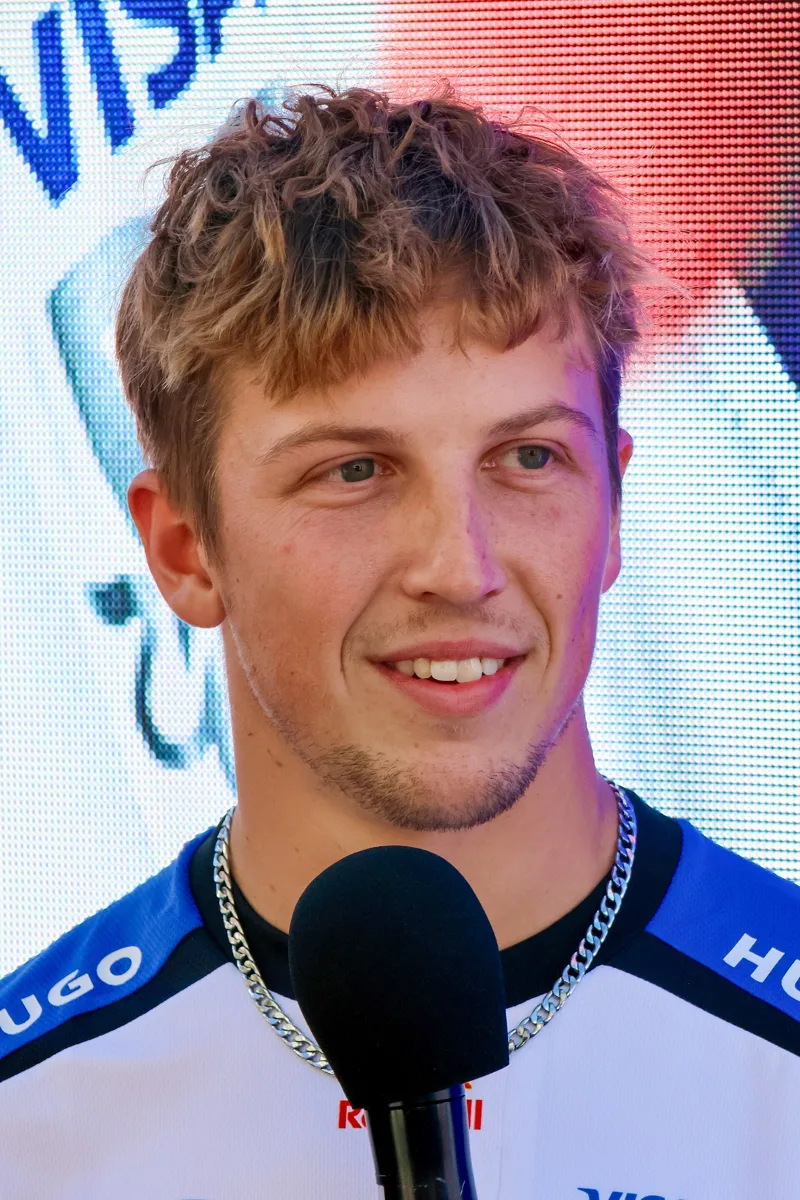
Other graduates included Daniil Kvyat, who came through in 2014, along with Alexander Albon, Yuki Tsunoda and Liam Lawson, who debuted in 2021 and 2023.
How did the Vettel and Verstappen years change the programme?
Vettel won four consecutive world titles from 2010 to 2013, becoming the sport's youngest champion and the first graduate of the Junior Team to win the title. Daniel Ricciardo joined the programme in 2011 and Jean-Eric Vergne in 2012. Both arrived while Vettel was champion.
When Mercedes dominated the new regulations in 2014, Ricciardo took over as Red Bull's lead driver and Vettel left for Ferrari. Daniil Kvyat filled the seat for 2015 and 2016. Max Verstappen, then 17, and Carlos Sainz Jr raced for Toro Rosso that season.
Marko administered the programme from its founding, choosing which drivers were placed in Toro Rosso and when they moved up to the senior team.
Verstappen was promoted for the 2016 Spanish Grand Prix and won on debut for the senior team, becoming the youngest Grand Prix winner in the sport's history. By the end of 2018 he had become the lead driver over Ricciardo. Pierre Gasly joined him after 2017, and Marko moved Gasly out in mid-2019, replacing him with Alexander Albon.
What did Verstappen's title run bring?
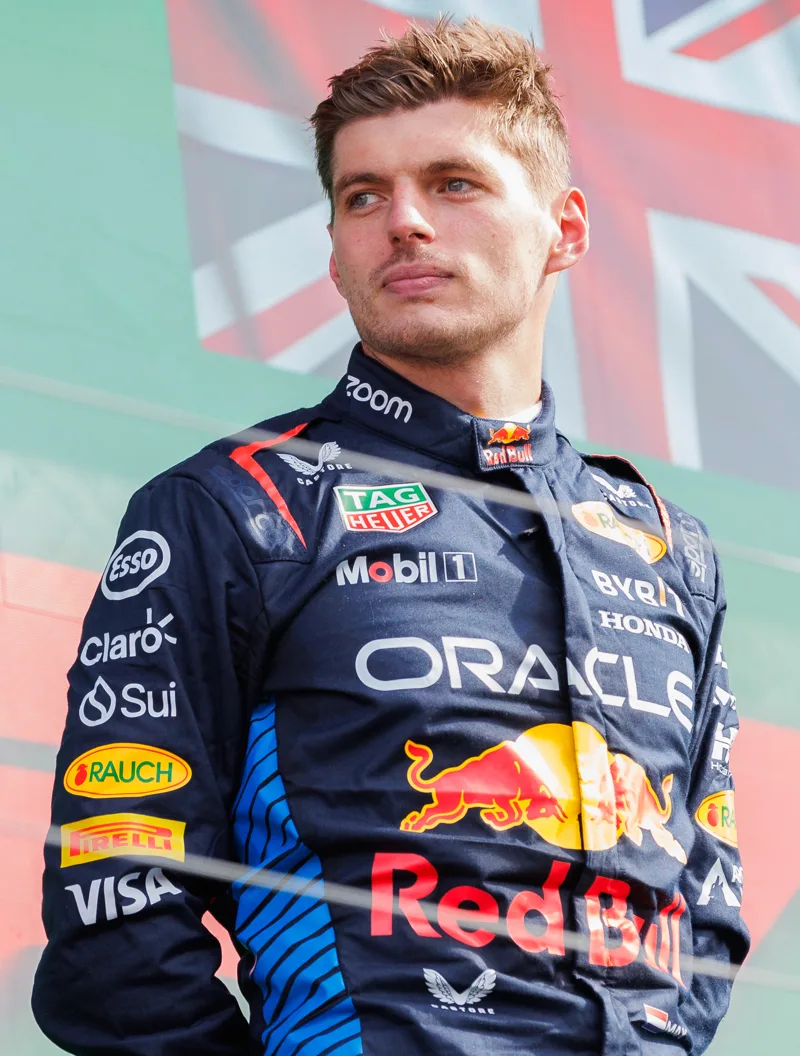
From 2021 to 2024 Verstappen collected four straight world titles, along with 53 Grands Prix. Those titles were the highest point of the programme's record. As Verstappen saw off Gasly and Albon, Red Bull chose Sergio Perez to replace them after private talks with Marko.
Yuki Tsunoda debuted in 2021 and Liam Lawson in 2023. The programme drew criticism for its harsh approach to talent. In 2018 one motorsport writer called it a harsh and unforgiving school, and the recycling of talent as drivers fell short of the mark Verstappen had set.
| Year | Milestone |
|---|---|
| 1966 | Sportscar debut as a privateer in a Triumph Spitfire at Aspern |
| 1971 | Wins the 24 Hours of Le Mans with Gijs van Lennep; F1 debut at the German Grand Prix |
| 1972 | Second at the Targa Florio; injured at the French Grand Prix, aged 29 |
| 1984 | Founds RSM Marko |
| 1999 | Team operates as the Red Bull Junior Team |
| 2005 | Joins Red Bull Racing as an adviser |
| 2010 to 2013 | Vettel wins four consecutive world drivers' titles |
| 2021 to 2024 | Verstappen wins four consecutive world drivers' titles |
| 2025 | Retires from his management positions |
Taken together, the table shows a driver whose on-track career ended in 1972, followed by a management career that ran from 1984 to 2025. RSM Marko was founded in 1984, and his formal association with Red Bull Racing lasted from 2005 until the end of 2025.
What controversies involved Marko?
Marko faced criticism in 2023 over remarks about Sergio Perez's form, which many people saw as racially charged. He apologised, and in 2024 he faced an internal investigation over leaked information, after which he was cleared. The FIA also issued a reprimand in 2023.
In September 2023, after the Italian Grand Prix, Marko commented on Perez's qualifying form in remarks to ServusTV, a broadcaster owned by Red Bull. Critics pointed out that Perez is Mexican rather than South American. Marko apologised on 8 September, and Perez accepted the apology on 14 September, while the FIA reprimanded Marko the following day.
In March 2024 Red Bull opened an internal inquiry into Marko, which could have led to suspension, over the leaking of insider information about team principal Christian Horner's alleged misconduct. Max Verstappen said he would leave if Marko was dropped, and he was cleared of the allegations after discussions involving Red Bull GmbH executive Oliver Mintzlaff.
In 2025 a remark about Isack Hadjar's incident on the Australian formation lap drew attention. A later claim about Kimi Antonelli and the Qatar Grand Prix led to online abuse and threats directed at Antonelli.
When did Marko leave Red Bull?
Marko stepped back from his management roles once the 2025 season ended, after overseeing the junior programme since its founding. His final graduate, Arvid Lindblad, was set to make his debut in 2026. Lindblad was the last driver he brought through the system.
In 2025 Red Bull released Sergio Perez, and Marko put Liam Lawson in the seat. Yuki Tsunoda replaced Lawson after two Grands Prix.
Outside motorsport he runs hotels in Graz, among them the Lendhotel and Kai 36. He is also an art collector who curates the pieces shown in them.