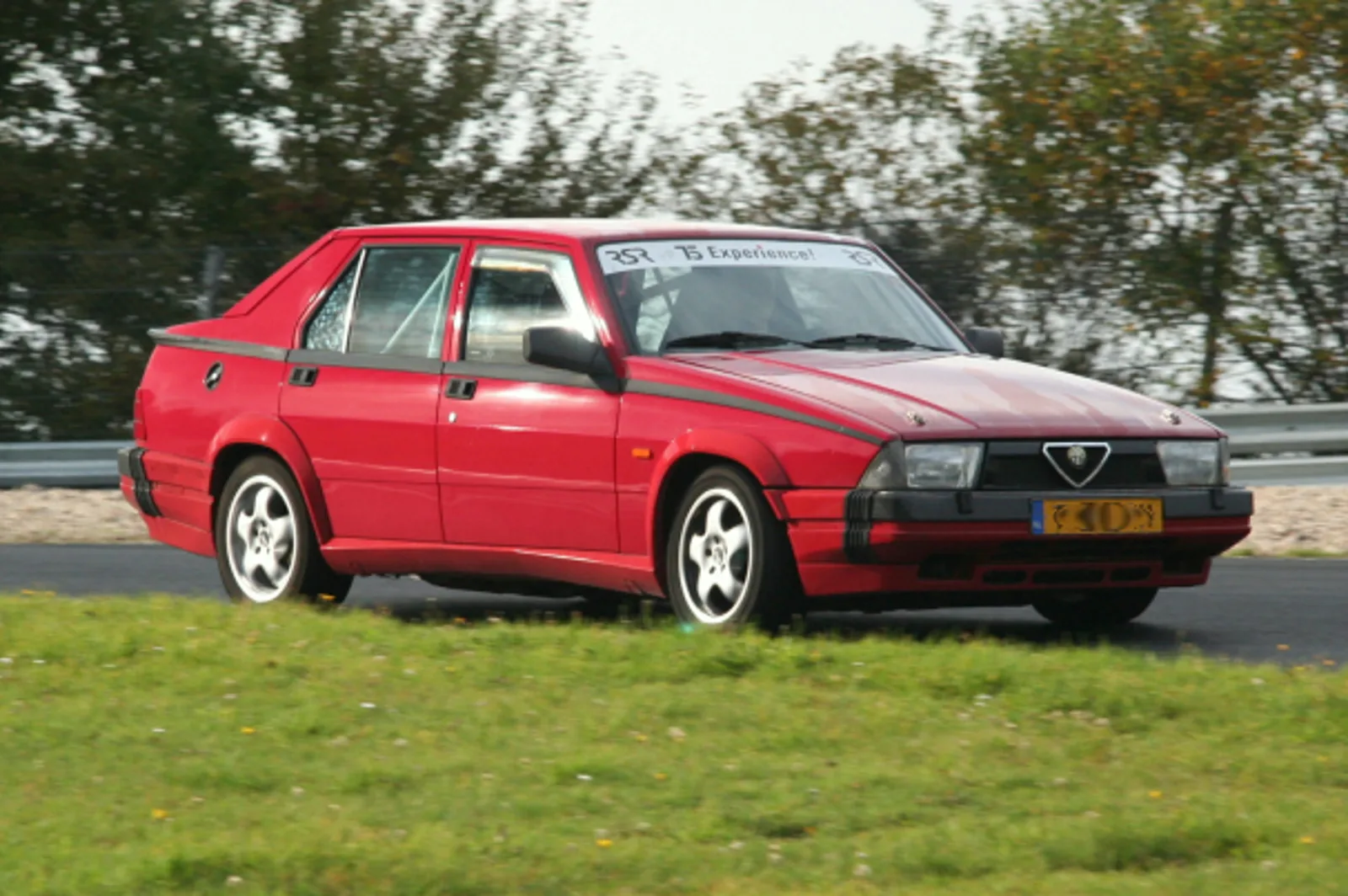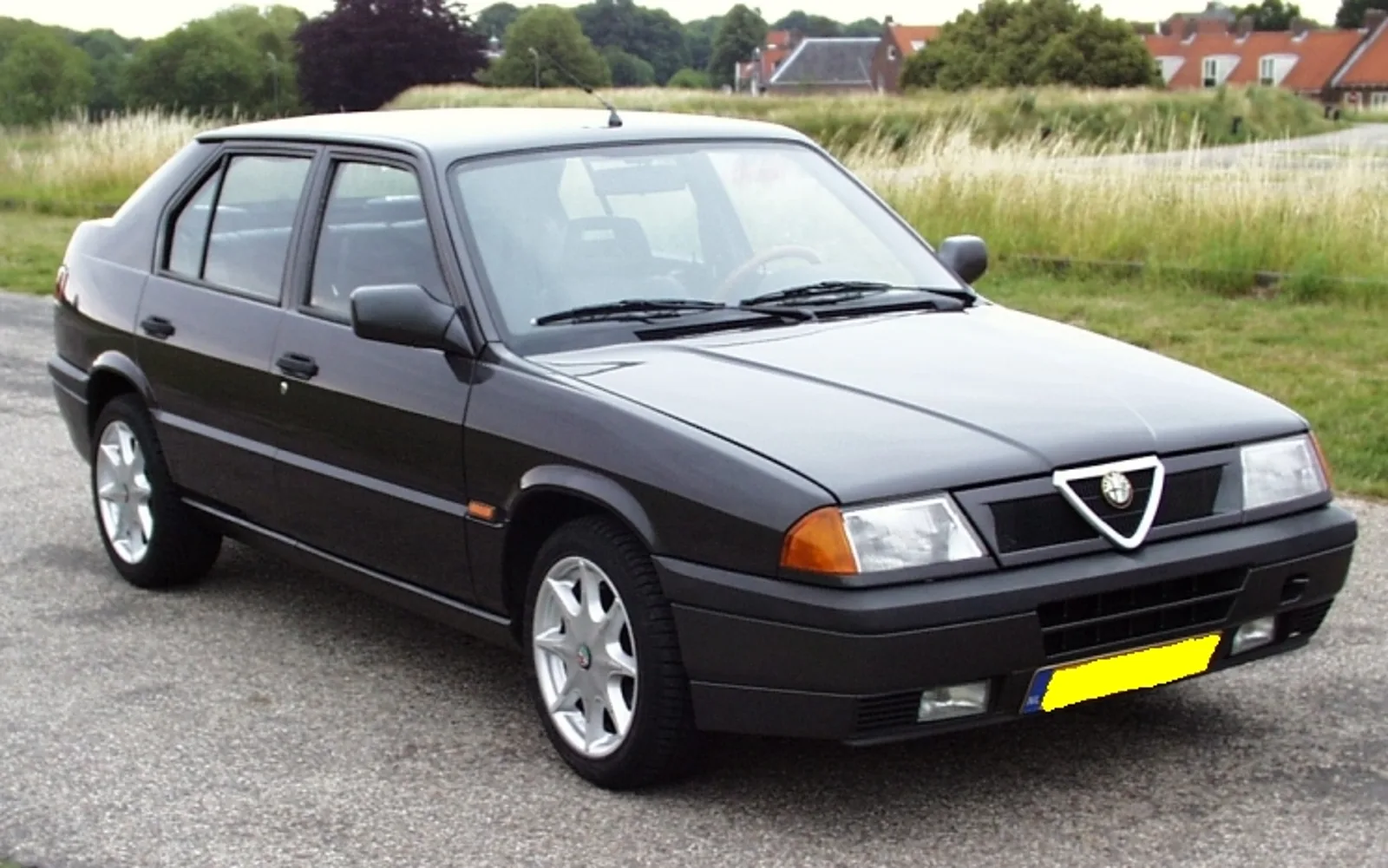
A hatchback, estate and four-wheel-drive family car that grew out of the Alfasud and sold nearly 1 million examples.
The Alfa Romeo 33 was a small family car built by Alfa Romeo from 1983 to 1995, with Type 905 and 907 designations. It was based on the Alfasud and sold nearly 1 million units. Early cars offered nimble handling but suffered electrical faults and rust.
From 1983 to 1995 Alfa Romeo sold the 33, a compact family car offered as a hatchback, an estate and a four-wheel-drive model. Nearly 1 million were produced. Its boxer engines and lively handling won fans, while electrical faults and rust hurt its reputation.
What was the Alfa Romeo 33?
The 33 was Alfa Romeo's compact family car through its 11-year production run. It came as a hatchback and an estate, with a four-wheel-drive version and a sporty Quadrifoglio range on top. Nearly 1 million cars left the factory, which gives it a unique place in the company's history.
Launched in 1983 as the Alfa 33, the first generation carried the Type 905 code. A revised second generation, the Type 907, followed in January 1990 with new styling and, on some engines, fuel injection. Both generations relied on boxer petrol engines.
Drivers praised the car for nimble handling and strong boxer engines. Owners, however, complained about unreliable electronics, and early examples were prone to rust, a common failing of Italian cars at the time.
Nearly 1 million cars from one boxer-engined family: sharp handling, fragile electrics and an Alfasud heritage.
How did the 33 grow out of the Alfasud?
The 33 kept the floorpan, chassis and drivetrain of the Alfasud it succeeded. Engineers simplified the suspension and brakes, and the front discs that sat on the gearbox moved out to the wheel hubs. The rear discs gave way to drums.
Mechanically the car was a careful evolution rather than a clean sheet. Much of the layout stayed the same, so the older model's engines and gearbox carried straight over into the new body.
The Nissan-based Arna arrived soon after the 33 went on sale. It offered a similar size at a lower price, which gave buyers a cheaper Alfa Romeo alternative within the same family of cars.
Which engines powered the 33?
Launch models used SOHC flat-four boxer engines of 1,350 cc and 1,490 cc, fed by a twin-choke carburettor and paired with a five-speed gearbox. Later cars used 1,712 cc units, a 1,779 cc turbodiesel and fuel-injected 1.7 litre engines. The range grew steadily more powerful.
The 1.3 produced 76 PS (56 kW; 75 hp), peaking at 6,000 rpm, while the 1.5 of the Quadrifoglio Oro offered 85 PS (63 kW; 84 hp) with its peak at 5,800 rpm. Fifth gear worked as an overdrive, so the car reached its top speed in fourth.
The 1985 model year brought twin-choke carburettors to every engine except the base 1.3. The sporty 1.3 S made 86 PS (63 kW; 85 hp), peaking at 5,500 rpm, and the 1.5 estates and Quadrifoglio Oro rose to 95 PS (70 kW; 94 hp).
In 1986 every 1.5 variant adopted the 105 PS engine from the Quadrifoglio Verde. The 1.7 Quadrifoglio Verde arrived with 118 PS (87 kW; 116 bhp) from its 1,712 cc boxer. A fuel-injected 1.7 IE followed in July 1988 with Bosch 3.1 LE Jetronic injection, giving 110 PS (81 kW; 108 bhp), a touch less than the carburetted engine.
The diesel, a 1.8 TD sold in Italy and some other markets, came from VM Motori. Its 1,779 cc straight-three had a KKK turbocharger but no intercooler, which gave 54 kW (73 PS; 72 bhp). A balance shaft offset the vibrations typical of a three-cylinder engine.
How was the 33 styled and built?
The hatchback was styled by Ermanno Cressoni in the Centro Stile Alfa Romeo studio, while Pininfarina designed the station wagon. The car's drag coefficient was 0.36, and the instrument binnacle rose and fell with the adjustable steering wheel. Its sleek shape played a big part in the UK launch.
The moving binnacle counted among the company's innovations of the period. It disappeared at the 1986 facelift, when the dashboard and steering wheel were replaced by a more conventional layout.
Pininfarina also built the bodies for the four-wheel-drive hatchback and the Giardinetta estate. Bodies were built in Grugliasco, near Turin, before being sent to Alfa Romeo for the mechanical work.
What changed in the 1986 facelift?
The autumn 1986 facelift brought clear indicator lenses, a new grille, wheel covers and side skirts on every model. Inside, a more conventional dashboard and steering wheel replaced the moving instrument binnacle. The 1.5 Quadrifoglio Verde's engine was also rolled into the 1.5 range.
The 1.7 Quadrifoglio Verde replaced the 1.5 QV. Its 1,712 cc engine came from enlarging the bore and stroke of the 1.5, added hydraulic tappets, and needed vented front discs to cope with the extra power.
The 1.7 QV lost the grey stripe along its flank but gained alloy wheels, front side window deflectors and a rear spoiler on the boot lid. Inside it had a leather-wrapped steering wheel, red floor carpets and grey, black and red chequered sport seats. Suspension, brakes and gearbox also changed, with more closely spaced gear ratios.
Was there a four-wheel-drive 33?
Yes. The 33 1.5 4x4 went on sale in December 1983 after its debut at the Frankfurt Motor Show that year. It used a quick-shift system that the driver could engage at any speed, and the estate offered the same option from June 1984.
The four-wheel-drive system was developed by the specialist Ototrasm. Normally front-wheel drive, the car could be switched to four-wheel drive by a lever near the gear selector. Its bodywork was two-tone, metallic red or silver above a black lower body, separated by a double white pinstripe.
The Giardinetta estate, shown at the March 1984 Geneva Motor Show, came in both 4x4 and front-wheel-drive versions. The 4x4 reached showrooms first, and the front-drive model followed after its Turin Motor Show debut in November.
The Quadrifoglio Oro and Verde range
The Quadrifoglio Oro, or Gold Cloverleaf in the UK, was the luxury trim. It had a silver grille, two-tone paint, a beige Texalfa interior and a woodtone steering wheel and shifter knob. The trim also came with bronze tinted glass, headlight wipers and a trip computer.
The Quadrifoglio Verde, launched in June 1984, sat above the Oro as the sporting model. Its 1.5 boxer used double twin-choke carburettors to make 105 PS (77 kW; 104 hp), and Alfa Romeo quoted a maximum speed above 185 km/h (115 mph).
The Verde was easy to spot from its own grille, plastic spoilers under both bumpers and side skirts. Its grey 8-hole alloy wheels wore 185/60 HR14 tyres, and the car came in Alfa red or optional metallic silver, with a pale grey band along the flank. Inside were black and grey cloth sport seats and extra gauges for voltmeter and oil pressure.
Why did the Series II matter?
The Series II, sold from January 1990 and called Nuova, brought a revised interior and fuel injection, plus a 16-valve 1.7 engine of 137 PS. Its restyled front and rear matched the new Alfa family look set by the 164. Late cars also gained galvanised frames, which largely ended the rust problem.
The part-time four-wheel-drive 33 4x4 was joined by the Permanent 4, a permanently four-wheel-drive model offered only with the 16-valve engine. It had Recaro front seats and a Nardi steering wheel, and it was renamed the Q4 from 1992.
The estate was renamed Sport Wagon in most markets, dropping the Giardinetta name, and it received darker rear lights and a curvier rear bumper. Euro 1 rules then ended most uncatalysed models in mid-1992. The 1.8 TD became the 1.8 TD Eco in May 1992 and was dropped midway through 1993.
How did the 33 sell in the UK?
Britain received a narrower range: the 1.5 and 1.7 Green Cloverleaf hatchbacks, plus a market-specific 1.7 Sportwagon estate. Alfa Romeo GB offered a Veloce version of all three, fitted with a colour-matched Zender body kit. Those were the only 33 models sold in Britain, so buyer choice was narrow.
The UK hatchbacks shared the Quadrifoglio engines and trim of the continental cars, so British buyers had the same sporting character without the wider choice of diesel and four-wheel-drive models.
What prototypes did Alfa Romeo build?
Alfa Romeo built a few experimental 33s. Zagato made a tall three-door Compact MPV prototype called the Z33 Free Time, shown at the 1984 Geneva Motor Show. A hybrid test car based on the 1.5 Sport Wagon used a 16 hp electric motor, and 3 vehicles were built.
The Z33 Free Time was a tall-bodied three-door that anticipated the Renault Scenic by over a decade. Zagato built it on the 33 chassis, but it stayed a single prototype. At just under 4 metres (157 in) it was no longer than the regular 33, yet it seated six.
The hybrid prototype combined the boxer engine with a three-phase asynchronous electric motor. A toothed belt linked the motor to the gearbox, so the car could run on electric power, petrol or both.
The hybrid could cover 5 km (3.1 miles) on electric power alone at up to 60 km/h. Its batteries, motor and power electronics added 150 kg to the car, and only minimal body changes were needed.
Alfa Romeo 33 specifications
| Specification | Detail |
|---|---|
| Production | 1983 to 1995; nearly 1 million built |
| Designations | Type 905 (first series), Type 907 (Series II) |
| Launch engines | 1,350 cc and 1,490 cc SOHC flat-four boxers |
| 1.3 | 6,000 rpm: 76 PS (56 kW; 75 hp) |
| 1.5 Quadrifoglio Oro | 5,800 rpm: 85 PS (63 kW; 84 hp) |
| 1.5 Quadrifoglio Verde | 105 PS (77 kW; 104 hp); above 185 km/h (115 mph) |
| 1.7 Quadrifoglio Verde | 1,712 cc, 118 PS (87 kW; 116 bhp) |
| 1.7 IE (July 1988) | Fuel injection, 110 PS (81 kW; 108 bhp) |
| Series II 1.7 16-valve | 137 PS (101 kW; 135 hp) |
| 1.8 TD diesel | 1,779 cc straight-three, 54 kW (73 PS; 72 bhp) |
| Drag coefficient | 0.36 |
| Hybrid prototype | 5 km (3.1 miles) electric only, up to 60 km/h |