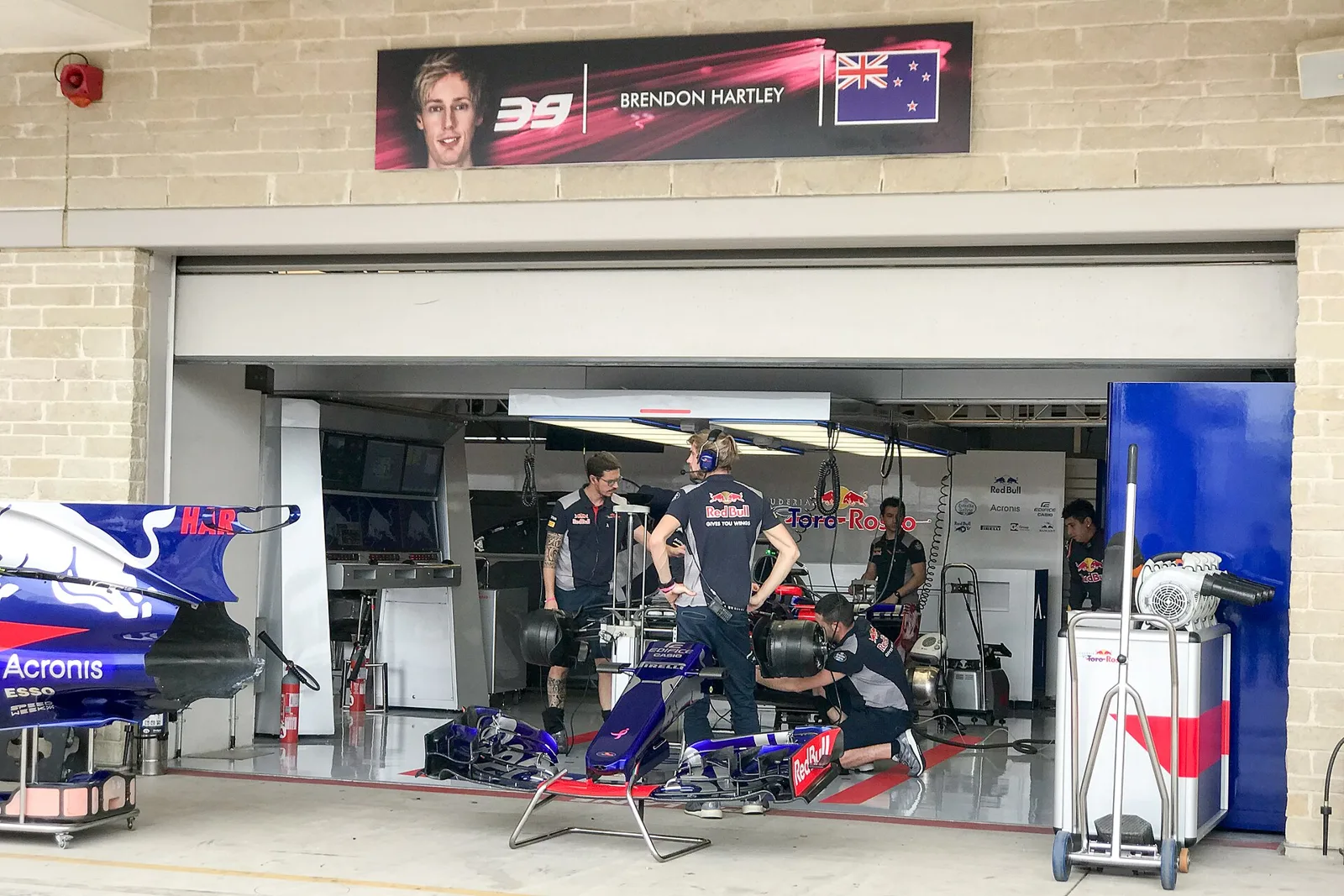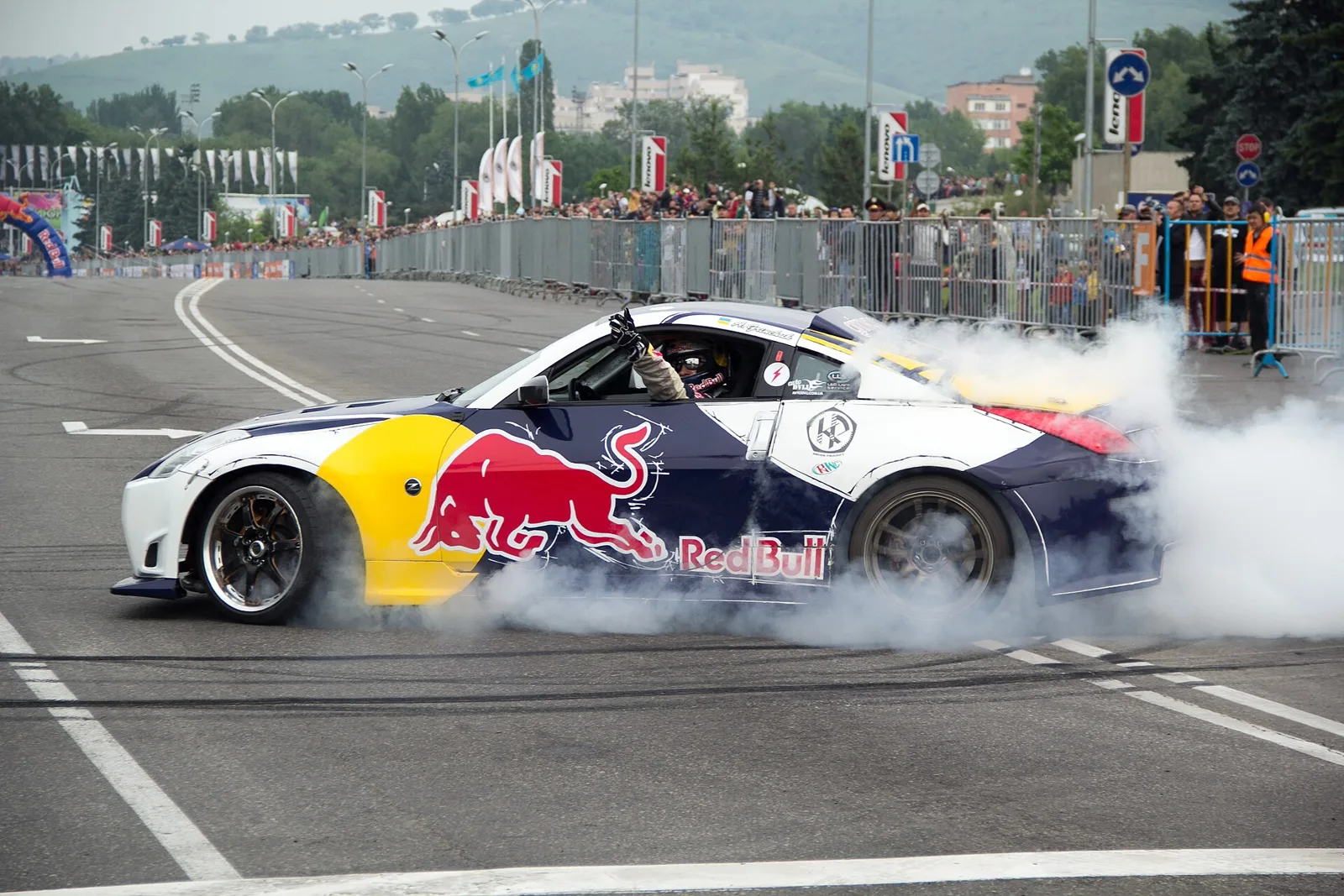
An energy drinks company bought Jaguar's Formula One team in 2004 and turned it into a constructors' champion within six years, then a four-time drivers' champion line.
Red Bull bought Ford's former Jaguar Racing team in November 2004. Since then the squad has won six constructors' titles and eight drivers' titles, four each for Sebastian Vettel and Max Verstappen. From 2026 it runs power units developed with Ford's help, a partnership announced in 2023.
Red Bull Racing is a Formula One team that competes under an Austrian licence but is based in England. It is one of two Formula One teams owned by the Red Bull group, the other being Racing Bulls. Christian Horner managed the team from its formation in 2005 until 2025, when Laurent Mekies took over the leadership.
How did Red Bull Racing begin?
The team traces its roots to the Stewart Grand Prix outfit that debuted in 1997. Jackie Stewart sold it to the Ford Motor Company late in 1999, and Ford rebranded it as Jaguar Racing. The team struggled for five years before Ford put it up for sale in September 2004, saying it could no longer make a compelling case for any of its brands to compete in Formula One.
Red Bull, the energy drinks company, agreed to buy the team on 15 November 2004, on the final day of the sale. According to BBC Sport, Ford wanted just a token US$1 from the buyer, in exchange for pledging US$400 million of investment across three seasons. The Cosworth engine developed for the 2005 chassis stayed in use, and the operation kept running under the new name.
Christian Horner was installed as team boss, and David Coulthard and Christian Klien were signed as drivers. The team ran under a British racing licence from 2005 to 2006. Red Bull had been involved in Formula One long before that, as a sponsor of Sauber from 1995 to 2004 and of Gerhard Berger from 1989, but buying a team of its own meant ending the Sauber partnership.
An energy drinks company bought a struggling Formula One team in 2004 and turned it into a dynasty built on a single design office.
What were the Cosworth and Ferrari years like?
The first chassis, the RB1, used Cosworth engines in 2005, the same unit that Jaguar Racing had used. Coulthard was chosen for his experience, a former McLaren driver who had struggled there in 2003 and 2004 but was now a revelation for the new team. Klien and Vitantonio Liuzzi, the 2004 F3000 champion, shared the second car, although Liuzzi appeared only four times.
The results were a clear step up from the Jaguar years. The team was sixth in the constructors' standings for most of the season, beaten only at the end by the BAR Hondas, and it scored 34 points. Coulthard collected 24 of them, Klien 9 and Liuzzi 1. American driver Scott Speed, who came through the Red Bull Driver Search, drove for the team at the Canadian and United States Grands Prix, partly because his nationality could raise the profile of both the brand and the sport in America.
On 23 April 2005 the team agreed a deal to use customer Ferrari engines for 2006, which came alongside a rule change to V8 engines. Adrian Newey, the highly successful McLaren technical director, was hired in November 2005. The second car, the RB2, first ran at Silverstone in December 2005, and Coulthard described it in glowing terms. Early testing was troubled by cooling problems and overheating.
The first podium came at Monaco in 2006, when Coulthard finished third. Horner had promised to jump into the track's swimming pool if one of the cars reached the podium, and he kept his word, wearing only a red cape. The team finished seventh in the constructors' standings with 16 points. Coulthard scored 14 of them and finished 13th in the drivers' standings, while Klien's two points left him 18th. His replacement, Robert Doornbos, failed to score.
Why did the team switch to Renault engines?
On 31 August 2006 Red Bull announced it would use customer Renault engines from 2007, passing the Ferrari contract to Scuderia Toro Rosso. Adrian Newey designed the RB3 for 2007, and Mark Webber joined Coulthard after the team signed him in August 2006. That season the team also became an Austrian constructor by receiving an Austrian licence, although it kept its base in Britain.
The 2007 season brought the team its first points, when Coulthard scored a gritty fifth place in Spain. Webber finished third at the European Grand Prix for his second career podium, and Coulthard took fourth at the Japanese Grand Prix in wet conditions. Geoff Willis was hired as technical director on 17 July 2007. The team finished fifth in the 2007 constructors' standings.
The 2008 season started well, with Webber scoring five points finishes in a row and Coulthard taking third in Canada. Yet the team managed only five points in the last ten races. Toro Rosso, the sister team, won the rain-hit Italian Grand Prix that year, with Sebastian Vettel at the wheel, and it became the first race win for a Red Bull-owned team. Many blamed the Renault engine for lacking horsepower, and Coulthard announced his retirement at the British Grand Prix.
For 2009 Vettel took Coulthard's seat. The RB5 was launched virtually on 8 February, with a computer-generated video narrated by Vettel. At the Chinese Grand Prix Vettel took the team's first pole position and then its first win, in rain-soaked conditions, with Webber second. Webber later scored his first win at the German Grand Prix and his second at Brazil. Vettel finished second in the drivers' championship on 84 points, 11 behind Jenson Button, and the team was second in the constructors' table on 153.5 points, 18.5 behind Brawn GP.
How did Vettel and Webber win the 2010 titles?
Vettel and Webber were both retained for 2010, with Renault still supplying engines. Vettel won in Malaysia, and Webber took victories in Spain, Monaco, Hungary and Britain. The title fight was intense. At the Turkish Grand Prix Vettel tried to pass Webber for the lead, the two collided, and Vettel retired while Webber took third. Vettel also won at Valencia from pole.
The team clinched the Constructors' Championship at the Brazilian Grand Prix, when Vettel and Webber finished first and second. Red Bull became the first Austrian team to win the Formula One constructors' title. Team boss Horner stressed that the faster driver should win, and the team would not order a driver to let his teammate past in the final race. Vettel then won the Abu Dhabi finale and took the drivers' title.
Over the season Red Bull claimed nine race wins, five of them for Vettel and four for Webber. It also took 15 pole positions, ten for Vettel and five for Webber, which made the pair the strongest qualifiers of the year.
What did the Renault works years bring?
In 2011 the team was promoted to Renault's full-works partnership. It received free engines when Renault's own works team was rebranded as Lotus Renault GP. Vettel defended his title by winning eleven races, and he took 15 poles that year, which broke Nigel Mansell's 1992 record. The team scored 650 points, 153 more than McLaren in second place.
In 2012 Vettel became the youngest triple world champion, passing Ayrton Senna's record. In 2013 the team was renamed Infiniti Red Bull Racing after the car brand became its title partner. The season was overshadowed in Malaysia, where Vettel passed Webber despite a team order to hold position, and the radio exchange that followed became famous. Vettel won the title at the Indian Grand Prix, and the team took its fourth consecutive constructors' championship.
Webber retired at the end of 2013, and Daniel Ricciardo replaced him for 2014. The Renault engine struggled badly with power and reliability that year. Ricciardo won the Canadian Grand Prix, and the team finished second in the constructors' standings on 405 points with three race wins. Vettel left after the 2014 season, and Daniil Kvyat took his seat for 2015.
The 2015 season was a disappointment. The team failed to win a race for the first time since 2008, and it finished fourth on 187 points. Red Bull wanted out of the Renault partnership, but it could not find another engine supplier, so it kept running Renault engines for 2016 under the TAG Heuer badge.
How did the team move from Renault to Honda?
The TAG Heuer-badged Renault years were a strong recovery. In 2016 Max Verstappen replaced Kvyat, and he won the Spanish Grand Prix, becoming the youngest ever Grand Prix winner. That year the team was runner-up among the constructors. In 2017 it won three races, with Ricciardo in Azerbaijan and Verstappen in Malaysia and Mexico, and it finished third on 368 points.
Aston Martin became the title sponsor from 2018, an arrangement announced in September 2017. Ricciardo won the Chinese and Monaco Grands Prix, and Verstappen won the Austrian Grand Prix at the team's home track. Mexico brought the first front-row lock-out of the turbo-hybrid era, with Ricciardo on pole and Verstappen winning. The team finished third in the constructors' table, but Ricciardo's mechanical retirements cost points.
The partnership with Renault ended after 2018. Red Bull chose Honda power for 2019, partly because Honda's progress at the sister team Toro Rosso impressed it. Pierre Gasly was promoted from Toro Rosso to replace Ricciardo, who left for Renault, and Alex Albon took over from Gasly on 12 August 2019.
In 2020 Albon scored his first podium with third place at the Tuscan Grand Prix, while Verstappen won the 70th Anniversary Grand Prix. The team was second in the constructors' standings on 319 points, and Verstappen was third in the drivers' table with 214 points. Sergio Perez was signed to replace Albon for 2021.
What made the 2023 season so dominant?
Honda returned as the named engine supplier in 2023, with its branding back on the cars and team kit. The RB19, designed by Adrian Newey, was impressive in pre-season testing. Verstappen won the first race in Bahrain, and he went on to win 21 of the 22 races, a 95.45 per cent win rate. Perez won in Saudi Arabia and Azerbaijan, and the only race the team did not win was Singapore, where Carlos Sainz Jr. took the win for Ferrari.
The comparison that came up most was the McLaren MP4/4, another Honda-powered car, which won 15 of 16 races in 1988 for a 93.8 per cent rate. The Hungarian Grand Prix in 2023 was the team's twelfth consecutive race win, a record for a constructor that beat the eleven McLaren had held since 1988. The streak was extended to fifteen with wins at the Belgian, Dutch and Italian Grands Prix.
Verstappen also became the first driver to lead more than 1,000 laps in a single season, and the only driver to complete every racing lap that year. The team sealed the Constructors' Championship after his win in Japan, and he took the drivers' title at the Qatar sprint event, before his victory at Abu Dhabi closed out a season the team regards as among its best.
How did the team change after 2024?
The team won the first two races of 2024 with Verstappen taking both wins, but a brake failure in Australia ended his race. In China the team reached its 100th pole position, fifteen years after Vettel gave it the first at the 2009 Chinese Grand Prix. Verstappen then won at Sao Paulo from 17th on the grid, scoring 31 points that weekend, and he won his fourth title with 403 points.
Changes followed at the top. Sporting director Jonathan Wheatley left after 18 years with the team, and Adrian Newey announced his departure during the 2024 Miami Grand Prix weekend after 19 years. Newey moved to Aston Martin in March 2025. Sergio Perez agreed to end his contract in December 2024, and Liam Lawson took his seat alongside Verstappen for 2025.
Lawson struggled, and Yuki Tsunoda was promoted to the team from the Japanese Grand Prix. Christian Horner was released after the British Grand Prix and formally left in September, reportedly with a pre-tax severance deal of GBP 80 million. Laurent Mekies took over as team principal, and under his leadership the team won in Italy, Azerbaijan, Austin, Las Vegas, Qatar and Abu Dhabi. Verstappen finished second to Lando Norris by two points.
Who owns the team, and what is Red Bull Technology?
Red Bull Technology, previously Red Bull Racing Holdings Limited, is the parent company that designs and builds the team's cars. From 2007 it was also used to run two teams with one car design, which some saw as a loophole. Rival teams complained to the FIA, but the complaints were dismissed. The rules changed in 2010 to forbid identical cars between teams, and both teams built their own cars from then on.
The scale of the operation shows in the 2011 figures. Revenue reached $285.4 million against expenses of $284.4 million. Prize money brought in $88.8 million, sponsors $59.7 million, and the rest came from Red Bull. Research and development cost $112.8 million, and salaries came to $82.7 million for 605 employees.
Red Bull Advanced Technologies is the group's commercial engineering arm, based in the UK beside the team's facility. It developed the Aston Martin Valkyrie sports car with Aston Martin, and it worked with Dallara and IndyCar on the aeroscreen safety device. In June 2022 it announced the RB17 hypercar, with 50 units planned. The Minardi team was bought in autumn 2005 and became Scuderia Toro Rosso in 2006.
Red Bull Racing season highlights
| Season | Engine | Result |
|---|---|---|
| 2005 | Cosworth | Sixth in the constructors' table for most of the year, 34 points |
| 2006 | Ferrari | Seventh with 16 points; first podium at Monaco |
| 2009 | Renault | Second with 153.5 points; first win at the Chinese Grand Prix |
| 2010 | Renault | Constructors' champions; Vettel drivers' champion |
| 2011 | Renault | Constructors' champions with 650 points |
| 2013 | Renault | Vettel's title; fourth consecutive constructors' title |
| 2014 | Renault | Second with 405 points |
| 2015 | Renault | Fourth with 187 points |
| 2016 | Renault, TAG Heuer badge | Second in the constructors' table |
| 2017 | Renault, TAG Heuer badge | Third with 368 points |
| 2020 | Honda | Second with 319 points |
| 2022 | Honda, rebranded RBPT | Constructors' champions; Verstappen's sixth Drivers' title |
| 2023 | Honda | Constructors' champions; 21 wins from 22 races |