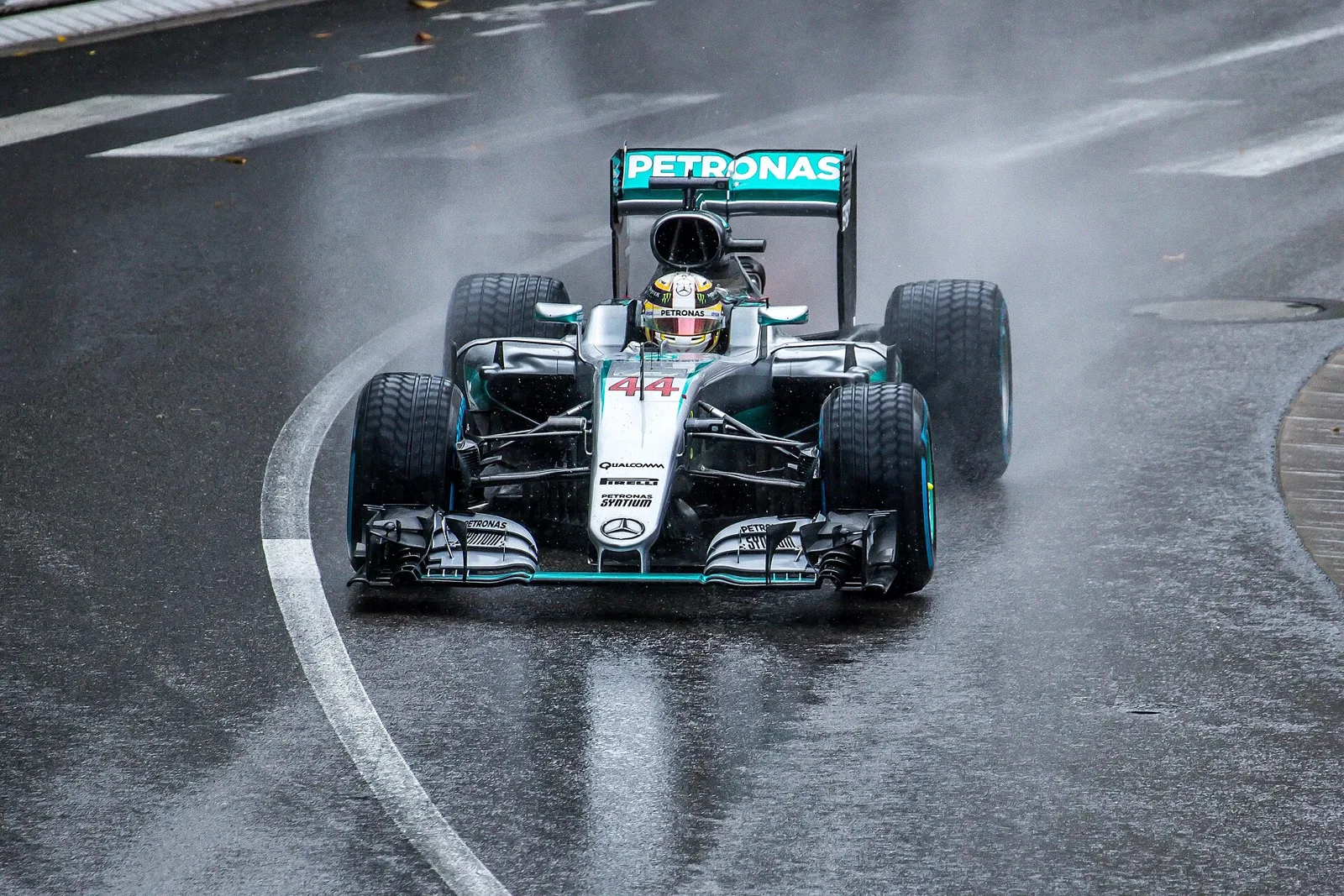
Ricciardo took his first pole in Monaco, but a late change of tyre plan let Hamilton take the lead and keep it to the flag.
The 2016 Monaco Grand Prix was the sixth round of the Formula One season, held on 29 May 2016 at the Monaco street circuit. Lewis Hamilton won for Mercedes, while Daniel Ricciardo finished second from his maiden pole and Sergio Perez took third for Force India.
Lewis Hamilton won the 2016 Monaco Grand Prix for Mercedes after a late change of tyre plan cost Daniel Ricciardo the lead during his pit stop. Ricciardo had started from pole, the first of his career, and Sergio Perez completed the podium for Force India, a team that had not reached the top three that season before.
Why was Mercedes under pressure at Monaco?
Mercedes arrived in the principality two weeks after its double retirement in Spain, when Hamilton and Rosberg collided at turn four. Head of motorsport Toto Wolff made clear the team could not afford another repeat of that day. Rosberg was the defending winner, having taken the previous three Monaco races in a row.
A fourth straight win would have made Rosberg only the second driver to take Monaco four times running, after Ayrton Senna. Hamilton, for his part, had won at the circuit only once before, in 2008. The year before this race he had felt robbed of a sure win after a pit call under a safety car period went against him.
Ricciardo took the first pole of his career, and a tyre call in the pit lane handed the win to Hamilton.
What changed on the cars for Monaco?
Alonso ran a revised combustion engine, his third of five allowed before a grid penalty applied. Honda said it had used no development tokens and had improved reliability instead. McLaren also fitted new batteries and electronics control units to both of its cars.
Renault had brought an updated power unit to the test after Barcelona, and Kevin Magnussen liked it enough to push for its introduction at Monaco rather than in Canada. Renault could only supply one updated unit each to its works team and to Red Bull, who ran it under the TAG Heuer name. Magnussen and Ricciardo received those two units.
Pirelli's new ultrasoft compound made its competitive debut here, sitting alongside the supersoft and soft. The rules obliged each driver to hold back two sets of the softest compounds for the race, plus a set of ultrasofts for Q3 for anyone who advanced, and the remaining sets were theirs to choose.
From this race onwards, drivers could choose alternative helmet designs for one weekend a season. Massa wore graffiti artwork by Os Gemeos, Bottas had casino imagery, and Romain Grosjean paid tribute to the late Jules Bianchi. McLaren marked fifty years since its first Monaco start.
How did the championship stand going in?
Rosberg led the drivers' table on 100 points, with Raikkonen on 61. Hamilton was third, four points further back, while Vettel and Ricciardo were level on 48 each. In the constructors' table Mercedes led on 157 points, 48 ahead of Ferrari, with Red Bull third on 94.
The gap between Mercedes and Ferrari was narrower than it had been before the Spanish race, but Mercedes still held the advantage going into the sixth round of the year.
How did practice go?
Practice on Thursday morning began with Hamilton fastest at 1:15.537, one tenth ahead of Rosberg. A loose drain cover at the opening corner punctured Rosberg's left-rear tyre and harmed Button's McLaren, which ended the session under a red flag. Earlier in the session Massa had hit the barrier at turn one, bringing out a virtual safety car. Hamilton also had a brake lock-up at the same corner, but he reached the gravel without brushing the barrier.
The afternoon belonged to Ricciardo, who set 1:14.607 and had a margin of over half a second on Hamilton. Rosberg and Verstappen were the only other drivers within a second of him. Raikkonen was fastest in seventh, while Vettel had an incident-packed run. He spun at Mirabeau, damaged his rear wing, and then hit the wall at turn one with wheel rim damage, finishing ninth.
Several incidents followed on the track. Grosjean crashed at the tunnel exit, Haryanto clipped the inside wall at that same spot, and Magnussen crashed at the final corner, each bringing a virtual safety car. Bottas and Massa struggled to 14th and 16th for Williams.
On Saturday morning Vettel set the fastest time, about a hundredth of a second quicker than Hamilton. Verstappen was fifth after a minor crash that clipped the wall near Casino Square, while Palmer crashed at the swimming pool section and hindered one of Hamilton's flying laps.
How did qualifying unfold?
Daniel Ricciardo took pole, the first of his career, almost two-tenths ahead of Rosberg. Vettel was fourth, almost a second adrift, and Hulkenberg was fifth ahead of Raikkonen, who had to serve a five-place penalty for an unscheduled gearbox change. Sainz, Perez, Kvyat and Alonso completed the top ten behind them, with Rosberg alongside Ricciardo on the front row.
The first part of qualifying was interrupted when Nasr's engine failed at the tunnel exit. Verstappen then crashed at the swimming pool chicane and brought a second red flag. Verstappen and Nasr were both slower than 107% of the quickest time, so they asked the stewards for permission to start, and both chose the pit lane.
Hamilton lost power as he left the pit lane for the third part, and he was sent back to the garage. He later returned to the track and qualified third, after abandoning several quick laps in favour of a final run at the last moment.
In the second part Hamilton set a quick time early, around half a second ahead of Rosberg. Ricciardo's fastest lap came on the harder supersoft tyre, so he could have started the race on it had the track stayed dry. Gutierrez, Button, Grosjean and Magnussen were the drivers left behind in that session.
In the first part, Haryanto and Wehrlein, along with Palmer and Ericsson, joined Nasr and Verstappen on the sidelines.
Ricciardo's pole was the first earned by a Renault-powered turbocharged car since Senna's Lotus start at the 1986 Mexican Grand Prix. In the second part, Williams struggled for pace, and Bottas and Massa missed out on Q3 by qualifying eleventh and fourteenth.
Which decisions did the stewards take?
The stewards let Magnussen keep his place despite passing a red light at the pit exit in Q1, since it had turned red just 0.55 seconds before he went through. Kvyat also escaped a penalty after his car failed the front floor deflection test, since an impact on track had caused the irregularity.
Kvyat kept eighth on the grid as a result. Verstappen started ahead of Nasr from the pit lane because he had set a time in qualifying, while Nasr had not set one at all.
How did the wet start shape the race?
Rain fell shortly before the start, so the field began behind the safety car on full wet tyres. Kvyat pitted on lap two with technical issues and rejoined a lap down, and Magnussen switched to intermediates at the end of lap seven. Ricciardo led the pack behind the safety car, and the race began in earnest on lap seven when that car pulled away.
Palmer crashed on a wet zebra crossing a lap later, which brought out a virtual safety car. On lap eleven Raikkonen damaged his front wing at the Loews hairpin, and the wing caught under his front tyres, blocking Grosjean, before Raikkonen retired a few corners later.
By lap 13 Ricciardo was ten seconds clear of Rosberg. Vettel became the first of the front runners to switch to intermediates a lap later. Mercedes issued team orders for Rosberg to let Hamilton past on lap 16, although by then the gap had grown to 13 seconds.
Why did the tyre calls decide the race?
Rosberg pitted for intermediates on lap 21, so the leaders on full wets were just Ricciardo and Hamilton. Ricciardo switched on lap 24, but Hamilton stayed out on the wets until lap 31 before he moved straight to slicks. He chose to stay out on the wets until the surface dried enough for slicks, rather than pit for intermediates, and that gamble was the turning point of the race.
Ricciardo followed onto slicks a lap later, but his crew had soft tyres ready when the engineers had asked for supersofts. He was made to wait more than 10 seconds while the team fetched the correct set from the back of the garage, and Hamilton took the lead.
Perez benefited from the second round of stops and emerged third, while Rosberg was left sixth behind Vettel and Alonso after the switch to dry tyres. Ricciardo tried to repass Hamilton on lap 34, but Hamilton held his position. Verstappen, who had started 21st, had climbed back into the top ten by then, while Ricciardo had edged to within half a second of Hamilton by lap 28 on intermediates.
How did the closing laps unfold?
Verstappen crashed into the barrier on lap 35 after locking his tyres, causing another virtual safety car. On lap 37, Hamilton misjudged the chicane coming out of the tunnel and backed Ricciardo off at the exit, which led to a complaint on the team radio. The stewards investigated and took no action against Hamilton.
From there the order was Hamilton, Ricciardo, Perez, Vettel, Alonso, Rosberg, Hulkenberg, Sainz, Button and Gutierrez. The top four pulled clear of the rest of the field, and in front the race carried on in that same order.
On lap 50 the two Saubers touched at Rascasse, after Nasr disregarded a pit wall request to let Ericsson go by. Both cars made pit stops to repair the damage and then retired. A fourth virtual safety car came out on lap 68, when a plastic sheet was blown onto the start-finish straight, and Hamilton used the pause to extend his lead over Ricciardo.
Hamilton set the quickest lap of the afternoon on lap 71 and crossed the line first. Rain returned three laps from the finish, but nobody switched tyres before the finish.
Key results at a glance
| Milestone | Driver | Detail |
|---|---|---|
| Pole position | Daniel Ricciardo | Red Bull Racing, first career pole |
| Race winner | Lewis Hamilton | Mercedes, second Monaco win and first since 2008 |
| Second | Daniel Ricciardo | Red Bull Racing, lost the lead at his stop |
| Third | Sergio Perez | Force India, first top-three finish of the season |
| Fastest lap | Lewis Hamilton | Lap 71 |
What did the result mean for the teams?
Hamilton's win was his second at Monaco and his first since 2008, a result that ended a run of poor outcomes at the principality. Force India's podium was its first top-three showing of the year, and the first since the 2015 Russian Grand Prix. Red Bull could take some comfort from Ricciardo's pole, but the lead slipped away at his pit stop.
Mercedes had come into the weekend determined not to repeat its Barcelona collision, and the two cars stayed clear of one another for the whole race. For Ricciardo the stop was the turning point, and the team's own tyre call was the reason it had gone wrong.