A team bought from Spyker for 88 million euros, its first points in 2009, a fourth-place finish in 2016 and 2017, and administration in 2018.
The Force India team raced from Silverstone with an Indian licence. Its best results were fourth places in the Constructors' Championship in 2016 and 2017, and it entered administration in 2018 before a consortium bought its assets for a successor entry.
Force India was a Formula One team and constructor that raced from Silverstone in the United Kingdom under an Indian licence. Its existence began with a takeover, when the Indian businessman Vijay Mallya and the Dutch businessman Michiel Mol bought the Spyker outfit. Its best seasons came in 2016 and 2017, when it finished fourth in the Constructors' Championship twice.
Where did the Force India team come from?
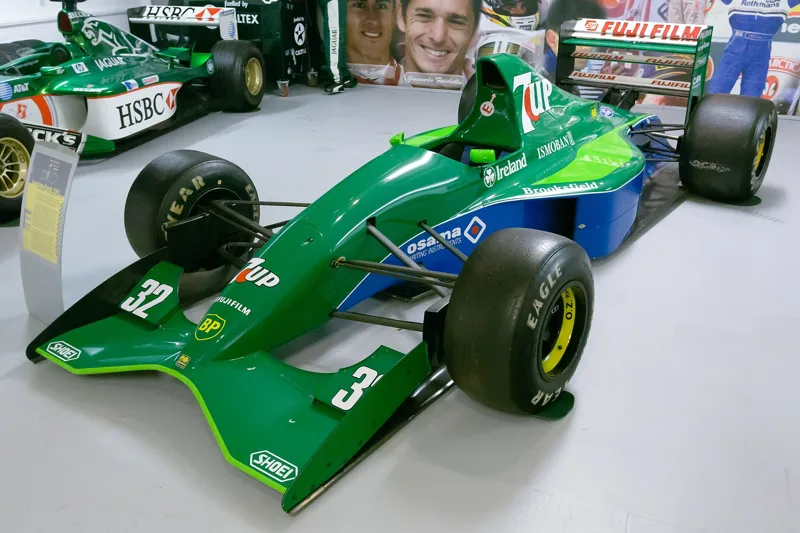
The team's origins run back to the Jordan Grand Prix team, which entered Formula One in 1991 from Silverstone. Jordan won four races over its career and finished third in the 1999 Constructors' Championship. Financial problems in the 2000s led the owner, Eddie Jordan, to sell to the Midland Group in early 2005.
Midland renamed the team Midland F1 Racing in 2006 and spent two seasons near the back of the grid. Alex Shnaider then sold the team to Spyker Cars midway through 2006, and Spyker scored a point in 2007 and briefly led the European Grand Prix, before money problems led to another sale.
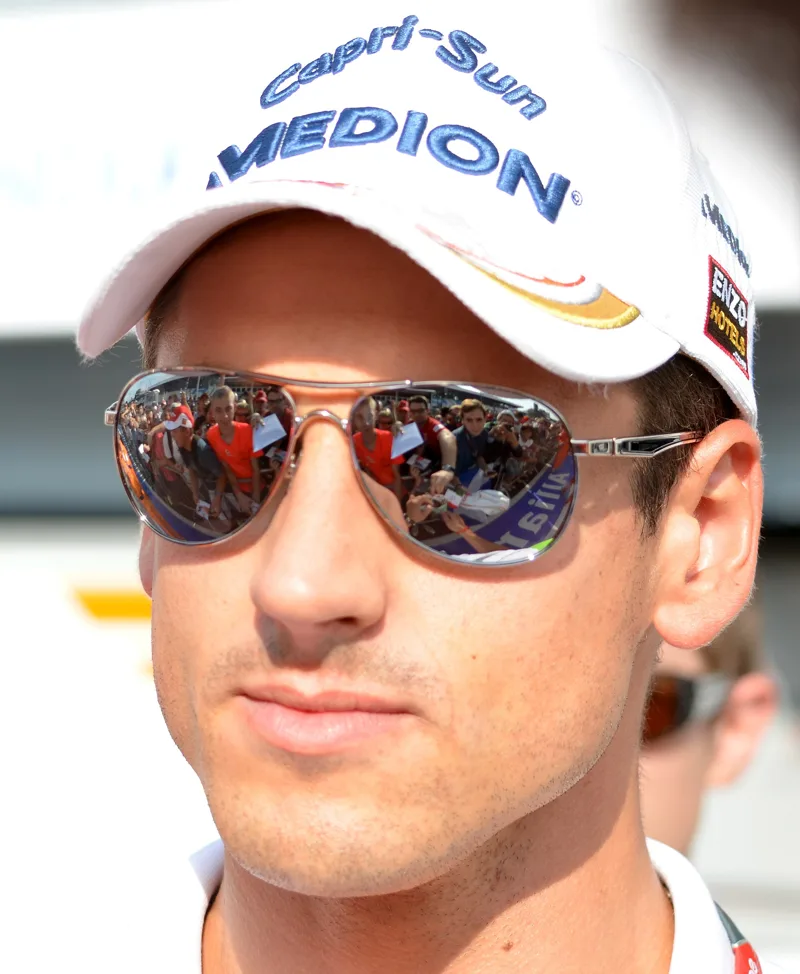
Mallya, then chairman of the United Breweries Group, and Mol bought Spyker for 88 million euros. The team was renamed the Force India Formula One Team for 2008, keeping Colin Kolles as team principal and Mike Gascoyne as chief technology officer, and it retained Adrian Sutil alongside Giancarlo Fisichella.
A midfield team with a loyal following, five podiums and a Pink Panther livery, undone by debt rather than by the track.
How did the first season go in 2008?
The new car, the VJM01, was an updated version of the Spyker chassis with Ferrari engines. It was launched at the Gateway of India in Mumbai, and the team hoped to beat Super Aguri, which had spent the previous seasons at the back of the grid.
In Melbourne both drivers retired within the opening laps, but in Malaysia Fisichella's twelfth place gave the team its first finish. Sutil came close to a first points finish in the wet at Monaco before Kimi Raikkonen's Ferrari hit him and ended his race.
Development of the VJM01 halted once the team turned its attention to 2009, and the car was updated with a seamless-shift transmission at Valencia. Fisichella ended the season with a best finish of tenth at the Spanish Grand Prix, and the team finished tenth in the Constructors' Championship.
When did Force India score its first points?
Force India scored its first championship points and its first podium at the 2009 Belgian Grand Prix. Fisichella took pole there, the team's first at Formula One level, and then finished second behind Kimi Raikkonen after 29 races without a point.
Adrian Sutil followed with fourth place at the Italian Grand Prix that year, and he set the team's first fastest lap in the process. Missing the win in Belgium was partly blamed on the car's lack of KERS, a system that the Ferrari had and the Force India did not.
On 3 September 2009 the team released Fisichella so that he could race for Ferrari for the rest of the season. Vitantonio Liuzzi, the test driver, replaced him. At Monza Liuzzi qualified seventh on his race debut for the team, but he retired with a transmission failure while running fourth.
The team finished 2009 ninth in the Constructors' Championship with 13 points. That total did not fully reflect the progress made during the year, because the car had been transformed from the weak start of the season.
What were the Mercedes years like?
From 2009 the team ran Mercedes-Benz engines, after signing a five-year deal on 10 November 2008. The agreement also covered McLaren-Mercedes gearboxes, hydraulic systems and the KERS hardware, and the VJM02 was revealed on 1 March 2009.
The 2010 season began with points in Bahrain, when Liuzzi finished ninth. Sutil finished fifth in Malaysia, and at Monaco both cars finished eighth and ninth, avoiding the chaos around them and giving the team its first double points finish.
Senior staff left during the season. Technical director James Key joined Sauber, and the chief designer Lewis Butler, the senior aerodynamicist Marianne Hinson and the commercial director Ian Phillips also departed. The team still finished seventh in the Constructors' Championship with 68 points, a point behind Williams.
In January 2011 Paul di Resta was promoted to a race seat, and the VJM04 launched in February 2011 through an online event. It was the first car developed under technical director Andrew Green, and it was built with help from the McLaren Applied Technologies partnership and Mercedes-Benz engineers.
The 2011 season brought a sixth-place finish in the Constructors' Championship, four points behind fifth-placed Renault. Sutil's sixth at Brazil and di Resta's eighth there helped the team finish strongly, though its results had been spread across many races in midfield.
Who owned Force India?
In October 2011 the Indian company Sahara India Pariwar bought 42.5% of the team for 100 million dollars. Mallya kept 42.5% and the Mol family held the remaining 15%, and the shares sold were newly issued rather than taken from existing holders.
The new shareholding led to the team being renamed Sahara Force India. The arrangement gave the team a larger budget, which it spent on development, and a link with a major Indian conglomerate that supported its Formula One ambitions.
Mallya's own position was later undermined. By 2018 he was facing fraud accusations and defaulted loans, and he could no longer afford to run the team, which was placed into administration by the High Court in London.
How did the team reach its peak?
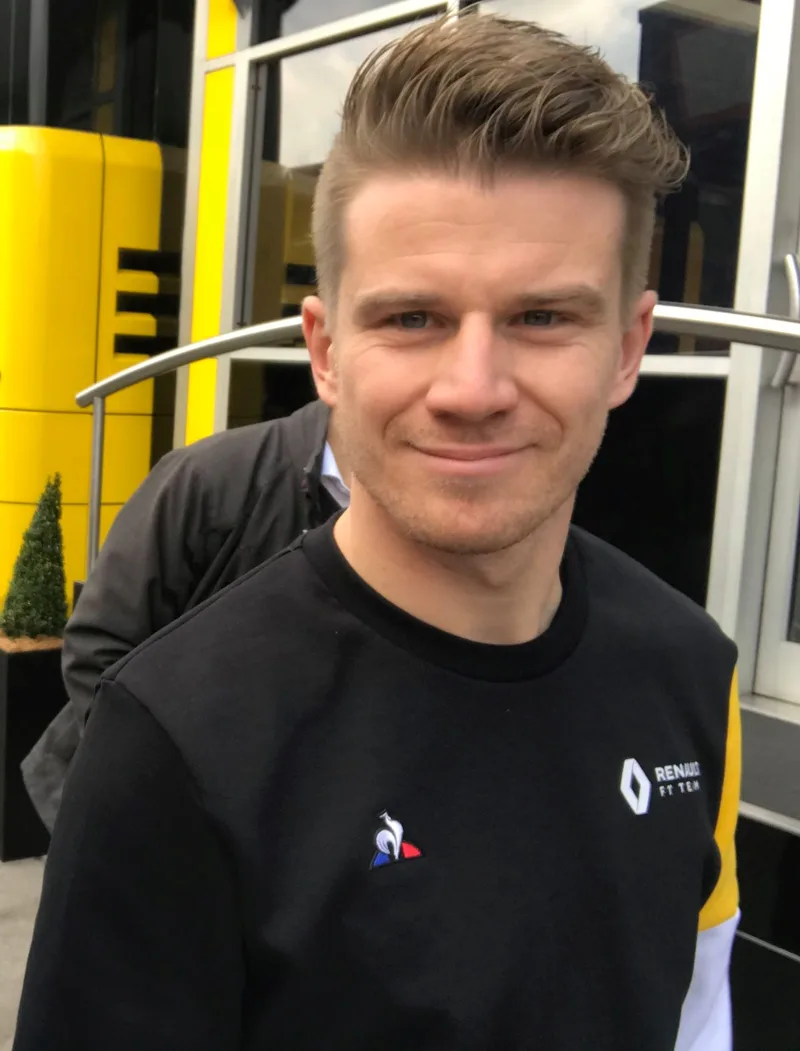
Nico Hulkenberg replaced Sutil for 2012, and the team finished seventh with 109 points. At the Brazilian Grand Prix Hulkenberg led for a long stretch, including a period behind the safety car, before a collision with Lewis Hamilton cost him a drive-through penalty and he finished fifth.
Sergio Perez joined in 2014, and Hulkenberg returned to the team from Sauber. Force India finished sixth in the Constructors' Championship with 155 points, which was 125 more than seventh-placed Toro Rosso. Perez's third place in Bahrain was the team's first podium since Belgium in 2009.
In 2015 the team faced serious financial difficulties. Reports suggested that important parts suppliers had not been paid, and the VJM08 was delayed so badly that the team missed the first pre-season test. The car finally appeared on track at Barcelona, and Hulkenberg finished seventh in the first race in Australia.
The team's 2015 season picked up in the summer. The B-spec car introduced at the British Grand Prix was a significant step forward, and Perez finished fifth in Belgium after almost leading on the first lap. The team finished fifth overall with 136 points.
The 2016 season was the team's best to that point. Perez took third at Monaco, the first podium for the team at Monaco in any of its guises, and he finished third again at the European Grand Prix in Baku. Hulkenberg and Perez then finished fourth and fifth in Belgium, and the team took fourth place with 173 points.
| Season | Constructors' position | Points | Highlight |
|---|---|---|---|
| 2009 | Ninth | 13 | Fisichella second in Belgium |
| 2010 | Seventh | 68 | Monaco double points finish |
| 2012 | Seventh | 109 | Hulkenberg fifth in Brazil |
| 2013 | Sixth | 77 | Di Resta fourth in Bahrain |
| 2014 | Sixth | 155 | Perez third in Bahrain |
| 2015 | Fifth | 136 | Perez fifth in Belgium |
| 2016 | Fourth | 173 | Perez third at Monaco and Baku |
| 2017 | Fourth | 187 | Best points tally in the team's history |
What happened to Force India in 2017 and 2018?
Hulkenberg left for Renault after 2016, and Esteban Ocon moved up from Manor to a full season. The VJM10 appeared in a pink livery after a sponsorship deal with the drinks company BWT in March 2017, and the car quickly gained the Pink Panther nickname from fans and commentators.
Ocon and Perez scored in the first five races of 2017, with Perez fourth in Spain and Ocon fifth there, a career best for Ocon at that point. The pair later collided several times, which cost both of them results and triggered tensions inside the squad.
The 2017 season ended with fourth in the Constructors' Championship again, and the team's 187 points were its highest total. The 2018 season opened with the same drivers, but the team's finances did not hold.
In 2018 the team was placed into administration during the Hungarian Grand Prix. The legal action was started by a group of creditors, including Perez, to keep the team running while a new owner was sought, after a winding-up petition from the tax authority threatened an unmanaged collapse.
A consortium led by Lawrence Stroll bought the team's assets, but the deal for the shares could not be completed in time because the parent company's creditors had to agree. The buyers therefore raced as Racing Point Force India, and the FIA excluded the former Force India entry from the championship for not completing the season.
Who sponsored Force India?
Kingfisher, a brand owned by Mallya, was the primary sponsor, and it was joined over the years by partners such as Whyte and Mackay, AVG, Airbus and Johnnie Walker. Aethra, a Brazilian auto parts maker, became an official partner in 2012.
The pink livery gave the 2017 car a distinctive look that fans quickly adopted.
The drinks brand Hype Energy sponsored the team from 2015, and its chief executive, Bertrand Gachot, had raced for the Jordan team in 1991. Hype's branding appeared on the rear wing and side pods on races where alcohol advertising was restricted.
What is the legacy of Force India?
Force India's legacy is that of a midfield team that repeatedly got more from its budget than its rivals expected. It produced five third-place podiums, all with Perez, and finished fourth in the Constructors' Championship in 2016 and 2017.
The team also supported young drivers through the FIA Global Pathway and gave Formula One test seats to several of them. Jehan Daruvala was one of the youngsters supported after winning the team's One in a Billion competition. Its story ended in administration, but the drivers and personnel it developed carried its name into the sport's later years.