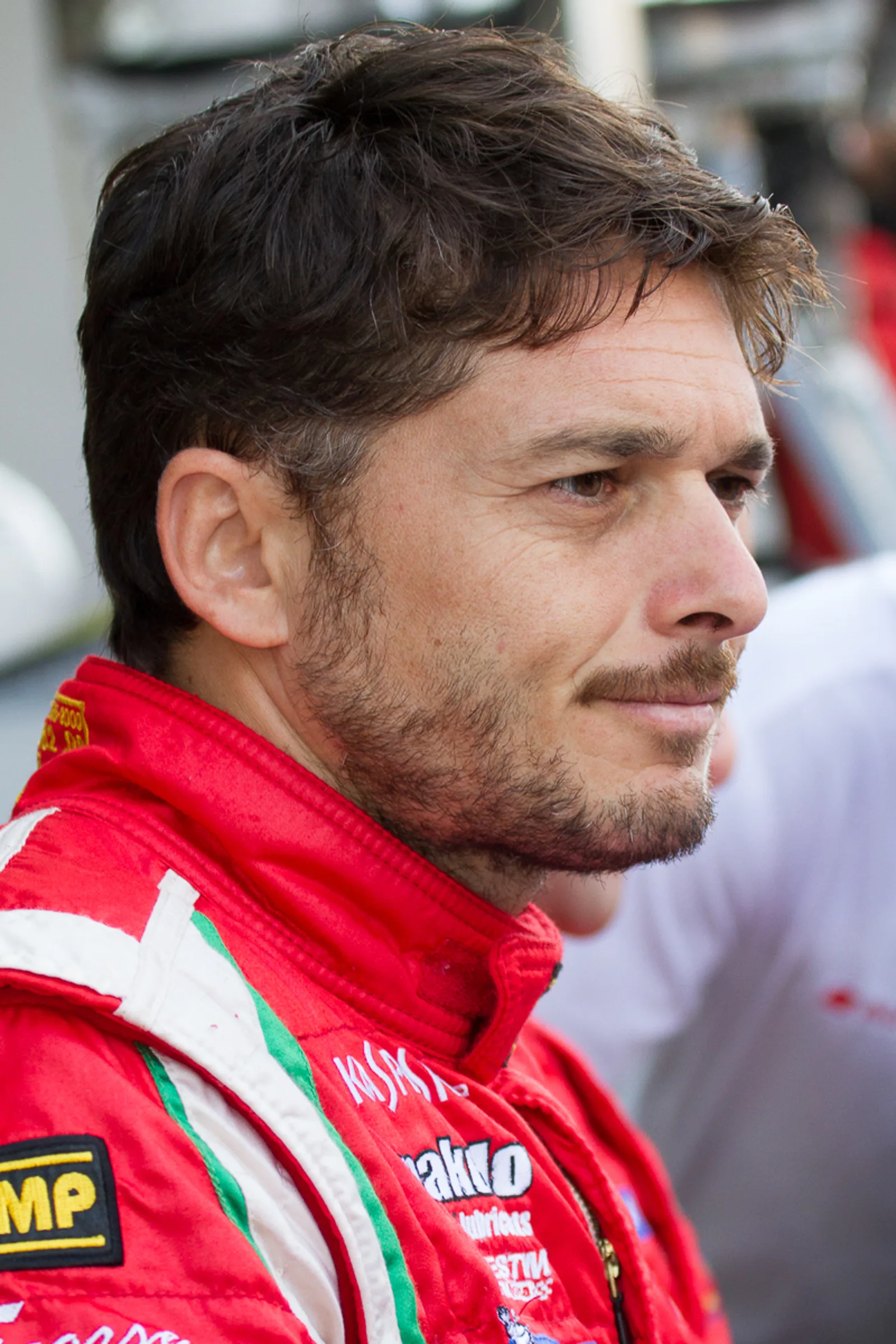
From Minardi to Force India and Ferrari's test team, the career of an Italian driver who won in Brazil, Australia and Malaysia.
Giancarlo Fisichella is an Italian former driver who competed in Formula One from 1996 to 2009. His three victories came in Brazil in 2003, Australia in 2005 and Malaysia in 2006, and he later took class wins at Le Mans.
Giancarlo Fisichella, nicknamed Fisico, spent 14 seasons on the Formula One grid with teams including Minardi, Jordan, Benetton, Sauber, Renault and Force India. He won three Grands Prix, finished fourth in the 2006 championship and later became a sports car winner at Le Mans. His long career is a useful guide to how a midfield driver could still win races with the right machinery.
Who was Giancarlo Fisichella?
Fisichella was born in Rome on 14 January 1973. He comes from the noble Fisichella family of Sicily, and he began his racing in karts at Guidonia's circuit. He then climbed the Italian Formula Three ranks and took the 1994 crown for RC Motorsport, with wins at Monaco and Macau along the way.
Before reaching Formula One he tried several formulas. He spent 1995 and 1996 driving touring cars for Alfa Romeo, and in June 1997 he took a single outing at Spa in the Belgian Procar series, in a works Peugeot, filling in for Vincent Radermecker and coming second.
Three Grand Prix wins, a fourth-place championship in 2006 and a Brazilian victory that was only confirmed days after the race.
How did his Minardi and Jordan years begin?
Fisichella made his Formula One debut with Minardi at the 1996 Australian Grand Prix, having been the team's official test driver the year before. Minardi needed a driver who could bring money, so he was replaced by Giovanni Lavaggi before the season was out.
In 1997 he joined Eddie Jordan's team alongside Ralf Schumacher. He claimed his first podium at the Canadian Grand Prix and finished ahead of his teammate in the standings. At Hockenheim a win looked possible, but a puncture and a strong run from Gerhard Berger ended that hope. He then finished second to Michael Schumacher in the rain at Belgium, and that result earned him a move to Benetton for 1998.
What happened at Benetton between 1998 and 2001?
When Renault withdrew its works team, Benetton ran rebranded development versions of 1997 Renault engines in 1998. Even so, Fisichella took second places at Montreal and Monaco, and he claimed his first pole position at the Austrian Grand Prix. A clash with Jean Alesi in that race cost him a good result.
The following season was just as uneven. A second place at Montreal and a run at the European Grand Prix, where he led before spinning off, were the highlights. In 2000 he took surprise podiums in Brazil, Germany, Monaco and Canada and finished sixth in the championship. He also outperformed his Austrian teammate, Alexander Wurz, by a clear margin.
Renault bought the team during 2000, but its engine design left Benetton with an uncompetitive car for 2001. Fisichella spent much of that year fighting with cars such as Minardi and Prost. Technical director Mike Gascoyne and his staff nevertheless made progress, and the season produced a 4-5 finish at the German Grand Prix and third place in Belgium. Benetton did not keep him, so he rejoined Jordan for 2002.
How did the 2003 Brazilian victory come about?
Fisichella's first Formula One victory came at the 2003 Brazilian Grand Prix, a race run in heavy rain with many crashes. He took the lead on lap 54, just before a red flag, but at first he was placed second on the podium.
Several days later the FIA ruled that Fisichella had started his 56th lap before the red flag. That put him ahead of Raikkonen two laps before the race was stopped, and the win was awarded to him. The winner's trophy was handed to him at Imola, the following race. The episode made him the only driver to have won a race without ever standing on the top step of the podium.
His other points finish that season was seventh place at Indianapolis. Jordan was struggling by then, because Honda had withdrawn its engine supply and the team had moved to Ford engines for 2003. Its car still could not compete with the leading teams, which made the Brazilian win all the more unusual.
What was the 2004 Sauber season like?
Fisichella moved to Sauber for 2004, hoping for better results than Jordan could deliver. Sauber ran re-badged Ferrari engines, which offered him a route toward the Italian team. He outpaced his teammate, Felipe Massa, for much of the year, scoring 22 championship points to Massa's 12.
Several points finishes followed, although the season did not produce another victory.
Did Fisichella match Alonso's pace in 2005?
Not consistently. Flavio Briatore brought him back to Renault for 2005 as the partner of Fernando Alonso. A win at the season opener in Melbourne suggested a breakthrough, but it proved a false dawn. Bad luck pushed him behind Alonso in the standings, and at times the pair set noticeably different lap times in identical cars.
Alonso's steady consistency carried him to the title, while Fisichella's misfortune cost him points. At the Japanese Grand Prix Raikkonen passed him on the final lap, despite his race engineer urging him to keep Raikkonen behind, and the press criticised him heavily. Even so, his performances helped Renault win the Constructors' Championship ahead of McLaren and Ferrari, which had held that title for the previous six seasons.
How did 2006 bring his best season?
Fisichella won the 2006 Malaysian Grand Prix from pole, but he could not sustain that pace. Twice he could not get into the top ten in qualifying. Strong late-season results, including a finish ahead of Alonso at the United States Grand Prix, gave him his best championship position.
The 2006 campaign closed with him fourth in the drivers' table, on 72 points, with a single win and five rostrum finishes. A Monaco penalty for allegedly impeding David Coulthard had added to his troubles earlier in the year. After his third place in Japan he paid tribute to a close friend, Tonino Visciani, who had died of a heart attack shortly before the race. A sixth place in Brazil then secured the Constructors' title for Renault.
What went wrong in 2007?
Alonso had left, and Fisichella inherited the lead role at Renault in 2007. Kovalainen, a young Finn, was his teammate. The car no longer matched the speed of earlier years, and nobody has pinned down exactly why. Explanations on offer include the tyre switch from Michelin to Bridgestone, the team's wind tunnel, and rivals making faster gains in development.
Fisichella started well, but Kovalainen had the better finishes in Canada and the United States. Canada brought a disqualification, shared with Massa, after he left the pit lane while the red light was showing. He said he had been busy avoiding other cars and had not noticed the signal. In Hungary a collision with Anthony Davidson's Super Aguri broke his rear suspension and ended his race.
Why did he join Force India?
Renault had moved on, signing Alonso and Nelson Piquet Jr. for 2008. Fisichella was announced on 10 January 2008 as the number one driver for Force India, alongside Adrian Sutil. It was his third stint with the former Jordan team. At Monaco that year he became the ninth driver to reach 200 Grands Prix starts.
The 2008 season yielded no points for him or the team, although he briefly ran in the points at Brazil, where he switched early to soft tyres and used his wet-weather skills to reach fifth. Force India kept him on for 2009 in October.
How did 2009 go with Force India?
The 2009 Force India VJM02 used a Mercedes-Benz engine. Fisichella qualified 18th for the season opener in Australia, was promoted to 15th after penalties for others, and finished 11th. In Malaysia he spun in torrential rain, and the race was halted by lap 33.
On 29 August Force India had its first pole, at Belgium, and the car's upgrades helped make it possible. He went on to finish second behind Kimi Raikkonen, which brought the team its first points and its first podium in Formula One. Rumours then linked him with a Ferrari seat, something he admitted he had always wanted.
A press statement on 3 September confirmed his move: he would leave Force India and race for Ferrari at Monza, his home event.
What was his Ferrari spell like?
He stepped into the injured Felipe Massa's seat at Ferrari for the last five rounds of 2009, having agreed a deal to cover the rest of the year and serve as reserve in 2010. He had wanted another race seat, but the Sauber option closed when Pedro de la Rosa became the second driver.
Force India also fell through, with Adrian Sutil and Vitantonio Liuzzi retained. He became one of Ferrari's test drivers for 2010, alongside Luca Badoer, Marc Gene, Jules Bianchi and Valentino Rossi. At the end of 2010 Bianchi replaced him in the test role for 2011, but he stayed close to the team and attended its annual media event in January 2011.
How did he succeed in sports car racing?
His sports car career began in 2010 at AF Corse, behind the wheel of a Ferrari F430 raced in the Le Mans series. In 2011 he and Gianmaria Bruni took the LMGTE Pro drivers' and teams' titles in that series, finishing second at Le Mans and winning the 1000 km of Spa along the way.
In 2012 he won the season opener of the World Endurance Championship, and he then won the GTE-Pro class at the 24 Hours of Le Mans with Toni Vilander and Bruni. Their Ferrari 458 Italia covered 335 laps, and Fisichella drove the final stint of the race.
After a difficult 2013 with Risi Competizione in America, he returned to AF Corse and took another Le Mans class win in 2014. That crew covered 339 laps, four more than in 2012. Two American wins followed, at Road America and at Virginia International Raceway.
What did he do in open-wheel racing after Formula One?
In 2022 Fisichella returned to Australia to race in the S5000 category at the Adelaide 500, taking part in one round and three races. He drove for Team BRM. He expected the car to be quick on the street course, a shorter variant of the Grand Prix layout.
What does his career look like at a glance?
| Years | Team or category | Standout result |
|---|---|---|
| 1996 | Minardi | Formula One debut at the Australian Grand Prix |
| 1997 | Jordan | First podium at the Canadian Grand Prix |
| 1998-2001 | Benetton | First pole at the 1998 Austrian Grand Prix |
| 2002-2003 | Jordan | Brazilian Grand Prix victory in 2003 |
| 2004 | Sauber | 22 championship points to teammate Massa's 12 |
| 2005-2007 | Renault | Wins in Australia (2005) and Malaysia (2006) |
| 2008-2009 | Force India | First pole and first podium for the team in 2009 |
| 2012 and 2014 | Sports cars | Le Mans class wins with AF Corse |
What is his legacy?
Fisichella is remembered for three Grand Prix wins, a fourth-place championship finish in 2006 and a long run of Formula One starts. The Brazilian win stands out as an unusual case. His later career in sports cars brought Le Mans class victories in 2012 and 2014.
He also left a small mark on the sport's equipment. In 2004, while at Sauber, he was the first on the grid to decorate his HANS head-restraint in his own colours, and others soon copied him. His helmet changed over the years, and it turned black and grey after he moved to Ferrari.
Off track he set up Fisichella Motor Sport in 2005, which ran a GP2 entry between 2006 and 2009. He later supported FMS International, a GP2 outfit of his own. He raced in the World Endurance Championship from 2018 to 2022 and later moved to Italian GT3.